
Thermae Romae Redux – Volume 1
The return of a concept as brilliant as ever
Score: 8/10
 By Farrel Grimwood · published · 6 min read
Contents
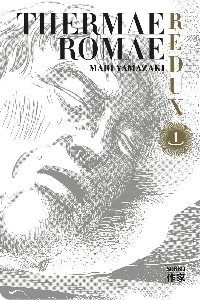
Published in French by Casterman on March 18, 2026, Thermae Romae Redux brings Lucius Modestus, a Roman architect specializing in thermal baths, into the spotlight in a new series that extends the universe imagined by Mari Yamazaki. This time, Lucius advances in a 2nd century Rome crossed by a feeling of decline, between intimate crisis, family tensions and concern in the face of a society which seems to him to be moving away from its ancient virtues. When Emperor Antoninus Pius entrusted him with the restoration of ancient baths, this passionate specialist saw it as an opportunity to restore a little grandeur to Rome.
This first volume immediately finds what made the concept strong. Lucius observes, compares, is surprised, then transforms his discoveries into very concrete solutions for the Roman Empire. The gap between his absolute seriousness and the findings from contemporary Japan remains truly effective, especially since Redux seems to want to broaden its material a little, giving its character a heavier, more melancholy, almost more worn-out existence than before.
It remains to be seen if this new departure is really enough to restore all its momentum to the series, or if Thermae Romae Redux lives above all on the intact strength of an idea that Mari Yamazaki had already brilliantly found.
The same pleasure of bathing, two civilizations that respond to each other
Mari Yamazaki brings Rome and Japan into dialogue around the same relationship with bathing. The idea is immediately amusing, of course, but it is especially valuable for what it reveals. Through Lucius, a Roman architect proud of his know-how and the heritage of his time, Thermae Romae Redux features a man convinced that thermal baths say something about the greatness of a civilization. His view of Rome, of its customs, of its supposed moral weakening, also gives this return a slightly more melancholic color than in the memory left by the original series. Casterman presents this Lucius well as a man worried about the decline of Roman society, even in his family life and in his way of understanding his time.
This is what gives this volume more interesting material than a simple return to formula. Lucius not only arrives with his passion for baths intact. He also advances with fatigue, with nostalgia, with the impression of seeing around him a Rome less worthy of its ancient virtues. The manga gains a lot from there. Each new cultural shift retains its comic effectiveness, but it is part of something a little more charged, a little more inhabited, as if bathing also became a way of rediscovering an order, a beauty and a usefulness that the character believed to be losing.
The plot moves forward with the same clarity. Antoninus Pius entrusts Lucius with the restoration of ancient baths, and this mission is enough to revive the mechanics of the manga. Lucius observes, travels, discovers, then transposes. Mari Yamazaki keeps this very simple, almost ritualistic structure, which is an integral part of the pleasure of reading. The series then advances on a very sure balance between repetition and variation. The reader knows what is going to happen, but he waits for the way in which Lucius will marvel, misunderstand, then reinvent in his own way what he saw on the other side of time.
This first volume also carries a theme that remains very strong in the world of Thermae Romae: the idea that comfort, hygiene, care of the body and the attention paid to everyday places reveal a certain idea of civilization. Behind the humor, Mari Yamazaki continues to work on this parallel between two bathing cultures, with a sincere curiosity for their uses, their refinements and their way of making the simplest gesture a true art of living. This is where Redux goes far beyond the simple gag. The manga entertains, yes, but it also takes a very serious look at what a bath tells about a people.
Lucius at the centre, with all the humour his seriousness creates
In this first volume, Thermae Romae Redux relies first on Lucius. Mari Yamazaki immediately finds what makes the character so special: his absolute seriousness, his rigor as an architect, his almost sacred respect for the art of bathing, and this very Roman way of approaching each problem as a question of civilization. The character still works so well because he moves forward without distance, without irony, with a gravity that makes each shift even funnier. As soon as he discovers a Japanese practice, he observes it with a mixture of amazement, admiration and application which gives the manga its best mechanics.
This return also gives him a little more depth. Redux presents an older Lucius, more tired, more worried too, in a Rome that he looks at with a form of melancholy. His personal situation, his physical pain, his family tensions and his almost obsessive attachment to the thermal baths add a denser color to his portrait. The manga therefore keeps its comic spring intact, but it also gives him a character that is a little more charged, a little more worn, which prevents this new departure from being reduced to a simple repetition.
Around him, volume 1 mainly involves supporting presences. Antoninus Pius plays an important role in relaunching the plot with this restoration mission which gives Lucius a very clear direction. The other figures exist through his relationship to them, to his work, to his place in Rome and to his way of understanding the world. This gives the book a very clear structure. And as the character remains extremely well drawn, this is more than enough to bring the whole thing to life.
This is undoubtedly where Thermae Romae Redux remains most accurate. The manga knows that its heart lies in this character, in this way he goes through time without ever losing his dignity, even when the situation becomes absurd. Lucius entertains, of course, but he is never reduced to a simple walking gag. His love of bathing, his attachment to Rome and his deep conviction that comfort says something about a civilization give him a very particular presence. Volume 1 has a lot to do with that. This alliance between the stiffness of the character, the finesse of the shift and the real pleasure of seeing him transform astonishment into invention.
Precise artwork, with just enough stiffness to serve the contrast
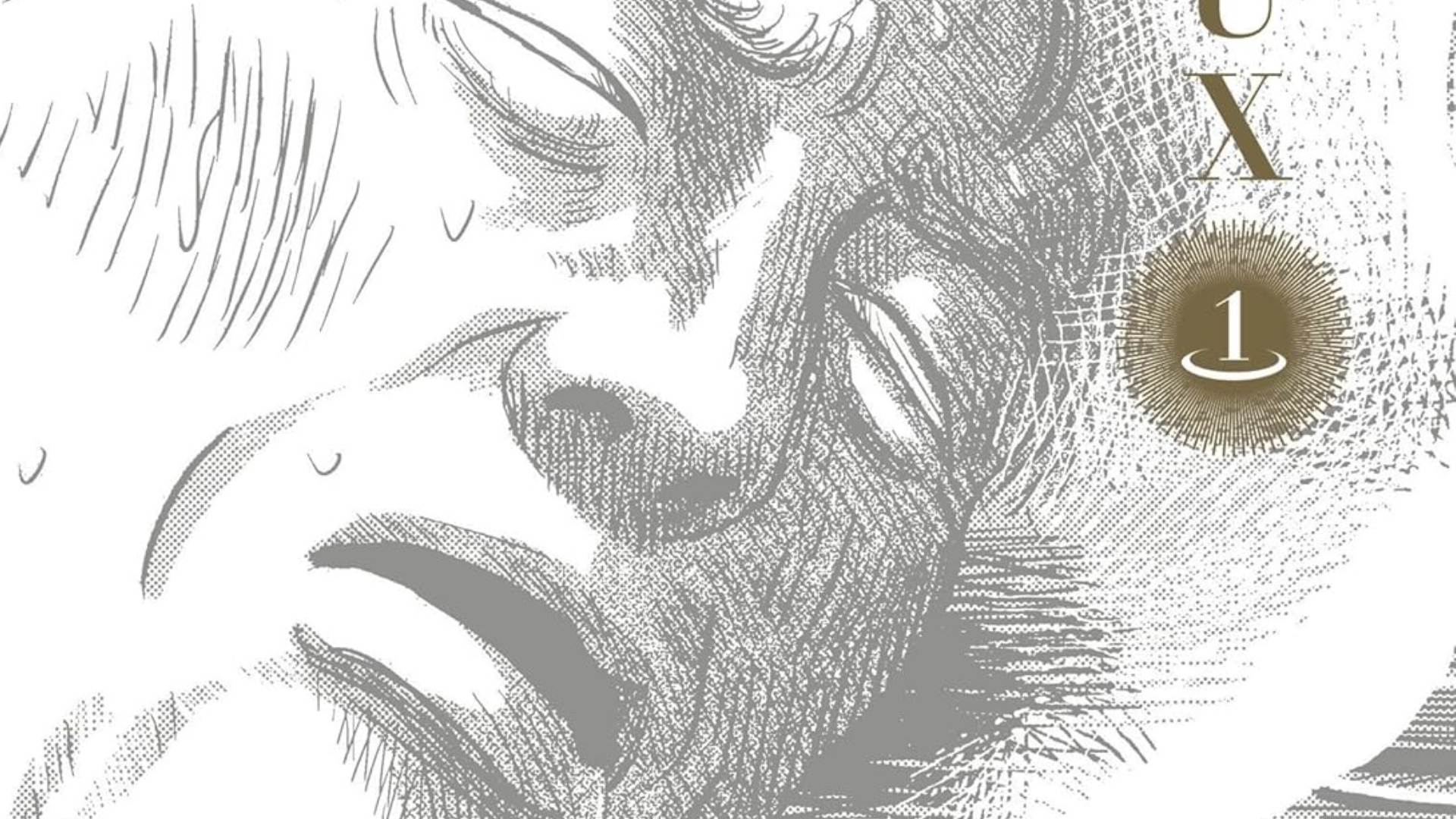
Visually, Thermae Romae Redux immediately finds what made the series unique. Mari Yamazaki draws Rome with real attention to detail, decor, architecture and bodies, in an approach that immediately gives weight to the frame. The baths, the interiors, the clothes, the faces, all this establishes a very concrete, very readable material, which anchors the manga in something solid. This care given to ancient Rome remains one of the great pleasures of the book, because it gives the slightest movement of Lucius a real visual density.
This realism serves humor very well. The more seriously Lucius and his world are drawn, the more the shift works. The manga plays a lot on this almost severe expression, on these diligent faces, on this way of making the thermal baths exist as a noble and almost sacred subject. From there, the smallest detail from modern Japan takes on a particular flavor. The laughter comes as much from the idea as from the imagery, because Yamazaki never forces her effects. She lets the precision of the drawing do some of the work.
There is also something very stable, very clean in this trait, which suits Redux well. The manga does not seek flamboyance; it advances with constant readability, a clear layout, black and white which favors reading and expression. This restraint suits it well. It lets the situations breathe, supports the observational comedy and gives the book a discreet elegance, very in tune with its subject.
Verdict
A return that immediately finds its accuracy
8/10
With Thermae Romae Redux, Mari Yamazaki relaunches her formula with almost disarming ease. The concept retains all its strength, the humor still works just as well, and this first volume easily finds this very particular mixture of seriousness, offbeatness and cultural curiosity which already gave the series its flavour. The book moves forward with real fluidity, carried by a Lucius who remains just as delightful and by a precise drawing which gives a lot of strength to the whole.
This return also has a slight melancholy to it, a little extra gravity, which avoids the impression of simple repetition. Thermae Romae Redux has lost none of its charm. Better yet, this volume 1 reminds us how brilliant this idea remains when it is held with such precision.
More in Manga & comics
Full library 8.5/10
Comanche Trail
Casterman 8/10
Sukima – Volume 1
Casterman 8.5/10
Nos accords imparfaits
Casterman 8/10
Hilda and Twig: Wake the Ice Man
Casterman 8/10
The Old Man and His Cat – Volume 10: Arching Their Backs
Casterman 9.5/10
Ces lignes qui tracent mon corps
Casterman 7/10
La Fleur des absents
Casterman 7/10
Et c’est ainsi que je suis née
Casterman 8/10
Mop & Pudding: Tea Beneath the Milky Way
Rue de Sèvres (Le Renard Doré) 8/10