
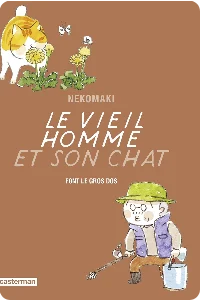
The Old Man and His Cat – Volume 10: Arching Their Backs
The fragile breath of buried memories
Score: 8/10
 By Farrel Grimwood · published · 5 min read
Contents
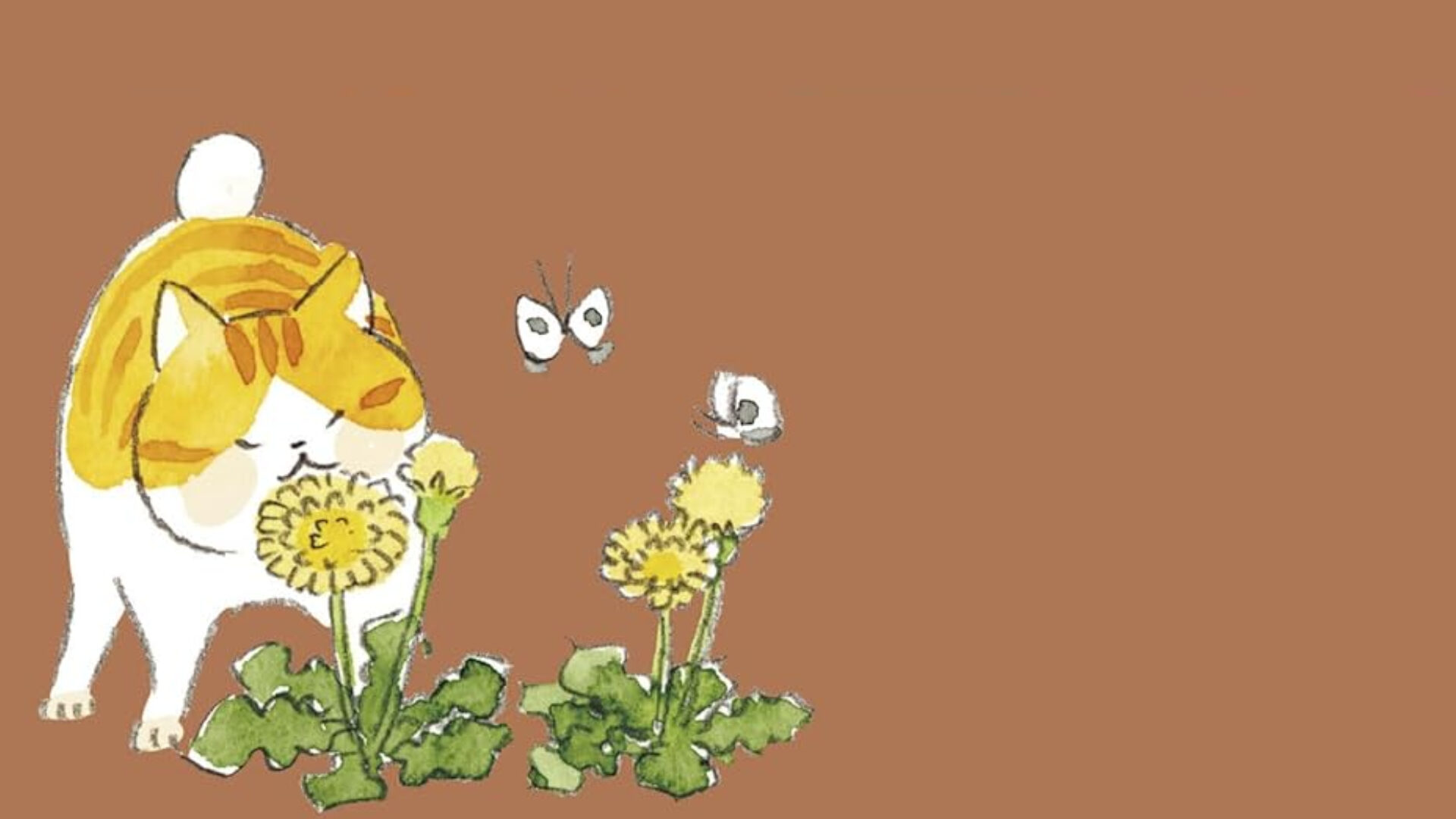
Ten volumes already, and yet the sweetness remains intact. With The Old Man and His Cat – Volume 10: Arching Their Backs, which will be published on September 17, 2025 by Casterman, Nekomaki chooses to slow down again, to delve into memory like one reopens an old trunk. It all begins with an almost childish gesture: Daikichi and Iwao, lifelong friends, unearth a treasure box on their island that they had hidden back in their school days. It is not a pirate’s chest that they find, but a concentrate of the past: damaged mangas with yellowed covers, notebooks stained with ink and corrected in red by a deceased teacher, toys which seem to have absorbed the dust of decades. Nothings, and yet nothings that weigh, that suddenly bring back the smell of classrooms, the laughter of summer afternoons, the awkwardness of a youth that only exists through these relics.
This volume does not offer a spectacular twist. It favours a slow pace and discreet emotion, the one that comes when you touch a forgotten object and the memory awakens. Arching Their Backs then becomes a metaphor: the curved backs of old men who bear their age with patience, but also the back of this box which waited, buried, to reveal its secrets. The cat, always there, observes in silence, punctuating the exchange of memories with its presence. Nekomaki thus continues his tender chronicle, where old age is not a fall but a retrospective look, where nostalgia is not a bitter regret but a gentle light that illuminates wrinkles and soothes time.
Faces that bend under time
In this tenth volume, the story does not progress through spectacular events but through the revelation of what the characters have always carried within them. The unearthed box becomes a mirror: for Daikichi and Iwao, it is not just a chest full of trinkets, it is a tangible link with their school years, with the childhood that slipped away silently. Each object found acts as a bridge: a dog-eared manga awakens afternoons spent dreaming of paper heroes, a school notebook highlights blunders corrected with a red pen, a worn toy recalls games in the dust of playgrounds. They are not treasures for those looking at them from the outside, but for them, they condense the memory, the laughter and the scratches of yesteryear.
Daikichi, an old man with a bent back, embodies serenity in the face of the passage of time. His tenderness is not demonstrative, it is expressed by a smile, by a discreet remark, by a hand that absently caresses Tama. Iwao, more melancholic, allows the fragility of an age where the past sometimes weighs more heavily than the present to shine through. Their dialogues are not numerous, but they are enough: a few sentences exchanged, inhabited silences, and the reader understands what they are saying without needing words.
Tama, as always, occupies a special place: a silent observer, he is the immutable witness of the scenes. His role is less to participate than to connect, to punctuate the moments with his innocuous gestures. Through his presence, he reminds us that life goes on, that even in the evocation of the past, there remains this simple daily life, made up of shared meals, naps in the sun and silent company.
This volume highlights less a story to follow than a state of mind to feel. The story is that of men who bend under the weight of the years but rise again with the force of memory. The nostalgia that emanates from the characters is not a wound but a reassurance, a way of accepting that the past time remains with them as long as they remember together.
The slow tempo of a reopened memory
The rhythm of Arching Their Backs refuses any haste. The reader follows these fragments as one explores familiar terrain, rediscovering on each page a variation of the same theme — memory that resists forgetting.
The structure of the story resembles a gentle progression, not towards a dramatic revelation, but towards appeasement. We begin with the excitement of the discovery, we pass through the melancholy of memories, and we end with a quiet serenity, as if the weight of the years had been lightened by this sharing.
Here, a lot of space is left to silence: large panels showing Daikichi or Iwao motionless, an object in close-up, the cat lying in a corner. These graphic breaths function as pauses, forcing the reader to slow down and contemplate. The pages do not seek to overflow with details, they prefer to emphasize the essential: a hand that trembles slightly while holding a relic, a wrinkle accentuated by shadow, a late afternoon light that stretches across the room.
This narrative choice may seem minimalist, but it perfectly embodies the logic of the series: transforming the ordinary into an event, making the mundane a source of emotion. Arching Their Backs does not offer suspense or spectacular revelations; it relies on constancy, on repetition as a language, and on slowness as a mode of reading. It is an experience that does not seek to surprise but to envelop you, to create an atmosphere where every little detail counts.
Intimate linework and the silence of the pages
In this tenth volume, Nekomaki remains faithful to the simplicity of his line, a drawing which seeks neither exuberance nor technical virtuosity, but the most direct expressiveness. The faces of Daikichi and Iwao bear the weight of the years: outlined wrinkles, tired looks but still sparkling with humanity, bodies stooped but still solid. The accuracy of the drawing lies in this mixture of fragility and dignity, which allows the reader to immediately feel old age without it ever being caricatured.
The settings are sober, almost bare: the house, the garden, the landscapes of the island. Nothing invasive, but a setting evocative enough to bring back memories. The graphic space is often restricted to the objects exhumed from the box: a damaged toy, a stained notebook, an old comic book. These close-ups give the relics the place of main actors, as if they alone became characters capable of speaking through time.
The visual rhythm is based on large, airy panels, where silence occupies as much space as the dialogues. Nekomaki plays with light: the evening shadows, the setting sun, the light filtering through the windows. These choices make nostalgia tangible, creating a bittersweet atmosphere where every visual detail is charged with emotion.
Nekomaki’s style does not seek to shine through performance: it shines through accuracy. Each line describes old age with modesty, each panel captures an emotion without overplaying it. It is not a flashy aesthetic, but an intimate aesthetic, which touches precisely because it remains at the service of the story and the characters.
Verdict
The tender weight of time rediscovered
8/10
With this tenth volume, Nekomaki does not change the formula but recalls its strength: The Old Man and His Cat is not a series that seeks the spectacular, but a chronicle of daily life where memory and friendship take all the place. Here, the opening of a treasure box becomes a metaphor: it is not only objects that Daikichi and Iwao find, but a part of themselves, buried for decades and awakened by the fragile contact of yellowed paper or worn plastic.
This volume succeeds in transforming an anecdote into a universal story. The slowness, the silences, the looks are enough to say the essential: growing old means carrying the past without denying it, it means accepting nostalgia as a gentle light rather than as a bitter regret. The cat, discreet but present, continues to punctuate this daily life where the ordinary becomes precious.
Arching Their Backs reveals a rare sincerity: a book which soothes as much as it moves, which reminds us that memories, even fragile, hold up as long as they are shared.
More in Manga & comics
Full library 8.5/10
Comanche Trail
Casterman 8/10
Sukima – Volume 1
Casterman 8/10
Thermae Romae Redux – Volume 1
Casterman 8.5/10
Nos accords imparfaits
Casterman 8/10
Hilda and Twig: Wake the Ice Man
Casterman 9.5/10
Ces lignes qui tracent mon corps
Casterman 7/10
La Fleur des absents
Casterman 7/10
Et c’est ainsi que je suis née
Casterman 8/10
Mop & Pudding: Tea Beneath the Milky Way
Rue de Sèvres (Le Renard Doré) 8/10