
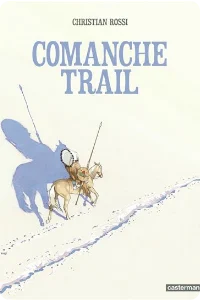
Comanche Trail
The trail and the wound
Score: 8.5/10
Images and videos
At a glance
We liked
- A western that really works on the road, the territory and memory.
- Carefully written, demanding dialogue full of tension.
- A central character marked by banishment and return.
- A staging of the landscape that goes beyond simple decor.
We liked less
- A deliberately calm rhythm, which requires a lot of attention.
- A story that relies more on restraint than dramatic explosion.
- A subject very anchored in its historical and western logic, therefore less immediate for those expecting a more direct story.
 By Farrel Grimwood · published · 5 min read
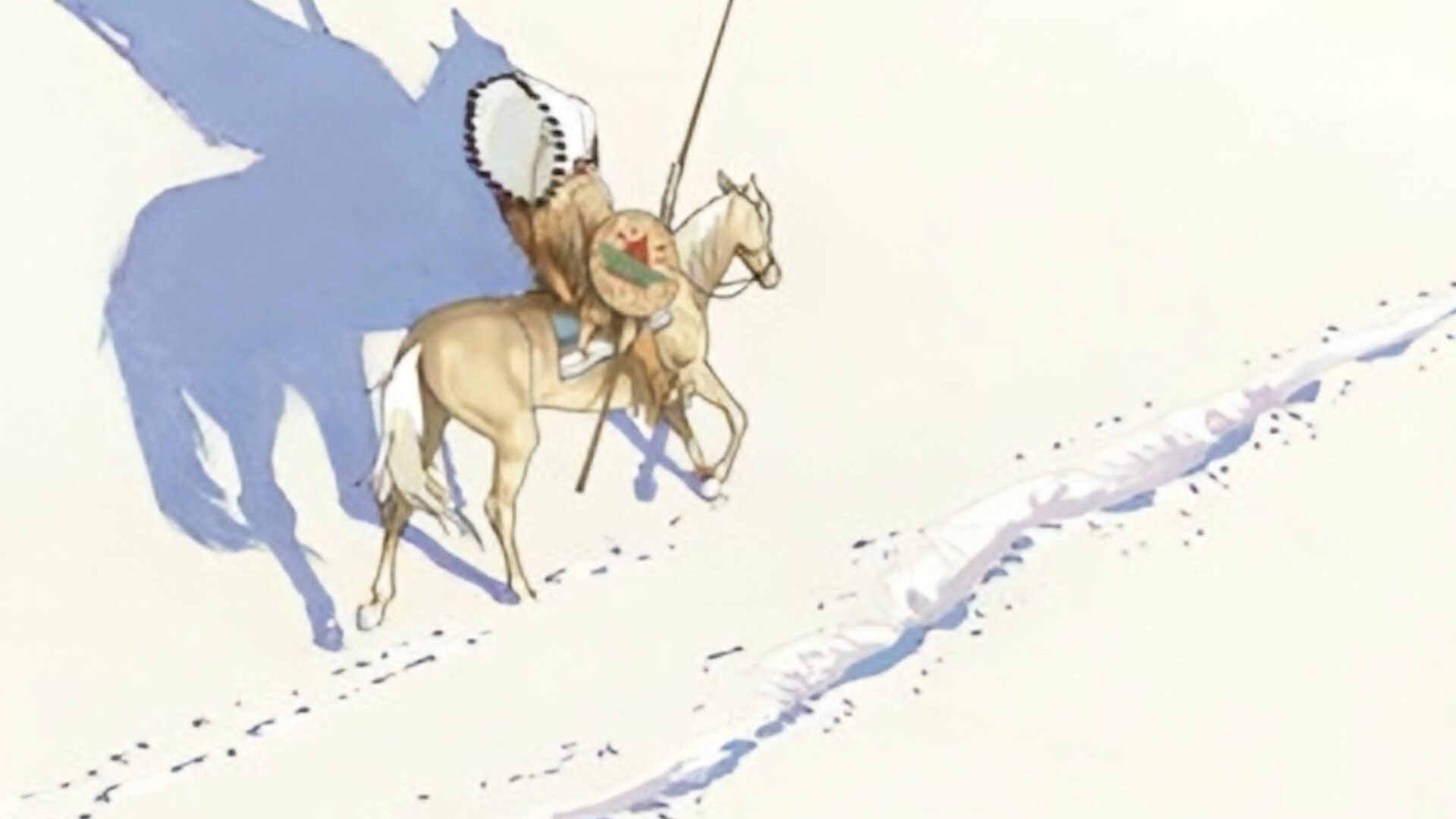
Comanche Trail has all the makings of a western that returns to its own myths with enough restraint to never seem like an academic reconstruction. Christian Rossi does not seek to make noise for noise’s sake, nor to put a sweeping epic tone on a story which would be content to line up horsemen, the guns and the dust. He prefers to work on the road, on banishment and the tension that arises when a man, after being rejected, finally resumes his path.
The graphic novel settles into a very physical, almost harsh form of western, where the journey matters as much as the destination. Comanche Trail is not just a setting or a graphic novel title: it is a line of force, a historical past, a geographical and symbolic scar which runs through the history of the territory as much as that of the characters. The graphic novel seems to have perfectly understood that a good western does not need to do too much to carry weight; all it takes is often a road, a silence, and what a man is willing to lose to continue moving forward.
An ancient road
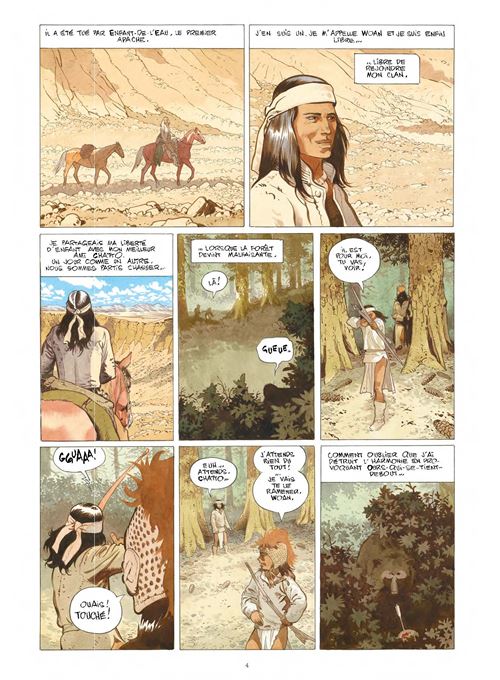
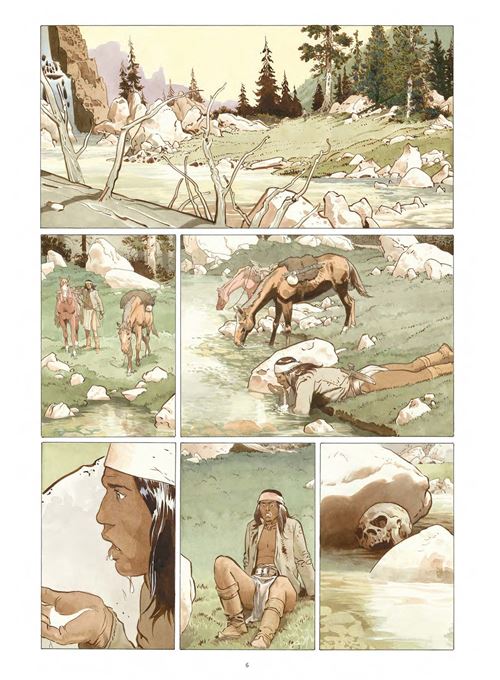
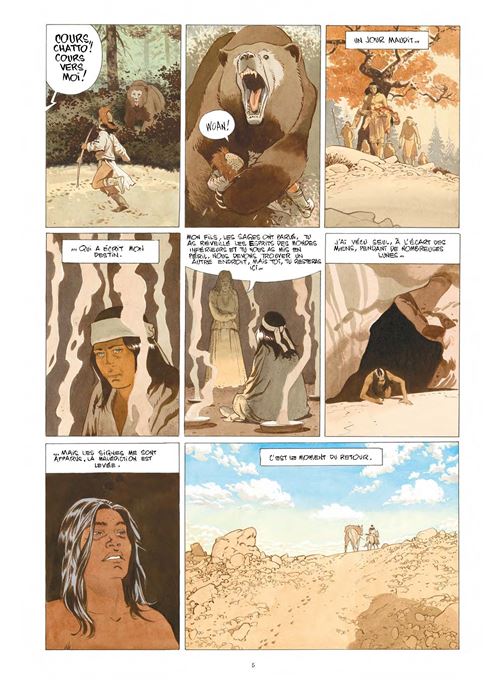
The heart of the graphic novel rests on Woan, a banished Apache warrior who can finally take the road to find his family, but whose return obviously does not take place in a peaceful space. This simple idea immediately gives depth to the story: it is not a question of a hero launched towards an abstract objective, but of a man already marked by rejection, duration and what time has done to him. The story then gains a particular density, because it not only tells of a quest, but of the human cost of reclaiming territory, identity and place in the world.
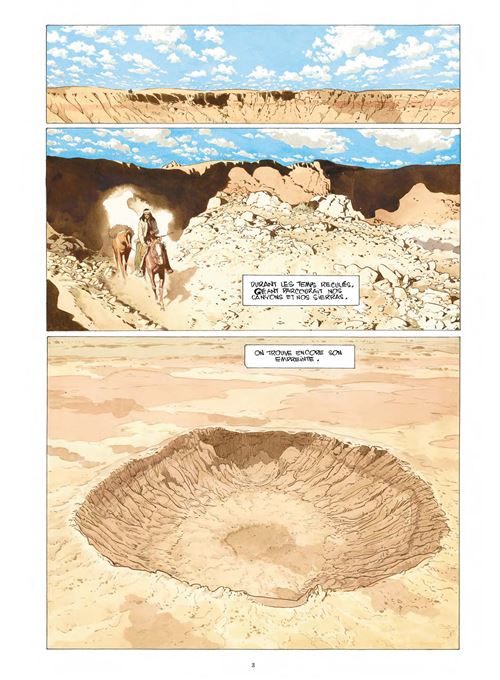
What interests Rossi above all is the friction between the legend of the western and the harsher reality of the people, the lands and the violence that crosses them. The trail itself refers to a much broader history, that of Comanche roads and their concrete use of territory, mobility, war, trade and pillaging. In the background, this gives the graphic novel something more solid than the simple drama of a return home: a feeling of real, inhabited and fought over land.
The interest of the story also lies in this refusal of smooth heroism. Woan moves forward not as a triumphant figure, but as someone navigating a world still fraught with grudges, hurts, and old orders. This way of placing a character as an extension of a collective story rather than solely in his personal trajectory gives the book its main weight.
Faces with presence
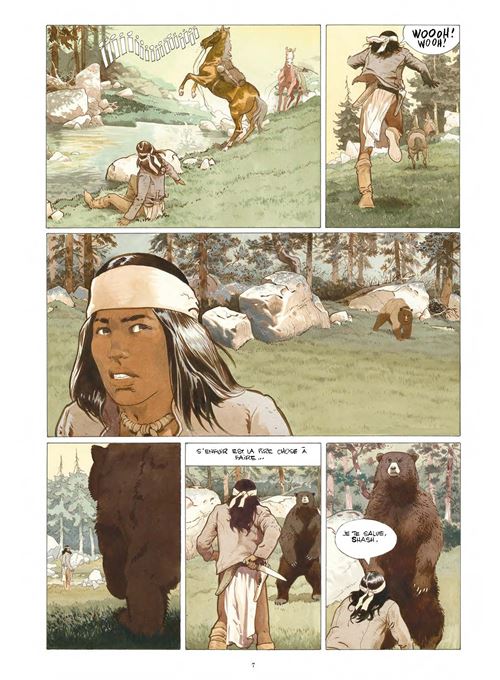
One of the most remarkable points of Comanche Trail is the care given to dialogue and the presence of the characters. This is not a comic that relies solely on its grand landscapes or its western heritage; it gives conversations room, and they are not there to fill the panels. The dialogues are elaborate, demanding, to be read without rushing, because they convey nuance, anger, the past and the balance of power at the same time.
This care gives depth to the graphic novel, but it also imposes its tempo. Comanche Trail is not a book to skim. It asks us to accept the duration of the exchanges, the weight of the words, the pace of the confrontations which are not resolved with a look or a gunshot. This relative slowness contributes to the general structure of the book, to this impression that we are not just facing one more adventure, but before a story that knows how to let its scenes breathe.
This is also what prevents the graphic novel from falling into the trap of a simple illustrative fresco. The characters are not silhouettes lined up in front of a picturesque setting. They carry a memory, a status, a relationship to the territory which can be read in their way of speaking as much as in their way of occupying space. The western is therefore not a costume; it becomes a way of writing bodies and tensions.
The weight of the landscape
Visually, the graphic novel relies on a fairly obvious strength: that of the landscape as dramatic material. The desert, the tracks, the open spaces and the more hostile zones are never mere backdrops. They define the story’s true challenges. Moving forward here already means taking a position. And to survive is to accept that the world is larger, harsher and older than the certainties of the moment.
This way of making geography speak reminds us that the western remains a territorial genre before being an action genre. Comanche Trail understands this well. The track is not just a line to follow, it is a historical logic, a place of passage, of conflict, of return and of confrontation. In this sense, the graphic novel benefits a lot from not treating its settings as simple illustration. They are the true language of the work.
There’s a real sense of focus there. The graphic novel does not try to open all fronts at once. It holds to its line, its route and its subject, and that restraint suits it well. It allows it to avoid the frequent syndrome of the modern western which seeks to be broader than its subject. Here, the tension comes precisely from the fact that everything remains centered around the same idea: finding your place in a world that never expected you.
Revenge held in check
The subtitle already suggests it: there is revenge in the air. But Comanche Trail does not use it as a simplistic driving force. Revenge is not a slogan, it is a consequence, a possibility, a weight that is added to the road instead of replacing it. This nuance changes a lot of things, because it prevents the story from being reduced to a crude mechanism for putting things right.
The western could have moved towards a pure logic of settling scores. The graphic novel prefers something more restrained, more muted, where resentment exists without overwhelming everything else. This is undoubtedly what allows it to maintain a more adult tone than its setting might suggest. The violence is not denied, but it does not take precedence over the most important question: what does a man really find when he returns to his loved ones?
This approach also gives the graphic novel a certain elegance. It does not seek to overplay the grandeur of the return nor the brutality of the conflict. It moves forward while keeping a cool head, and it is precisely this restraint that increases the tension.
Verdict
The road before the shot
8.5/10
Comanche Trail achieves what many westerns seek without always succeeding: making people feel that the road itself already tells something. By following Woan in his return to his family, Christian Rossi constructs a graphic novel which takes the time to breathe, to listen to its characters and to let its landscape impose its law. The story thus gains in structure, gravity and density, without ever sinking into academicism.
The graphic novel does not need to force its effect. It simply needs to find the right dialogue between the land and the desire to return. This is what gives it its main strength: an attentive, assured western that feels lived in, which prefers the weight of a track to the sound of a gallop.
Pros
- A western that really works on the road, the territory and memory.
- Carefully written, demanding dialogue full of tension.
- A central character marked by banishment and return.
- A staging of the landscape that goes beyond simple decor.
Cons
- A deliberately calm rhythm, which requires a lot of attention.
- A story that relies more on restraint than dramatic explosion.
- A subject very anchored in its historical and western logic, therefore less immediate for those expecting a more direct story.
More in Manga & comics
Full library 8/10
Sukima – Volume 1
Casterman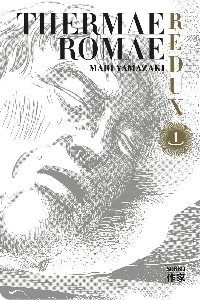 8/10
Thermae Romae Redux – Volume 1
Casterman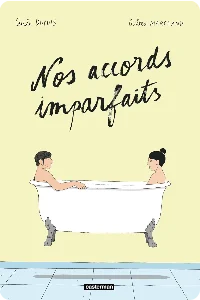 8.5/10
Nos accords imparfaits
Casterman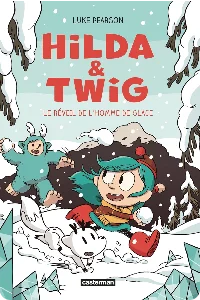 8/10
Hilda and Twig: Wake the Ice Man
Casterman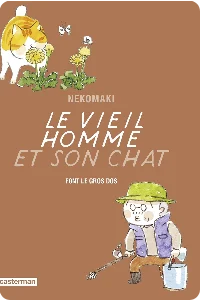 8/10
The Old Man and His Cat – Volume 10: Arching Their Backs
Casterman 9.5/10
Ces lignes qui tracent mon corps
Casterman 7/10
La Fleur des absents
Casterman 7/10
Et c’est ainsi que je suis née
Casterman 8/10
Mop & Pudding: Tea Beneath the Milky Way
Rue de Sèvres (Le Renard Doré) 8/10