
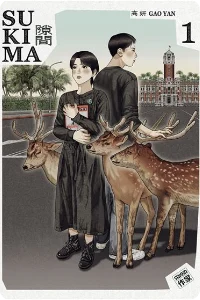
Sukima – Volume 1
The space between two lives
Score: 8/10
Images and videos
At a glance
We liked
- Yang Yang, a convincing heroine in her moments of hesitation
- An intimate story that does not force emotion
- Dialogue between Taiwan and Japan
- Gentle, precise and deeply sensitive artwork
We liked less
- A pace that is sometimes too subdued
- Political transitions not always smooth
- Secondary characters remain in the background
 By Farrel Grimwood · published · 6 min read
With Sukima, Yan Gao returns to Casterman after The Song about Green, still in this very intimate zone where youth advances with its hesitations, its wounds and its desires elsewhere. The first volume comes out on April 29, 2026 in the Sakka collection, with a 256-page black and white story, translated into French by Alexandre Fournier.
Sukima presents itself as a coming-of-age graphic novel about growth and travel. The manga also looks at political commitment, self-discovery, connected youth and this generation shared between the desire for emancipation, Japanese imagination and Taiwanese reality. Yan Gao does not seem to want to tell the story of a simple student interlude abroad. Instead, she establishes a trajectory between two countries, two ages, two ways of loving and defining oneself.
This is arguably where Sukima shines the most. The title itself evokes an interval, a space between two things. Yang Yang stands there, between what she leaves behind and what she hopes to find in Japan. Between a past that still sticks to the skin and a future that has no stable form. Between love, mourning, politics, meetings and this particular solitude of early adulthood.
Yang Yang searches for her place
Sukima follows Yang Yang, a young Taiwanese woman who leaves her country for Japan as part of a university exchange. The departure could seem like a fairly classic student interlude, but Yan Gao immediately sets it up in something more fragile. Yang Yang does not only leave to discover another country, but to breathe after a bereavement, to escape the discomfort of a toxic romantic relationship and to try to understand what she wants to do with her life.
This is what gives the manga its primary strength. Sukima does not transform its heroine into a spectacular figure. Yang Yang advances rather like a fragile, broken young woman, crossed by contradictory desires, fresh wounds, a fascination for Japan and a difficulty in finding a clear line between what she is fleeing and what she is seeking. The title speaks of a space, of an interval, and that is exactly where she finds herself: between two countries, two ages, two possible versions of herself.
Japan is therefore not only a comfortable setting for exile, it becomes a place of projection, almost a mirror. Yang Yang arrives carrying what Taiwan has left in her: her cultural references, her unfulfilled needs, her anger and her desires. In contact with the residents of her boarding house, university life and a new daily life, the manga reveals a process of growing up that is understated rather than showy. We do not follow a great metamorphosis in a straight line, we rather watch a young woman learn to occupy the space she has given herself.
This approach works because it does not reduce Sukima to a simple sentimental story. Love matters, obviously, since Yang Yang’s past remains marked by a relationship from which she seeks to escape. But Yan Gao connects this intimate emancipation to something else: the way in which a generation looks at commitment, politics, the history of Taiwan, and this fascination for Japan which never completely erases the question of origin. The manga finds there richer material than a simple story of rupture and reconstruction.
The volume also takes the risk of mixing this personal trajectory with the recent history of Taiwan. The temporal back and forth and the more political elements give the story a real density, even if they can sometimes make the reading less intense. We immediately understand the message, we sense the author’s fears and, within the framework of the story, they avoid making Yang Yang a heroine locked only in her moods. What she goes through also belongs to a country, to an era, to a generation.
The secondary characters mostly seem to exist as points of contact. The residents of the boarding house, her university encounters, the people she crosses paths with in Japan: each unsettles Yang Yang, forcing her to articulate her desires and look differently at what she thought she already knew. The manga does not necessarily seek to give everyone an immense presence from this first volume. It uses them more as points of friction, voices, presences which make exile less abstract and flight more concrete.
Sukima does not dramatize every silence, does not turn every encounter into a revelation, does not give Yang Yang too easy a cure. The story advances in fragments, by hesitations, sometimes with a slowness which can be confusing, but which corresponds quite well to its subject. Leaving a country is not enough to leave something that weighs you down. Entering a new life does not yet mean knowing how to live in it.
This first volume therefore establishes a heroine who is more interesting for her hesitations than for her certainties. Yang Yang hasn’t arrived anywhere yet. She is in movement, between intimate pain and a broader awareness of the world around her. Sukima not only tells the story of a young woman who leaves for Japan, it tells the story of this unstable moment when we begin to understand that becoming an adult also means choosing what we agree to carry with us.
A line that lets you breathe
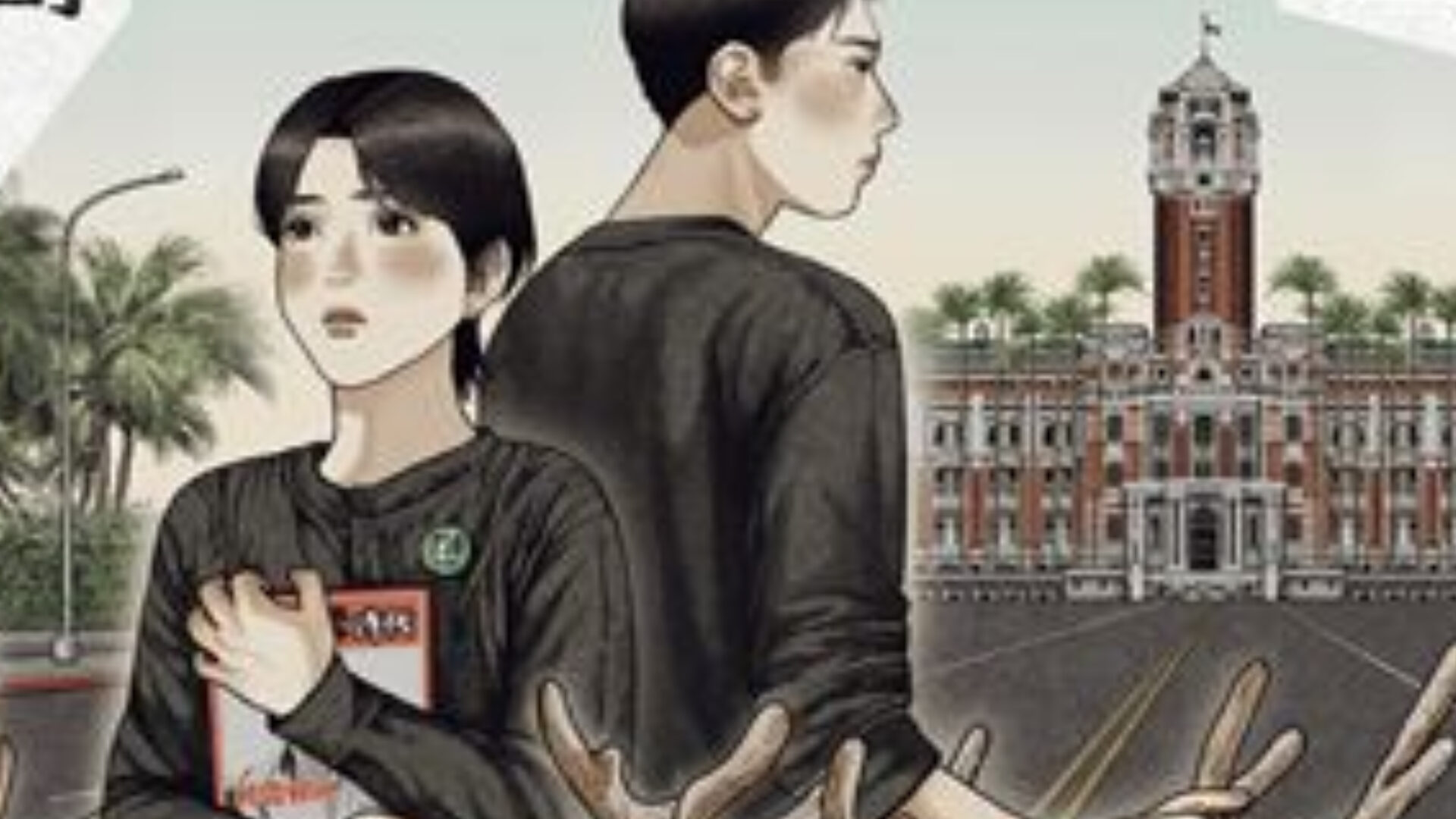
Much of the strength of Sukima comes from its artwork. Yan Gao does not seek a spectacular effect, nor a page that crushes everything with its composition. Her linework takes a different approach, with a rather intimate gentleness, an attention to the faces, to the places crossed, almost to the contemplation of the moment. The manga talks about an in-between, and the image accompanies this idea well. The characters often seem caught in suspended moments, between a conversation and what they cannot yet say.
It is this restraint that gives the volume much of its strength. Emotions do not always come through big declarations, but through a posture, a slightly shifty look, a distance between two bodies, a street that we cross without really knowing what to do with it, scenes that are repeated to better support a shift. Sukima doesn’t need to force melancholy into existence. The drawing leaves enough room for emptiness, and this emptiness sometimes tells the story better than the dialogues.
Yang Yang’s Japan is also shown with this same delicacy. The manga does not transform Okinawa into a postcard. It prefers everyday spaces, rooms, corridors, streets, places of passage, everything that makes up student life before becoming a memory. This choice suits the story well. Yang Yang doesn’t just visit a country; she learns to inhabit a place, with all that that implies of solitude, curiosity and difference.
Yan Gao’s line retains something very personal, at the crossroads of manga and a sensitivity from Taiwan. This mixture gives Sukima a discreet, but real identity. We feel an outside view of Japan, not just an imitation of its codes. It’s important, because the story speaks precisely of fascination, of displacement, of cohabitation between two cultures. The image never contradicts this subject. It extends it with a kind of unwavering logic.
The staging remains deliberately calm. The pages favor inner rhythm, small gestures, breathing. This can give the volume a real elegance, especially when the narrative lets Yang Yang simply exist in her new environment. In the end, Sukima could have done without the image to present itself in the form of a novel without losing out.
Verdict
Find your place between the pages
8/10
Sukima succeeds because it knows how to stay close to its heroine. Through Yang Yang, Yan Gao tells of a departure, a bereavement, a damaged relationship, a fascination with Japan and this very simple difficulty of becoming an adult without really knowing what we are looking for or what it means. The manga progresses slowly, with sensitive linework, carefully judged silences and a fairly accurate way of bringing into existence the in-between announced by its title.
This first volume has a real delicacy, a consistency of tone and a discreet melancholy which makes you want to follow Yang Yang further. A fragile, intimate and sincerely touching manga.
Pros
- Yang Yang, a convincing heroine in her moments of hesitation
- An intimate story that does not force emotion
- Dialogue between Taiwan and Japan
- Gentle, precise and deeply sensitive artwork
- Real coherence between the title, the subject and the setting
Cons
- A pace that is sometimes too subdued
- Political transitions not always smooth
- Secondary characters remain in the background
More in Manga & comics
Full library 8.5/10
Comanche Trail
Casterman 8/10
Thermae Romae Redux – Volume 1
Casterman 8.5/10
Nos accords imparfaits
Casterman 8/10
Hilda and Twig: Wake the Ice Man
Casterman 8/10
The Old Man and His Cat – Volume 10: Arching Their Backs
Casterman 9.5/10
Ces lignes qui tracent mon corps
Casterman 7/10
La Fleur des absents
Casterman 7/10
Et c’est ainsi que je suis née
Casterman 8/10
Mop & Pudding: Tea Beneath the Milky Way
Rue de Sèvres (Le Renard Doré) 8/10