
La Fleur des absents
A flower to revive the absent
Score: 7/10
 By Farrel Grimwood · published · 6 min read
Contents
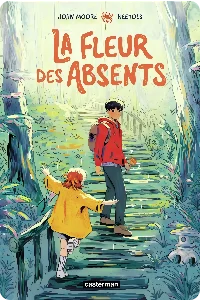
Published on August 27, 2025 by Casterman, La Fleur des absents brings together writer John Moore and artist Neetols (Maëlys Cantreau took care of the coloring). This children’s comic strip offers a contemporary story tinged with fantasy, where the pain of mourning and the quest for identity mix with an intimate plot. Presented as a work intended for both adolescents and adults sensitive to introspective stories, the album is distinguished by its desire to address strong themes (loss, isolation, difference) through an accessible story.
But does this flower, supposed to heal absences, really open the way to a significant story, or is it content with an unfinished perfume?
The intimate specters of absence
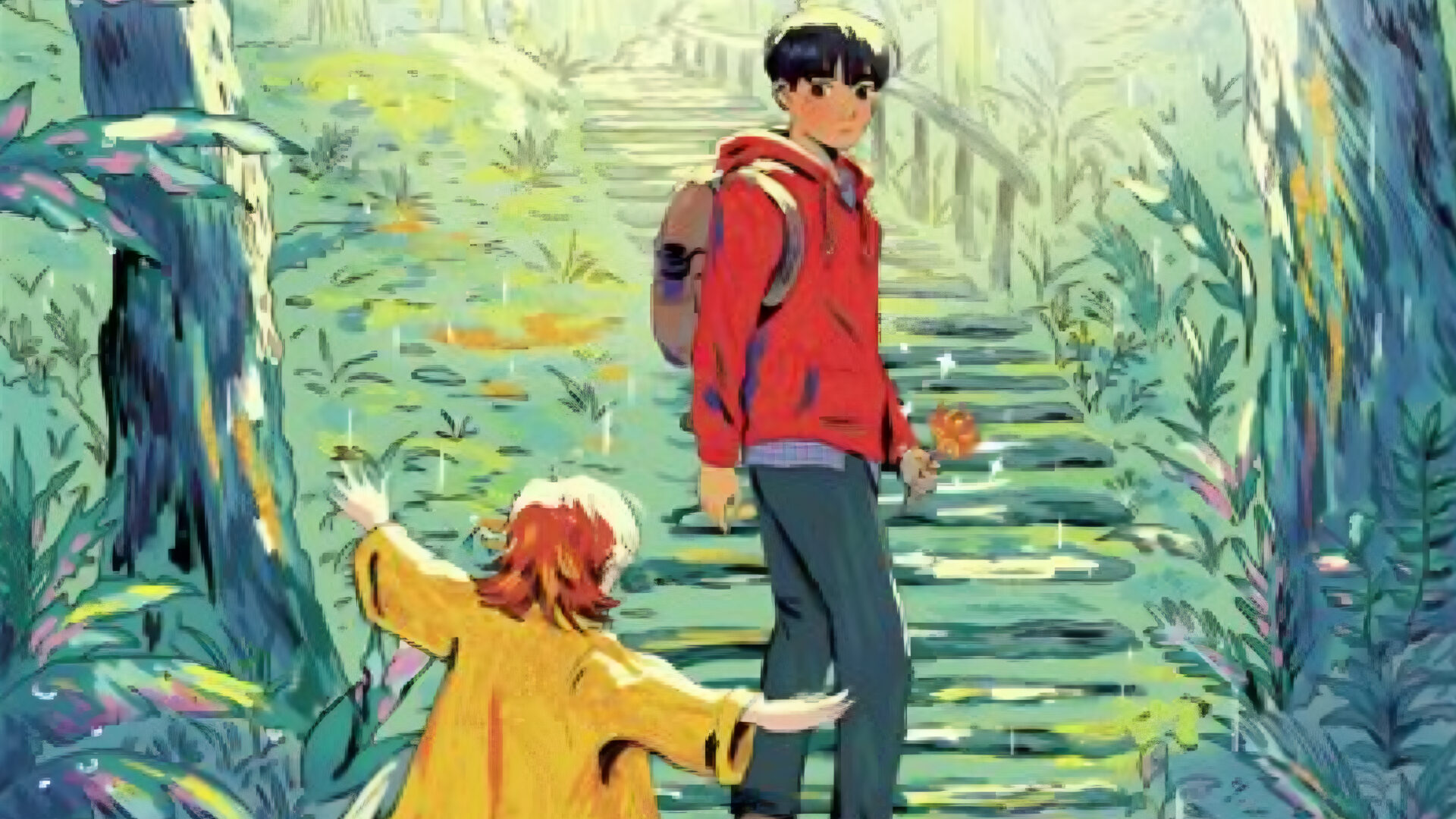
Damian is a teenager whose shoulders are too frail to carry the weight of a loss that has broken him. His mother is dead, his father has turned to a new household which no longer has room for him: all he has left is a grandfather who doesn’t talk much, and the void that nothing fills. It is in this silence, in this painful lethargy, that the improbable emerges: a flower of the absent, a mysterious relic which temporarily invokes the deceased. But the miracle slips away. It is not the expected face of his mother that emerges from the darkness, but that of Saskia, a little girl who died in opaque circumstances.
From this moment on, the story ceases to be a simple variation on mourning. It becomes an impossible cohabitation, a permanent dialogue between a living person who can no longer be alive and a dead girl whose message could not be delivered. Damian, tossed between isolation at school and simmering bullying, finds in Saskia a disconcerting presence: ironic, lively, full of energy which contrasts with his painfully withdrawn silence. As their exchanges deepen, they both become mirrors: she reflects his inability to open up back to him, and he reflects the shadows of her own absence back to her.
Secondary characters play the role of echoes or counterpoints. The grandfather embodies a generation marked by withdrawal. The high school students, reduced to archetypes of hostility or indifference (with the exception of Frank), reinforce the feeling of suffocation. But the story does not stop there: it dares to address, in sometimes too brief touches, themes of difference, orientation, shame and secrecy. Adolescence appears in all its brutality: that of an age where we define ourselves as much by what we keep silent as by what we claim.
What is striking is not so much the complexity of the scenario as the emotional density of the situations. Each appearance of Saskia destabilizes Damian, each word exchanged further widens the gulf between what he would like and what he can. The fantastic is never an ornament: it becomes the very language of lack, the incarnation of an absence too heavy to remain abstract.
But this choice has a price: by dint of multiplying the wounds, the themes, the unsaid, the story disperses and runs after itself. The album seeks to say everything, to suggest everything, and ends up leaving certain tracks unresolved. The absence is not only that of the missing characters: it slips into the silences of the story, into the conclusions sketched too quickly, leaving the reader with an impression of unfinished business, voluntary or not.
When fantasy becomes a language
Each page functions almost as an autonomous scene, with its own rhythm, its silences, its outbursts, and comes together in a story where emotional coherence takes precedence over narrative continuity. Where some children’s albums favor action or explanatory dialogue, this one imposes a slower tempo, marked by breathing, glances, and abrupt interruptions.
The fantastic, this flower which summons the absent, is not treated as a spectacular gadget. It is a staging tool, which transforms Saskia’s appearance into a dramatic shift. We do not witness a deployment of special effects or thunderous revelations: we see emergences, often discreet, which crack Damian’s reality. This sobriety gives the supernatural a rare symbolic force: the miracle blends into everyday life, and each manifestation becomes a revelation rather than a rupture.
The narrative construction is deliberately tight: a clear common thread, but a refusal to offer a classic arc of build-up and spectacular resolution. The story progresses in fragments, oscillating between school life and supernatural tête-à-têtes, until a rapid conclusion, almost cut short. This choice comes at a price. On the one hand, it perfectly embraces the theme of absence, this lack that is never filled; on the other, it leaves the impression of an unfinished story, of a puzzle with a few pieces missing.
In terms of graphic staging, Neetols opts for economy of means. The settings are often minimalist, the faces concentrate most of the expression. The framing varies between raw frontality, which underlines the solitude of the hero, and more dynamic compositions during emotional confrontations. This stripped-down approach forces the reader to concentrate on the intensity of the exchanges, on the looks and the silences. But it also generates a certain visual repetition, which can become boring as you read.
Where other children’s stories multiply narrative artifices, La Fleur des absents chooses a staging that is both intimate and sober, at the risk of frustrating those who would expect a broader development or a more classic dramaturgy. This paring down is its strength and its limit: it magnifies the raw emotion, but limits the potential richness of the universe sketched.
Chiaroscuro faces, naked emotions
Visually, La Fleur des absents first stands out with the unique touch of Neetols. The artwork, openly influenced by manga but softened by a more European approach, does not seek excess detail or ornamental virtuosity. The settings are reduced to the essentials, the backgrounds often refined, almost erased, to better refocus attention on the characters. Everything is played out in the looks, in the inflection of a mouth, in the tension of a face. It’s a frontal staging of the intimate, which conveys Damian’s flaws and Saskia’s constant energy without resorting to grandiloquence.
Expressions are at the heart of the graphic device. Damian is drawn with constant restraint: low shoulders, downcast eyes, a silhouette that always seems withdrawn. Saskia, on the contrary, radiates through her gestures, her abrupt smiles, her assertive postures. This visual contrast creates a dramatic rhythm which compensates for the sparsity of the settings.
The color, entrusted to Maëlys Cantreau, accentuates this chiaroscuro atmosphere. Pastel tones dominate, with bright touches that emerge during supernatural apparitions. These chromatic variations translate the passage from the banal to the fantastic, and mark each return of Saskia with an immediately perceptible intensity. The spectrum of colors thus becomes a narrative vector in its own right: cold and neutral for everyday life, warm and saturated during the irruption of the absent.
This visual bias has an undeniable coherence, but it has its limits. By dint of minimalism, some pages end up looking the same. The reader sometimes loses the impression of visual progression, as if the graphic universe remained prisoner of its own choices of outline. This lack of variety slows down immersion in secondary scenes and weakens the impact of certain revelations.
In terms of atmosphere, the album favors a muted tone. No overload of action or graphic debauchery: the melancholic climate remains permanent, punctuated by emotional outbursts. This sobriety serves the purpose, but it requires active involvement from the reader, who must accept the void, the silences, the absences.
La Fleur des absents builds a strong visual identity, based on restraint and suggestion. Its visual language is that of economy and contrast: an art of the little, which sublimates emotion but risks stifling diversity.
Verdict
A fragile flower, but whose scent persists
7/10
La Fleur des absents is a story that chooses modesty instead of excess, the intimate instead of the spectacular. You will not find a gripping intrigue or a dazzling resolution: you will cross a path of silences, glances and poorly closed wounds. Damian, in search of his late mother, finds in Saskia a fortunate companion, half-ghost, half-sister, who reveals his shortcomings as much as his strengths. This duo alone carries an album which prefers to suggest rather than resolve, and whose narrative economy embraces the central theme of absence.
This restraint builds the strength of the album, but also its limit. By multiplying themes without always delving into them, the album sometimes gives the impression of being scattered. The abrupt conclusion leaves a taste of unfinished business, reinforcing the feeling that everything has not been said. But this is perhaps its coherence: telling the story of absence also means accepting not to fill all the voids.
More in Manga & comics
Full library 8.5/10
Comanche Trail
Casterman 8/10
Sukima – Volume 1
Casterman 8/10
Thermae Romae Redux – Volume 1
Casterman 8.5/10
Nos accords imparfaits
Casterman 8/10
Hilda and Twig: Wake the Ice Man
Casterman 8/10
The Old Man and His Cat – Volume 10: Arching Their Backs
Casterman 9.5/10
Ces lignes qui tracent mon corps
Casterman 7/10
Et c’est ainsi que je suis née
Casterman 8/10
Mop & Pudding: Tea Beneath the Milky Way
Rue de Sèvres (Le Renard Doré) 8/10