

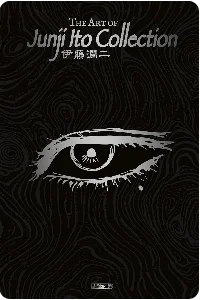
The Art of Junji Ito Collection
An art book worth a closer look
Score: 8.5/10
At a glance
We liked
- The connection between original pages, preparatory drawings and images from the anime.
- Story-by-story organisation that makes reference and comparison easier.
- Additional interviews with Junji Ito and Shinobu Tagashira.
- A large format edition and careful reproductions.
We liked less
- Comments which describe rather than analyze adaptation choices.
- The interview with Shinobu Tagashira would have deserved more space.
- Presentations and images that reveal part of the stories.
 By Farrel Grimwood · published · 5 min read
Contents
Adapting Junji Ito into animation poses a fairly obvious problem: much of his horror relies on the drawing itself. The distorted bodies, the faces and the profusion of details matter as much, if not more, than the stories. In 2018, studio DEEN tackled several of his stories with Junji Ito Collection, under the direction of Shinobu Tagashira. An uneven adaptation, whose graphic choices become interesting to examine when compared to the original pages.
This is precisely the subject of The Art of Junji Ito Collection, published by Mangetsu with the participation of Crunchyroll. Jonathan Clements accompanies the production documents with texts revisiting the stories and their adaptation. We must clearly distinguish these 232 pages from the Junji Ito Artbook already published by Mangetsu: we are here behind the scenes of a specific series. What do these drawings really teach us about the transition from manga to the screen?
From one story to another
The book covers the stories adapted one by one, with a presentation of their plot and various documents allowing us to follow their transformation. We find in particular Tomie, the young woman whose beauty provokes murderous obsessions, as well as Soïchi, the child fond of curses and nails. The selection also allows us to return to briefer stories, without limiting the work to Junji Ito’s best-known characters.
Organizing by story is a good choice. It allows you to keep the situation and the characters in mind while looking at the visual development work. A presentation by profession, with all the settings on one side and all the faces on the other, would certainly have made the comparison more laborious. Here, the documents remain linked to the story for which they were produced. The book is therefore easy to consult when you want to come back to a particular adaptation.
This approach, however, requires a minimum knowledge of the stories. The summaries and images reveal parts of the stories, which counts a lot for an author who often prepares an appearance or a transformation before showing it. It is better to have discovered the stories elsewhere before exploring how they were adapted. It would be a shame to encounter some of the most striking images in an explanatory feature rather than at the time chosen by the mangaka.
From line to movement
The interest comes from the connection between the manga pages, the preparatory drawings and the images from the series. Character studies shows how their appearance is adapted for animation. Storyboards, the drawings that plan shots, allow you to look at the staging before the final result. For someone who knows mainly manga, these documents provide concrete elements to understand the work of the DEEN team.
The comparison also reveals what adaptation loses along the way. In Ito, the shadows and the many lines directly contribute to the unease. A shape becomes difficult to identify because the drawing emphasizes its texture, folds or distortions. When simplified for animation, this same shape can appear much more ordinary. The problem therefore goes beyond the resemblance between two faces: it is sometimes the effect produced by the image that changes.
The book benefits from leaving these differences visible. The documents are interesting even when they do not favour the series. They remind us that an adaptation can preserve a character, a situation and a framing without finding all the force of the page. This is also what distinguishes this volume from a simple collection of promotional images: several stages show how the final result took shape.
The case of Hell’s Funeral, a six-page story in its manga version, poses another problem. Adapting such a brief text requires thinking about its development and its duration on screen. This question is more interesting than a simple check of faithfulness. What seems fast on paper does not automatically result in a good animated sequence, and the book is right to focus on this difficulty.
Images before analysis
The texts place the stories in context, but often remain descriptive. We would have liked more explanations on the staging decisions or the graphic compromises. The comparison still relies heavily on the reader, while the documents make you want to understand why certain solutions were chosen.
The two interviews placed at the end of the book provide a welcome addition. Junji Ito discusses his inspirations and his relationship to adaptation, while Shinobu Tagashira discusses the work of adapting the stories. The two points of view complement each other: on the one hand, the author of the stories; on the other, the person responsible for their animated production. Tagashira’s interview is however shorter, while this production experience would have deserved more space.
These exchanges give a little more substance to a book dominated by iconography. Above all, they avoid leaving the drawings totally separated from the intentions of their authors. We would simply have liked to find this precision more often in the sections devoted to the different stories, where the documents allow us to discuss the choices made.
A nice volume for a specific audience
Mangetsu takes care of the presentation with a large format, a hard cover and glossy paper. The quality of the reproductions is important for a work of this type, since part of its interest lies in the possibility of distinguishing the details of the drawings. The pages give enough space for the documents to be viewed on their own, rather than serving only as illustrations for comments.
The interest in purchasing depends a lot on what you are looking for. To discover behind the scenes of the anime or compare its images to the manga, the subject is well covered. To find above all the drawing of Junji Ito in all its richness, a collection devoted directly to his illustrations will be more appropriate.
The title may create ambiguity on this point. An essential part of the documents comes from the work of the animation team, even if everything starts from the work of the mangaka. This is not a defect, but it is an important difference before purchasing, especially for readers who are mainly looking for illustrations drawn by Ito himself.
Verdict
A nice complement to the anime
8.5/10
The Art of Junji Ito Collection brings together interesting documents in an edition that leaves room for them. The story-by-story organisation, comparisons with the manga and the two interviews give good reasons to focus on it. Even the limits of adaptation become useful when they allow us to better understand what the original drawing brings to the stories.
However, the texts remain too limited to constitute an in-depth study of the adaptation. The book is especially valuable for its images and production documents. A nice complement to the 2018 series, rather than a first discovery of the mangaka's work.
Pros
- The connection between original pages, preparatory drawings and images from the anime.
- Story-by-story organisation that makes reference and comparison easier.
- Additional interviews with Junji Ito and Shinobu Tagashira.
- A large format edition and careful reproductions.
Cons
- Comments which describe rather than analyze adaptation choices.
- The interview with Shinobu Tagashira would have deserved more space.
- Presentations and images that reveal part of the stories.
More in Books
Full library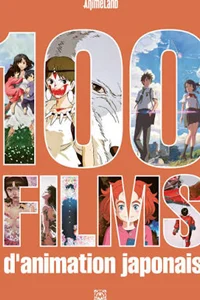 8/10
100 Films d’animation japonais
Yniss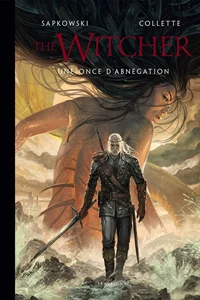 8/10
The Witcher: A Little Sacrifice
Bragelonne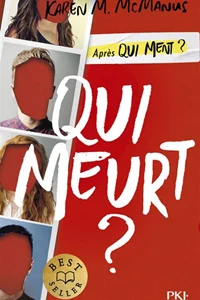 7/10
One of Us Is Next
PKJ 9/10
The Star That Fell from the Sky
 8/10
Mégères et vamps face caméra
L’Harmattan 8/10
Strange Maps
Seuil 7.5/10
Quelque part dans la région du Kinki
Seuil 7.5/10
L’Élue du Dragon Volume 1: Le Voyage de Mia
Ynnis Éditions 8/10
Comme dans une romance de Noël… ou pas !
Hauteville 9/10