
Exceptional Motorcycles
Fifty motorcycles and more than one way to stand out
Score: 7.5/10
At a glance
We liked
- A selection that gives big tourers as much of a place as track bikes
- Models that illustrate several links between road bikes and racing
- The combination of photographs, model histories and technical data
- A large format that suits close looks at bodywork and mechanical details
We liked less
- Some anniversary editions owe most of what sets them apart to their finish
- Fifty models in 224 pages leave little room to trace their engineering lineage
 By Farrel Grimwood · published · 5 min read
Brough Superior’s AMB 001 Pro was built for the track. The Honda Gold Wing made its name over long distances. Putting those two bikes side by side makes the title Exceptional Motorcycles much harder to pin down. Aston Martin and Brough Superior set out to generate downforce at high speed. Honda has been working since 1975 to make long days on the road more comfortable. Both are ambitious projects. They demand very different qualities.
In this 224-page coffee-table book from Hugo Image, Michaël Levivier brings together fifty models. Sport bikes, adventure bikes, big tourers, naked bikes and cruisers share the pages, with photographs, spec sheets and model histories. The range is broad enough that engine displacement and power alone no longer determine how interesting a bike is. The book still has to explain what earns each one its place.
Three ways to talk about racing
The AMB 001 Pro immediately gives the selection some weight. Its 997 cc twin is rated at 225 hp, and the two brands capped production at 88 bikes. The most interesting detail, though, is at the front. A duct channels air over the rider, and aerodynamic fins increase downforce. The shape of the bike addresses a specific problem. It has to manage airflow around both the machine and its rider. The production cap explains the rarity. The work on the fairing explains why this motorcycle deserves more than a line of figures.
The Ducati Desmosedici RR starts from a different idea. Ducati turned its MotoGP machine into a road-going version and built 1,500 of them. That change of purpose is what makes the model interesting. The Brough benefits from the freedom that comes with building a track-only bike. The Ducati earns its place by bringing engineering developed for racing onto the road. Putting the two side by side tells more about how they were designed than grouping them together as rare sport bikes.
The MV Agusta Brutale 1000 RR Assen complicates the comparison further. Its 300 numbered bikes celebrate the brand’s 35 wins at the Dutch circuit. Carbon fiber wheels set this edition apart, while its mechanical underpinnings come from the existing Brutale 1000 RR. Here, racing is chiefly what gives the name its meaning. These are three very different ties to the track, and bringing all three into the same book is one of Levivier’s better decisions. “Racing” can mean what a bike is built for, where its engineering comes from, or a record of wins that the manufacturer wants to keep alive.
The weight of anniversaries
The Gold Wing broadens the book’s scope. Since its launch in 1975, the Honda has been built around a task that sounds simple and is much harder to pull off. It has to cover long distances in comfort. What makes the bike interesting is how long Honda has kept at it. Making room for the Gold Wing recognizes that a motorcycle can make history by changing what riders can reasonably expect from a day in the saddle. That gives the big tourers a reason to be here in a book where the sport bikes supply the most spectacular figures.
The Fat Boy Gray Ghost is a more mixed case. Harley-Davidson marks the Fat Boy’s 35th anniversary with a mirror finish created by depositing metal on the fuel tank and fenders. Applying the process to parts this large is a first for a production Harley. That makes it an interesting manufacturing choice in its own right. The Gray Ghost shares its mechanical underpinnings with the Fat Boy of the same model year. The process deserves attention. The anniversary edition carries less weight in a selection of fifty motorcycles when the base bike already does most of the work of justifying its place.
The two examples show how much the choice of version matters. The Gold Wing’s history earns it a place because of what the bike brought to touring. For the Gray Ghost, the question is what this edition brings to the Fat Boy. Levivier is right to take the finish seriously. Including so many commemorative editions makes the selection less discerning once rarity and tribute start to serve the same purpose.
What a profile can explain
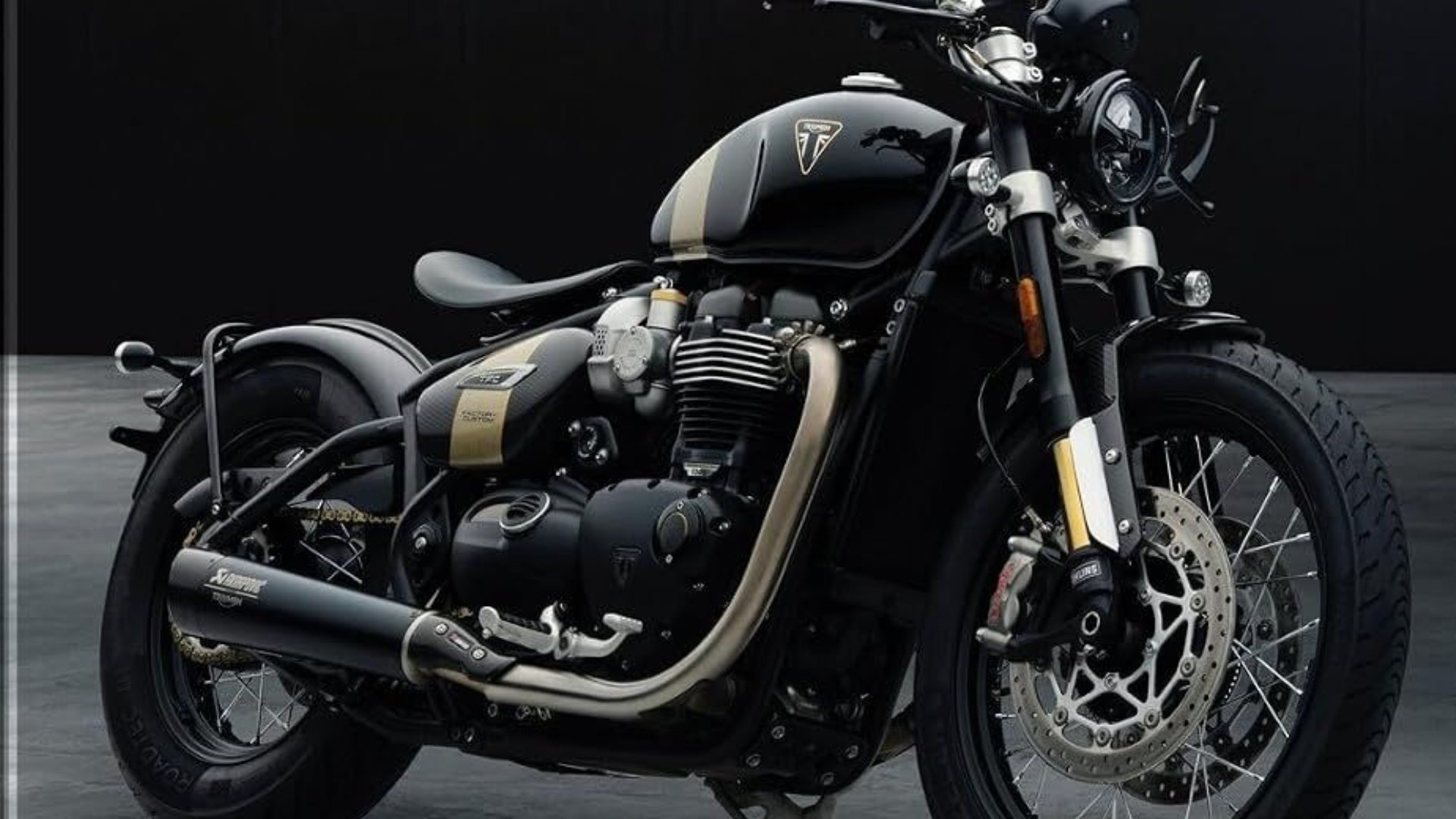
At nearly 26 by 32 cm, the hardcover is sized for its subject. A motorcycle photograph benefits from enough space to make out where an exhaust pipe runs, the shape of a wheel or how the fairing wraps around the engine. Figures alone do a poor job of explaining those details. Pairing photographs with the model’s history makes particular sense for the Gray Ghost, whose finish shows the result of a manufacturing choice, and the AMB 001 Pro, whose bodywork meets an aerodynamic need. That is where the large format earns its keep.
Spec sheets provide useful reference points. It still matters which figures are being compared. For the Brutale Assen, MV Agusta lists 186 kg dry and 197 kg in running order. Eleven kilograms separate two accurate figures for the same bike in different conditions. The value of a technical profile depends on that kind of precision. A table makes it easy to look up a figure. The text has to give it enough context to explain what it measures and why it matters to the bike’s story.
The number of models sets a hard limit. Spreading 224 pages across fifty motorcycles leaves an average of fewer than five pages per bike, even before setting aside the pages that cover the book as a whole. Within that space, a spec sheet, photographs, a model history and any racing record compete for room. The format makes it easy to move from one brand to the next and stop at an unfamiliar bike. It leaves little room for a bigger question, such as how the big touring bike evolved or everything Ducati had to adapt to turn its MotoGP machine into a road bike. The variety makes the book easy to pick up again for a few pages at a time. Each detour leaves a little less room to dig deeper.
Verdict
The choice of bikes makes the book
7.5/10
Exceptional Motorcycles gives good reasons to go from a track-only Brough to a Honda built to eat up the miles. That’s where Michaël Levivier’s selection is most convincing. The Desmosedici RR earns its place for bringing race engineering to the road, and the Brutale Assen for the link between a brand and a circuit. Each offers a different answer to the question posed by the title.
The space given to commemorative editions is less convincing when the finish accounts for most of the difference. And fitting fifty models into 224 pages makes for plenty of discoveries at the cost of depth. The book is worth reading for that variety, especially when a bike sparks curiosity about a design decision. It’s a selection with a personality of its own, best explored one motorcycle at a time.
Pros
- A selection that gives big tourers as much of a place as track bikes
- Models that illustrate several links between road bikes and racing
- The combination of photographs, model histories and technical data
- A large format that suits close looks at bodywork and mechanical details
Cons
- Some anniversary editions owe most of what sets them apart to their finish
- Fifty models in 224 pages leave little room to trace their engineering lineage
More in Books
Full library 7.5/10
Manhattan Rivals
Pocket Jeunesse 10/10
Sépia, tome 2 : Le complot de Flobourg
Pocket Jeunesse 8/10
100 Films d’animation japonais
Yniss 8/10
The Witcher: A Little Sacrifice
Bragelonne 7/10
One of Us Is Next
PKJ 9/10
The Star That Fell from the Sky
 8/10
Mégères et vamps face caméra
L’Harmattan 8/10
Strange Maps
Seuil 7.5/10
Quelque part dans la région du Kinki
Seuil 7.5/10