

Leads Mouvement
Society under permanent influence
Score: 8/10
 By Farrel Grimwood · published · 6 min read
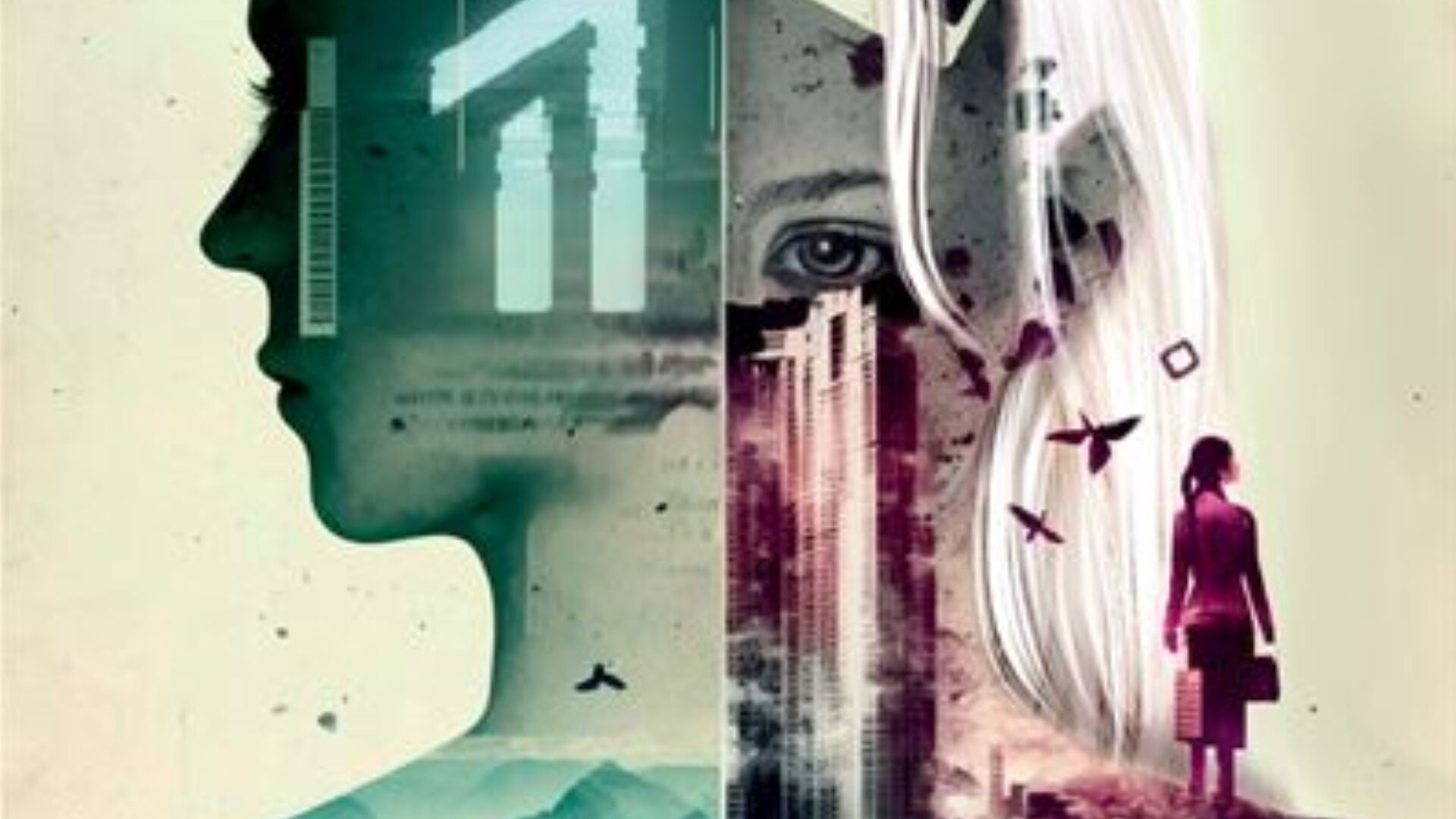
Published in November 2023 by Hello Éditions, LEADS: Mouvement plants its dystopia in a future where digital appearance replaces all reality. We notably follow Gally, an influencer at the top of a social hierarchy imposed by the “Leads”, and Aradia, a worker invisible to the eyes of the network; both forced, despite themselves, to participate in a brutal game show that exposes their lives to the cameras.
The novel depicts a society where each individual receives an assignment upon leaving the Institution: a “1Plant” implanted, a role to play, visibility to achieve. Between public parades, inner doubts and permanent staging, the story questions the border between truth and spectacle: when the “movement” becomes only repetition.
But behind this relentless social mechanism: do this game show, these millions of followers, this quest for visibility protect its participants or do they crush them under the weight of the gaze?
Faces in the light
In LEADS: Mouvement, Tony Lecoq deploys a universe where everything is coded, calibrated, evaluated. Each human being lives under the control of a system of digital notoriety, the Leads, which dictate the social status, visibility and even the moral value of individuals. In this world saturated with images, we no longer live, we put ourselves on stage. The novel opens with this permanent tension between performance and identity, between the true and the constructed.
At the center of the story, Gally, a model influencer, embodies manufactured perfection. Every gesture, every smile, every word she pronounces is filtered, approved, broadcast. She reigns over an empire of images but already senses the fragility of her position. Behind the makeup and the screens, a dull anxiety sets in: that of disappearing, of being replaced, of being forgotten. Lecoq succeeds in making her terribly human, lost between the cynicism and panic of a world that does not tolerate slowness.
Opposite her, Aradia, an anonymous worker, lives on the margins of the system. Invisible, condemned to exist off-camera, she symbolises the other side of the mirror: that of the forgotten people who feed the network without ever benefiting from it. When destiny leads her to cross paths with Gally, the novel shifts into a dynamic of two voices: that of the top and that of the bottom, of light and shadow. This contrast structures the story and gives it its political depth.
Lecoq relies on this opposition to reveal the cynicism of a society where hierarchy is based on visibility. It is no longer money or power that governs, but attention. The characters do not fight to live, but to exist in the eyes of others. And in this fight, no one wins: the dominants wear themselves out to maintain their image, the dominated exhaust themselves trying to achieve it.
The writing, rhythmic and precise, alternates between introspection and dramatic tension. The dialogues click like advertising slogans, the descriptions refer to images of flows and neon lights, screens and blurred faces. Lecoq masters his tempo and constructs a story where each character becomes a distorted reflection of our own relationship to visibility.
But beyond social criticism, LEADS: Mouvement talks about loneliness. That of Gally, prisoner of her image; that of Aradia, condemned to silence; that of all these bodies which move in a system where to move is already to obey.
The theater of control
The world of LEADS: Mouvement is based on relentlessly precise social mechanics. Tony Lecoq constructs a dystopia that doesn’t seem like it, a universe so close to ours that it becomes suffocating. Everything works according to a flow logic: likes, shares, visibility, influence. “Leads”, these implants which measure, classify and sanction, replace institutions, laws and morality. The human being is no longer just one piece of data among others, a product that must be optimized to exist.
The novel excels in this description of soft control: no militia or visible tyrant, just a system that feeds itself. Membership is total, voluntary submission. Lecoq transforms the most banal gestures into political acts. Everyday life becomes spectacle, spectacle becomes norm. This is where the strength of the book lies: in this absence of break between entertainment and servitude.
The style, lively and almost cinematic, embraces this logic of flow. The short chapters follow one another like sequences, the points of view alternate without transition, imitating the permanent zapping of the digital world. Lecoq does not dwell on details: he cuts, juxtaposes, accelerates. The text moves like a news feed: cold, hypnotic and sometimes disembodied. This formal choice gives the novel continuous tension, but can also tire some: LEADS: Mouvement leaves no respite, neither for its characters nor for its reader.
The symbolic dimension slips into the decor: advertising neon lights that replace the sky, streets crisscrossed with sensors, faces without gaze. Each image refers to the disappearance of spontaneity. The city of the novel resembles a gigantic theater stage where everything is measured, timed, validated. Even the revolts are spectacular, calibrated for the cameras. Lecoq describes a world that has integrated its own criticism and transformed it into entertainment.
The novel also questions the fatigue of existing in a system where every movement is monitored. “Movement” no longer means freedom, but agitation. The characters exhaust themselves producing gestures that no longer have meaning, like dancers condemned to continue to avoid silence. Lecoq perfectly captures this contemporary anguish: that of constantly having to prove that we are still here.
The strength of the book is that it never moralizes. It does not denounce; it shows. It lets the reader understand that this dystopia is not a possible future, but an amplified present.
The reflection and the noise
LEADS: Mouvement is striking for the precision of its atmosphere. Tony Lecoq does not seek beauty, he seeks clarity: writing cut to the bone, stripped of lyricism, where each word functions like a pixel in a continuous flow. The prose adopts the logic of the networks it describes: short, visual, fragmented sentences. We sometimes have the impression of reading an edited text, more than written; a succession of mental images that scroll at the speed of a screen that we scroll endlessly. This syncopated, almost mechanical writing gives the novel a hypnotic rhythm.
Lecoq uses a cold but never impersonal language. The words click, the transitions are sharp, and emotion is born precisely from this refusal of emotion. When Gally looks at herself in the screens, or when Aradia fades into the crowd, the style becomes a mirror: smooth, glossy, without roughness. The author masters this distance perfectly; he does not describe the void, he makes it felt.
The visual universe of the novel imposes itself with immediate force. LEADS: Mouvement does not multiply its settings; it repeats them to exhaustion: shopping centres saturated with advertising, windowless flats, industrial zones where neon replaces the sun. This repetition creates discomfort, a feeling of progressive suffocation. Lecoq does not show a city, but a state of the world: one where everything has already been seen, filmed, commented on.
Every scene seems to have its own background noise: the constant murmur of the network, the whirring of drones, the whisper of holograms. You can almost hear the digital saturation through the sentences. Even silences have weight; they become ruptures, moments of humanity that contrast with the social uproar.
The tone remains consistent from start to finish: clinical but sensitive, technological but deeply human. Lecoq does not seek to seduce through form, he wants to disturb through coherence. The reader is not invited to dream of this world, but to recognize it.
Verdict
The dizziness of transparency
8/10
LEADS: Mouvement is not a science fiction novel, it is a clinical observation of our present. Tony Lecoq dissects the pulse of the present with a watchmaker’s precision, examining an age that confuses light with visibility. We move forward in this book as in a two-way mirror, observing characters who fade as they appear. Nothing is spectacular, everything is true. The text does not seek to convince or moralize, it exposes the void and lets it resonate.
The beauty of this work comes from its coldness, from its way of describing the modern dependence on attention as a quiet illness. When you close the novel, you do not feel the fear of a possible future, but the fatigue of a present already accomplished. LEADS: Mouvement acts as a faint signal, a barely perceptible whisper in the din of the connected world.
More in Books
Full library 7.5/10
Manhattan Rivals
Pocket Jeunesse 10/10
Sépia, tome 2 : Le complot de Flobourg
Pocket Jeunesse 8/10
100 Films d’animation japonais
Yniss 8/10
The Witcher: A Little Sacrifice
Bragelonne 7/10
One of Us Is Next
PKJ 9/10
The Star That Fell from the Sky
 8/10
Mégères et vamps face caméra
L’Harmattan 8/10
Strange Maps
Seuil 7.5/10
Quelque part dans la région du Kinki
Seuil 7.5/10