La Mélodie de la Pluie
Magnificent rain in a very simple story
Score: 7.5/10
Images and videos
At a glance
We liked
- Chiaki Okada's pencil illustrations, detailed and full of tenderness.
- Large double pages that make you want to look at each companion.
- Sounds and repeats that support reading aloud.
- Animated toys naturally integrated into the adventure.
We liked less
- A very predictable story that lacks little surprises.
- The text sometimes repeats what the images already show.
 By Farrel Grimwood · published · 4 min read
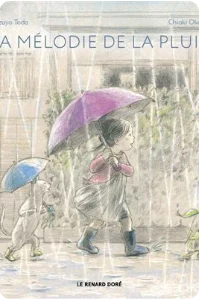
It’s raining, Amé is bored and her toys are no longer enough for her. Kazuyo Toda starts from this little annoyance to organize a party with a frog, a cat and stuffed animals who decide to go out too. Already published in France under the title Jour de pluie in 2017, this album returns to L’École des Loisirs in the Le Renard Doré collection, with a new translation by Anaïs Koechlin.
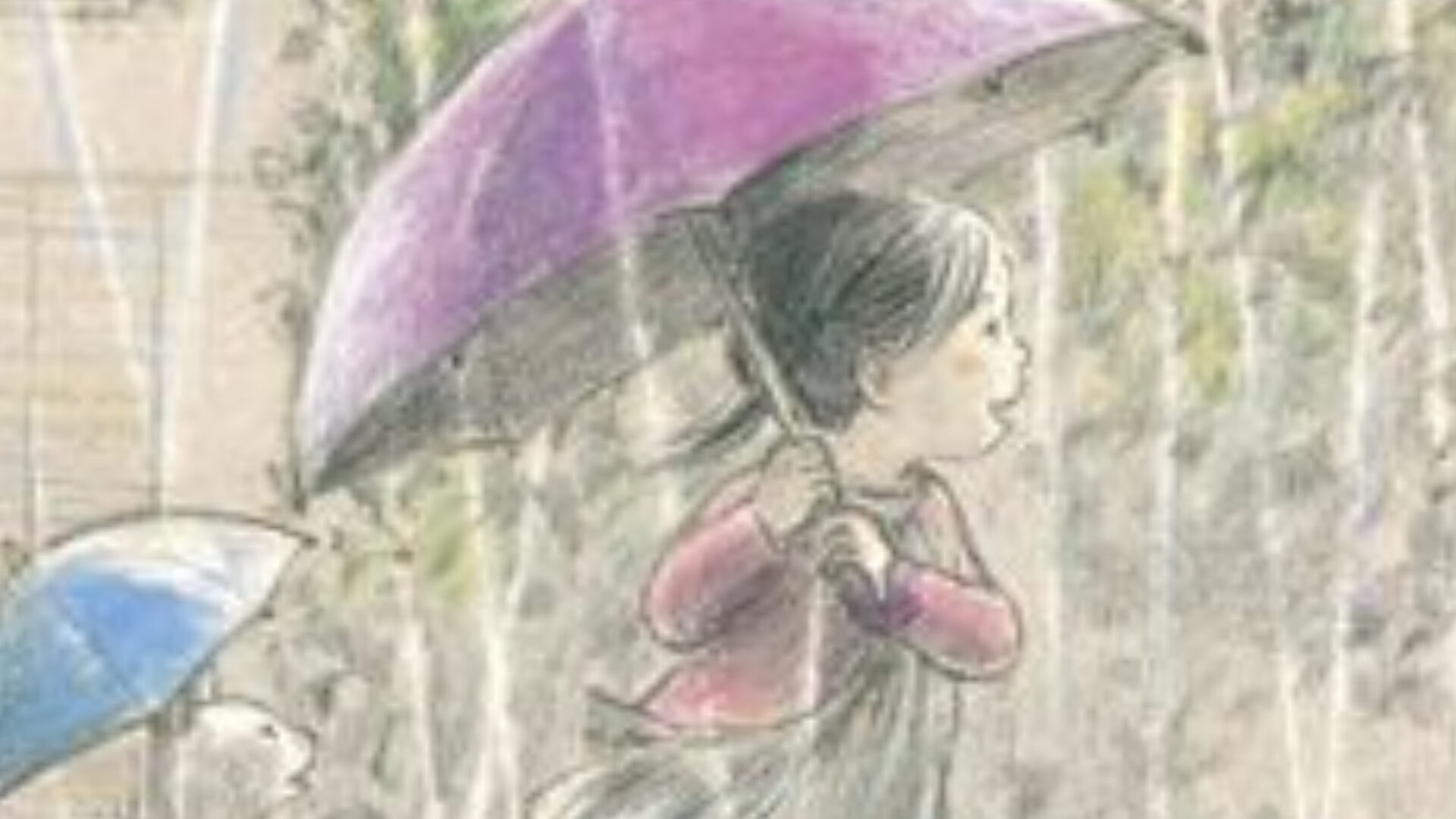
In the drawing, we find Chiaki Okada, whose J’attends maman and Le Portrait de Nounours already explored the emotions of children and their attachment to cuddly toys. Okada’s pencils here give a lot of charm to a story whose ending we quickly guess. Do these forty pages have anything to offer other than pretty pictures under an umbrella?
Everyone outside
Amé would like to play outside, but the rain keeps her at home. When a little frog appears at her window to invite the girl to its home, the day takes a different turn. Boots on her feet, umbrella in hand, the little girl leaves with all her little troop. Even the toys come to life. The book accepts this madness with a naturalness that is pleasing: no one stops to explain why a stuffed animal walks or how a cat learned to wear shoes.
This simplicity suits the subject well. A child who invents an adventure with his cuddly toys does not need to justify their powers. Kazuyo Toda keeps this logic and lets the walk continue to the frog house, where a meal and a party await the guests. The marvelous is constructed with what Amé already had in her room, which makes it immediately familiar.
However, it is regrettable that at no time is a message given about following a stranger. As it stands and without ever explicitly specifying the imaginary nature of the adventure, La Mélodie de la Pluie seems to validate that a child can follow a stranger without even expressing the slightest doubt. Given the primary target of the work, even an additional sentence would have been necessary.
Images where we stay
The great success of the book comes from the drawing. Chiaki Okada gives substance to the soft toys, relief to the interiors and a lot of presence to the vegetation. The pencil rendering maintains a softness that is suitable for little ones, with shapes precise enough for the toys to remain recognizable once animated. A cuddly toy still looks like a cuddly toy, even when it takes part in the walk.
The large double pages above all allow you to watch something other than the main action. The walk leaves room to follow each companion. At the party, the plants, the guests and the kitchen occupy different planes. We can linger on one corner of the image while the story continues elsewhere. This work gives interest to scenes that would be quite banal with a less elaborate setting.
Color also plays an important role. The interior at the beginning seems more closed, then going outside brings in greenery and the party fills the pages. Okada makes the rain pleasant to look at without erasing it. It’s more convincing than a story that waits for the sun to return to allow its characters to be happy.
Read aloud
The music announced by the title comes from the sounds of the rain and the songs that accompany the group. The repeats give a cadence to the walk, then prolong the excitement of the party. The text remains simple, but this sound work gives it more dynamism than a succession of descriptions. Read aloud, it naturally invites you to mark the rhythm.
This is also a good reason to offer it to the three to six year olds for whom it is intended. The story flow is easy to follow, while the sounds provide something to pick up on while reading. The adult tells the story, the child can participate, then the illustrations allow you to return to the scene without needing to reread each sentence.
However, the balance between text and image is not always so interesting. The story often accompanies what the drawing already shows, without adding a shift or a little additional gag. The rhythm compensates for this redundancy, but the illustration remains clearly richer than the story it accompanies.
The scenario reaches its limit quite quickly. Amé is bored, accepts an invitation, has fun and changes her mind about the rain. Once the frog appears, we pretty much know where the album is going to take us. The party prolongs the pleasure of watching, but does little to renew what is happening. A few additional comic ideas would have given the text more personality.
For such a short album, the walk and the images are enough to maintain interest. The book simply works better when you take the time to detail the scenes than when you are looking for what will happen next. This is where the desire to return to it comes into play: the words tell a little adventure, the drawings give reasons to return to it.
At 15 euros for 40 hardback pages, this edition therefore deserves to be chosen above all for the illustrations by Chiaki Okada. The title change should also not mislead families who already own Jour de pluie: it is the same album, reproduced with a new translation.
Verdict
The illustrations make the difference
7.5/10
La mélodie de la pluie is a beautiful album to read with a young child. The animated stuffed animals, the rhythm of the text and the large pencil scenes give charm to this improvised outing. Above all, Chiaki Okada provides enough details for the reading to continue once the sentences are finished.
The story remains conventional and the text could be more surprising, but the whole holds up well over its forty pages. A gentle read, very successful in its images, which is worth more for the walk than for its outcome.
Pros
- Chiaki Okada's pencil illustrations, detailed and full of tenderness.
- Large double pages that make you want to look at each companion.
- Sounds and repeats that support reading aloud.
- Animated toys naturally integrated into the adventure.
Cons
- A very predictable story that lacks little surprises.
- The text sometimes repeats what the images already show.