
Wander Stars
A shonen looking for its real punch
Score: 6/10
Images and videos


At a glance
We liked
- A great idea for fights
- A real shonen adventure charm
- A central duo that makes you want to move forward
- A very clear visual and musical identity
We liked less
- Only in English
- Uneven technical performance
- An adventure more marked out than it gives the impression
- A promise stronger than its outcome
 By Farrel Grimwood · published · 6 min read
Contents
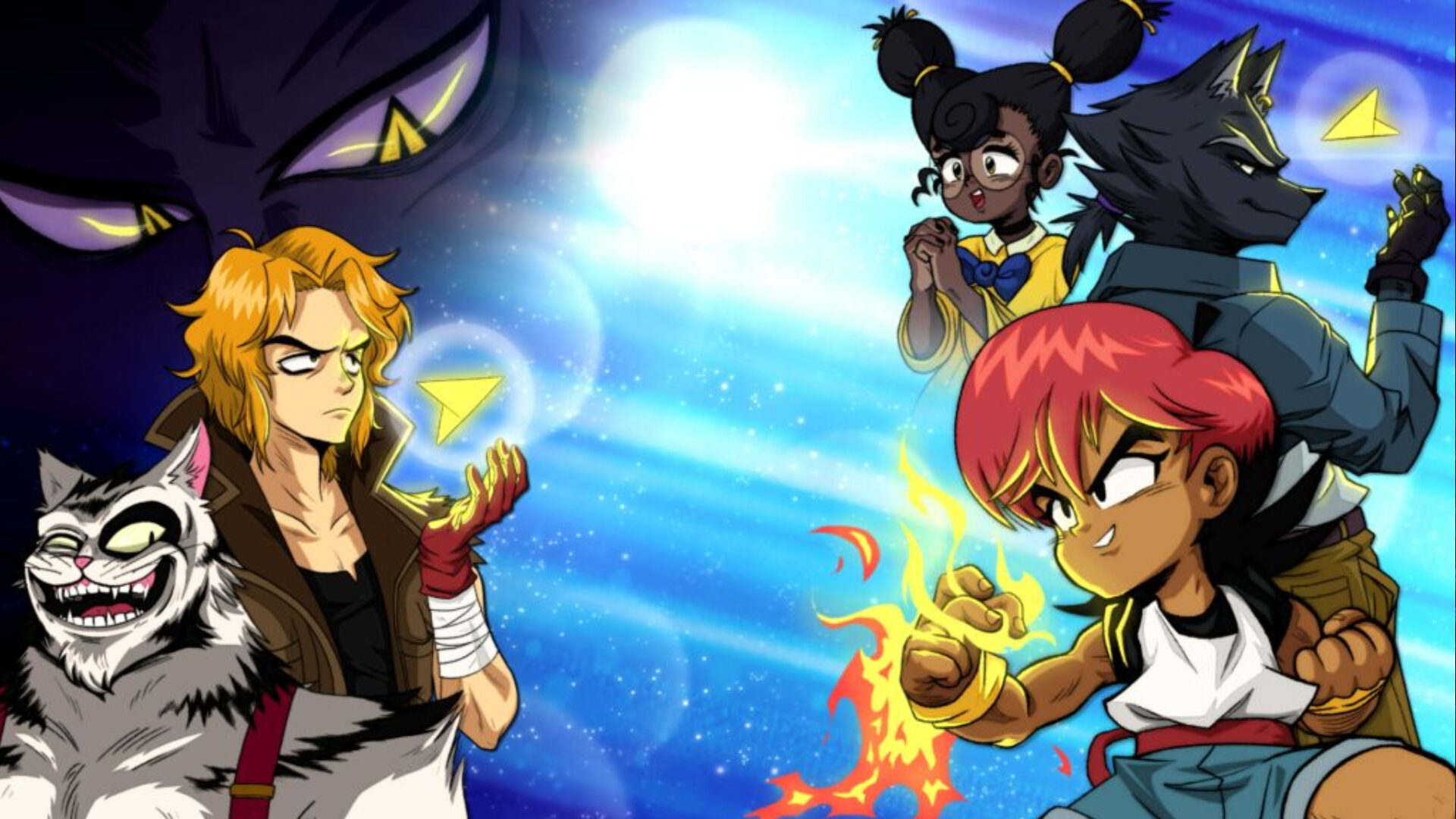
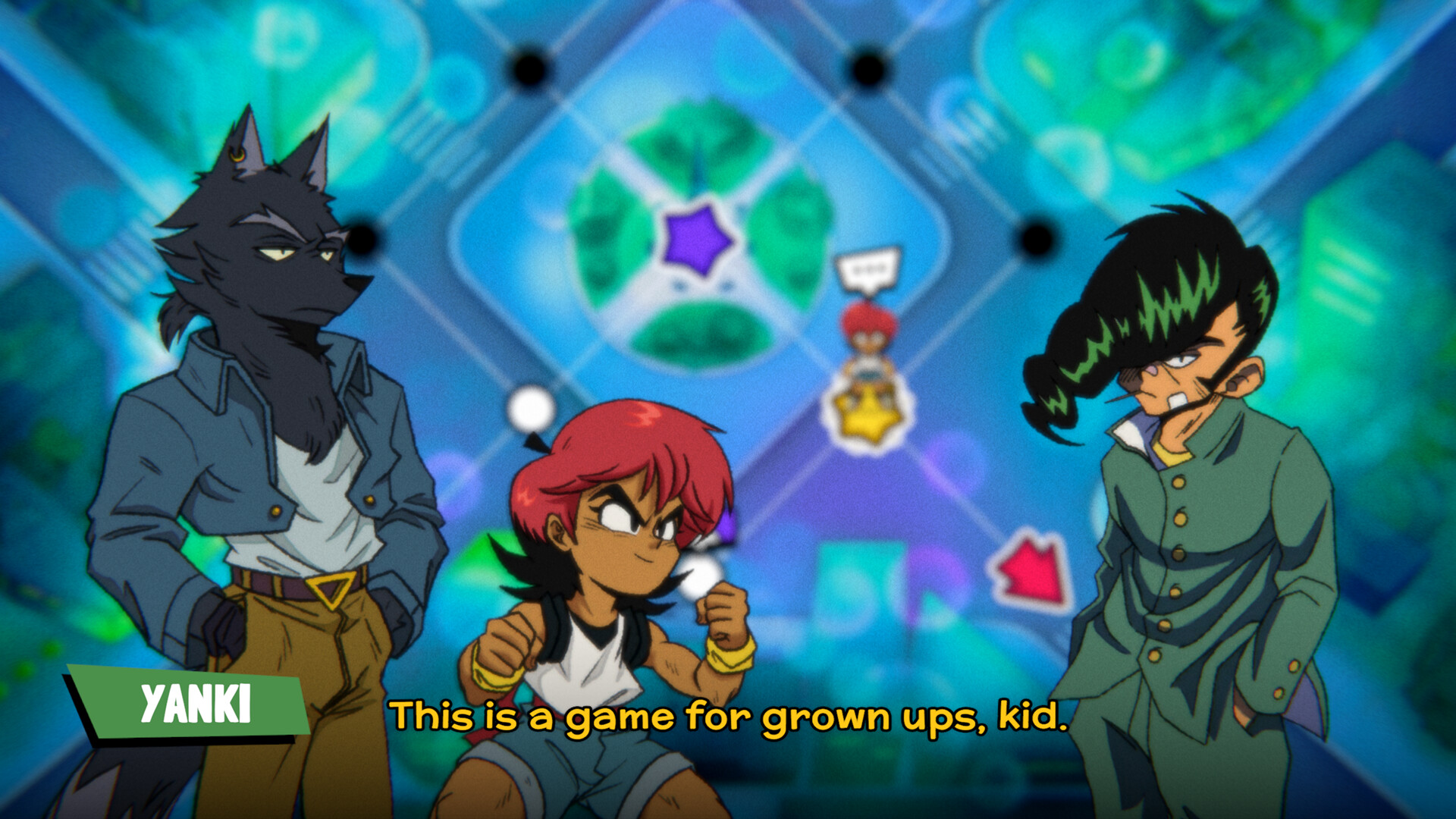
Developed by Paper Castle Games and published by Fellow Traveller, Wander Stars has been available on Nintendo Switch since September 19, 2025. The game follows Ringo, a Kiai expert who sets out to find her brother, alongside Wolfe, a fugitive on the trail of fragments of the legendary map Wanderstar. The adventure is divided into ten episodes and immediately displays its love for old-fashioned action anime.
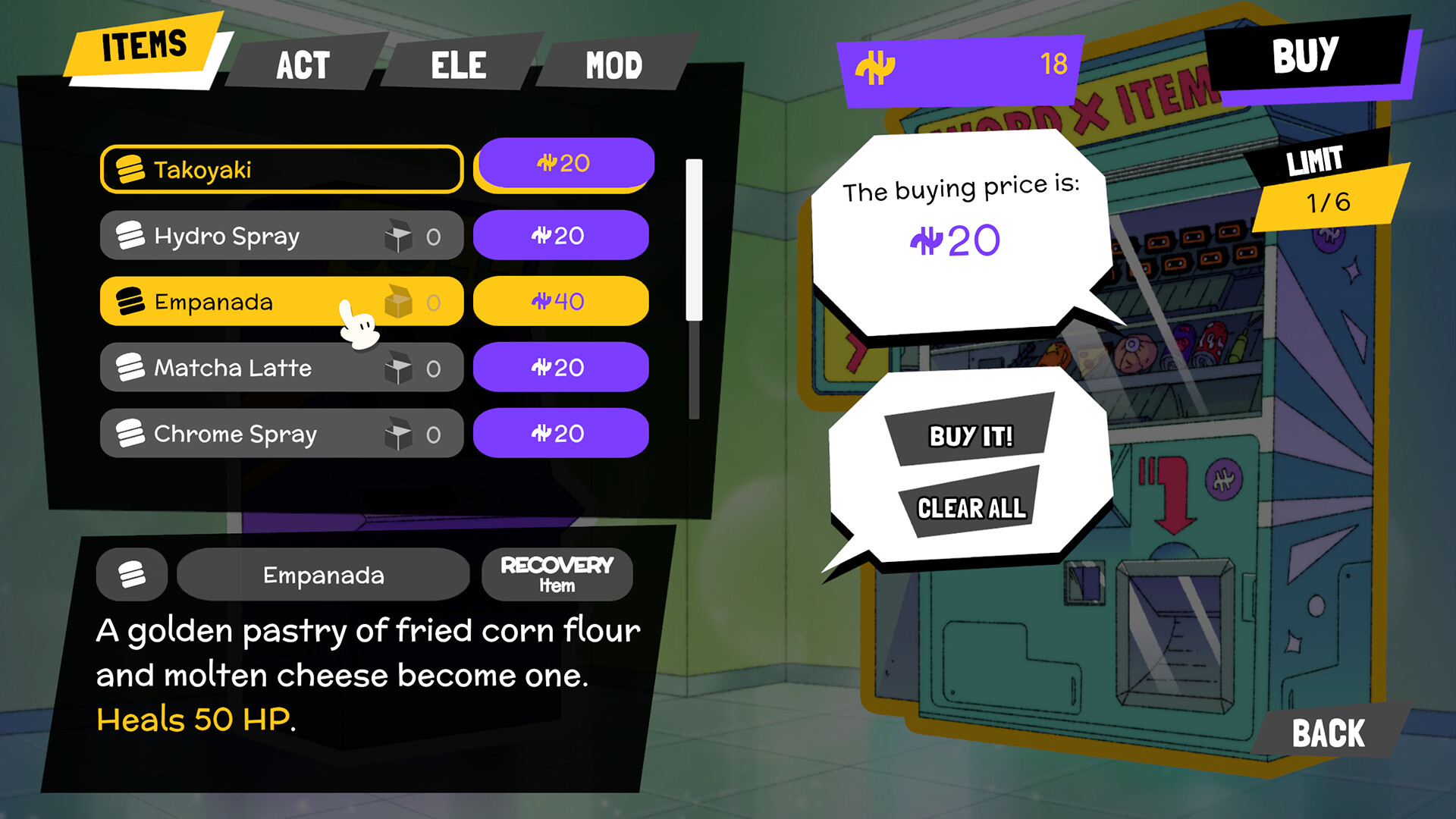
But Wander Stars isn’t all about its packaging. Its real idea is elsewhere, in this combat system which asks you to combine words to create your own techniques. The game therefore does not seek to seduce only with its energy, its colors or its nostalgia. It tries to make language itself a mechanism for progression, almost a way of thinking about combat. On paper, the idea is excellent. It remains to be seen if the game knows how to give it enough strength to carry the whole adventure, and not just a few very good moments.
Heroes who live by their momentum
On paper, Wander Stars says something very simple. Ringo searches for her missing brother, Wolfe pursues the fragments of the legendary Wanderstar map, and their common road gradually turns into a journey through ten episodes. This basis gives the game real movement, a clear direction and, above all, a reason to make its characters exist other than as simple shonen silhouettes.
Ringo also carries the adventure with a rather rare obviousness. Her energy, sincerity and head-on approach to each situation immediately give her depth. She is not just the enthusiastic figure expected of this type of story. She also has this almost naive tenacity which prevents the game from tipping into pure parody. Opposite, Wolfe works very well as a counterweight. Drier, more opaque, more initially interested in his own interest than in the rest, he gives their exchanges a light but constant tension, which is enough to make the duo live well beyond their starting point.
What works above all is the way Wander Stars treats its material. The game openly loves the old codes of adventure anime, the great impulses, the exaggerations, the rivalries, the colorful figures. But it does not trap itself there. It also knows how to convey something more tender, sometimes even more melancholic, in this relationship to lack, to brotherhood and to the errors that we drag behind us. It is this mixture that gives the story its best hold. It can be funny, absurd, talkative, then suddenly find a much more accurate emotion.
This writing, however, has its limits. Wander Stars likes to talk, a lot; and its narrative pace sometimes suffers. Certain sequences stretch out more than they should, certain dialogues take the time to establish their charm when the adventure sometimes needs to go faster. The game often compensates for this with the warmth of its casting and the quality of its general tone, but it still happens to confuse generosity with length.
Still, the essential thing is there. Wander Stars may not build the tensest story or the most complex characters in the genre, but it gives them enough heart to make us willing to follow them for a long time. And in a game that relies so much on momentum, rhythm and the pleasure of seeing your universe held together by your energy alone, this is not a detail. It’s probably even its first victory.
Words to strike… and to exclude
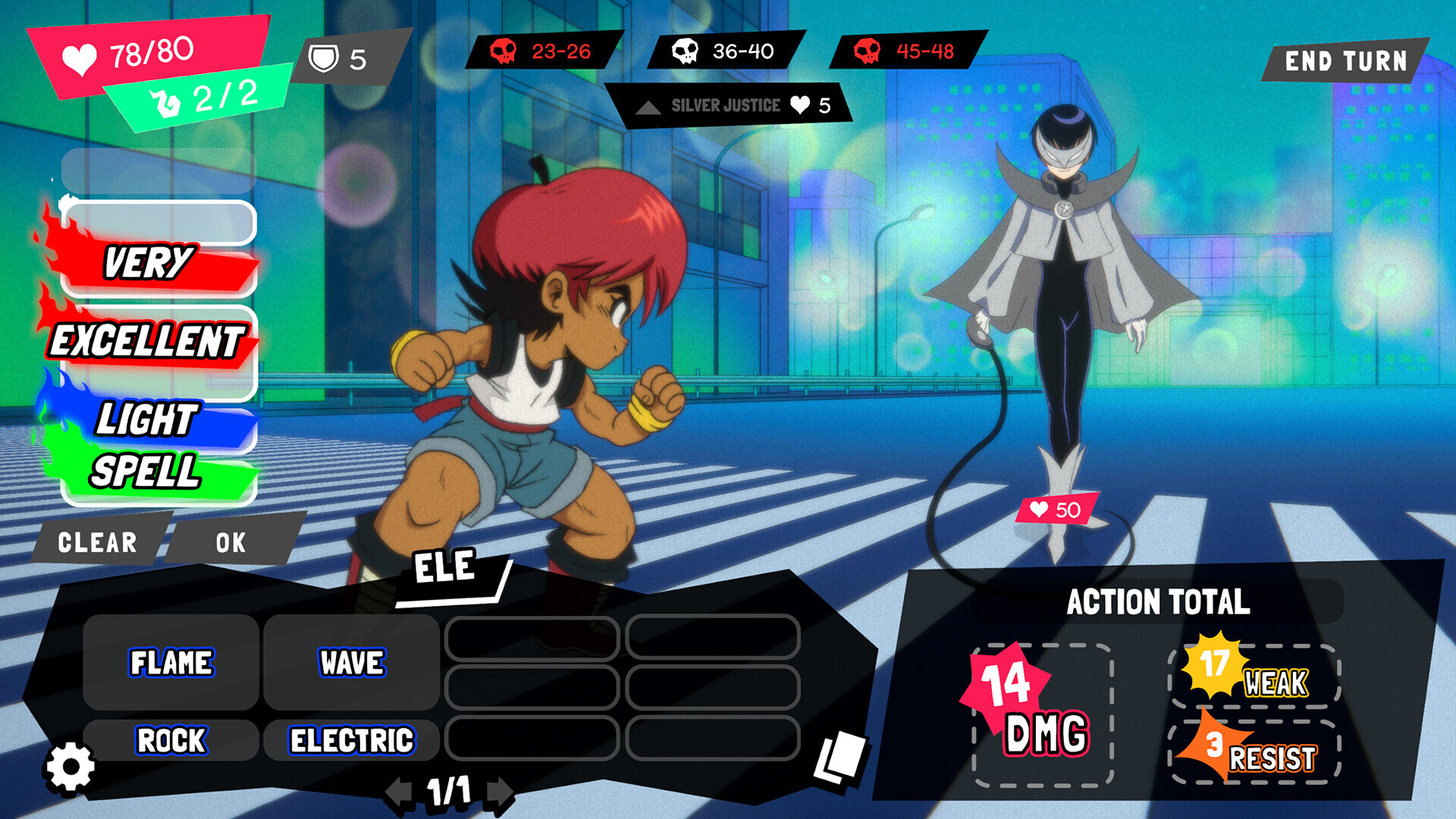
The heart of Wander Stars is also its best idea. Everything is based on a combat system which asks you to create your techniques from words, by combining actions, elements and effects according to the space available and your spirit level. In principle, it’s brilliant. The game doesn’t just make you choose an attack from a list. It pushes you to compose it, to model it, to look for the right formula according to the enemy, their resistances and the cooldown of each term. Very quickly, we understand that the pleasure of the game does not come only from victory, but from the sensation of constructing your own combat language.
And this idea really holds up over time. Wander Stars does not rely on a nice find that would run out after two hours. Progression adds new words, expands the available arsenal and requires you to regularly rethink your combinations. There is a real freshness in this way of making the verb a tactical resource. The game then becomes very endearing, because it rediscovers something of the shonen momentum that it constantly invokes: the pleasure of naming its moves, amplifying them, giving them an almost theatrical existence before sending them into the opponent’s face.
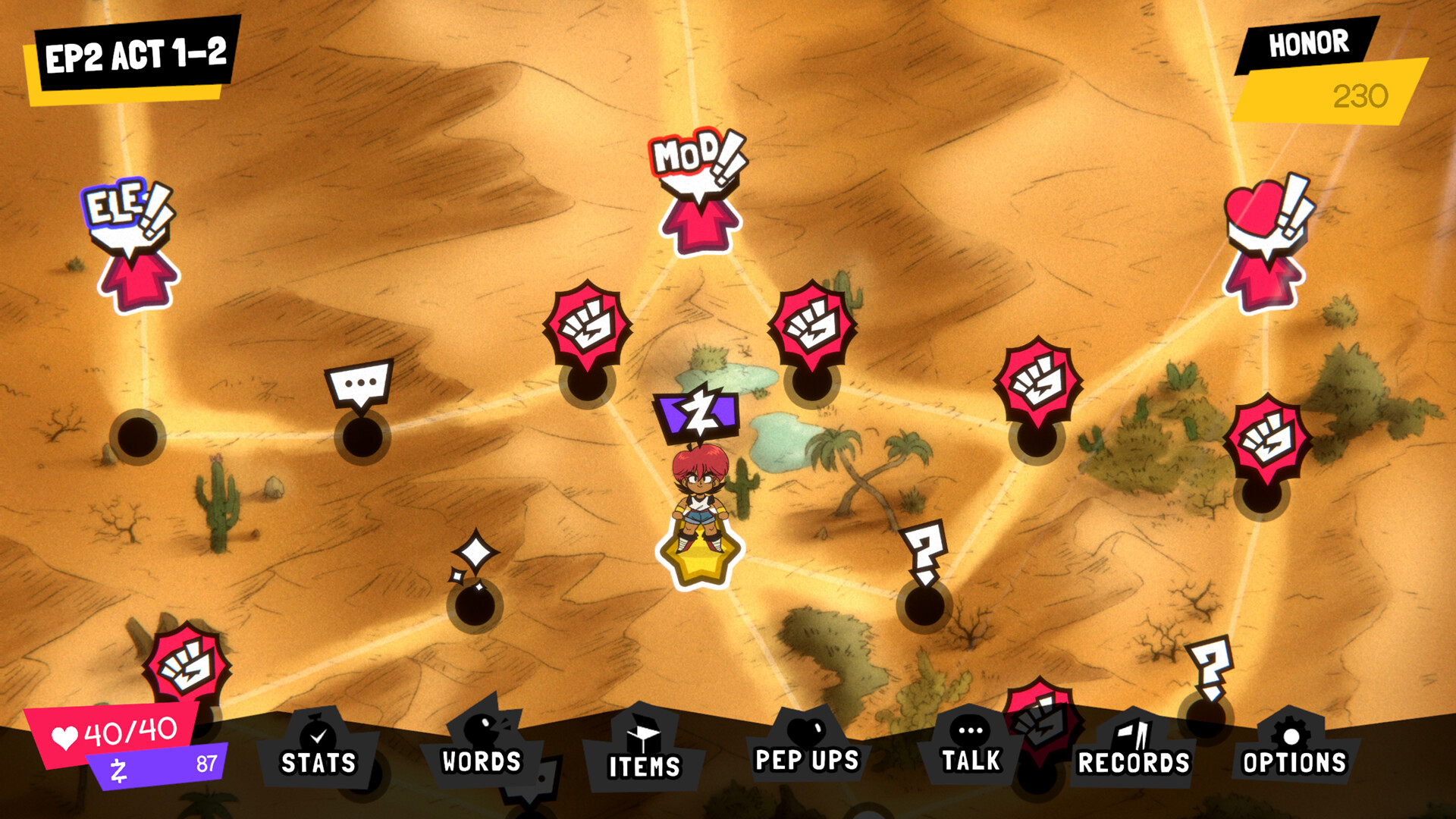
But this mechanic doesn’t go as far as it should. The more we advance, the more we feel that the promised freedom nevertheless remains very limited. The combinations are numerous, of course, but their madness remains relative; and the system ends up running in a more limited space than expected. This is where Wander Stars stops being exhilarating and becomes simply clever again. It remains enjoyable, often very enjoyable, but does not push its idea to the point where it could have become totally euphoric.
But there is its real downside, the one that absolutely cannot be relegated to the end of the review as a secondary detail. One that is even prohibitive. The game is only offered in English. Nothing else. But here, this purely financial decision is much more serious than a simple lack of comfort for the French-speaking public. Wander Stars is a game based on words. It requires us to immediately understand what they mean, what they produce, what they suggest together; and how they can be misused to create effective techniques. The absence of French therefore not only hinders the reading of the dialogues or the understanding of the scenario. It directly affects the central mechanics of the game. It makes its most brilliant idea less accessible, less instinctive, and therefore less strong for an entire part of its audience. This is a major flaw. A very big flaw, even.
An anime that lives better than the machine that carries it
Visually, Wander Stars hits the mark almost immediately. The game understood that it was not enough to borrow a few codes from old anime to rediscover their flavor. We also had to capture the movement, the heat and this very direct way of bringing a world into existence with a few bold colors, legible silhouettes and an explosive staging. On this point, Paper Castle Games is doing something very coherent. The game feels less like a lazy imitation and more like a true declaration of love to all the imagery of the late 80s and 90s.
What works best is how this visual identity remains tied to the system itself. The fights don’t just have style in absolute terms. They have the right amount of impact, readability and exaggeration to make each word exist like a little shonen scene. The effects, transitions, postures and general cutting regularly give the game that very particular relief of animated series which know how to sell a shot before it even starts. Wander Stars does not seek graphic sophistication at all costs. It favours personality, and rightly so.
The soundtrack accompanies this choice very well. The game features music composed by Sayth Vashra with contributions from Stijn van Wakeren, in a register nourished by jazz fusion, prog rock and Japanese city pop. This could just be a display of intentions. This is not the case. The music has nerve, momentum, sometimes even a real sense of revival, which fits perfectly with this adventure designed like an old TV series full of twists and foreshadowing effects. It doesn’t always impress with an unforgettable major theme, but it gives the game a constant color, and that’s already a lot.
Where the problem lies, especially on Nintendo Switch, is that this whole identity comes up against a technique that does not follow. The game has charm, yes, but it doesn’t protect it from its glitches. Stuttering, slowdowns in combat when the screen loads a little too much, shaky animations, bugs more visible than they should be, and even a few cases of complete blocking are regular reminders that this version lacks durability. It’s all the more a shame that Wander Stars relies heavily on its rhythm. As soon as it cracks, a part of its grace escapes with it.
Verdict
A great idea that never becomes a great adventure
6/10
Wander Stars is the kind of game that you want to love very quickly. Its word-based combat system gives it an immediate personality, its central duo works, and all its old shonen energy gives it real charm. There is a real idea here, a real color, and at times even a real freshness. But the more the adventure progresses, the more the gap widens between what it promises and what it really accomplishes.
Technical performance lacks stability on Switch, the structure remains more defined than it should, and above all the absence of French weighs far too heavily for a game which makes language precisely the heart of its pleasure. This is where Wander Stars is partially scuttled. It remains endearing, often clever, sometimes even inspired. It simply lacks enough breath and enough breadth to transform its very beautiful initial idea into a lasting achievement.
Pros
- A great idea for fights
- A real shonen adventure charm
- A central duo that makes you want to move forward
- A very clear visual and musical identity
Cons
- Only in English
- Uneven technical performance
- An adventure more marked out than it gives the impression
- A promise stronger than its outcome
More in Video games
Full library 10/10
World of Warcraft: Forever
PC 8.5/10
Warhammer 40,000: Boltgun 2
PC 9/10
Total War: Warhammer III – Lord of the End Times DLC
PC 7/10
Revisited | Warcraft III: Reforged
PC 7.5/10
Warcraft III Reforged: Forsaken Kingdom
PC 8.5/10
World of Warcraft: Midnight
PC 9/10
Puzzle Bobble Everybubble!
PC 6/10
Crown of Greed
PC 6.5/10
Tavernhold
PC 6.5/10