
Voxelgram 2
Silent sculptures in two colors
Score: 7.5/10
Images and videos



At a glance
We liked
- The two-tone logic which profoundly renews deduction.
- The 20 dioramas as a natural and elegant learning path.
- Generous content (250 puzzles + returning models from the first game).
- Stability and fluidity on Switch, perfect for long sessions.
We liked less
- Controller input is less precise on complex models.
- Comfort options (shortcuts, angle memos) that are too frugal.
- A very discreet soundtrack, not very memorable outside of the session.
- A repetitiveness that can appear after very long series.
 By Farrel Grimwood · published · 6 min read
Contents
Voxelgram 2 takes the principle of the 3D nonogram and refines it with a simple but decisive idea: introducing two colors into the puzzle-solving logic. On offer are 250 new puzzles organized into 20 handmade dioramas, with the possibility of replaying the grids of the first Voxelgram adapted to the new rules. Content that virtually doubles the volume for veterans.
In this meditative framework where we “sculpt” voxel models layer after layer, the question is clear: does this increase in complexity through color succeed in profoundly renewing the pleasure of spatial thinking, or are we staying too close to the first opus to rekindle the spark?
Stories carved in silence
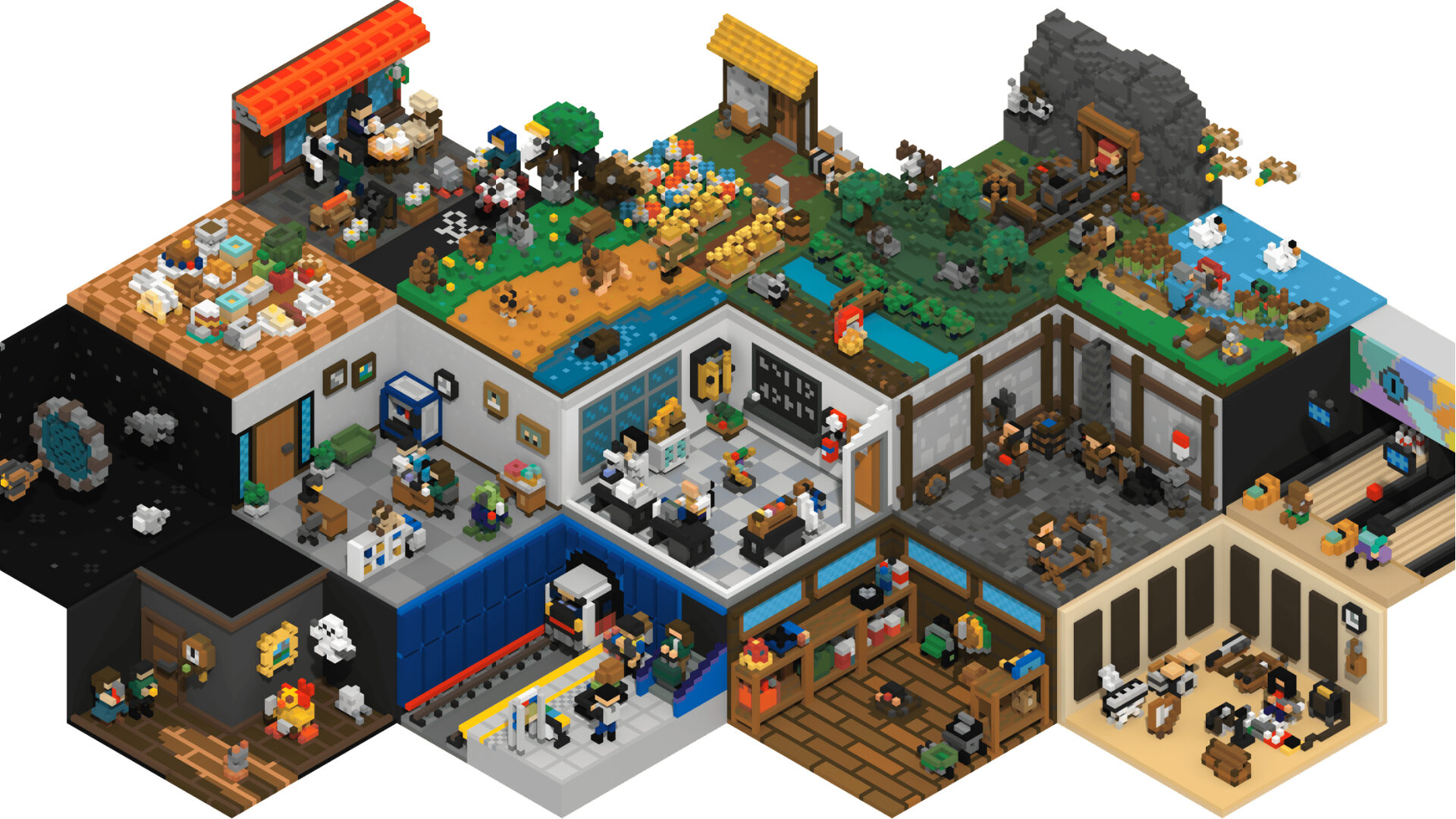
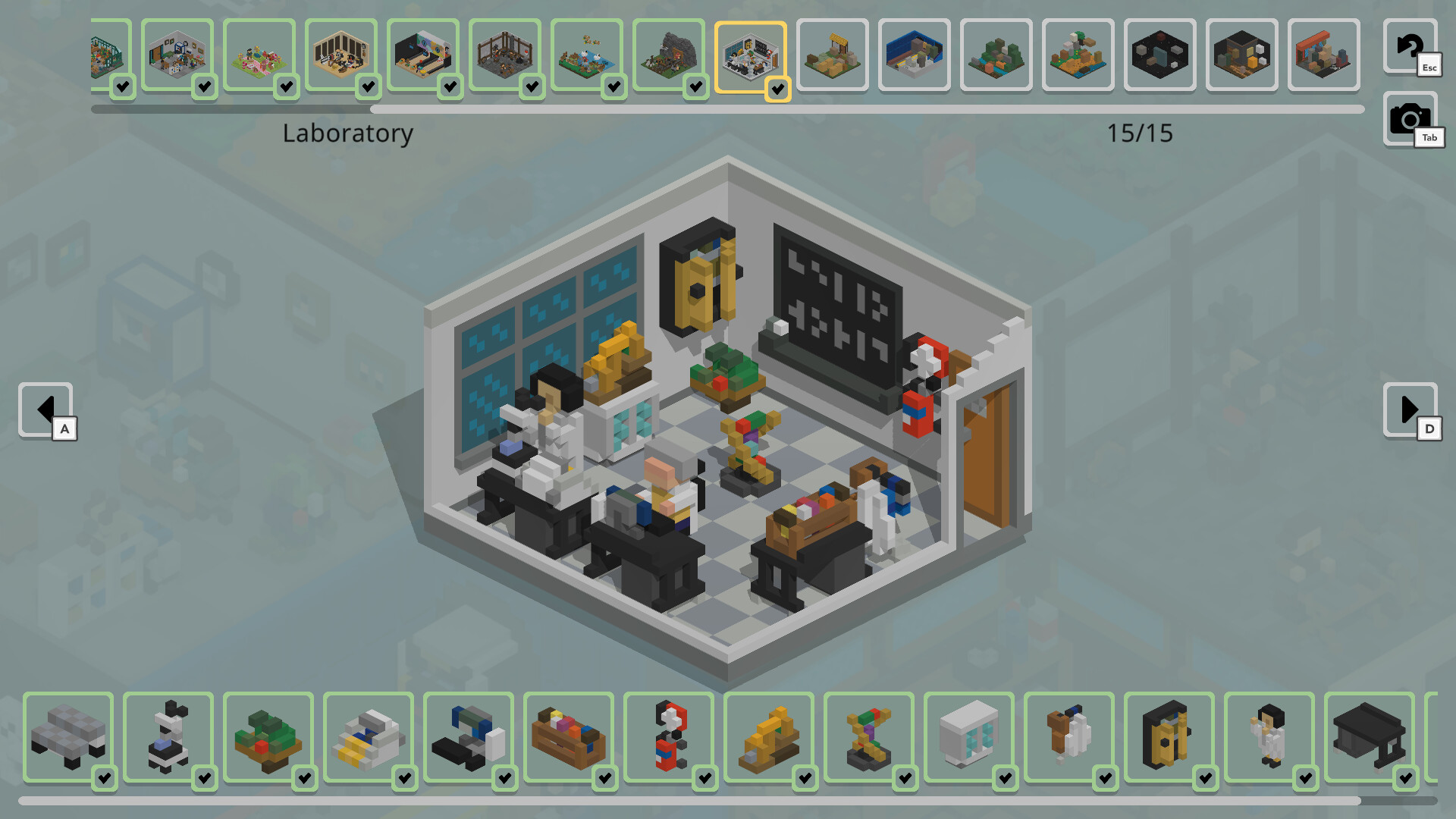
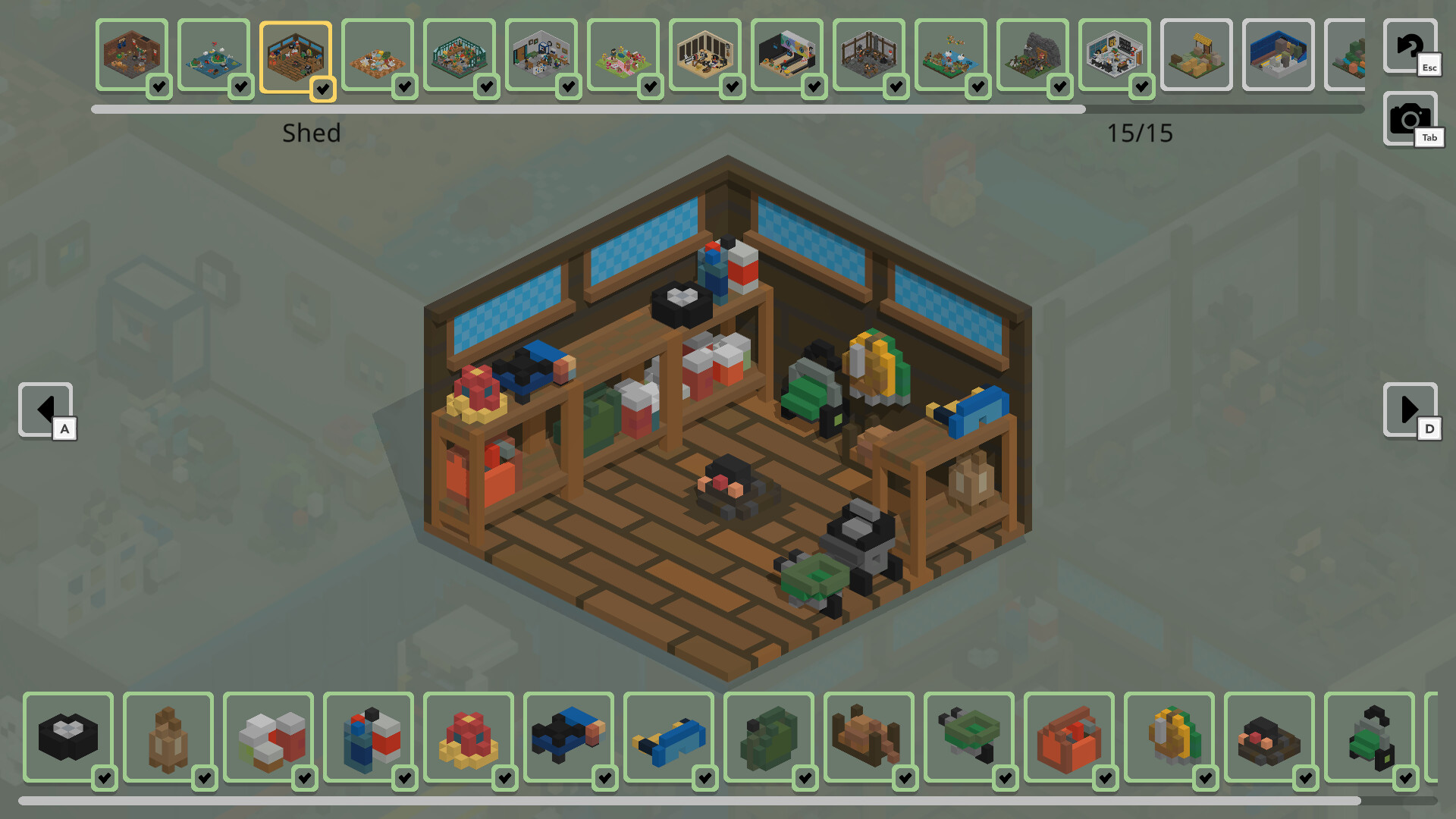
Voxelgram 2 does not tell a fable in the classic sense; it leaves it to the player to guess scenes by revealing volumes. Each diorama acts as a frozen moment: a set table, a moving animal, a small domestic setting or a fragment of architecture. Nothing is said, everything is suggested. The “narration” is born from the patient gesture which captures, colors, confirms; until the object makes sense.
There are no protagonists or dialogues, only shapes that are revealed as we decipher the clues. However, the illusion of a story takes hold: one pattern calls for another, a color changes the intention, a silhouette is completed and the gaze reconstructs the story behind the object. The player then becomes the craftsman of a book without words, where each puzzle is a silent page that is turned by crumbling the material.
The introduction of a second color subtly inflects this minimalist dramaturgy. Two shades are two interpretations: a separation of planes, a visual counterpoint, sometimes a detail which bifurcates the interpretation. On the scale of a diorama, this duality is enough to create a small display without ever breaking the tranquility of the workshop.
The patient geometry of the two shades
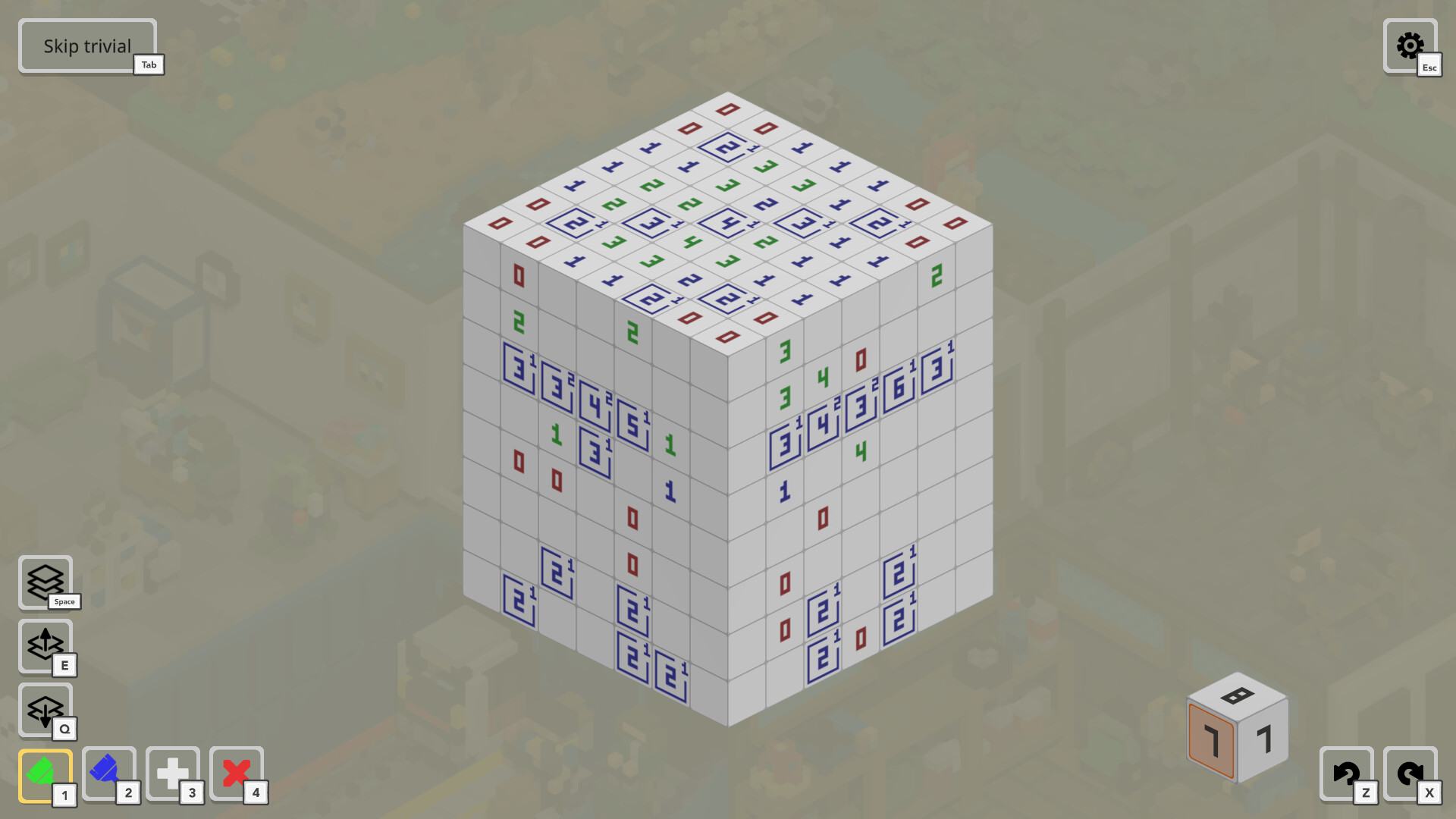
Voxelgram 2 puts logic back in focus, but subtly moves the difficulty slider. Where previously we sculpted a binary volume, each puzzle now requires permanent triangulation: remove, keep in color A, keep in color B. This third way changes everything. It requires you to read the clues like scores for several voices, to cross the counts by axes and slices, to check that a “5” line does not hide three blocks of one, two of the other, and above all to understand how these groups fit together without contradicting each other when you move around the model.
Rhythm arises from this alternation between cut and projection. We slice the sculpture in layers, we validate an edge, then we go back towards the depth by reinterpreting figures whose meaning shifts with the angle. The first minutes are played out in broad gestures, but the second half of the puzzle becomes a game of spatial chess: each decision locks or releases possibilities, each error propagates like a logical crack. The elegance of the game is that it never requires guessing; it demands deduction.
The presence of dioramas scripted in sequences of objects provides a framework for this increase in complexity. A thematic decor first introduces simple volumes (bases, columns, legible silhouettes), then gradually adds reading traps: overhangs which hide a row, misleading symmetries, alternating patterns where the two colors respond to each other like a checkerboard. We thus learn to recognize recurring patterns and apply heuristics: lock the ends, count from opposite edges, look for minimal overlaps that force one color rather than another.
This visual language calls for a disciplined approach. Turn the model, return to a plane, recheck an already validated alignment: success depends as much on the method as on the eye. The best moments come when an apparent impasse is unlocked by a micro-decision that sheds new light on the entire puzzle. Conversely, completion becomes more delicate than in the first opus: it is no longer enough to have the “right” quantity of material, you need the right material with the right shade, in the right place. This requirement adds tension without breaking the calm of the workshop.
Finally, the learning curve turns out to be steep but fair. The opening models teach you to isolate a pattern, those in the middle require juggling two colors on several axes, and the late pieces test volumetric vision: understanding that an insignificant number on the north face implies an implacable constraint on the southwest column, two rotations further. We emerge from these large sculptures with the rare sensation of having sharpened a mental tool, which gives each success a weight that the simple puzzle counter cannot summarize.
A bright workshop, a cozy score
Beneath the geometric surface of Voxelgram 2, the artistic direction plays with sovereign discretion. The dioramas rise like domestic models, cut from cubes with sharp edges, bathed in a soft light that never seeks show-off. The restrained palette favors useful contrasts: it is less a decoration than a reading tool. The introduction of a second shade does not only serve to complicate the reasoning; it trains the eye, creates planes and reveals contours that are invisible until the piece is turned an additional notch.
Readability is based on a demanding visual grammar: guide lines, temporary transparencies, rhythms of shadow and light which reveal a column, hide a span, invite you to go back. When the complexity increases, the game imposes discipline: pivot often, change angles, check a cut, return to the initial face to confirm that a pattern has not slipped a square. Sometimes the eye gets lost. Not for aesthetic reasons, but because the sculpture resists; and that the two colors respond to each other like a trompe-l’oeil checkerboard. This assumed frugality keeps the screen clear, at the cost of constant framing effort.
To the ear, the soundtrack is content to be a breath: sustained layers, parsimonious notes, barely audible punctuations which allow the silence of the workshop to reign. The effects are micro-gestures: a dull click for extraction, a clearer ringing for confirmation, a discreet sigh when canceling. Nothing distracts attention; everything signals, reassures, cadence. We may regret the absence of memorable themes, of melodies that remain – but this minimalism serves a concentration that does not tolerate chatter. Here, the music does not tell: it lets the brain count.
The little tools that make for great patience
On Switch, Voxelgram 2 prioritizes stability over demonstration. Loading times are short, the animation remains fluid even on large models, and the game supports the incessant back and forth between rotation, zooming and cutting layers without flinching. It’s a workshop that never coughs: we string together the pieces without worrying about technical performance.
Ergonomics, however, dictates the best terrain: in handheld mode, the touch screen provides precision and cadence that the controller struggles to match on large sculptures. The analog stick/D-pad combination works, but the micro-adjustments require more attention to the pad. Conversely, on TV, the seating and readability of large volumes make reading easier; we gain in distance what we lose in finesse.
In terms of comfort, the interface remains sober: clean rotation, legible cuts, discreet markings which help to “think” about the model without saturating the screen. Nothing invasive, nothing automatic either: the game lets the brain work. This restraint is its strength… and its limits. Purists will appreciate the absence of heavy assistance; others will regret the absence of more aggressive shortcuts (layer favorites, angle memorization) which would speed up large formats.
There is no shortage of material to sculpt: 250 puzzles divided into 20 dioramas and, for veterans, the possibility of replaying the models from the first Voxelgram adapted to the two-color rules. The curve stretches smoothly: from warm-up objects to twisted architectures, we feel the workshop moving upmarket. The game lends itself to both short sessions and long evening sessions; putting the console to sleep encourages the “ten more minutes” which becomes an hour.
In short, a reliable, portable and demanding workshop, which prefers a sure hand to gadgets. The rare roughness comes from the controller on the complex parts and from deliberately frugal comfort options, choices consistent with the spirit of the game: letting logic speak.
Verdict
The calm of the hand, the demands of color
7.5/10
Voxelgram 2 keeps its promise: transforming an already elegant concept into a finer, denser workshop, where every decision counts. Adding the second shade not only increases the difficulty; it broadens spatial thinking, installs visual counterpoints and gives the dioramas a little silent staging. We find there the particular calm of successful puzzles, the one which allows long concentration without ever sinking into boredom.
Its limits are clear: ergonomics of the controller that can be improved on large models, a frugality of comfort options which will leave some wanting more, and a deliberately discreet soundtrack which struggles to leave an imprint. But these reservations do not undermine the solidity of a generous set (250 puzzles, 20 dioramas, returning models from the first game) and remarkably coherent on Switch, especially in handheld mode.
It’s a game that respects your time and rewards your method: a reliable workshop, a soothing setting, and a two-tone logic that refines the eye as much as patience.
Pros
- The two-tone logic which profoundly renews deduction.
- The 20 dioramas as a natural and elegant learning path.
- Generous content (250 puzzles + returning models from the first game).
- Stability and fluidity on Switch, perfect for long sessions.
- Precise, comfortable touch controls in handheld mode, even on large sculptures.
- Exemplary readability: restrained palettes, clear markings, clean cuts.
- The meditative rhythm which establishes a real zone of concentration.
Cons
- Controller input is less precise on complex models.
- Comfort options (shortcuts, angle memos) that are too frugal.
- A very discreet soundtrack, not very memorable outside of the session.
- A repetitiveness that can appear after very long series.
- The two-color puzzles, which can be confusing at first without further help.
- A minimalist aesthetic that sometimes lacks thematic variety.
- Useful but uneven procedural puzzles to break the routine.
More in Video games
Full library 10/10
World of Warcraft: Forever
PC 8.5/10
Warhammer 40,000: Boltgun 2
PC 9/10
Total War: Warhammer III – Lord of the End Times DLC
PC 7/10
Revisited | Warcraft III: Reforged
PC 7.5/10
Warcraft III Reforged: Forsaken Kingdom
PC 8.5/10
World of Warcraft: Midnight
PC 9/10
Puzzle Bobble Everybubble!
PC 6/10
Crown of Greed
PC 6.5/10
Tavernhold
PC 6.5/10