
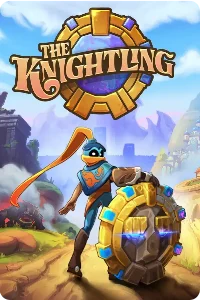
The Knightling
The Little Knight and the Great Shield
Score: 7/10
Images and videos
At a glance
We liked
- The shield, excellent central idea
- A pleasant and fluid exploration
- Clesseia, colorful and welcoming kingdom
- A sincere family tone
We liked less
- Combat that is too simple over time
- Often very classic objectives
- Some less inspired areas
- A lack of weight in clashes
 By Farrel Grimwood · published · 11 min read
Contents
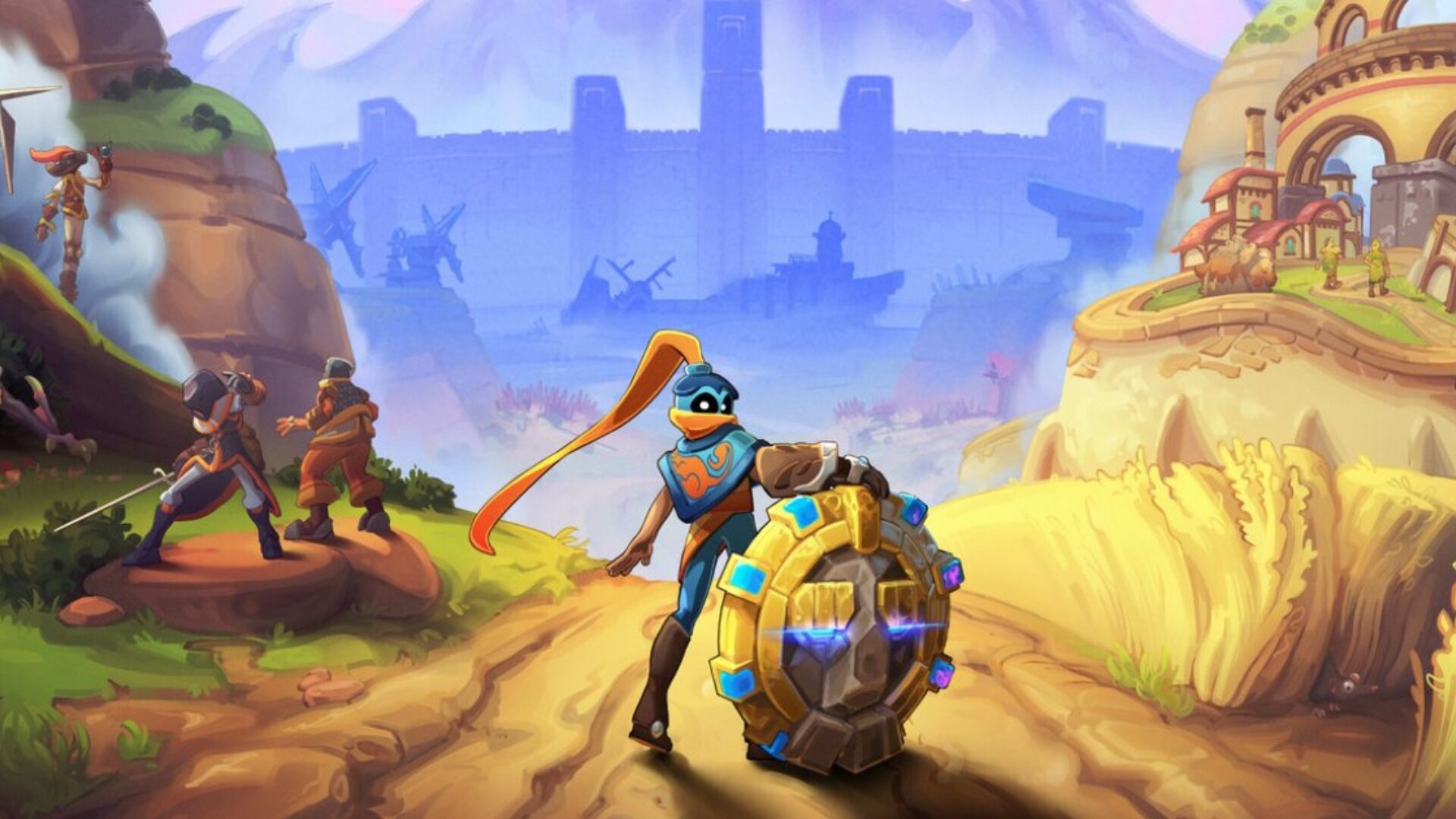
The Knightling starts from a very simple image: an apprentice knight, too small to carry the legend on his shoulders, inherits the shield of his missing master. Sir Lionstone has not returned from his latest quest, Clesseia needs a protector, and the Squire must hit the road with a weapon that serves as much for self-defense as it does for moving, fighting, sliding, leaping, and proving that a hero can begin without a sword. The game was released on Xbox Series X|S on August 28, 2025, developed by Twirlbound and published by Saber Interactive.
The first hook comes from this shield. The Knightling does not rely entirely on its open world, nor on its story of chivalry. Above all, it finds its identity in this unique tool, at once a weapon, protection and means of transport. We block, we parry, we hit, we propel ourselves, we almost surf on the roads of Clesseia. The game has something of an old, more modest 3D Zelda, but with a clearer obsession: making movement part of the pleasure, not just a journey between two objectives.
This is what makes you want to believe it. Clesseia is colorful, welcoming, full of characters to help, paths to follow, secrets to find and small tasks that recall the adventures of another era, when an open world could still be held together by its charm rather than by a map covered in icons. The Knightling doesn’t have the scale of a big RPG, but instead seeks that simpler feel of an adventure tale where you traverse plains, villages, ruins and dangers with a fairly honest smile.
However, not everything has the same outfit. The combat sometimes lacks depth, certain mechanics remain familiar, and the whole thing bears the traces of an independent project which does not always have the means for all its desires. The best impressions left by the game are often due to its movement, its color, its humor and its generosity; the limits return as soon as the action requires more variety or we expect a finish closer to the great models it evokes.
It remains to be seen whether this little knight really holds his own, or whether The Knightling remains above all a charming, sincere adventure, but still too short of sword to join the heroes he looks at with so much admiration.
A squire with big boots to fill
The Knightling tells a simple story, almost deliberately old in its way of putting things. Sir Lionstone, great hero of Clesseia, disappears, leaving his shield behind. His young squire does not have the prestige, not the experience, not the stature of the master, but he recovers this inheritance and leaves to understand what happened to him. The game doesn’t seek to break the tale of chivalry. It approaches it gently, placing at the center someone who was not supposed to become the hero so quickly.
This is what makes the starting point quite endearing. The Squire is not a flamboyant chosen one, nor a warrior already ready to overthrow the kingdom. He moves forward with something more modest, almost more touching: the desire to live up to it. Sir Lionstone’s shield therefore becomes more than a combat tool. It is a burden, a proof, a constant reminder of who we must find and of the place we must perhaps learn to take.
The story works well when it stays in this zone. The Knightling does not need to pile up revelations to make you want to move forward. It only needs to bring Clesseia to life as a kingdom which still believes in its heroes, but which gradually discovers that the greatest of them is no longer there to solve the problems. The Squire then becomes an imperfect response, sometimes clumsy, but sincere. This is not the figure of the all-powerful hero. It’s that of the replacement who hasn’t really had time to grow.
The characters encountered on the road accompany this tone. They give the world a fairly immediate warmth, with requests, small worries, light dialogues and this very adventure game way of bringing a kingdom to life through its inhabitants more than through large scenes. Some necessarily remain functional, because they exist mainly to give a quest or open a passage. But the whole thing maintains a pleasant tone, tender enough so that Clesseia does not just look like a map to cross.
Writing prioritizes accessibility. The Knightling is not looking for a dark story, nor a heavy epic. It maintains a light humour, a form of assumed naivety and a real desire to tell a heroic adventure from a child’s perspective. This can seem a little safe at times, especially when the dialogues or situations follow highly expected paths. But this simplicity also corresponds to the identity of the game. It wants to be warm before being surprising.
The French localization naturally helps this part. The dialogues, quests and small instructions can be read without obstacle, which is very important for a game which is also aimed at a family audience. The Knightling does not have a complex narrative, but it relies on the charm of its exchanges and the clear understanding of the objectives. The French makes the adventure more welcoming, without adding an unnecessary barrier between the player and this storybook kingdom.
The limit comes mainly from the lack of relief of certain issues. Sir Lionstone disappears, Clesseia needs help, the Squire must prove something to himself: it all works, but remains quite limited. The direction is often guessed, the emotions are posed with kindness rather than force, and the game doesn’t always have the scene or character that would really turn its story into something memorable.
But The Knightling maintains a sincerity that counts. Its story is not there to overturn the codes, but to support an adventure of exploration, movement and progression. It gives enough heart to the Squire, enough presence to Clesseia, enough weight to the shield for us to agree to follow this little quest. The game tells the story of a hero in the making. And even if it does so with very simple words, this simplicity sometimes has the good taste of being honest.
The shield does almost everything
The Knightling is mainly based on a good idea: the shield. It’s not just a protection placed on the back of a little hero. This is the object that gives the game its personality. It is used to block, strike, parry, slide, propel yourself, cross the world and resolve some situations. Where many adventures of this type multiply weapons and gadgets, this one concentrates a lot of things in a single tool. And it’s often when it trusts this shield that it works best.
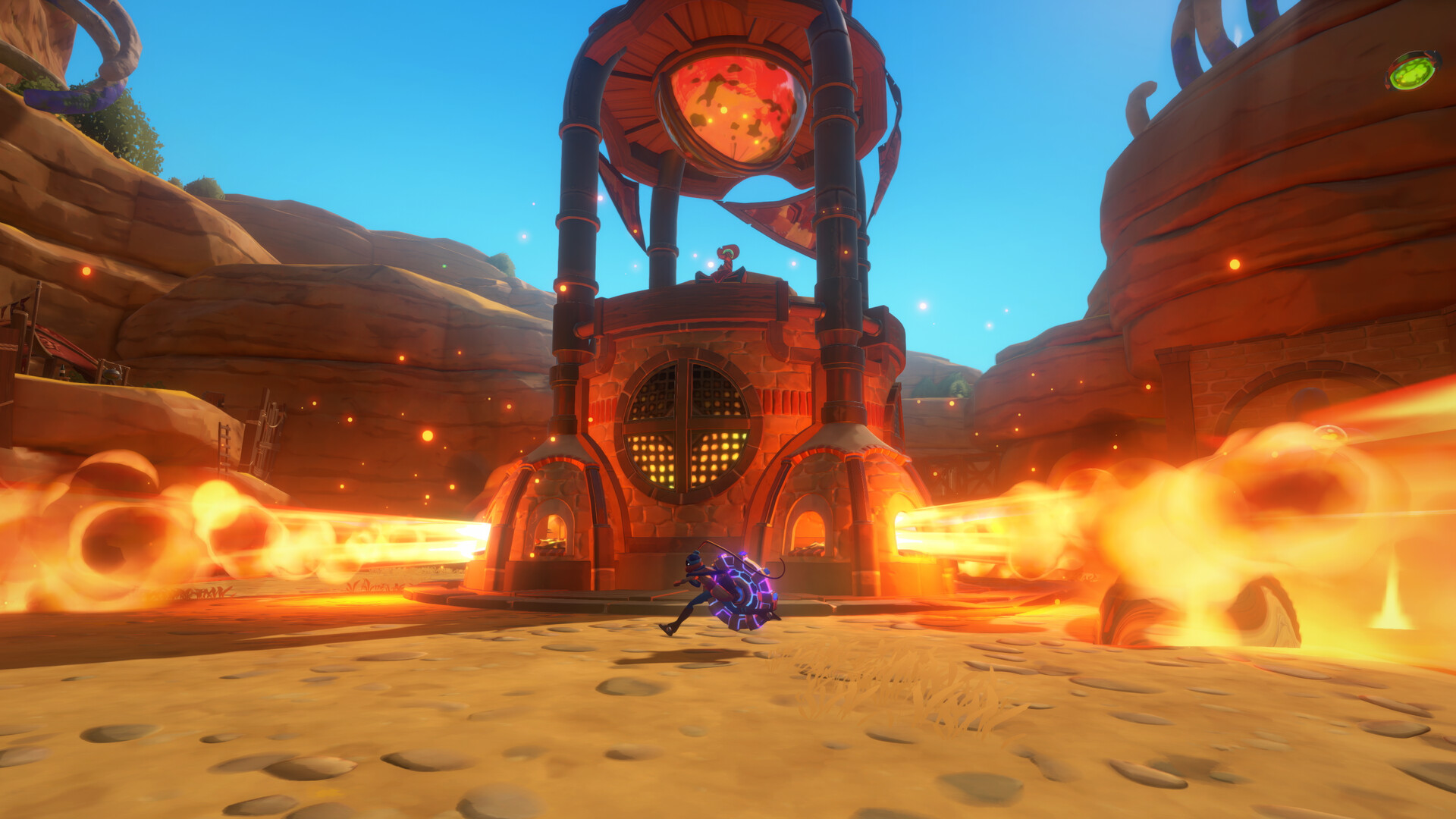
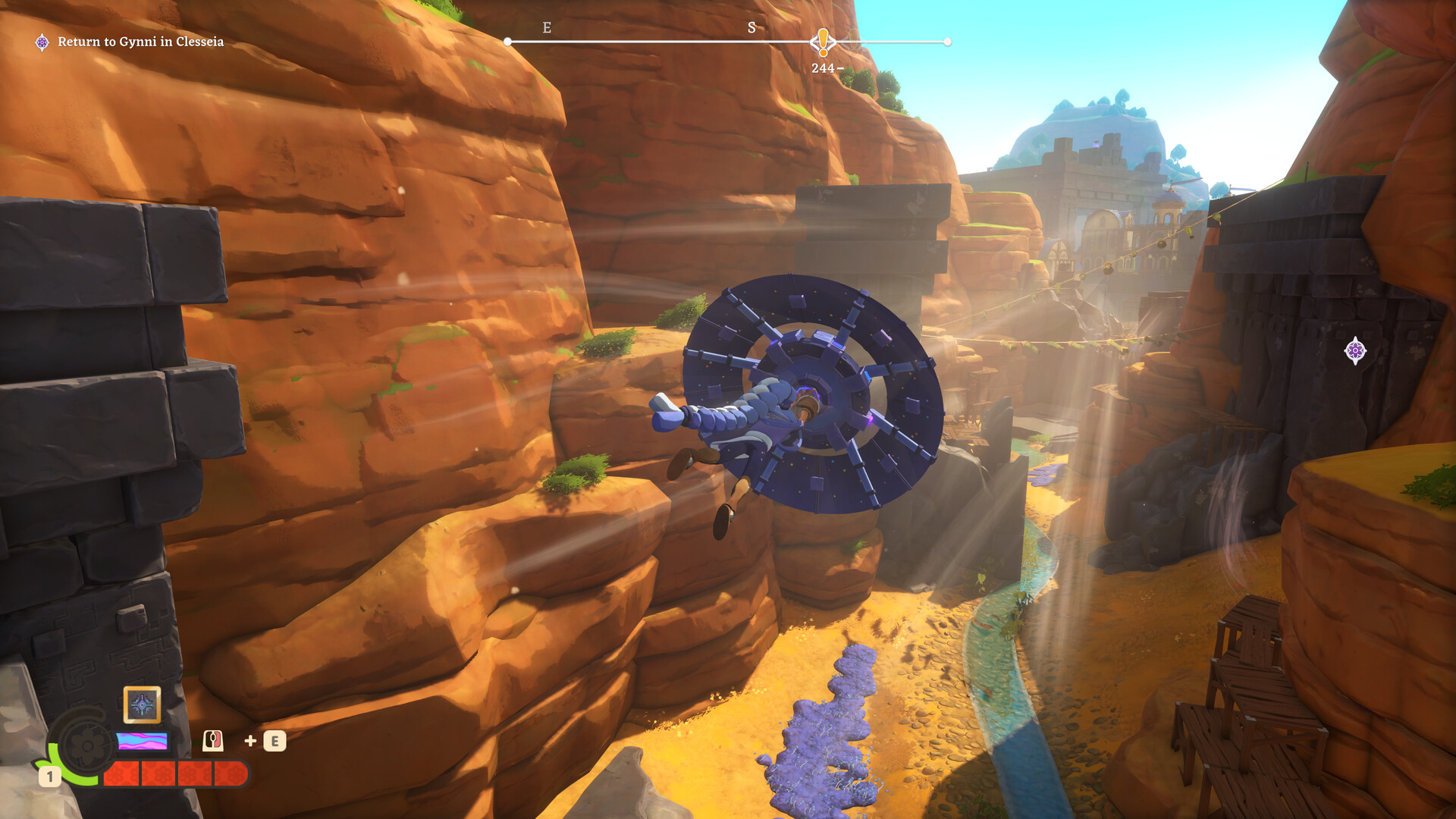
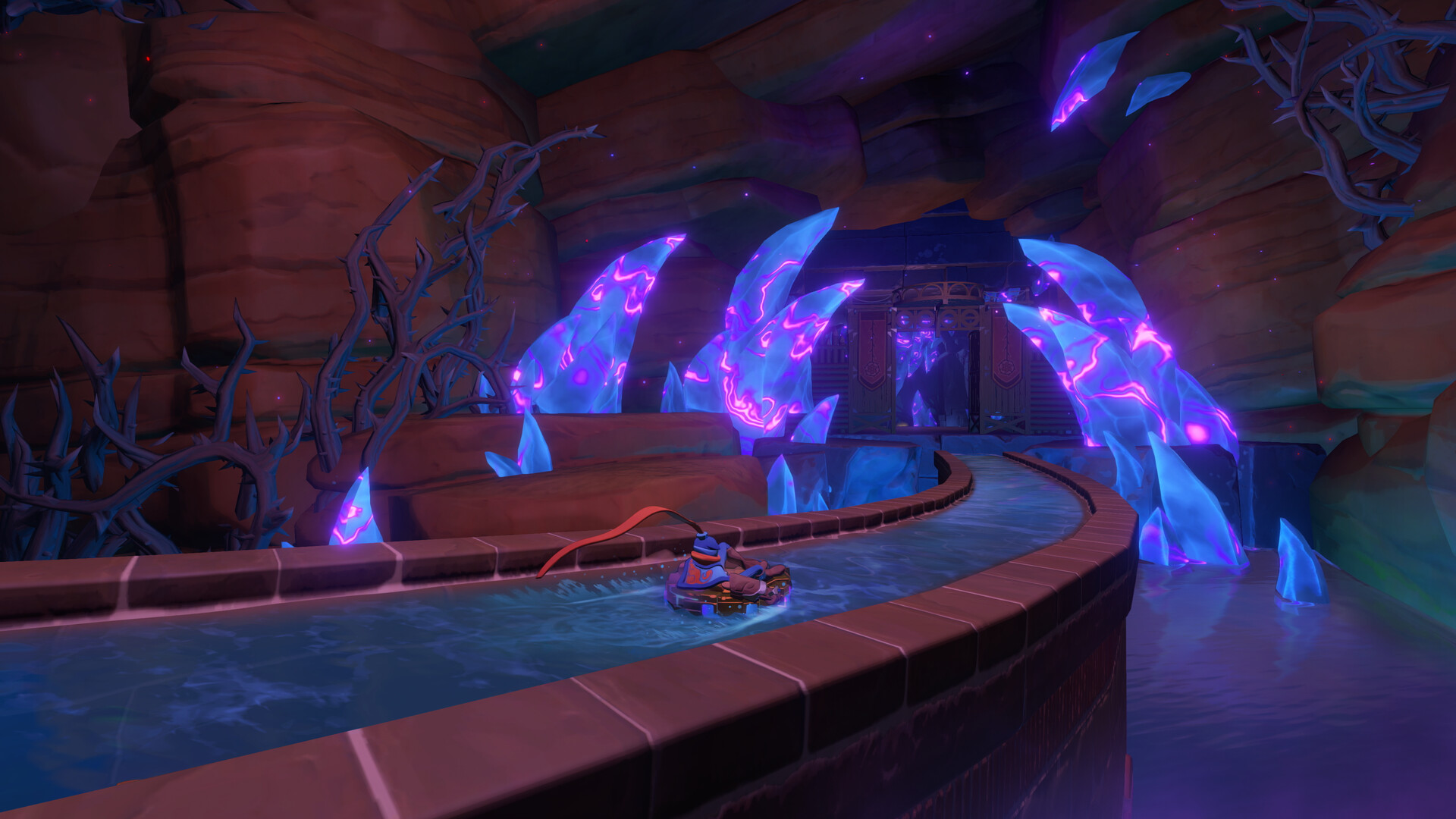
The travel is the most enjoyable part. Clesseia makes you want to cross because the Squire doesn’t just run from one point to the other. He can gain speed, use his shield like a board, dash on the roads, jump, look for shortcuts and turn certain journeys into little moments of pleasure. The game doesn’t need a huge world to give that feeling. Sometimes all it takes is a slope, a well-designed path, a passage seen in the distance for the journey to become more fun than the objective.
This mobility gives a real rhythm to exploration. We look at the scenery differently, we look for heights, reliefs, areas where we can gain momentum. The Knightling gains a lot when it lets the player play with space. The map is not just a series of markers. It becomes a ground on which the shield can express something. This is where we most feel the influence of old-fashioned 3D adventures, those which gave as much importance to the journey as to the destination.
The quests remain simple. We help residents, we collect objects, we unblock passages, we solve small local problems, then we move forward to the next stage. Nothing really surprising, but the game remains easy to read. It knows how to guide without being too overwhelming, and to suggest detours without completely losing its player. For an adventure that also targets a family audience, this balance matters. We can move forward quietly, come back later, look for a few secrets, without the world becoming an indigestible list.
The level design works better in open spaces than in more structured sequences. When the game leaves room for movement, it breathes. When it confines the Squire to very conventional fights or objectives, it seems more ordinary. Clesseia has charm, but not all its paths have the same strength. Some areas make you want to take your time. Others are crossed mainly because the quest requires it.
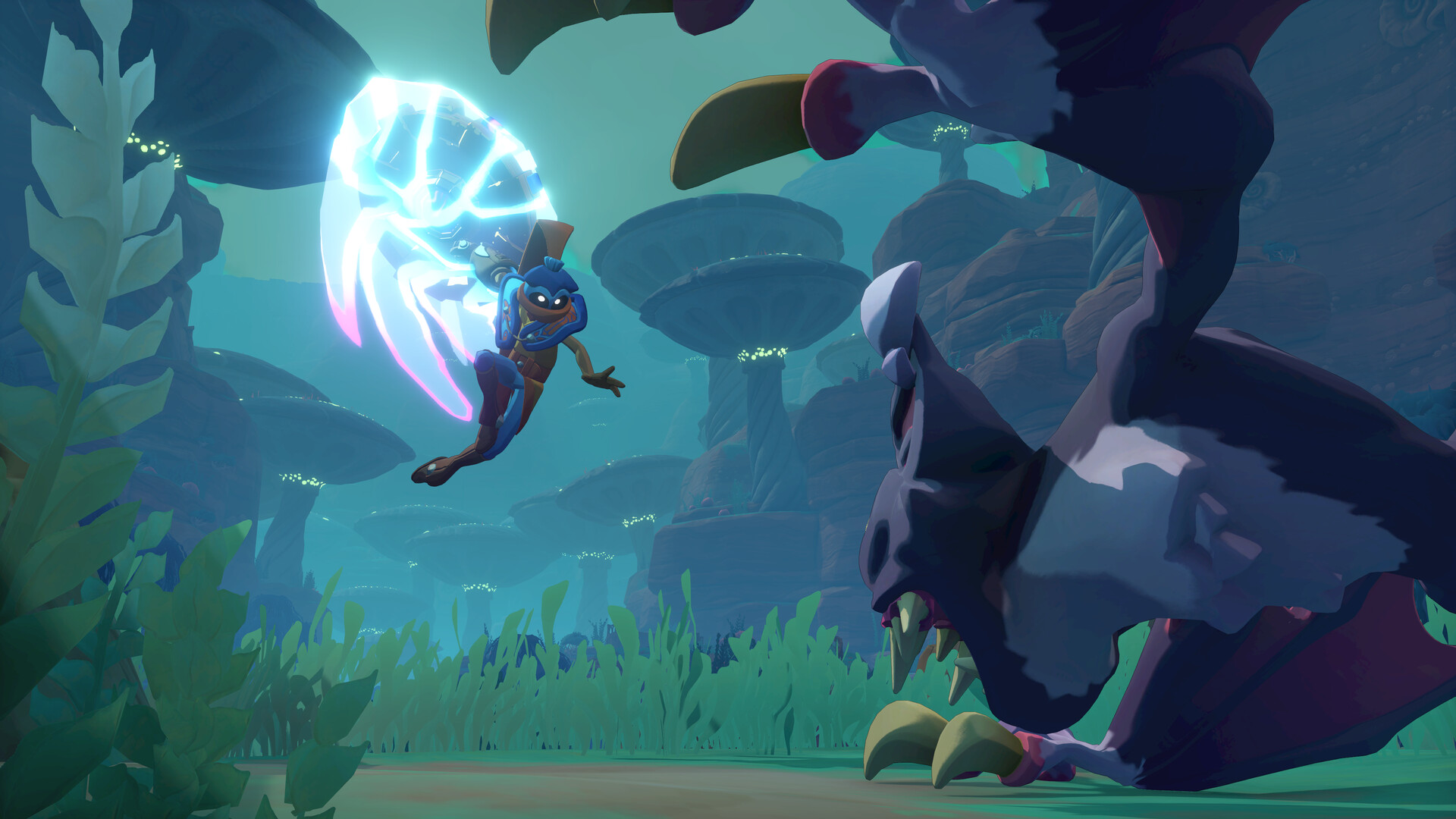
The combat is also based on the shield, with a fairly direct logic. We block, we dodge, we wait for the opening, we sometimes return the opposing energy, then we strike. The base is clear, and it fits the character well. The Squire is not a master of arms. He survives thanks to his tool, his timing, his ability to return an attack against the one who launched it. On paper, it’s coherent, almost elegant.
In practice, the action sometimes lacks teeth. The clashes remain accessible, the enemies are read correctly, but the possibilities are not always renewed quickly enough. The shield gives a good identity to the system, but it is not enough to avoid a certain repetition. We understand quite quickly how to approach many encounters, and the game sometimes struggles to find the enemy or the situation that really forces you to change your habits.
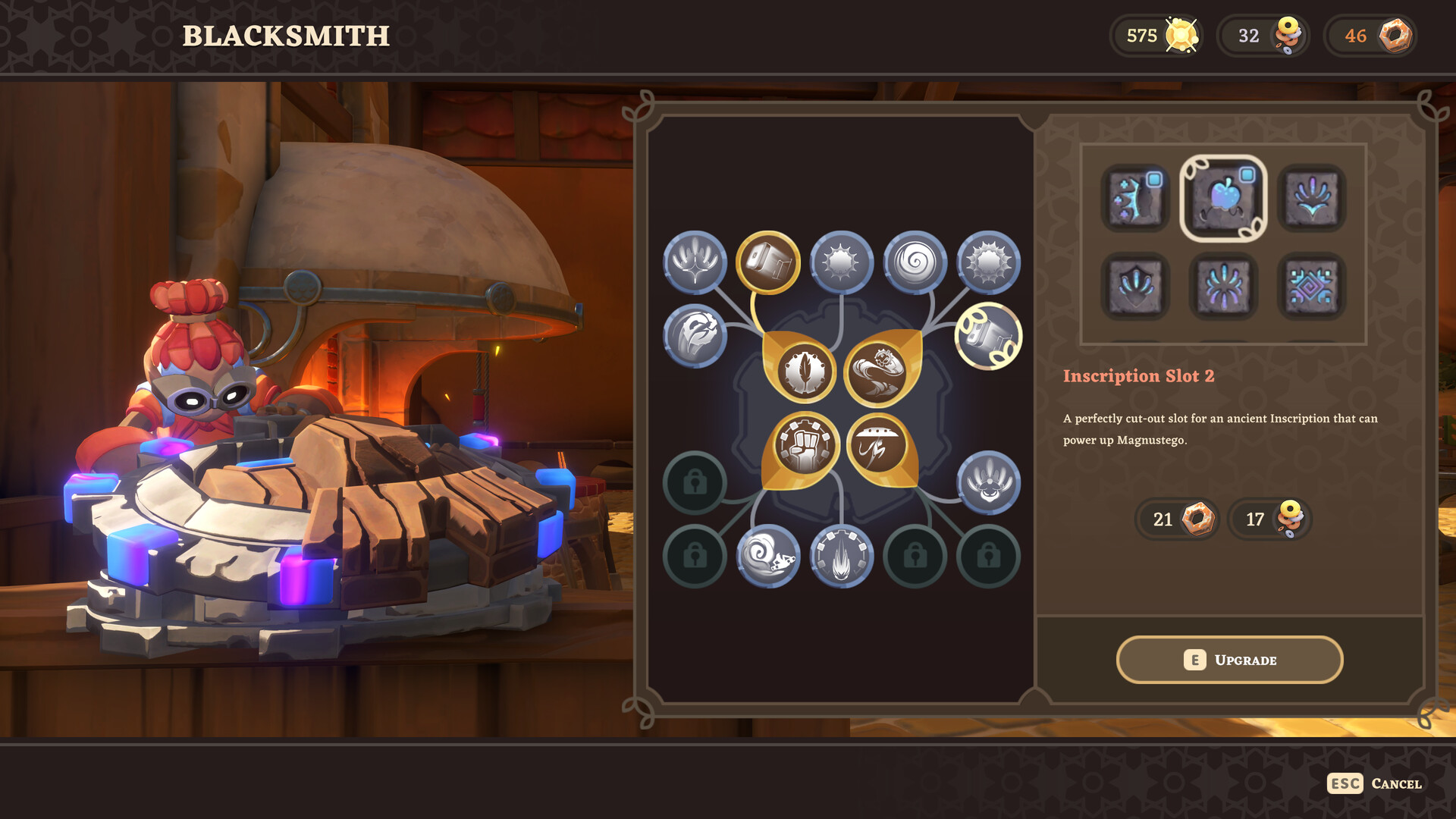
Improvements bring some progress. Gaining new abilities, strengthening the shield, opening up movement or combat options naturally makes you want to continue. The Knightling keeps this very simple pleasure of adventure where each new tool makes the world a little more passable. It’s not a very deep system, but it’s effective, because it always connects progression to something concrete in the player’s hands.
The more structured bosses and challenges give more depth to the whole thing. When the game requires reading an attack well, using the shield at the right time, positioning yourself and taking advantage of the terrain, it better shows what it can do. We then feel that the central mechanics had enough to support a truly solid adventure. But these moments are not always numerous enough, nor always ambitious enough to make us forget the simplicity of the rest.
The Knightling therefore remains a pleasant game to play, more convincing in the movement than in the pure combat. The shield is a real find, because it gives character to the hero and the world. It makes journeys lively, small explorations pleasant, platform sequences more natural. But the action does not always have the variety or impact necessary to hold up to the same level. The game often glides very well. It hits with less force.
Clesseia has the charm of simple tales
The Knightling chooses a very readable visual direction. Clesseia is not a world that is dark, dirty, or crushed by its own lore. It is a colorful, round, welcoming kingdom, thought of as a storybook adventure rather than a great heroic fresco. The plains, the villages, the paths, the ruins and the small heights immediately make you want to move forward. The game does not seek to impress with power. It seeks to inspire a fairly simple desire: to go and see what’s behind the next hill.
This clarity suits it well. The character stands out correctly, the paths are read quickly, the important areas stand out quite naturally. For a game that relies heavily on movement, this is essential. When the Squire gains speed with his shield, the world must remain comprehensible. The Knightling often succeeds, with settings that leave enough space to allow movement to breathe.
Above all, the artistic direction has real warmth and likeability. The characters have simple silhouettes, the colors remain warm, and the shield immediately gives an identity to the hero. It’s not the finest or most detailed game in its category, but it has a good face. We feel a desire to make an accessible, bright, almost family adventure, without falling into something too flat.
The animation contributes greatly to the pleasure of traveling. Sliding, dashing, small jumps, dashes, and shield-related movements give the game a nice energy. This is less noticeable in fights, where the blows sometimes lack weight, but when it comes to crossing Clesseia, The Knightling finds real fluidity. We feel that the game was designed around this sensation of movement.
The Xbox Series X|S version offers a clean rendering, without the game giving the impression of aiming for a technical demonstration. The image remains sharp, the fluidity holds up correctly, and the whole thing goes well with an adventure of this size. The limits are more visible in certain somewhat empty settings, certain less worked details, or some stiffer secondary animations. Nothing prohibitive, but enough to remind us that The Knightling remains a more modest project than the large models it evokes.
The soundtrack follows this same line. It accompanies the adventure with gentle, heroic themes without heaviness, capable of supporting exploration without taking up too much space. The game doesn’t have music that you necessarily keep in mind long after the console is turned off, but it gives Clesseia a coherent atmosphere. It establishes the tale, the momentum, the small nobility of this squire’s quest.
The sound effects are more uneven. The shield produces fairly satisfactory feedback when used for movement, especially in the sliding or impact phases against the scenery. In combat, it sometimes lacks punch. The blows would have benefited from more slamming, the parries from giving more response, the enemies from better emphasizing the violence of the exchanges. The game remains enjoyable, but not always physical enough.
The French dubbing and texts make the whole thing welcoming. For an adventure that relies on its quests, its secondary characters and its family tone, this is important. The Knightling can thus easily reach its audience, without language barriers, with simple dialogues and light humor that stick to its universe.
The Knightling therefore has a sincere, warm, sometimes very pleasant appearance. Clesseia is not a spectacular world, but a readable and sympathetic story setting, carried by an immediately identifiable hero and a good feeling of movement. It sometimes lacks density, weight and some truly memorable visual moments. But the kingdom has enough charm to make you want to slide in shield first.
Verdict
A little hero who slides well
7/10
The Knightling succeeds mainly thanks to the shield. Twirlbound has found a simple, readable tool capable of giving a real identity to its squire and to its world. Crossing Clesseia, gaining speed, sliding on the roads, solving small situations and progressing in this colorful tale often brings a smile. The game has heart, a real sweetness, an endearing hero and an adventure clear enough to speak to a family audience without ever looking down on them.
But the whole thing remains a little too modest to make a complete impact. The fights lack depth, some objectives remain very classic, the areas are not all equal and the finishing sometimes recalls the limits of an independent project. The Knightling does not have the scale of the great adventure games that it evokes, but it retains some of the charm. A sincere, accessible quest, sometimes too light, but driven by a good idea and a nice sense of movement.
Pros
- The shield, excellent central idea
- A pleasant and fluid exploration
- Clesseia, colorful and welcoming kingdom
- A sincere family tone
- French text welcome
- A truly gentle adventure
Cons
- Combat that is too simple over time
- Often very classic objectives
- Some less inspired areas
- A lack of weight in clashes
- A finish that is sometimes a little modest
More in Video games
Full library 8/10
Onimusha: Way of the Sword
XBOX 7.5/10
The Lord of the Rings: War in the North – Legacy Edition
XBOX 5/10
Disgaea Mayhem
SWITCH 9.5/10
Assassin’s Creed Black Flag Resynced
XBOX 5.5/10
Tale of Dark Lands
SWITCH 9/10
007 First Light
XBOX 8/10
Realm of Ink
SWITCH 7/10
Ariana and the Elder Codex
SWITCH 6.5/10
Kingdom’s Return: Time-Eating Fruit and the Ancient Monster
SWITCH 9/10