
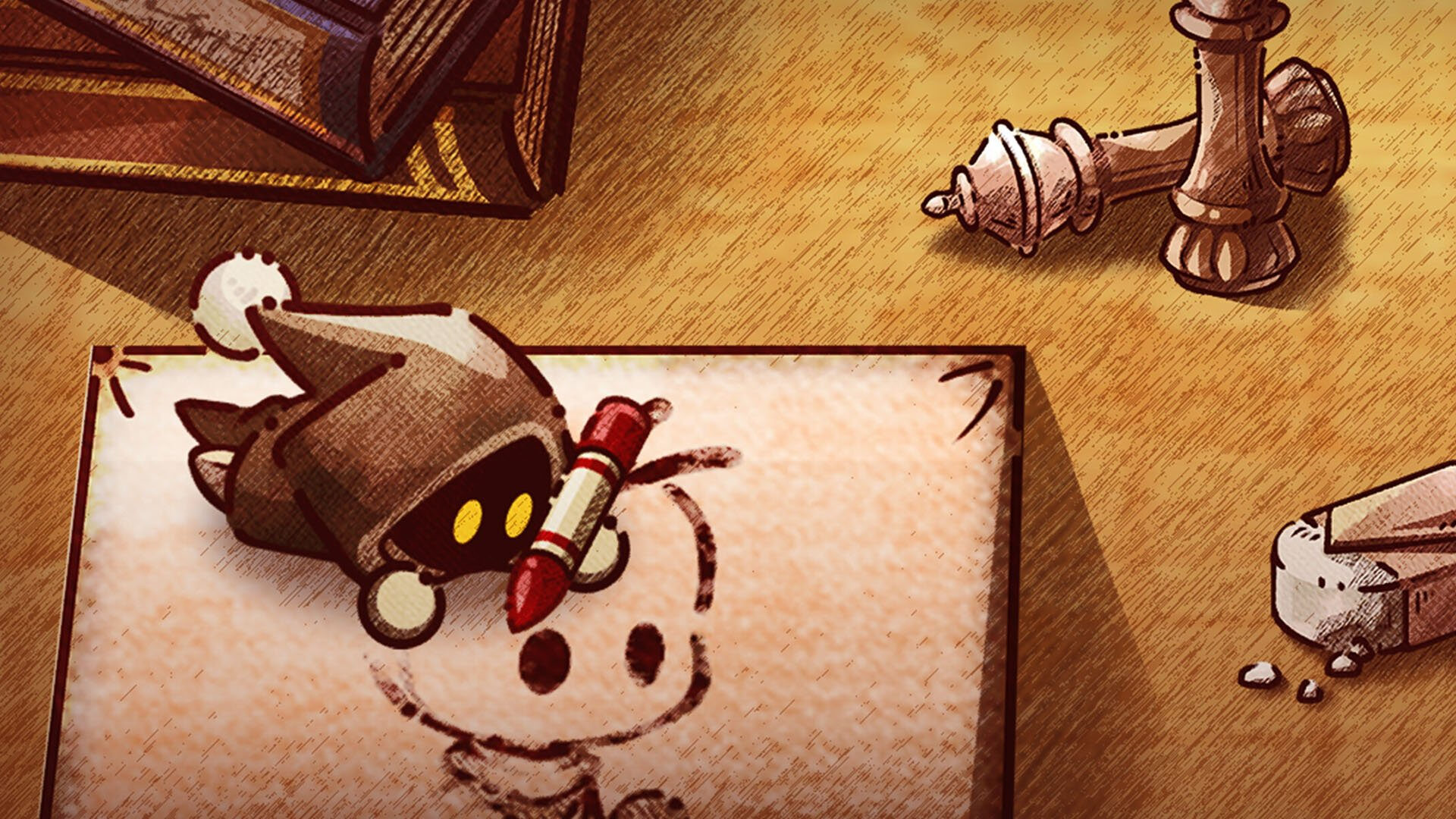

ShapeHero Factory
The poetic mechanics of creation
Score: 9/10
Images and videos



At a glance
We liked
- Absolute clarity of the automation system
- The strategic richness of combinations of shapes
- Exemplary fluidity on Switch
- The minimalist but expressive artistic direction
We liked less
- A demanding learning curve for beginners
- Fights sometimes too passive
- A lack of visual variety over time
- Few scripted elements to contextualize the world
 By Farrel Grimwood · published · 6 min read
Contents
Beneath its minimalist appearance and pastel shades, ShapeHero Factory hides a machine that is both ingenious and hypnotic. Developed and published by Asobism, the title comes to Nintendo Switch on September 18, 2025, and transforms the creation of heroes into a strange industrial ballet. Here, the factory does not produce weapons, but legends shaped, calibrated, polished by the player’s mathematical logic.
The concept is as simple as it is captivating: you build, modulate and improve a production line responsible for manufacturing geometric heroes. Each form becomes a living unit, each assemblage an abstract soldier ready to fight in a world without flesh or face. Behind its cute and almost naive appearance, ShapeHero Factory hides a formidable optimization game, where each technical decision becomes a strategic choice.
This improbable fusion of automatic management, modular progression and zen aesthetics raises a question: how far can you push mechanical perfection before it destroys the magic of creation?
The architects of abstraction
ShapeHero Factory doesn’t really have a story in the classic sense. No charismatic hero, no lengthy dialogues or epic quests. And yet, everything tells something. Behind the geometric shapes and automatic circuits lies a silent story, that of a world where creation has become an industrial process. You are an architect of ideas, a worker of the concept, a demiurge reduced to a board of orders.
Each session invites you to design heroes made of cubes, spheres, prisms and gears. These abstract entities are born, perfected, destroyed, then reborn in other configurations. This endless cycle evokes the eternal loop of production, where beauty only has value in its efficiency. The factory you manage becomes a character in its own right: it breathes, creaks, adjusts, improves, until it gives the illusion of a mechanical consciousness.
The little narration comes through the interfaces, the menus, the little diverted sentences that dot the screens. There is something fascinating in this silence: ShapeHero Factory tells without speaking, it suggests without explaining. The “heroes” that you assemble bear your signature, your logic, your errors. They are your geometric children, forged by repetition and the obsession with perfect order.
And little by little, something strange happens. Behind the coldness of the simulation hides an unexpected emotion: that of the creator who sees his creation escape him. You realize that the perfection you seek does not exist, that it crumbles the closer you get to it. The game then becomes a discreet, almost poetic metaphor for the relationship between the player and his work. Create, destroy, start again: it is the only language of this voiceless world.
The watchmaking of the perfect hero
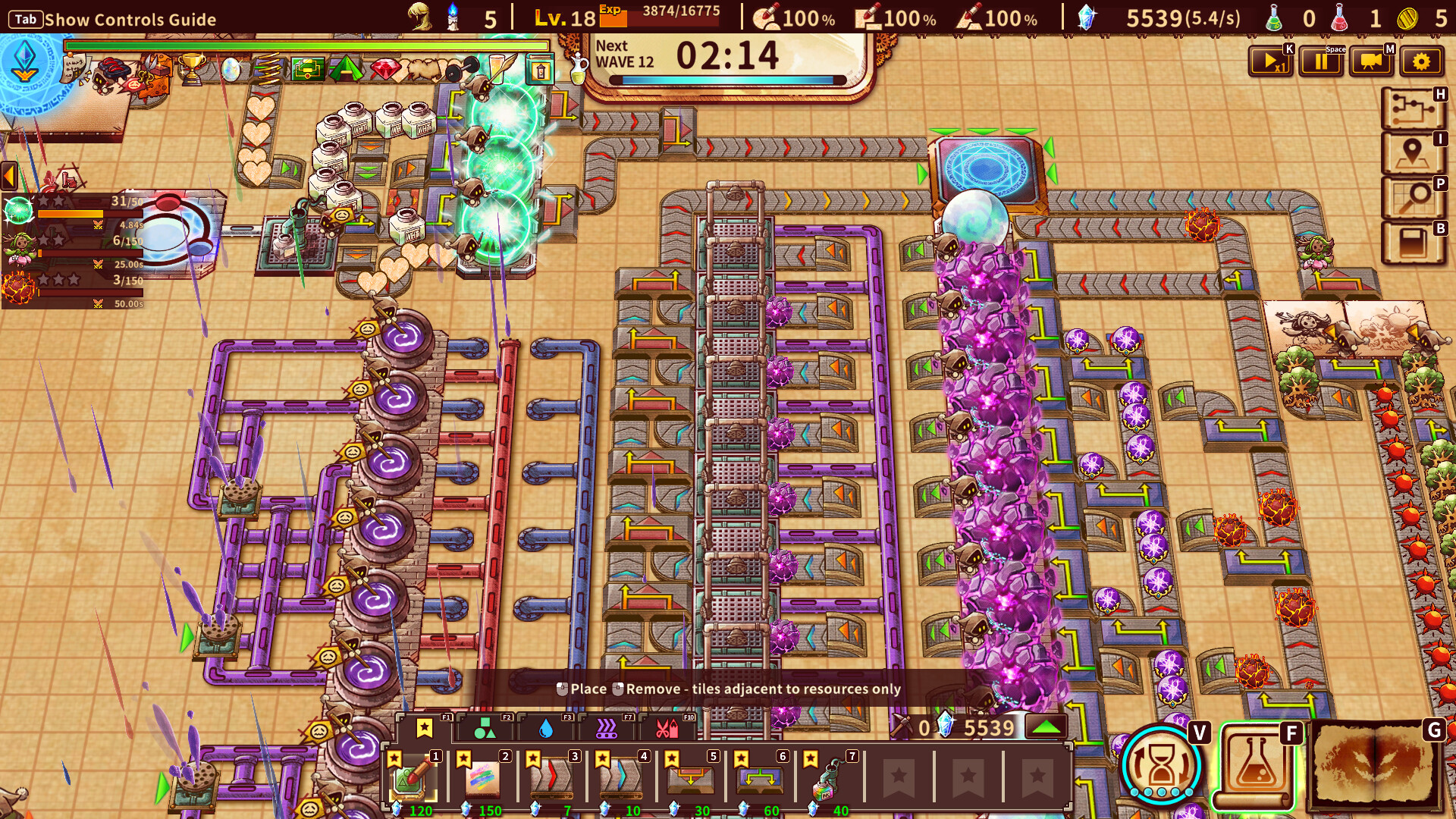
In ShapeHero Factory, every cog counts. The game is based on a clear idea: transform a workshop of geometric shapes into an automated army capable of repelling waves of enemies. You assemble, configure, perfect: everything becomes a cycle where pure logic takes the place of brute force.
The game opens in the production phase, the very heart of your factory. There you have creation modules, conveyors and assembly points to give birth to your creatures. Each “hero” is born from the combination of basic shapes: a circle with a triangle produces a fast fighter, while a square fused with a prism generates a massive defender. The system is based on rigorous alchemy: understanding geometry becomes a weapon, and the arrangement of modules decides the fate of your entire line.
Each element has a specific role. Some modify the speed of production, others strengthen the quality of units, still others allow the fusion of rare attributes. You’re constantly juggling efficiency and stability, because a chain that’s too dense can collapse if it’s not calibrated. This tension makes every adjustment vitally important: the slightest mistake can ruin an entire production sequence, but one good decision transforms your factory into a mathematical war machine.
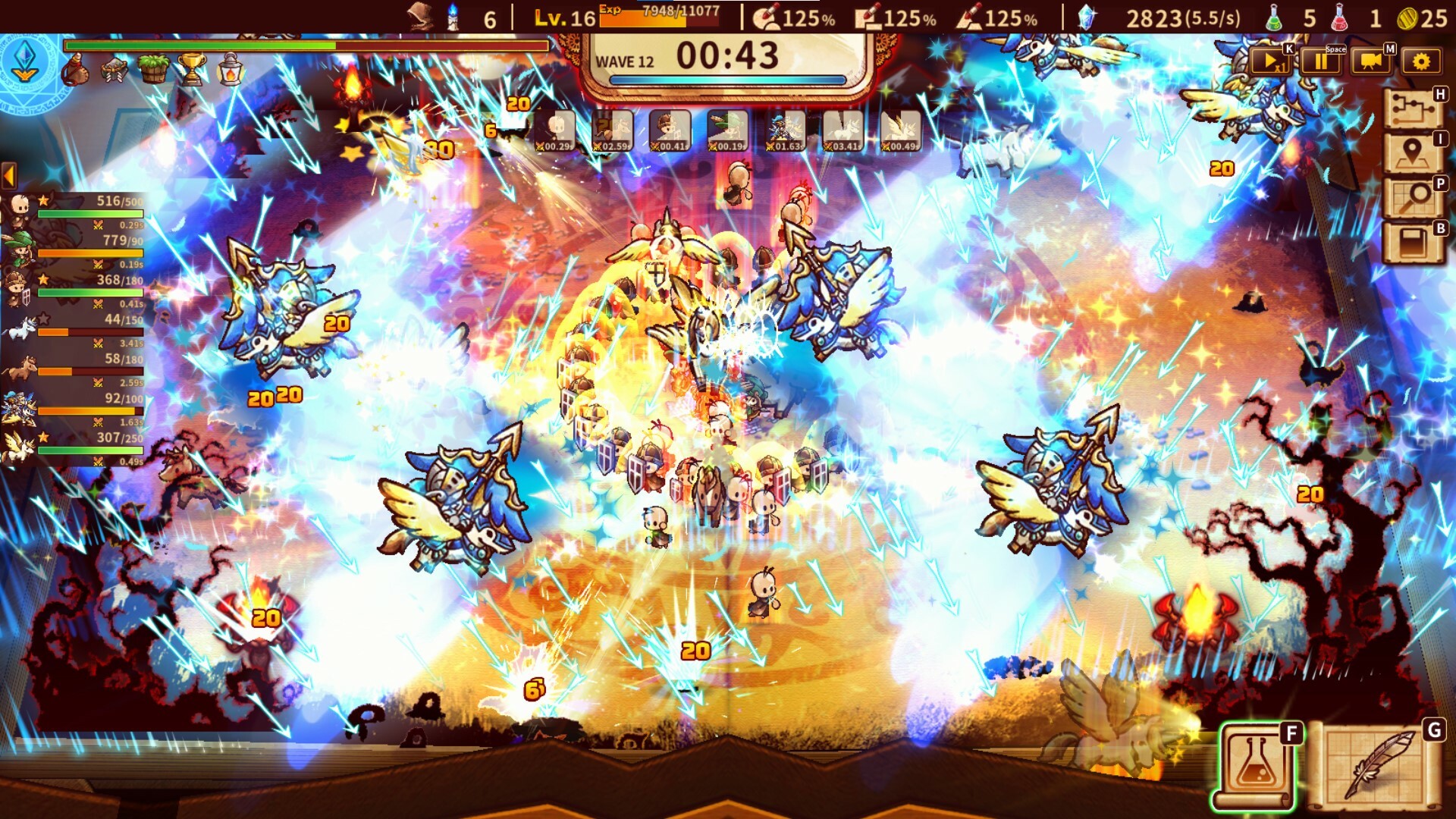
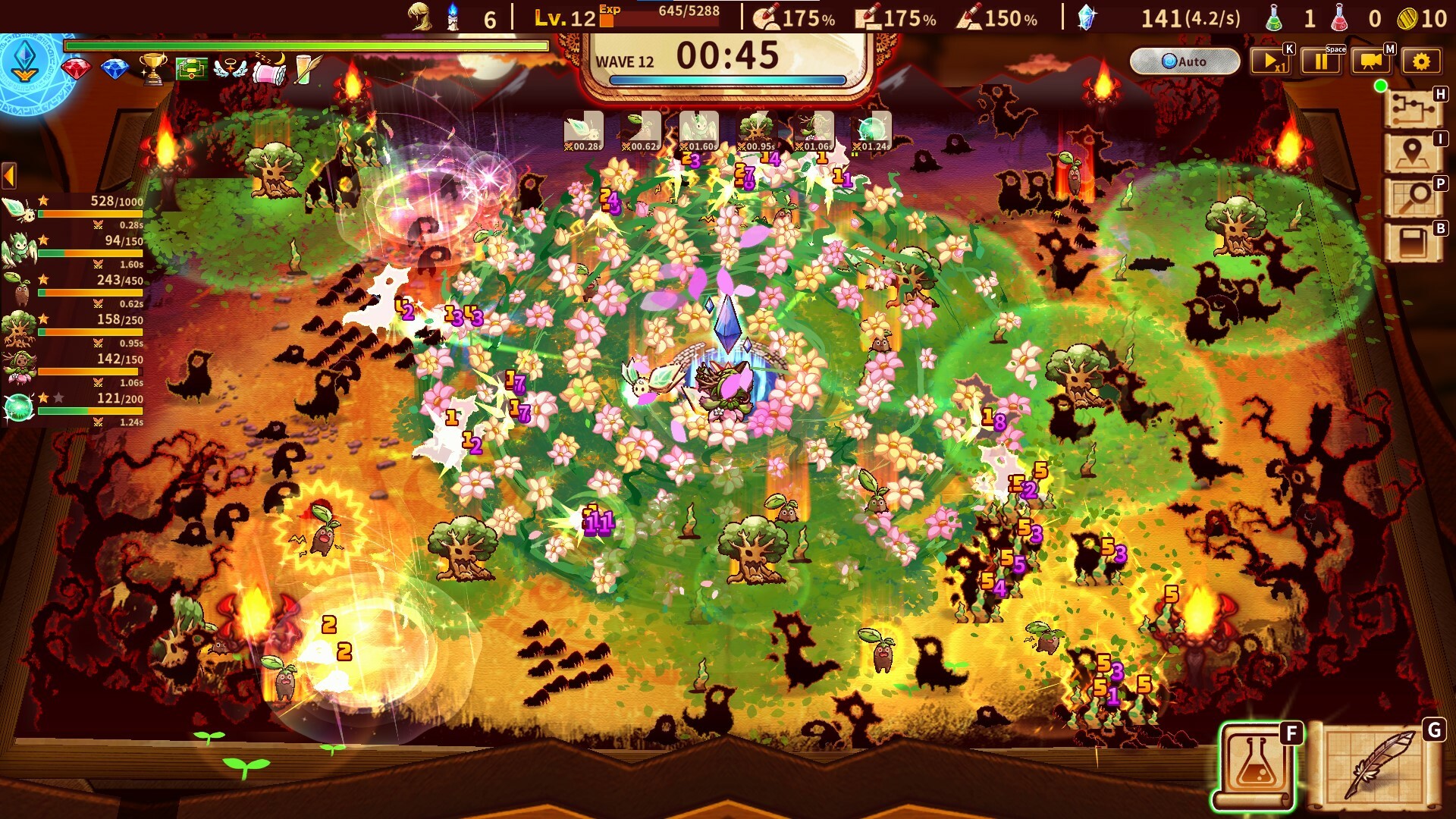
Once your heroes have been assembled, the combat phase is activated. You watch as your creations launch into battle, each in their own configuration. The player no longer acts directly: he becomes a spectator of his own ingenuity. Combat functions as a life-size test of your previous choices. It is possible to intervene occasionally to trigger a special ability or target a key enemy, but victory depends above all on the precision of your design.
The balance between automation and anticipation is at the center of the gameplay. Each production cycle confronts you with increasingly demanding enemy waves, forcing continuous adaptation. Nothing is static: yesterday’s configuration is no longer enough today. You must rethink your combinations, experiment with new recipes, and find the right pace to maintain the survival of your factory.
The roguelite elements further amplify this dynamic. After each defeat, you start a new run, but keep “Arcane Knowledge” points which unlock permanent improvements. This slow but tangible progression reinforces the feeling of constant learning. You never really lose: you perfect the machine, over and over again, until you achieve absolute harmony between order and chaos.
The level design embraces this philosophy. Each terrain imposes new production flows, new spaces to exploit. Nothing is decorative: everything serves functional logic. The difficulty curve, gentle at first, becomes relentless as the waves intensify. Play rewards planning, but also values experimentation. Some absurd configurations end up producing unexpected results, proof that creativity still has its place at the heart of mechanics.
ShapeHero Factory transforms repetition into ritual and logic into poetry. You are not just playing a management game: you are orchestrating a living factory, an organism that learns, corrects itself and evolves with you. In its cold perfection, in its haunting order, it hides a rare mechanical beauty: that of a system that works so well that it ends up seeming magical.
The language of forms and silence
ShapeHero Factory stands out for the purity of its artistic direction. No frills, no excess, no artifice. The world is expressed through lines, colors and movement. Each visual element is thought of as a component of the overall machine, each texture serves clarity. On Nintendo Switch, this sobriety becomes a strength: the game runs smoothly, fluid and readable, even when the screen fills with dozens of moving heroes.
The graphic style evokes a living design notebook. The shapes seem drawn in digital ink, the animations are sharp, almost surgical, and the lighting effects underline the mathematical logic of the gameplay. The explosions of particles, although discreet, reflect the satisfaction of the work accomplished: each successful production is manifested by a brief colored pulsation, each error by a subtle distortion. It is an aesthetic of control, precision, mastery.
The visual universe also plays on symbolism. Geometric shapes are not just a design choice, they embody the very hierarchy of the world: the square for stability, the circle for movement, the triangle for attack. This coherence transforms the screen into a true visual score, where everything obeys a rigorous internal logic. The decor remains deliberately abstract. A neutral space, made of floating surfaces and suspended structures, like a celestial workshop.
The sound design, like the rest, favors restraint and readability. Each module, each interaction, each movement emits a distinctive sound, its own note which adds to the general sound composition. The factory becomes music, a set of rhythmic and metallic pulsations which evolve according to your progress. As the production speeds up, the tempo intensifies, transforming mechanical noise into melody.
The soundtrack accompanies this increase in complexity with remarkable finesse. Electronic layers intertwine with mechanical tones and light percussion, creating an atmosphere that is both concentrated and contemplative. The game encourages calm and rigor, but also rewards daring: a sonic crescendo sets in with each wave, amplifying the tension without ever breaking it.
Finally, we must salute the care taken in the Switch version. The interface is perfectly adapted to touch, fluid and intuitive. Menus respond instantly, transitions are clear, and readability remains exemplary even in handheld mode. Few management games manage to maintain such precision on a small screen, and ShapeHero Factory stands out with exemplary ergonomics.
As a whole, the game achieves a rare harmony between form and function. Nothing is there merely to look attractive, everything is at the service of the concept. ShapeHero Factory speaks the language of minimalism, but with a mechanical eloquence that few titles dare to achieve.
Verdict
Mechanical perfection as utopia
9/10
ShapeHero Factory is a jewel of precision, a logic laboratory where every decision counts and every error teaches. Asobism here delivers a singular work, halfway between industrial meditation and pure strategy, capable of transforming a simple geometric assembly into a hypnotic experience. On Nintendo Switch, the game retains all its fluidity and proves that a rigorous concept can shine without artifice.
What is impressive is the absolute coherence of the project. Everything responds to a clear idea: making creation a living process. You are not playing a classic management game, you are participating in a reflection on the mechanics itself. Each module you place, each shape you assemble tells something about your way of thinking, of building, of anticipating. The pleasure comes not from victory, but from the moment when the machine becomes autonomous, when your decisions come to life without you.
Pros
- Absolute clarity of the automation system
- The strategic richness of combinations of shapes
- Exemplary fluidity on Switch
- The minimalist but expressive artistic direction
- The mechanical and immersive soundtrack
Cons
- A demanding learning curve for beginners
- Fights sometimes too passive
- A lack of visual variety over time
- Few scripted elements to contextualize the world
More in Video games
Full library 10/10
World of Warcraft: Forever
PC 8.5/10
Warhammer 40,000: Boltgun 2
PC 9/10
Total War: Warhammer III – Lord of the End Times DLC
PC 7/10
Revisited | Warcraft III: Reforged
PC 7.5/10
Warcraft III Reforged: Forsaken Kingdom
PC 8.5/10
World of Warcraft: Midnight
PC 9/10
Puzzle Bobble Everybubble!
PC 6/10
Crown of Greed
PC 6.5/10
Tavernhold
PC 6.5/10