
Nicktoons & The Dice of Destiny
SpongeBob plays a paladin
Score: 6/10
Images and videos


At a glance
We liked
- An immediately endearing Nickelodeon cast
- Local co-op for up to four players
- Simple rules, perfect for the youngest
- Characters with fairly readable roles
We liked less
- A very limited solo adventure
- Levels too linear
- Too basic loot
- Enemies that repeat themselves quickly
 By Farrel Grimwood · published · 10 min read
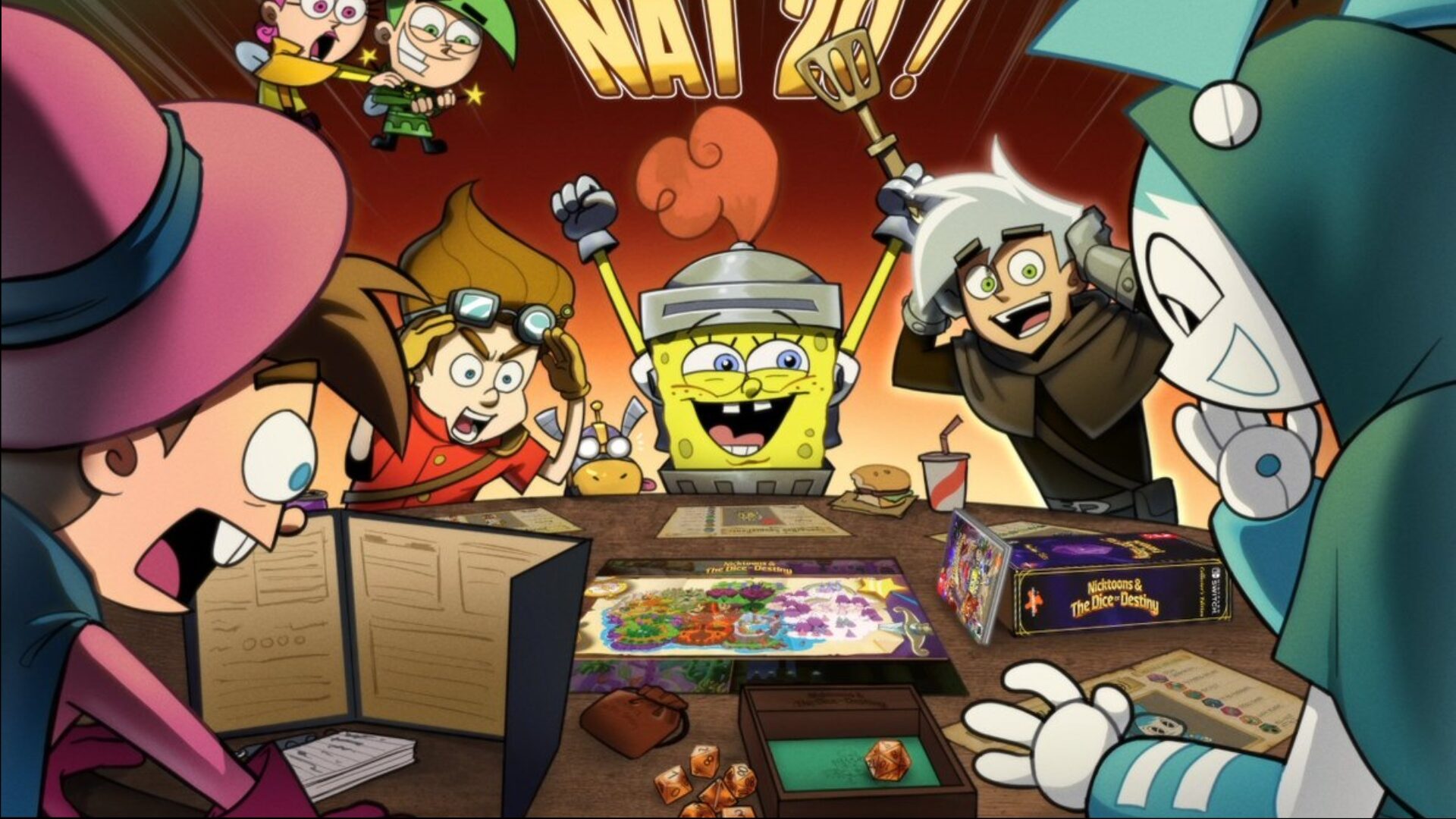
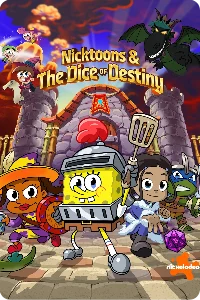
With Nicktoons & The Dice of Destiny, Petit Fabrik and Fair Play Labs take several figures from Nickelodeon, dress them up as role-playing heroes, then unleash them into a little family dungeon crawler. SpongeBob becomes a paladin, Sandy charges in as a barbarian, Katara keeps her water control, Leonardo takes out the katana, Timmy Turner takes the wizard role, and all these little people find themselves in an adventure that transforms Saturday morning cartoons into a very accessible fantasy campaign.
Nicktoons & The Dice of Destiny doesn’t have the chops for a great action RPG, and it almost knows it. It focuses on the characters, on local cooperation, on the colorful environments and on this very immediate pleasure of seeing heroes from different series sharing the same fight. The game works best when taken like that: a light, noisy adventure, made to be shared, where the choice between SpongeBob, Katara, Danny Phantom, Jenny Wakeman or the others counts as much for attachment as for attacks.
But this simplicity also has something risky. When we remove the Nickelodeon nostalgia, it remains a very safe dungeon crawler, with corridors, enemies to clean, chests to open, skills to trigger and a progression which seems above all designed to never lose the youngest. This is a quality if you play with a child. This is a limit if we are looking for a real action RPG capable of standing alone with its systems.
Cartoon heroes in the same dungeon
Nicktoons & The Dice of Destiny doesn’t tell a great story, and that’s clearly not what we’re asking of it. The game mainly starts from a rather amusing pretext: transforming several Nickelodeon characters into fantasy adventurers and bringing them together in a common quest. SpongeBob, Sandy, Katara, Leonardo, Danny Phantom, Timmy Turner, Jenny Wakeman, Susie Carmichael and Jimmy Neutron each leave their series to enter the same delirium of classes, powers, monsters and loot.
The idea works because it has something immediately readable. We understand the gag even before launching the first mission. SpongeBob as a paladin, Sandy as a fighting brute, Timmy as a magician, Leonardo as a katana warrior: the game has fun moving these characters to a setting that does not really belong to them. It’s not very subtle, but it gives the cast a little freshness. We don’t just find mascots placed there to sell a cover. We see them playing something else.
The scenario therefore mainly serves to make this improbable meeting happen. There is not particularly fine writing, nor a real desire to explore the characters beyond their function in the team. Everyone keeps a part of their original identity, a few attitudes, a few powers, a few references simple enough to speak to the target audience. The game doesn’t try to reinvent SpongeBob, Avatar or Danny Phantom. It uses them as immediately recognizable figures, capable of carrying the part without too much staging.
This is probably the right choice. A game like this could have quickly become tiresome if it had tried to justify its mixing too seriously. Nicktoons & The Dice of Destiny prefers to stay in the spirit of the toy. We take famous characters, we give them RPG costumes, we place them in a fantasy world, then we let the moves and the powers do the rest. The story is not there to thrill. It is there to provide an excuse for the chaos.
The limit comes from the lack of truly significant interactions. With a cast like this, we could have hoped for more little lines, clashes of temperaments, moments where the worlds really rub up against each other. The game has the characters, it has the concept, but it doesn’t exploit enough of what this encounter could produce. We more often sense an addition of heroes than a real troop.
This is especially seen solo. When playing alone, the chosen character exists mainly through his attacks and his fighting style. The writing takes a back seat, and the game is based more on the pleasure of recognizing a beloved figure than on the discovery of an adventure. In cooperation, this limit is felt less. Seeing several Nickelodeon heroes running together in the same dungeon is already enough to create a little group dynamic, even if the storyline doesn’t do much to fuel it.
Nicktoons & The Dice of Destiny therefore keeps the narration light, almost decorative. This is not a major flaw in a family game of this type. But it also reminds us that the license has a lot to do with the whole. Without SpongeBob, Katara, Leonardo or the others, the story would have little to offer. With them, it becomes a nice pretext, sometimes funny by its simple principle, but rarely written enough to really exceed the pleasure of the meeting.
A Diablo-themed birthday party
Nicktoons & The Dice of Destiny plays like a very accessible little hack and slash. You choose your character, you advance through a level, you hit groups of enemies, you collect loot, you trigger your skills, then you return to manage your equipment before leaving. The game doesn’t try to reinvent anything. It takes the basis of the dungeon crawler, greatly simplifies it, then dresses it up with Nickelodeon heroes.
This simplicity works quite well initially. The commands are quickly understood, the attacks come out without difficulty, the skills have legible effects, and each character has a fairly clear role. SpongeBob can take it, Katara attacks from a distance with her water, Leonardo goes for a more direct rhythm, Sandy hits hard, Timmy Turner plays more with magic. We are not talking about very deep classes, but there are enough differences that the choice is not just cosmetic.
Local cooperation naturally gives more meaning to the whole. With several people on the sofa, the game finds its real rhythm. The fights become noisier, the powers mix, the characters cross paths, and the simplicity of the mechanics becomes a quality rather than a weakness. You can play without spending time in the menus, without asking everyone to understand a complicated build system, without breaking the game with each new loot. For a family audience, it’s consistent.
Solo, the experience is thinner. The levels are traversed without much resistance, the enemies arrive in predictable groups, and the objectives remain very direct. We move forward, we clean, we open, we start again. The game remains a little immediate pleasure, but it quickly lacks bite. It’s not enough to put SpongeBob in armor to give relief to a corridor full of monsters.
The loot also remains very regulated. We recover equipment, we improve our statistics, we replace what is less good with what hits harder, but the system never pushes the thinking very far. This is not necessarily an error. Nicktoons & The Dice of Destiny is not aimed at players who want to spend an hour optimizing a build, but at those who want to understand in ten seconds if one weapon is better than another. Again, the choice is logical, but it reduces the depth.
Skills provide a little more variety. Each hero has their own attacks, powers and way of filling the screen. The best moments come when the game lets these differences exist, especially when facing bosses or in slightly more charged fights. We then feel what the title could have become with more varied enemies, more interesting arenas and more marked synergies between characters.
The bosses actually spice up the formula a bit. They give structure to the chapters, impose a minimum of reading, and allow the game to move beyond its simple sequence of waves. These are often the most pleasant passages, because they finally give a real target to this little team of cartoons. Nothing very difficult, nothing very technical, but enough to awaken attention.
The level design remains much safer. The environments are colorful, but the courses lack surprises. We go through linear areas, clean groups, break a few objects, pick up what’s lying around, then move on. The game doesn’t really make you want to explore, and it doesn’t reward curiosity enough to transform its levels into real adventure playgrounds. These are settings for progression, more than spaces that we want to explore.
This is where Nicktoons & The Dice of Destiny hits its limit. It’s too simple to keep a player accustomed to action RPGs hooked for long, but clear enough to work with younger players. Its interest depends a lot on the context. With four people, with children, in a short session, the game can have an effect. Alone, over several hours, it shows its seams much more quickly.
The title therefore remains honest in what it offers. It gives Nickelodeon characters an easy-to-learn formula, frictionless combat, a little loot, a few bosses, and local co-op that makes a real difference. But it lacks that layer of rhythm, surprise and depth that transforms a good family concept into a truly memorable game. Nicktoons & The Dice of Destiny knows how to roll dice. It does not always know how to make the result exciting.
A cardboard fantasy
Visually, Nicktoons & The Dice of Destiny stands out above all for its initial idea: transforming several Nickelodeon characters into fantasy heroes. This is where the game is most fun to watch. Each character retains enough of their original identity to be immediately recognized, while still fitting into the little RPG costume that the game imposes on them.
This reinterpretation works pretty well. The heroes are colorful, readable, expressive, and we feel that the game relies heavily on them to give depth to its universe. There is a simple pleasure in seeing these characters from very different series share the same screen, especially in local co-op. The image then becomes more alive, noisier, closer to a toy that has been emptied on the living room carpet.
The environments follow the same logic, with a very light fantasy, never threatening, designed to remain readable and accessible. The settings are colorful, clean, easy to navigate, but rarely striking. The game does not seek to build a very dense world. Rather, it brings together combat zones, corridors, arenas and some visual elements linked to the Nickelodeon imagination. It’s nice, but too limited.
The artistic direction therefore has charm, without much scope. It gives enough personality to the characters, less to the levels. The heroes have a real presence on screen. Places fade more quickly. We go through nice settings, but we mainly remember who we are playing, not really where we are. In a game that relies so heavily on nostalgia and cross-licensing, this isn’t surprising, but it limits the sense of adventure.
The animations remain correct. The attacks read well, the skills trigger fairly clear effects, and the fights never get really confusing. The game does not seek detail or spectacular fluidity. Above all, it aims for an action that is immediately understandable, even with several players on the same screen. From that perspective, it gets the job done.
But it often lacks weight. Hits don’t have the impact they should have, enemies fall without much presence, and some powers feel more like they fill the screen than really hit. For a hack and slash, even a family one, this is a limit. The pleasure comes a lot from the chosen character, less from the pure sensation of combat.
The sound part naturally relies on voices and references. Dubbing helps the characters exist, especially for those who have a particular attachment to these series. Hearing these heroes in a fantasy context adds a little life to the whole thing, even if the writing doesn’t always give them enough material to really shine. The lines accompany the action, make you smile at times, then blend into the general noise. Too bad the title is only available with the English dubs.
The music remains more discreet. They fulfill their role correctly, give a light adventure color, accompany the levels without breaking the rhythm, but they do not leave many traces. Nicktoons & The Dice of Destiny could have pushed further the mix between cartoon and heroic fantasy in its soundtrack. It often settles for effective, but fairly neutral, dressing.
Nicktoons & The Dice of Destiny therefore has an honest presentation, carried mainly by its characters. The Nickelodeon heroes make the picture charming, the cooperation makes the screen more lively, and the light fantasy suits the target audience well. But the settings lack character, the impacts remain a little soft, and the soundtrack accompanies more than it marks. The game looks like a good colorful toy, not an adventure that you keep in your head.
Verdict
A quest for the sofa
6/10
Nicktoons & The Dice of Destiny works when it accepts being a little family hack and slash. The Nickelodeon characters immediately make you want to try, the local cooperation gives rhythm, and the simplicity of the combat allows you to play without spending time in the menus. SpongeBob, Katara, Leonardo, Sandy or Timmy Turner don't need a big system to have a few hours of fun. Above all, they need to be readable, colorful and easy to share.
But the game remains very limited when you look at it as a real action RPG. The levels are too linear, the loot lacks depth, the enemies repeat themselves quickly, and the adventure loses a lot of its interest in solo play. Petit Fabrik and Fair Play Labs have therefore created a friendly adaptation, designed for children and multiplayer games, but too safe to go beyond its role as a licensed recreation. A good idea for a sofa, not really a great quest.
Pros
- An immediately endearing Nickelodeon cast
- Local co-op for up to four players
- Simple rules, perfect for the youngest
- Characters with fairly readable roles
- A colorful fantasy that fits well with the family tone
Cons
- A very limited solo adventure
- Levels too linear
- Too basic loot
- Enemies that repeat themselves quickly
- A general lack of depth over time
More in Video games
Full library 8/10
Onimusha: Way of the Sword
XBOX 7.5/10
The Lord of the Rings: War in the North – Legacy Edition
XBOX 5/10
Disgaea Mayhem
SWITCH 9.5/10
Assassin’s Creed Black Flag Resynced
XBOX 5.5/10
Tale of Dark Lands
SWITCH 9/10
007 First Light
XBOX 8/10
Realm of Ink
SWITCH 7/10
Ariana and the Elder Codex
SWITCH 6.5/10
Kingdom’s Return: Time-Eating Fruit and the Ancient Monster
SWITCH 9/10