
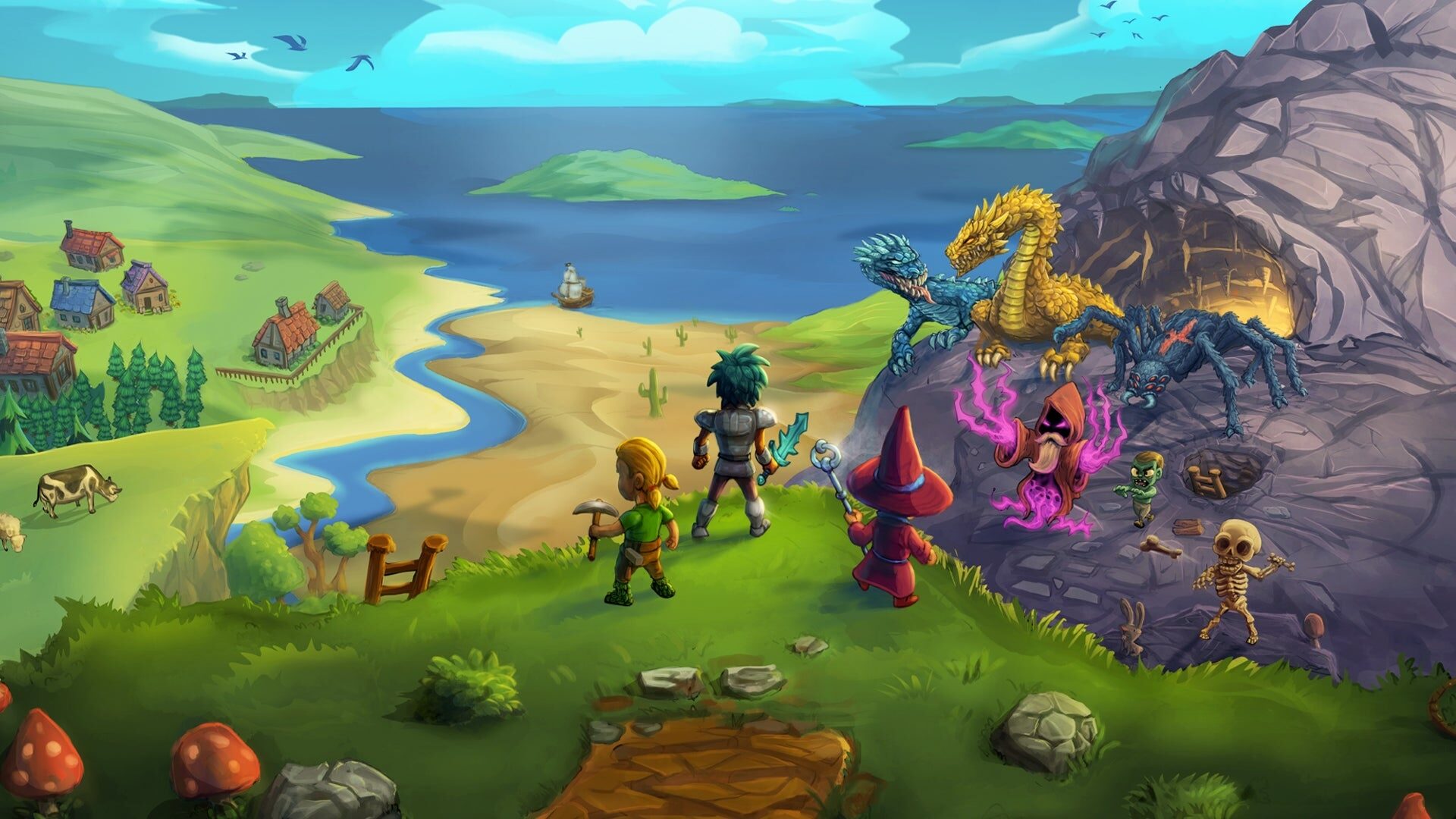
Necesse
The colony that digs on its own
Score: 7.5/10
Images and videos
At a glance
We liked
- The colony, the game’s standout feature
- A compelling loop of exploration, crafting and management
- Useful inhabitants, not just decorative
- Bosses that provide good progression milestones
We liked less
- Unremarkable pixel art
- A very dense interface
- Fairly simple fights
- A repetition that ends up appearing
 By Farrel Grimwood · published · 8 min read
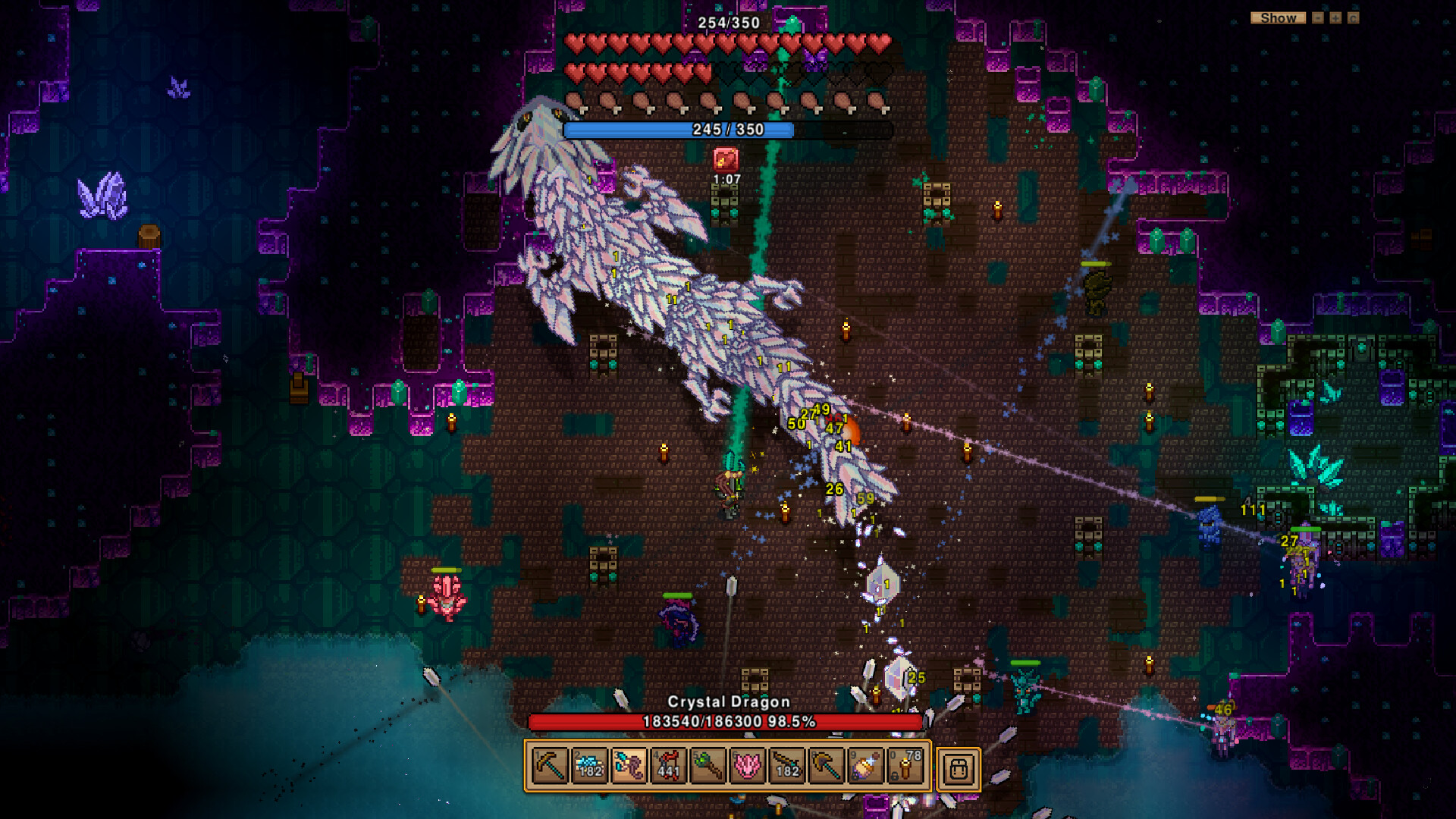
With Necesse, Fair Games ApS finally arrives at the end of a very long project. After several years of early access, the game is released in version 1.0 on October 16, 2025 on PC, with a proposal that fits into a fairly obvious, but rather clever mix: a bit of Terraria for exploration, a bit of Core Keeper for the caves, a bit of colony sim for the inhabitants who work in the player’s place, and enough bosses, crafting and biomes to keep those who like to disappear in this kind of loop occupied for a long time.
Version 1.0 also changes the feeling of adventure a lot. The world is no longer just a series of separate islands like before. It becomes an infinite and continuous map, with biomes that flow more naturally, more fluid exploration and progression that encourages you to go further without feeling like you are jumping from one piece of the game to another. For a sandbox built on “five more minutes,” this is a significant change.
Necesse catches the eye because it understands this little addiction of the genre very well. We go looking for copper, we come across a cave, the cave leads to a boss, the boss gives a new resource, the resource unlocks equipment, the equipment allows you to go further, and during this time the colony demands more beds, more fields, more storage, more security. The game constantly pulls on two threads: the desire to explore and the desire to improve what we leave behind.
But we should also not attribute to it a strength that it does not always have. Necesse remains a visually modest game, sometimes very generic in its pixel art, with an interface that can lack elegance and an artistic direction less striking than its systems.
Settlers who change the loop
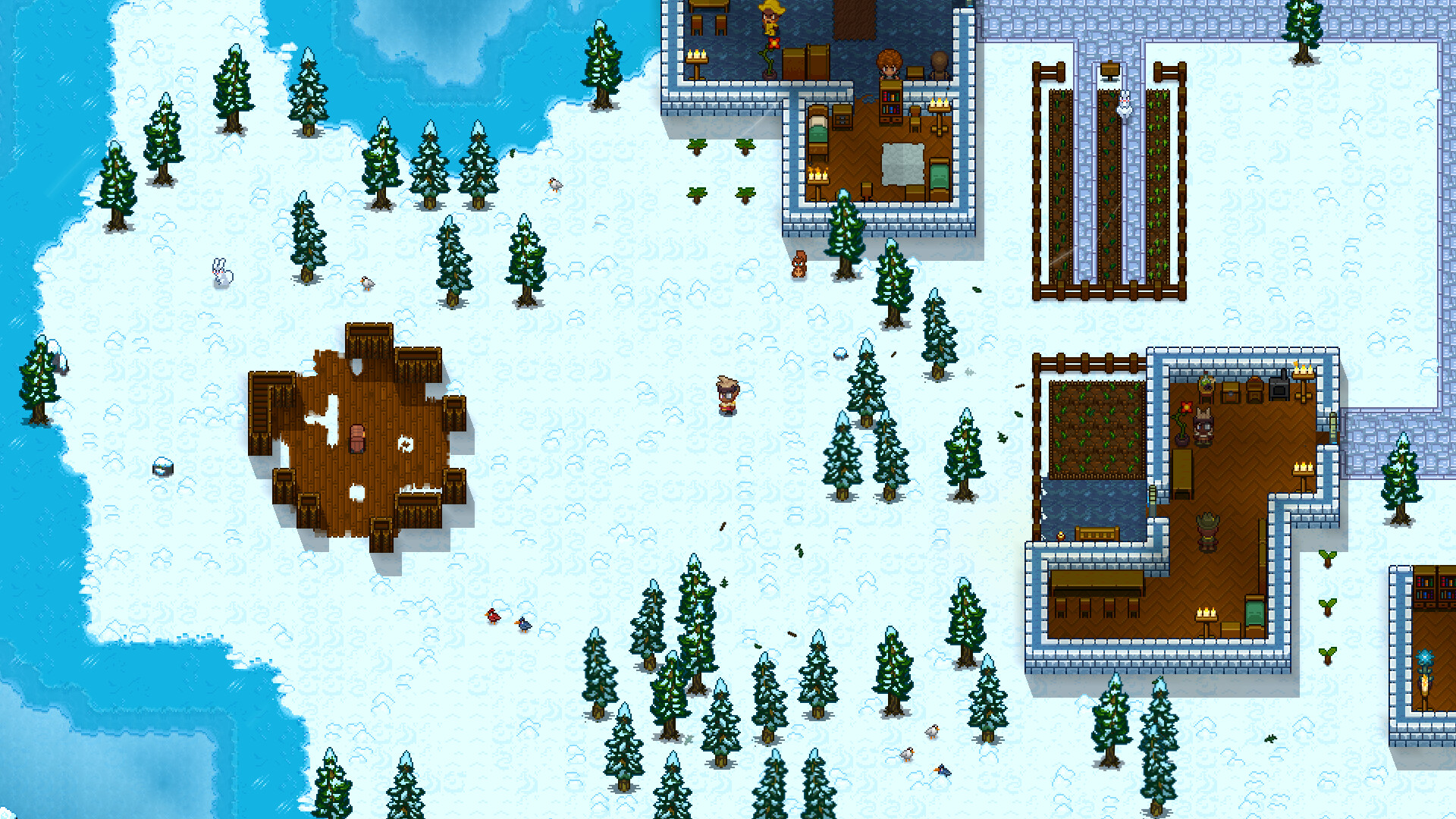
Necesse begins like many survival games: you appear in an open world, you chop wood, you break stone, you make your first tools, you put up walls, you prepare for the night and you quickly go down to look for what’s missing beneath the surface. Nothing very new in the first minutes. The game knows its models, does not try to hide them, and uses a grammar that fans of Terraria, Core Keeper or Stardew Valley immediately understand.
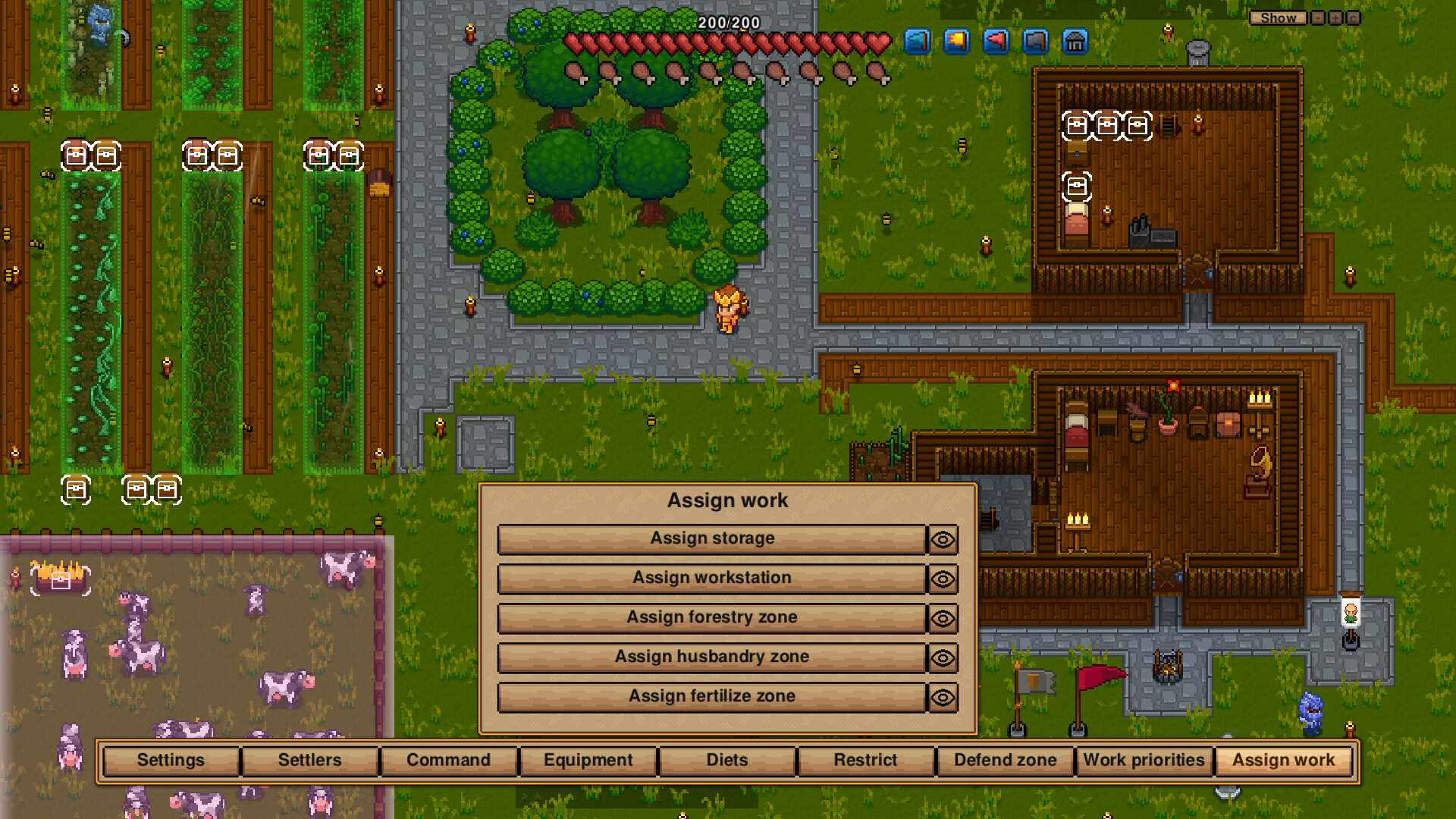
The difference comes when the colony really begins to exist. Necesse doesn’t just ask the player to do everything themselves until they’re exhausted. It allows you to attract inhabitants, assign them tasks, give them a role, entrust them with harvesting, sorting chests, cooking, agriculture or defense. And this is the heart of the game. Where many sandboxes end up transforming each return to base into a chore of tidying up and producing, Necesse gradually gives the impression of building a place that can run without the player having to monitor everything every second.
This is where the title gets really nice. A poorly organized base remains a painful base. A well-designed colony, with its storage spaces, its workshops, its fields, its beds, its defenses and its inhabitants assigned to the right tasks, completely changes the rhythm. We no longer come back just to deposit ore, but to check a small living system, improve a chain, correct a deficiency, expand what is already working. The game finds a good tension between personal exploration and collective management.
However, exploration still has a real place. Biomes, caves, resources and bosses constantly push you to go further. Necesse works well because it ties each expedition to a concrete need. You need a new ore to progress, a rare resource to craft equipment, a specific item to improve the colony, or simply enough materials to prepare for the next stage. The loop remains conventional, but it is solid. We always have a reason to go out, then a reason to come back.
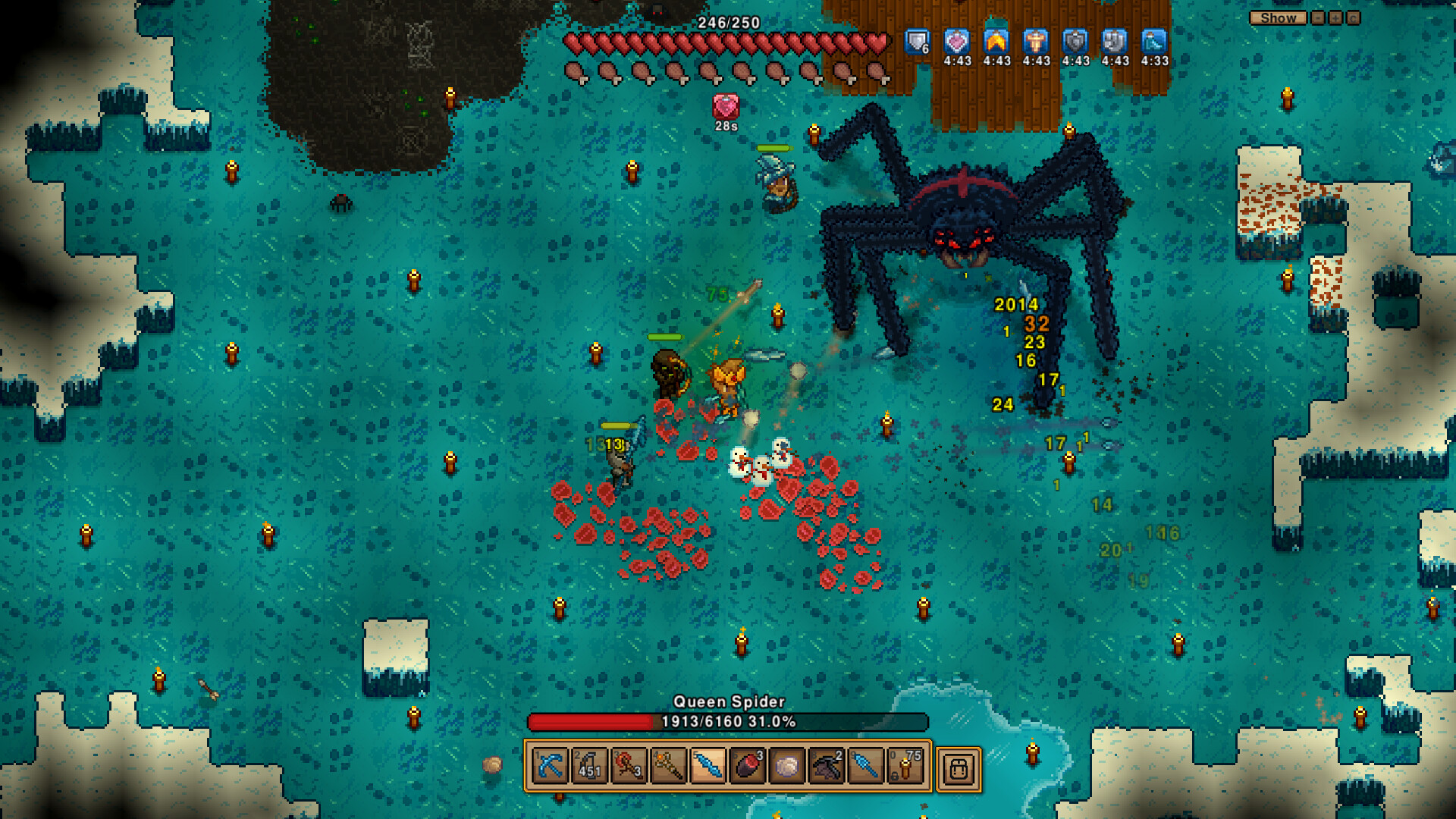
The fights are simple, but effective. The player attacks, dodges, changes weapons, uses potions, gradually learns to manage bosses and groups of enemies. The game does not seek the finesse of a pure action RPG. It remains in a sandbox logic where equipment, preparation and knowledge of the terrain count as much as reflex. Bosses provide good milestones for progression. They mark the stages, unlock new possibilities, and prevent the adventure from being reduced to a simple collection without relief.
Progression by equipment works well. New armor, new weapon, better tool, better access to dangerous areas: everything comes together with this slightly dangerous efficiency of the genre. We launch a small session to improve a workshop, and we end up an hour later preparing a boss because a resource was missing from a recipe. Necesse understands this logic of the permanent detour very well. Each objective hides two others, and this is often where the game is most addictive.
World generation and the move to more continuous biomes also give more depth to exploration. The game better avoids this impression of separate pieces. Movements become more natural, discoveries follow one another with less disruption, and we feel more of the idea of a world in which the colony is only an anchor point. This gives the adventure a wider breath, especially when you start going far away knowing that the base continues to live behind you.
But Necesse sometimes remains a victim of its modest ambition. Its systems are numerous, but not always very elegant in their presentation. The interface can take some getting used to, task management is not as clear as it should be, and certain menus remind us that the game has long been built in layers. Nothing blocking, but enough to make entry less fluid than its loop suggests.
The rhythm can also become repetitive. The colony automates many things, but it does not entirely eliminate the feeling of repeating the same actions: looking for a resource, improving, leaving, fighting, storing, starting again. The game holds because this repetition is well rewarded, not because it disappears. Those who do not adhere to this form of accumulation will quickly see the seams.
Necesse succeeds above all through the intelligence of its mixture. It is not the most beautiful, the fastest-paced or the most original game in each element taken separately. But it brings together exploration, crafting, combat, bosses and colony management with a coherence that ends up taking hold. The really good idea is not to let the base be just a giant chest surrounded by walls. It becomes a tool, a project, almost a small machine. And when this machine starts to spin, the game finally finds its true personality.
A modest, but readable world
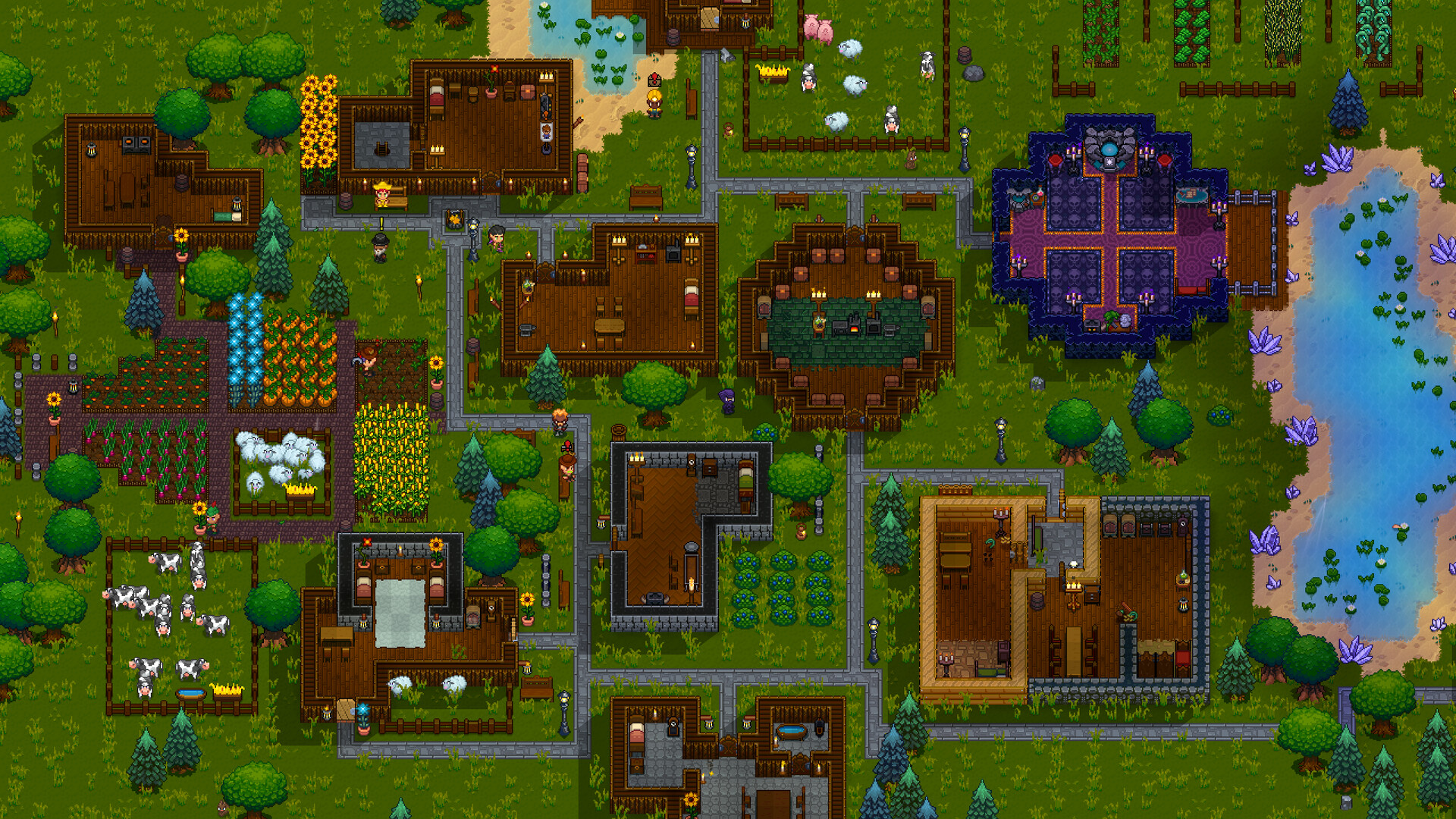
Necesse has clean pixel art, sometimes charming in its small details, but it never seeks to impress with art direction. We quickly understand where we are, what we can break, what we can pick up, where danger begins, where there is a chest, a door, a workshop or a settler. For a sandbox so loaded with repeated actions, this readability matters a lot.
The world still has more strength than it gives the impression at first glance. The biomes bring different colors, the caves maintain a little tension, the bosses give a bit of spectacle, and the colony gradually takes a real visual form. At the beginning, we only have a shelter to survive. A few hours later, we look at a village, with its houses, its fields, its workshops, its warehouses and its inhabitants moving around. This is where Necesse works best: not in the beauty of an isolated setting, but in the satisfaction of seeing a place created little by little.
The animations remain simple. The characters move little, the combat doesn’t have the weight of a real action RPG, and some enemies lack personality. The game partly compensates by the clarity of its effects, by the immediate reading of attacks and by this view from above which allows you to maintain control even when the base fills up or a fight becomes more charged. It’s not spectacular, but it’s rarely confusing.
The artistic direction also shows its limits over time. Some environments look similar, the characters remain quite generic, and the whole thing lacks a real signature. Terraria has its strangeness, Core Keeper has its subterranean light, Stardew Valley has its rural charm. Necesse, above all, has efficiency. It’s clean, nice, but less recognizable than its systems. We remember more what we have built than how the game shows it.
The interface follows the same logic. It is complete, sometimes very practical, but not always elegant. Managing chests, tasks, settlers, work areas and equipment takes some getting used to. The game provides a lot of tools, which is a real quality, but it does not always present them with the fluidity that we would like. We end up understanding, organizing, automating. But the entry is not as smooth as the loop might suggest.
On the sound side, Necesse remains discreet. The music accompanies the exploration and construction without taking up too much space. They establish a light, almost neutral atmosphere, which lets the player concentrate on his objectives. It’s not a soundtrack that you remember for a long time, but it suits the pace of the game. It accompanies long sessions without tiring.
The sound effects are more important. Cutting, mining, striking, placing, opening, sorting, manufacturing: everything must give clear feedback, because Necesse relies heavily on these repeated gestures. The game is doing well. Each action has its little signal, each fight remains legible, each interaction finds its place in the background noise of the colony. Again, nothing really shines, but everything serves the loop.
The colony also gives the sound a little extra life. Hearing the residents working, seeing the routines being put in place, feeling that the base continues to exist while we prepare something else: it’s not spectacular, but it contributes to attachment. Necesse does not need much staging to make it clear that a village is being built. Sometimes it simply needs to let its little systems run.
Visually and sonically, Necesse remains a modest game. It lacks a really strong identity, more striking animations, musical themes capable of staying in your head. But it has one essential virtue: it almost never gets in the way of what it is trying to do. It is readable, clear, functional, pleasant enough to accompany dozens of hours of collection, crafting and management. The charm does not always come from the screen itself. It comes from what the player ends up organizing there.
Verdict
A base that ends up living
7.5/10
Necesse succeeds because it understands very well what is often tiring in survival games. It doesn't just require cutting, mining, manufacturing and starting again. It pushes to organize a colony, to delegate, to automate, to bring to life a village which gradually becomes something other than a simple giant chest surrounded by walls. This idea really changes the loop, and gives the game a sharper personality than its very modest appearance would suggest.
Not everything is so striking. The pixel art remains quite generic, the interface requires time to adapt, the fights do not shine with their finesse, and the repetition inevitably ends up being felt. But Fair Games ApS delivers a solid, generous sandbox, which mixes exploration, crafting, bosses and colony management with rare coherence. A discreet game, but capable of swallowing up hours as soon as its little machine starts running.
Pros
- The colony, the game’s standout feature
- A compelling loop of exploration, crafting and management
- Useful inhabitants, not just decorative
- Bosses that provide good progression milestones
- A really solid 1.0 release
Cons
- Unremarkable pixel art
- A very dense interface
- Fairly simple fights
- A repetition that ends up appearing
- A visual identity less strong than its systems
More in Video games
Full library 10/10
World of Warcraft: Forever
PC 8.5/10
Warhammer 40,000: Boltgun 2
PC 9/10
Total War: Warhammer III – Lord of the End Times DLC
PC 7/10
Revisited | Warcraft III: Reforged
PC 7.5/10
Warcraft III Reforged: Forsaken Kingdom
PC 8.5/10
World of Warcraft: Midnight
PC 9/10
Puzzle Bobble Everybubble!
PC 6/10
Crown of Greed
PC 6.5/10
Tavernhold
PC 6.5/10