
Lost in Fantaland
The breath of forgotten cards
Score: 6.5/10
Images and videos


At a glance
We liked
- The tactical combat system, clear and elegant
- The perfectly fluid adaptation on Switch
- Soft and immersive sound identity
- The balance between reflection and tension
We liked less
- A repetitiveness that sets in too quickly
- Uneven writing, often weakened by translation
- Little visual variety over time
- Randomness that sometimes becomes too intrusive
 By Farrel Grimwood · published · 4 min read
Contents
Born from the pen of the small studio Supernature, Lost in Fantaland comes to Nintendo Switch with a proposition as modest as it is bewitching: mixing deck-building, turn-based strategy and the poetry of roguelite in a paper universe. Here, each movement is played on a checkerboard, each card becomes a weapon or a prayer, and each confrontation seems dictated by the chance of the gods.
Beneath its appearance of a miniature adventure game, Lost in Fantaland hides a much larger ambition: that of transforming tactical combat into a meditative experience, where randomness and strategy merge in the same breath. Between methodical planning and inspired chaos, it invites a strange dance of chance and control.
But does Lost in Fantaland really tame the complexity it celebrates, or does it end up lost in its own cards?
Voices from the arena
Lost in Fantaland doesn’t bother with mystery: its world is talkative, ironic, almost too self-aware. Each encounter gives rise to colorful dialogues and asides that oscillate between light comedy and pastiche of heroic fantasy. The writing is not always elegant, sometimes battered by a hesitant English translation, but it retains a charming sincerity. This awkward wording ends up becoming a style, a naive breath in the midst of strategic rigor.
The characters do not seek psychological depth; they play roles. Warrior, Mage or Deceiver, each speaks as he fights: frontal, calculating or cunning. The game makes these archetypes recognizable voices, simple but expressive, and builds around them a gallery of adversaries and creatures that extend this disordered fantasy. In each exchange there is a form of constant irony, as if the game was gently mocking its own codes.
This tone, between homage and self-deprecation, gives the world of Fantaland a singular relief. We do not attach ourselves to it out of empathy, but out of curiosity. The dialogues punctuate the progression like bursts of consciousness in a mechanical universe: a way of reminding us that behind the cards and numbers, there remains a shaky, funny and endearing humanity.
The checkerboard of controlled chance
Lost in Fantaland is based on a simple idea: transform each battle into a living chessboard, where strategy mixes with card drawing. On a squared board, you move your hero, play your attacks, your spells or your subterfuges, while composing a deck that you strengthen as you win. The principle, already mastered on PC, adapts here with surprising ease to the Nintendo Switch. The controls respond with precision, the menus flow naturally to the controller, and terrain reading remains crystal clear, even in handheld mode.
Each card has a defined role, each action has a weight. Where many games of this type sink into the illegible, Lost in Fantaland maintains a rare balance between accessibility and requirement. Synergy mechanics: position bonuses, chain reactions, combined effects; form a fine but readable canvas, and the runs follow one another with an almost hypnotic logic. We move forward, we learn, we adjust. Progression becomes a language in itself.
However, this mechanical elegance also reveals its cracks. The randomness of card draws, the engine of the system, ends up dominating pure strategy. Some games are played out in advance, carried or broken by a favorable hand. The game compensates with an array of upgrades, equipment, and tactical choices between fights, but frustration sometimes arises, brutally, when luck runs out. This is the price of a fragile balance, that of a system that wants to control everything while celebrating the unpredictable.
The variety of classes and enemies offers real density. Each run is renewed by the cards obtained, the terrain generated, the constraints imposed. But the overall architecture remains rigid: we feel the roguelite structure behind the fantasy setting, a skeleton of a repetitive loop that the richness of the gameplay barely manages to conceal. Pleasure is real, but cyclical; we play by reflex more than by curiosity.
Lost in Fantaland nevertheless achieves what few titles of this genre dare: making control and chaos two sides of the same pleasure. We enter for the challenge, we stay there for the beauty of the movement.
The charm of miniature worlds
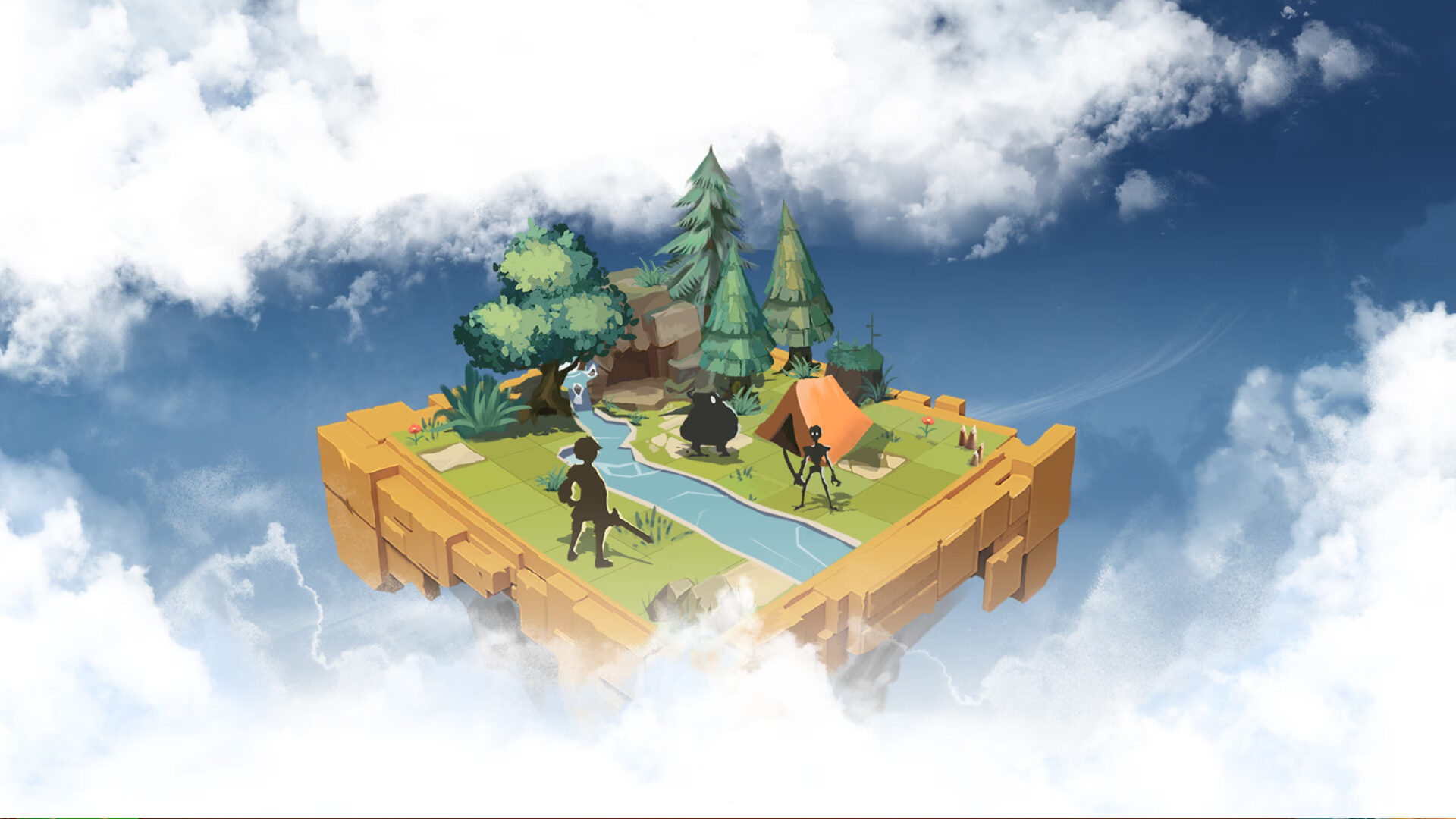
Lost in Fantaland adopts a deceptively simple visual style. Beneath its appearance of a retro game inspired by 16-bit RPGs lies an artistic direction of rare coherence. The settings are designed like miniature maps, the characters look like figurines placed on a board, and the whole thing exudes an artisanal warmth. It’s not a spectacular game, it’s a game that breathes. Each tile, each animation, each color evokes the pleasure of handmade.
On Switch, readability remains exemplary: sharp contrasts and thick edges preserve the clarity of the action, even on the handheld screen. The visual effects, discreet but precise, accentuate the impacts and give depth to the fights without ever saturating the screen. Nothing flashy, nothing artificial; just a controlled, almost humble staging, serving the rhythm.
But this sobriety has a downside. After the first hour, the eye gets used to this wise palette, and the repetition of environments ends up dulling the magic. The biomes change, of course, but the tone remains the same, and the visual variety struggles to keep up with the intensity of the clashes. We admire the coherence, but we would have liked a breath of madness, a graphic audacity to match the mechanics.
The soundtrack, on the other hand, carries everything. The compositions oscillate between light piano and nostalgic strings, creating an atmosphere suspended between serenity and tension. Each theme follows the tempo of the combat, slows down when reflection sets in, rises when chaos invites itself. The sounds of cards, footsteps, spells are clear, precise, almost excessively satisfying. We feel a search for rhythm, a listening to the gesture.
Verdict
The patience of chance
6.5/10
Lost in Fantaland is a balancing game, a fragile bridge between pure tactics and the pleasure of drawing cards. Supernature Studio deploys surprising rigor beneath a modest exterior, and offers on Switch a fluid, readable, strangely soothing experience. Its combat system, both clear and deep, captivates with its precision, but sometimes ends up biting its tail: through repetition, the magic dulls, and the chance it celebrates becomes its greatest enemy.
We admire the accuracy of the mechanics, the visual coherence, the musical softness, but we regret the absence of a real narrative breath, of an unexpected thrill. Lost in Fantaland charms without ever upsetting. It’s a sincere, meticulous game, carefully constructed, but a prisoner of its own restraint. A title that we respect more than we cherish, and which proves that between mastery and emotion, there is sometimes a gulf that even the most beautiful card cannot fill.
Pros
- The tactical combat system, clear and elegant
- The perfectly fluid adaptation on Switch
- Soft and immersive sound identity
- The balance between reflection and tension
Cons
- A repetitiveness that sets in too quickly
- Uneven writing, often weakened by translation
- Little visual variety over time
- Randomness that sometimes becomes too intrusive
More in Video games
Full library 8/10
Culdcept Begins
SWITCH 9/10
Total War: Warhammer III – Lord of the End Times DLC
PC 7/10
Brigandine Abyss
XBOX 8/10
Drill Core
XBOX 6/10
Crown of Greed
PC 6.5/10
Deathless. The Hero Quest
SERIES 9/10
Final Fantasy Tactics : The Ivalice Chronicles
SERIES 7.5/10
Castle Crumble
SWITCH 7/10
Ariana and the Elder Codex
SWITCH 6.5/10