
Halls of Torment
The taste of clicking in the embers of retro
Score: 7.5/10
Images and videos
At a glance
We liked
- An action loop of formidable readability
- Builds that quickly take on real flavor
- A dense and very catchy progression between runs
- An infernal retro aesthetic that gives it an immediate identity
We liked less
- A narrative covering too thin to leave a real trace
- Levels that are more functional than truly memorable
- A repetition that inevitably ends up appearing
- A solid soundtrack, but rarely memorable
More on Halls of Torment
 By Farrel Grimwood · published · 7 min read
Contents
Developed and published by Chasing Carrots, Halls of Torment arrived on Xbox Series on October 28, 2025, a little over a year after its full release on PC. The title takes the codes of survival horde and action roguelite to pass them into a visual mold which looks very clearly towards the RPGs of the late 90s, with its pre-rendered settings, its infernal corridors and its runs tightened around an immediate increase in power.
The proposal has something extremely readable, almost brutal in its promise. Choose a hero, descend into the rooms of torment, survive for around thirty minutes, improvise a build from the skills, traits and objects picked up along the way, then start again by coming back stronger. Halls of Torment does not initially seek to surprise with a major reversal of the formula. Above all, it seeks to make its loop denser, faster-paced and more deliberate than many of its closest relatives.
It remains to be seen whether under its retro exterior and its immediately catchy run logic, Halls of Torment really has the necessary strength to go beyond the simple reflex of “one more game”, or does it end up being consumed in the repetition that it claims to tame.
The shadows of a world that prefers to suggest rather than tell
Halls of Torment is not a game that seeks to build a grand narrative. Its starting point is in a few lines: choose a hero, descend into the halls of torment, survive waves of horrors; then face the tormented Lords who wait at the end of this descent. However, this dryness is not necessarily a fault. Chasing Carrots understands very well that its universe is based less on the accumulation of dialogues than on a continuous sensation of confinement, pressure and marching towards the depths.
The game therefore works more on evocation than on narration in the classic sense. There is no great fresco, no plot with twists and turns, no long-written characters to carry the adventure. On the other hand, there is a very clear consistency of tone. Each hall, each lord, each run gives the impression of a small, compact hellish world, shaped to bring old-fashioned dark fantasy into existence. Halls of Torment doesn’t say much, but it immediately establishes something, and that’s often enough to give its loop a particular weight.
Character-wise, the game speaks first through its playable heroes. There are eleven of them, with their own traits, their marks, then at high level more assertive specializations around weapon mastery, postures and dedications. They are not characters in the novelistic sense of the term. Rather, they are figures, archetypes, immediately readable silhouettes. And basically, that’s precisely what works here. Halls of Torment does not ask them to carry an intimate tragedy, but to give a clear identity to the run from the first minutes.
The little surprise comes more from the camp, which gives the whole thing a hint of continuity. Version 1.0 notably added the Scriptor, capable of providing information on recoverable items and sustainably improving heroes with Torment Shards. This remains very slight, of course, but this simple detail is enough to prevent the game from being a totally abstract sequence of rooms and monsters. There is just enough presence around the loop to give the feeling of a world that persists between two descents.
This is also where its limit lies. Halls of Torment establishes an atmosphere, a surface mythology, a few figures, but it almost never gives its characters greater depth. Those who expect strong writing or generously presented lore therefore risk staying away. On the other hand, for a game which relies primarily on the density of its progression and on the pleasure of the build, this minimalism works rather well. It gives just enough framework to feed the imagination, without ever distracting attention from what the game does best.
The simplicity of the gesture, the obsession with the build
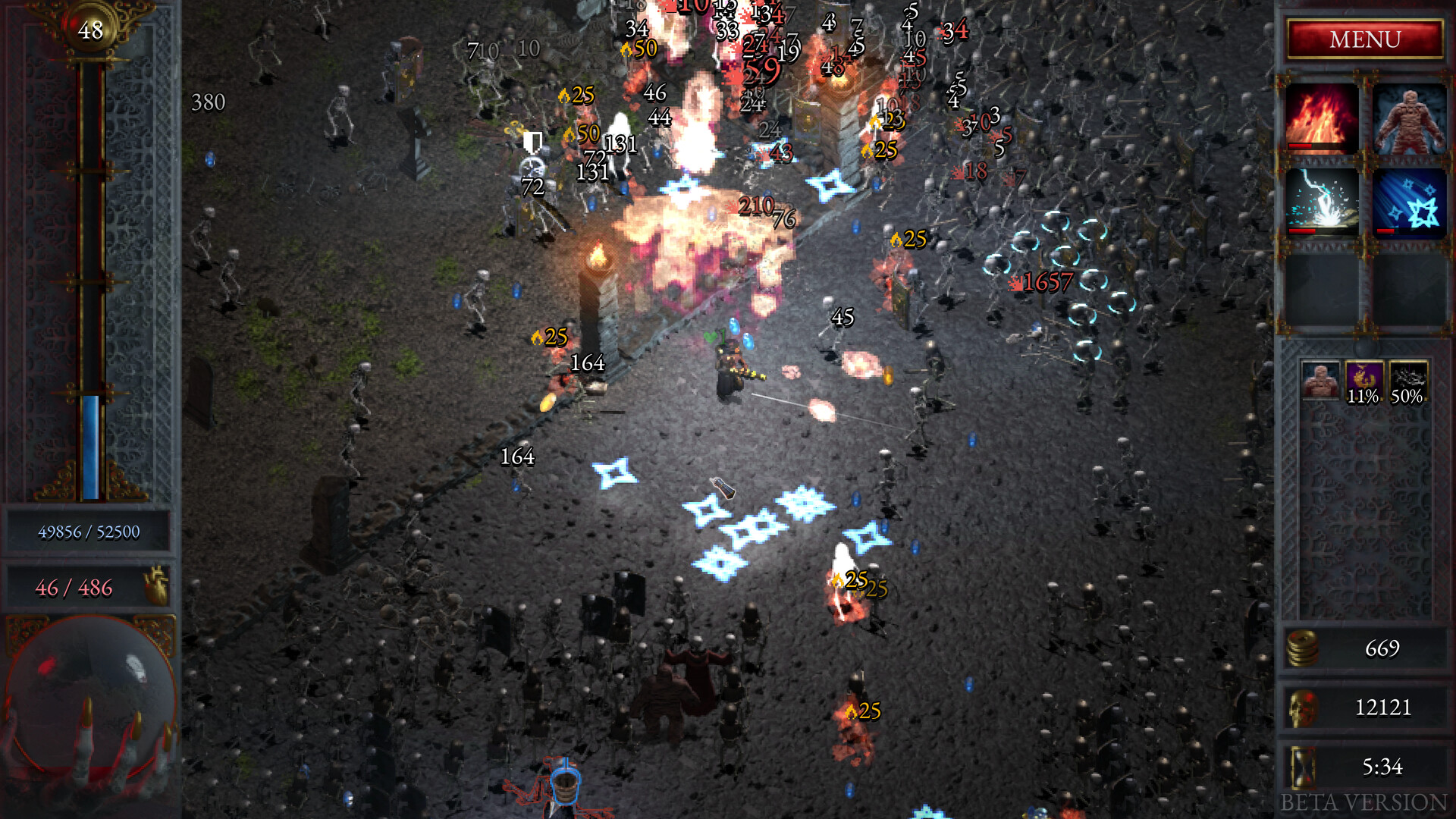
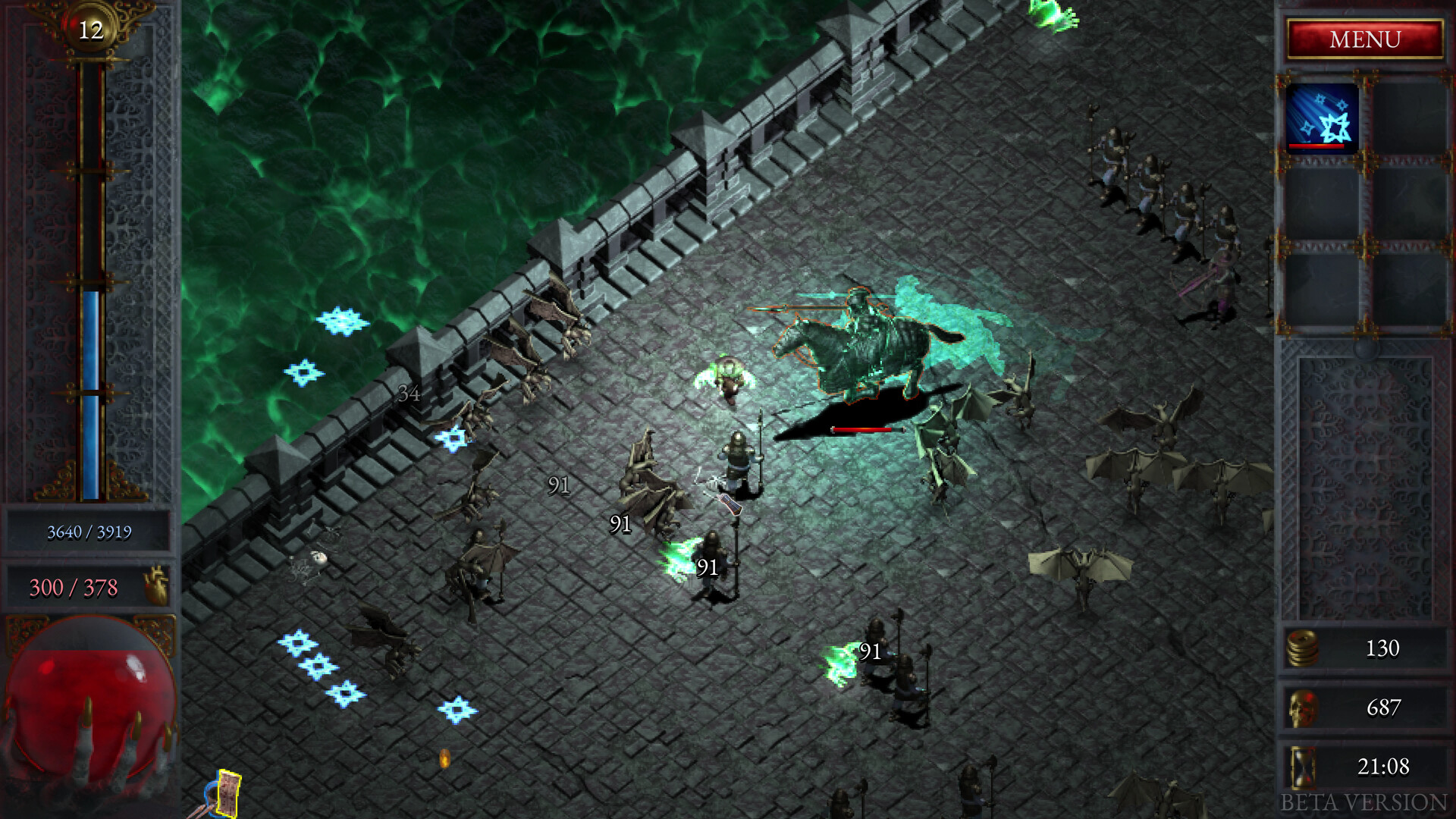
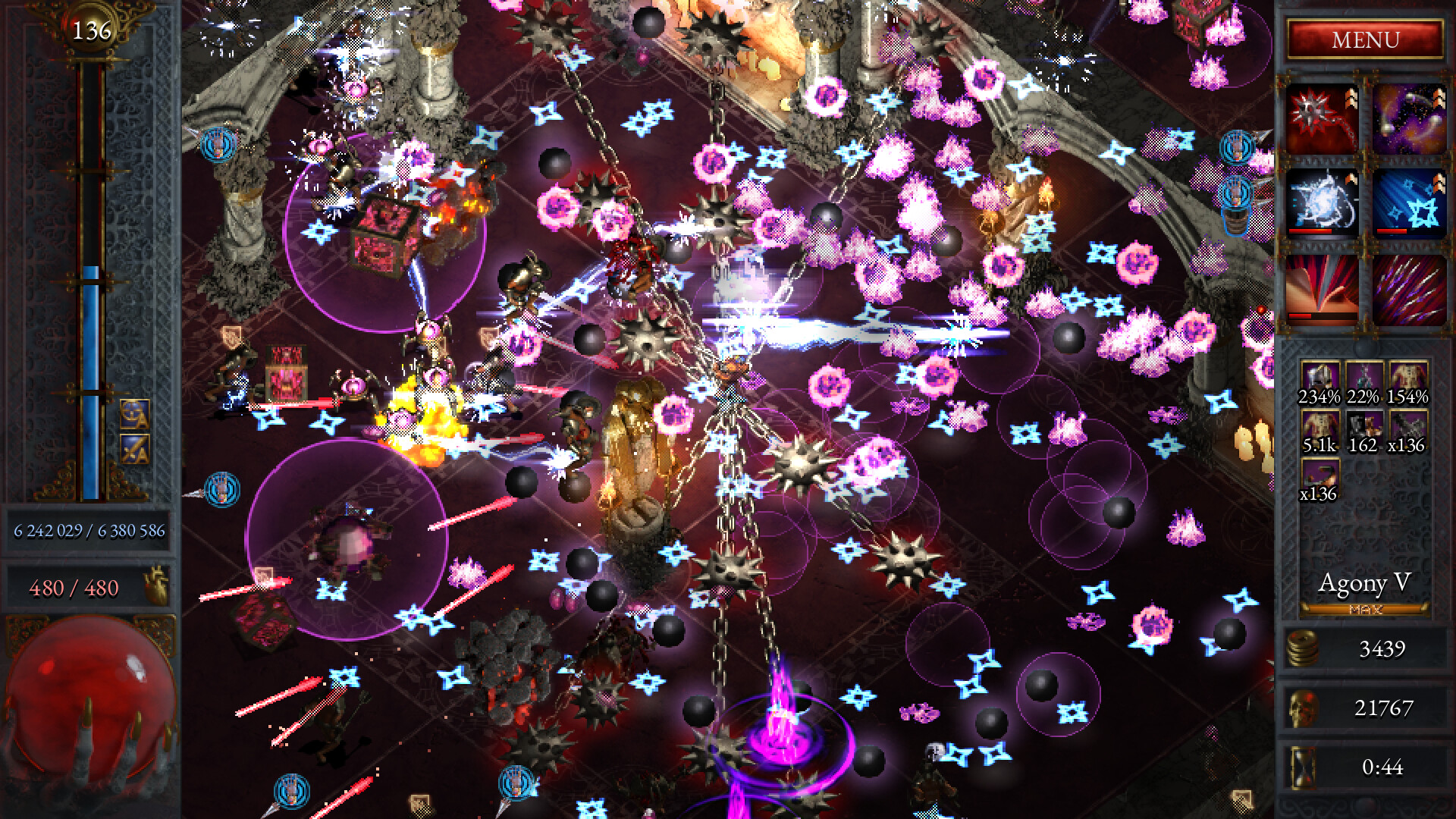
The basic loop of Halls of Torment is incredibly clear: enter a run designed around a format of around thirty minutes, survive successive waves, climb in power level after level, then convert this rise into a build that becomes more and more absurd as the screen fills up. The formula does not reinvent horde survival, but it executes it with a rigor that quickly makes a difference. The movements remain clear, the reading of the danger too, and all the pleasure comes from this very simple tension between avoidance, placement and the progressive construction of a killing machine which ends up overflowing everywhere.
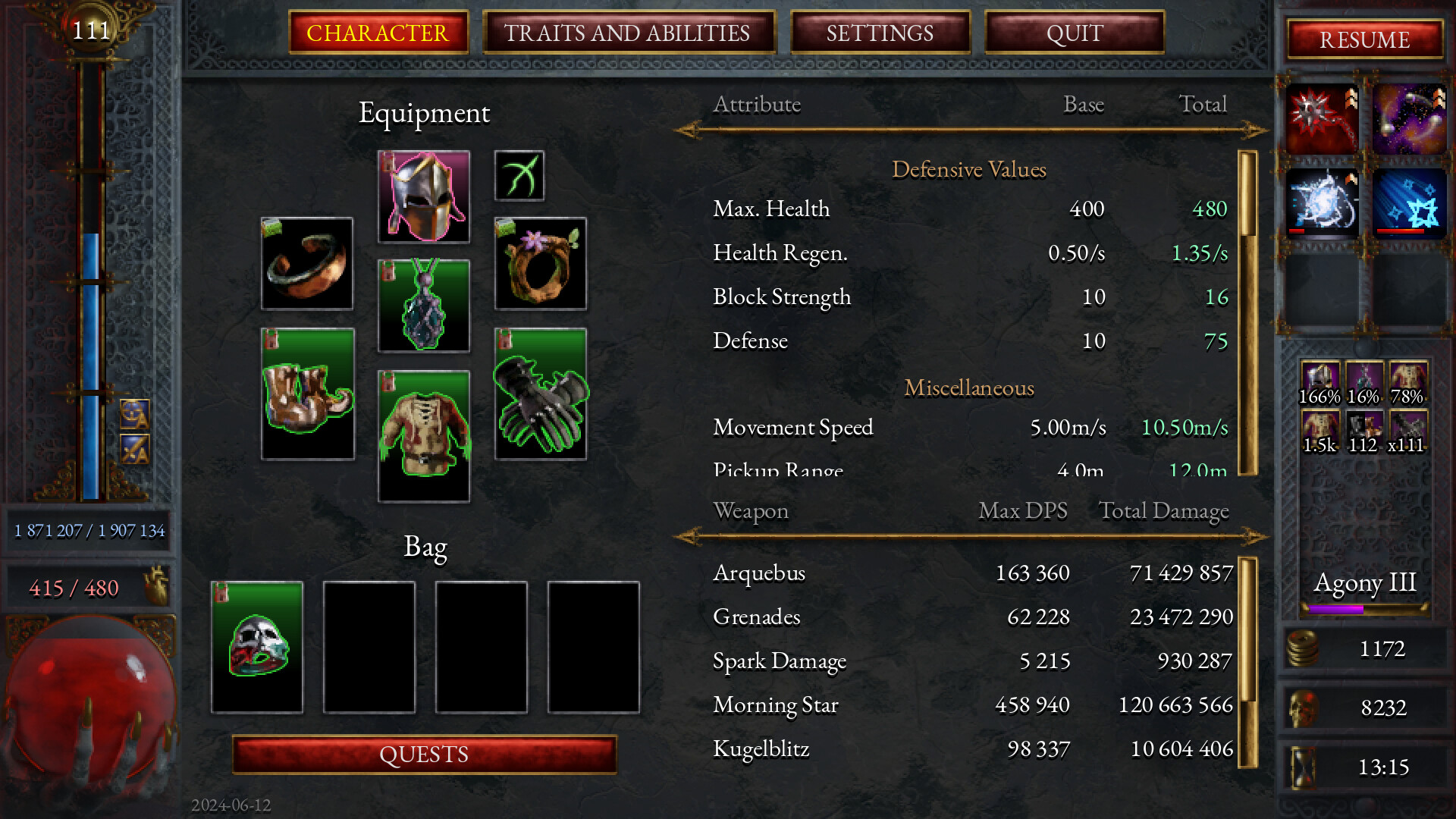
What especially gives depth to the whole thing is the quantity of levers that the game stacks without making it confusing to read. Halls of Torment structures its progression around heroes, traits, abilities, items, blessings and a huge quest board that feeds the opening of the content. The structure consists of six stages, eleven playable characters, sixty items to collect, seventy-four abilities and improvements, thirty artifacts and more than five hundred quests. Said like this, the whole thing could seem purely quantitative. In practice, this abundance works because it constantly fuels the feeling of unlocking something, of preparing a next attempt that is richer, more precise, more aggressive than the previous one.
The game design is also smarter than it seems in the way it connects running to non-running. Recoverable objects can be returned to the surface to personalize the following games, tinctures allow you to influence destiny a little, and the game even ends up opening a real end-of-game layer with the Shrine of Torment, its artifacts, then the Vault, the final stage unlocked after purchasing thirty objects from the Wellkeeper. This is where Halls of Torment stops being just a good run vacuum to become a real systemic progression game. It understands that compulsion is born not only from the immediate carnage, but from the promise that another level awaits after the next attempt. The Xbox version also benefits from the Bardcore update, which notably adds the Bard, six new abilities, six endgame artifacts, musical selection by stage and manual level increases.
The level design is more functional than dazzling. The maps have personality, a few secondary objectives, a few useful detours, sometimes one-off interactions that slightly break the pure circular logic of survival. But Halls of Torment relies less on spatial surprise than on continuous pressure. We therefore cross its environments like theaters of density rather than like real adventure spaces. This is more than enough to keep the loop alive, but it also explains why the perceived variety comes much more from the builds, enemies and systems than from the level structure itself.
This is also where the game also shows its limits. The more the hours pass, the more the quality of its systemic framework becomes evident, but the more its repetition becomes visible as well. Some progressions end up looking the same, some levels give the impression less of a discovery than of an additional increment, and these supposedly quick runs actually require a real commitment of time, especially when you want to push an attempt to the end. Halls of Torment therefore remains excellent when it brings together urgency, readability and increased power. It is a little less so when its taste for grinding begins to dull the effect of novelty.
The grain of the past, but a music which marks less than it accompanies
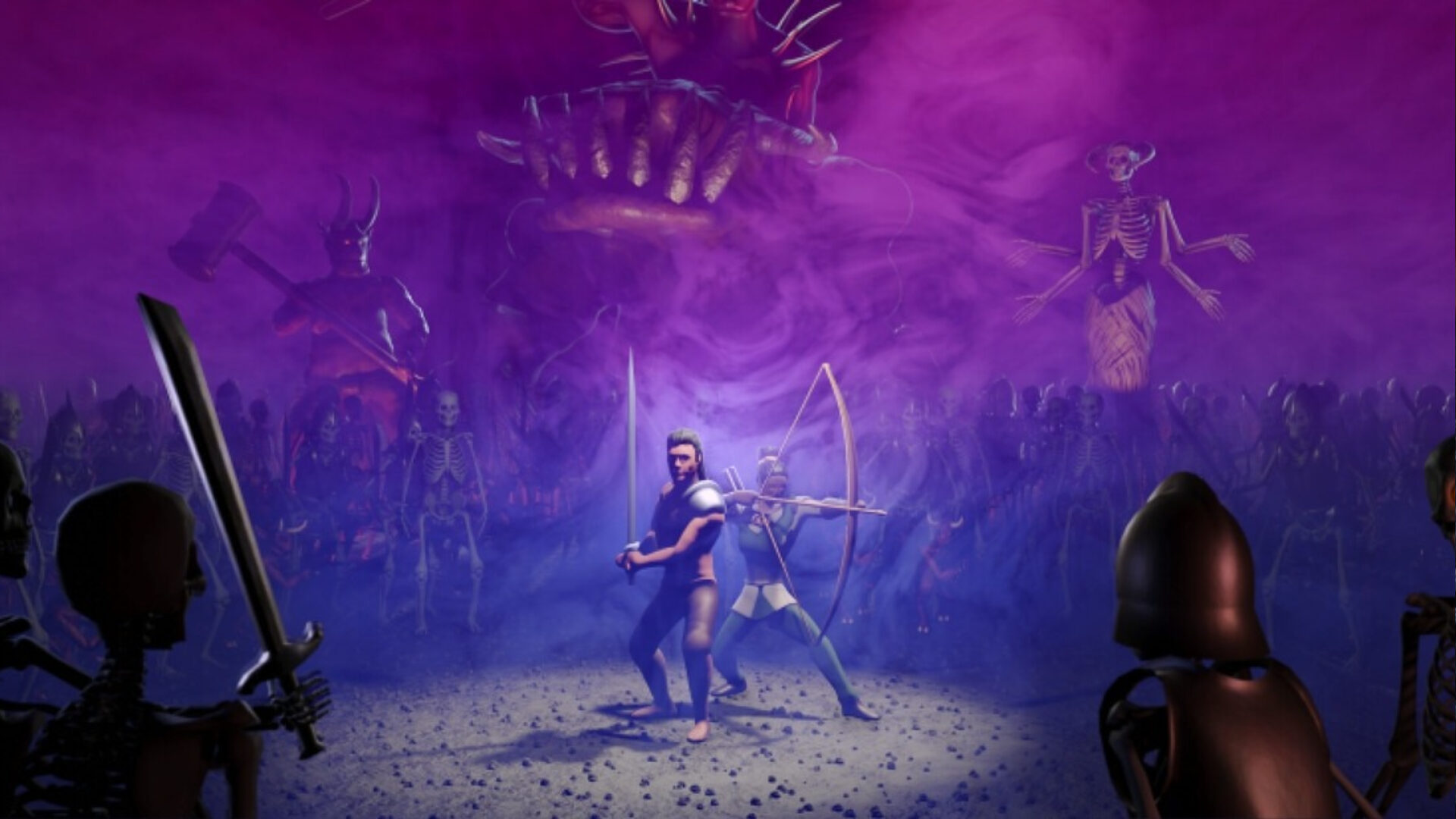
Visually, Halls of Torment immediately knows what it wants to be, and above all what it wants to recall. Its pre-rendered aesthetic looks directly towards the action RPGs of the late 90s, with a lineage that almost instantly evokes the first Diablo. The entire image is designed to find this particular roughness, with its dark settings, its stiff silhouettes, its grotesque monsters and this permanent impression of plunging into an old interactive nightmare unearthed from another age. It is a very readable, very coherent artistic direction, and above all sufficiently well-defined to give the game a real identity from the first seconds.
What works well is that this nostalgia doesn’t just rely on lazy retro dressing. Halls of Torment understands that this type of rendering must also serve the readability of the action. Despite the clutter of the screen, despite the deluge of enemies, despite the effects that accumulate as the run gets carried away, most of the time the game maintains a correct reading of space, threats and the progression of chaos. It does not seek seduction through technical finesse or visual overkill. It prefers an image that is more rustic, dirtier, more compact, but which effectively supports its survival loop. And this is precisely why its aesthetic holds up better than a simple pastiche.
This success does not completely erase a certain monotony. The environments have character, yes, but they don’t offer as much visual variety as the enemies or the builds themselves. In the long run, Halls of Torment impresses more with its general atmosphere than with the precise singularity of each of its spaces. There is a real patina, a real infernal coherence, but not always this extra visual renewal which would have allowed each descent to leave a clearer trace than the previous one.
On the sound side, the observation is close, with perhaps a little less force. The soundtrack supports the atmosphere well, its disturbing layers effectively accompany the crossing of these cursed rooms, and the entire audio design clearly reinforces this feeling of an old demonic dungeon crawler. The sound effects remain simple but functional, sufficiently present to give impact to the attacks and the carnage which gradually takes place on the screen. At the moment, it all works. Over time, however, few themes leave a truly lasting imprint. The music inhabits the game well, but it less often gives it a memorable signature than a solid and continuous ambient presence.
Verdict
A hell that knows why we keep returning
7.5/10
Halls of Torment doesn't really reinvent horde survival, but it compacts it with rare efficiency. Its loop is immediate, its progression outside of a run constantly feeds the desire to restart a game, and its taste for building ends up giving the chaos a real flavor. Beneath its rough exterior, the game understands very well what makes this type of experience so difficult to put down: the rise in power, the next unlock, and this very simple pleasure of seeing the screen give way under a character that we have patiently shaped.
However, not everything has the same strength. The narrative structure remains thin, the levels are less impactful than the systems, and the whole thing ends up showing its logic of repetition more clearly as the hours accumulate. But when Halls of Torment is running at full speed, it's a reminder that a good game doesn't need to do more to hit the mark. All it takes is a clear vision, a firm rhythm and enough stamina to transform wear and tear into addiction.
Pros
- An action loop of formidable readability
- Builds that quickly take on real flavor
- A dense and very catchy progression between runs
- An infernal retro aesthetic that gives it an immediate identity
Cons
- A narrative covering too thin to leave a real trace
- Levels that are more functional than truly memorable
- A repetition that inevitably ends up appearing
- A solid soundtrack, but rarely memorable
More in Video games
Full library 8/10
Onimusha: Way of the Sword
XBOX 7.5/10
The Lord of the Rings: War in the North – Legacy Edition
XBOX 5/10
Disgaea Mayhem
SWITCH 9.5/10
Assassin’s Creed Black Flag Resynced
XBOX 5.5/10
Tale of Dark Lands
SWITCH 9/10
007 First Light
XBOX 8/10
Realm of Ink
SWITCH 7/10
Ariana and the Elder Codex
SWITCH 6.5/10
Kingdom’s Return: Time-Eating Fruit and the Ancient Monster
SWITCH 9/10