


Cladun X3
The Damned of Arcanus
Score: 8/10
Images and videos
At a glance
We liked
- The surgical precision of the gameplay
- The uniquely rich customisation system
- Perfect fluidity on Switch
- A retro but coherent artistic direction
We liked less
- Sometimes unbalanced difficulty
- Repetitive environments
- Almost non-existent narration
- A progression that ends up closing in on itself
 By Farrel Grimwood · published · 5 min read
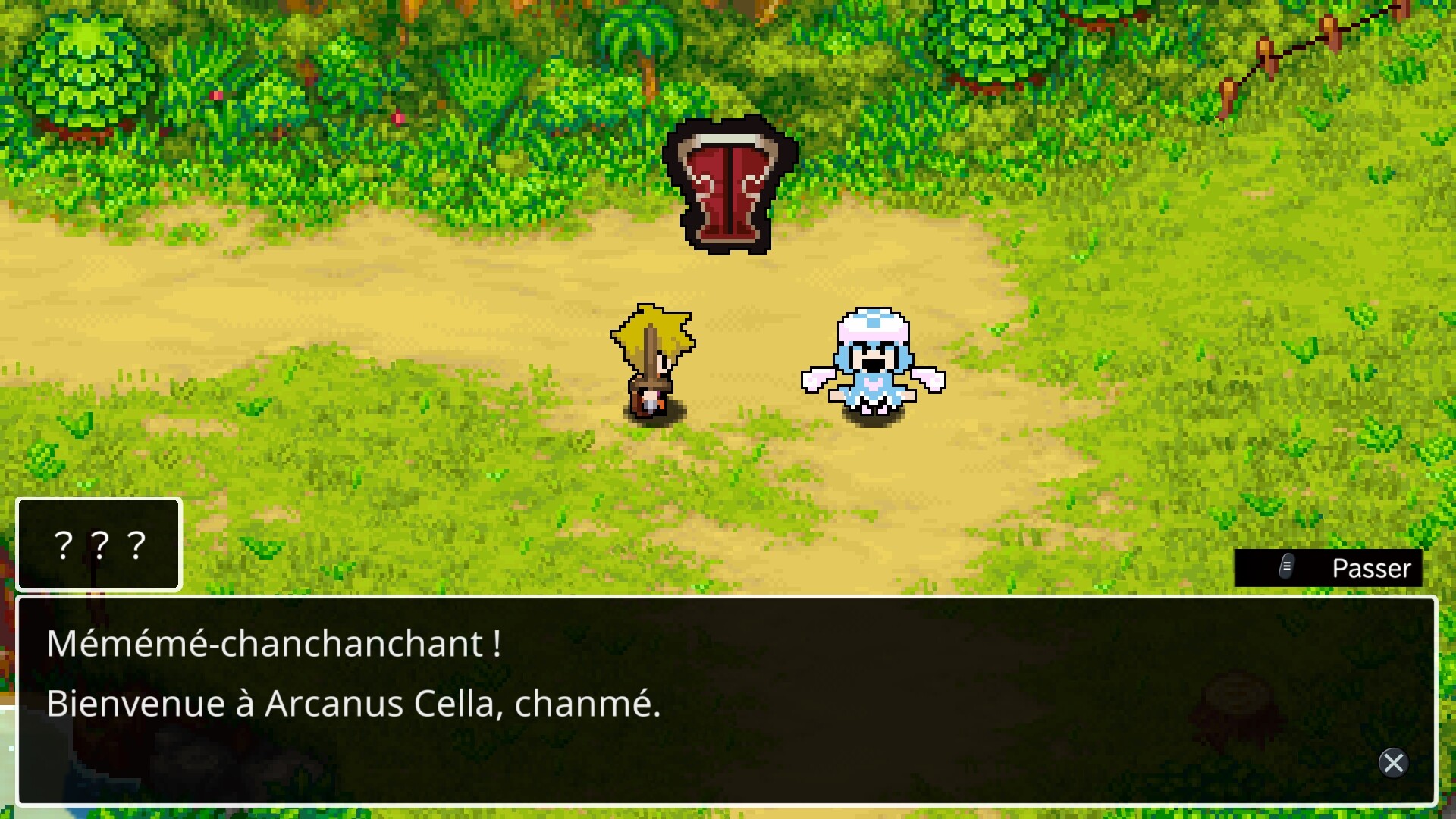
Developed by Nippon Ichi Software, Cladun X3 comes to Nintendo Switch with the same anarchic energy as its predecessors. Direct heir to the series born on PSP, the game dives back into the dungeons of Cladun: This is an RPG, but with a more radical tone. Here, you play as a wandering soul awakened in Arcanus Cella, a world between death and reincarnation, where only adventurers obsessed with glory or revenge return to fight.
Beneath its retro RPG appearance, Cladun X3 is anything but nostalgic. Nippon Ichi extends its taste for organized chaos: free progression, an absurdly dense class system, and dungeons generated like mental labyrinths. The game promises total customization: heroes, allies, weapons, magic, even the soundtrack. Everything can be changed, everything can be corrupted.
But behind this excess, does Cladun X3 still manage to transform its systemic madness into gaming pleasure, or is it merely a caricature of what it once revered?
Restless souls
In Cladun X3, it all starts with a return. You are dead, but not erased. Your soul awakens in Arcanus Cella, a pixelated purgatory where the deceased cling to what they were unable to let go of: glory, revenge, or the absurd need to start again. This in-between is neither hell nor heaven, but a morbid playground where each warrior tries to find peace by sinking into dungeons. This is where Cladun X3 finds its tone: that of an RPG about death, but with the lightness of an arcade game.
The narration is minimal, but it works by atmosphere. We talk little, we act a lot. The dialogues, often full of irony and detachment, evoke the heroes of old Nippon Ichi games: characters aware of their absurdity, stuck in a loop of combat that they no longer even try to understand. The writing does not seek to move people: it establishes a distance, almost a resignation. This world does not promise anything, it just offers to continue.
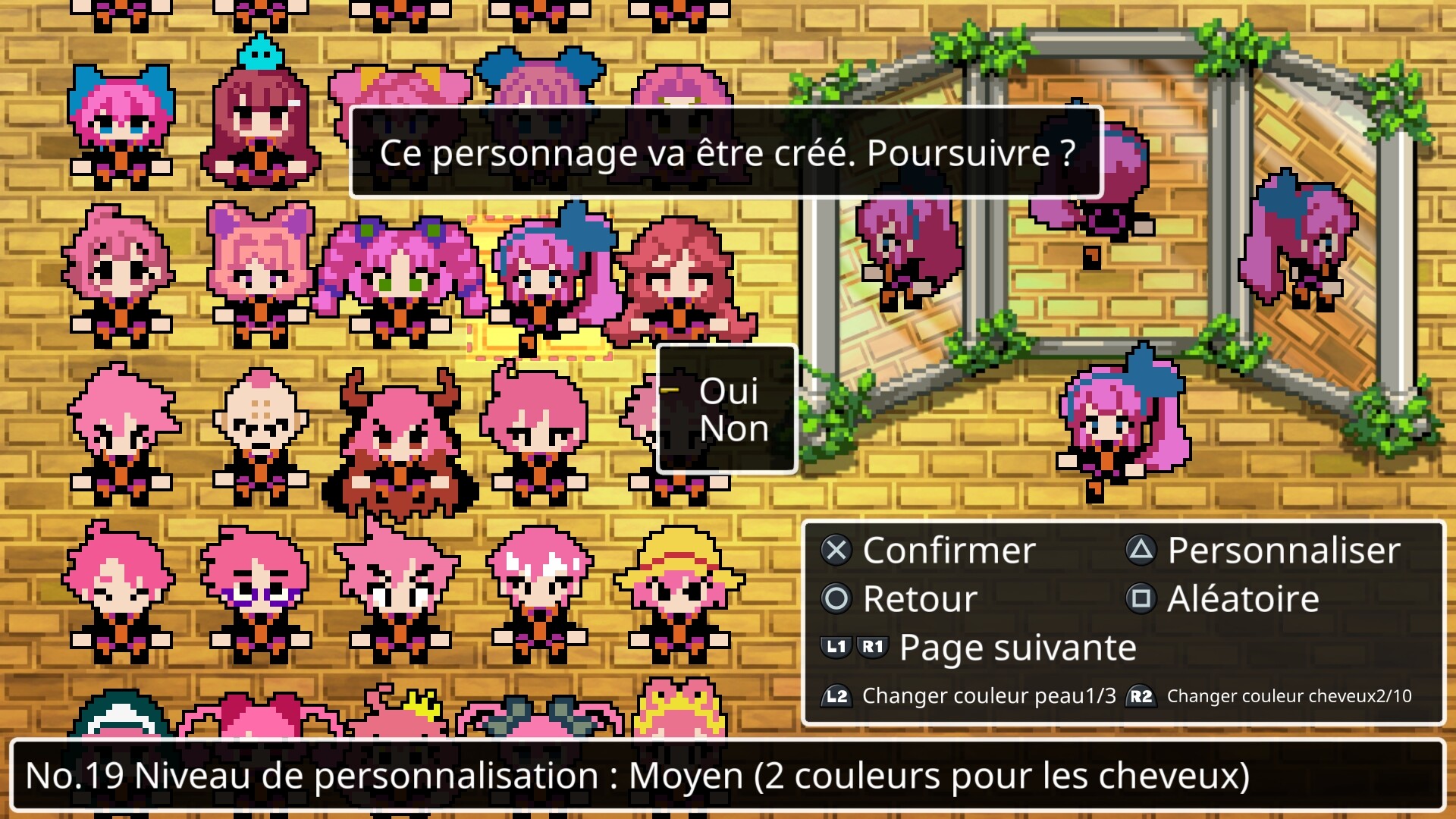
The player encounters a gallery of interchangeable silhouettes: amnesiac mages, sarcastic knights, repentant thieves. All are added to your team, all are customizable down to the smallest pixel. This is one of the strengths of Cladun X3: transforming customisation into storytelling. This is not a game where we discover a hero; it’s a game where you make it. Your group becomes an extension of your imagination, a miniature theater where each graphic or statistical choice gives meaning to what you want to embody.
Yet, behind this total freedom, something strangely melancholy persists. By being able to modify everything, we end up getting lost in a system that no longer tells us anything. The absence of storyline progression, assumed, ends up weighing down: the dungeons follow one another, the faces change, but the world remains still. As if Arcanus Cella was not a place to leave, but a prison to inhabit.
The inner labyrinth
Beneath its retro RPG appearance, Cladun X3 hides a structure of fascinating complexity. It all revolves around a simple principle: go down, fight, die, start again. Each dungeon becomes a testing ground where speed, precision and preparation make the difference. The game does not seek to seduce with its staging; it hypnotizes with its mechanics.
The combat system, in real time, retains the raw intensity of the series. Every move counts, every mistake has a cost, and the slightest hesitation turns victory into collapse. The rhythm is dry, without embellishment: no pause, no complacency. There we find this typically Nippon Ichi mixture: a difficulty which sometimes borders on sadism, but always balanced by an impeccable sense of rhythm.
Around this beating heart unfolds the true madness of the game: the Magic Circle System, an optimization system where the player places his allies around the hero to modify his statistics, his equipment and his resistances. Each configuration becomes a strategy in itself: we spend hours adjusting, testing, perfecting. Cladun X3 does not reward luck; but obsession.
The dungeons, short but dense, adopt a modular construction. No unnecessary gigantism: trapped arenas, rooms filled with chests, enemies placed like puzzles. The objective is clear: finish quickly, die little, start again better. The game encourages speed to the point of making it a philosophy: every hundredth of a second becomes a victory, each run an improvement.
The level design is part of an artisanal tradition: precise, readable, but without surprises. We navigate through deliberately stripped-down labyrinths, closer to a mechanical puzzle than to a living world. The traps, often cruel, serve less to punish than to teach. The player learns by failing, and it is in this repeated failure that Cladun X3 finds its personality: a game that transforms repetition into pleasure.
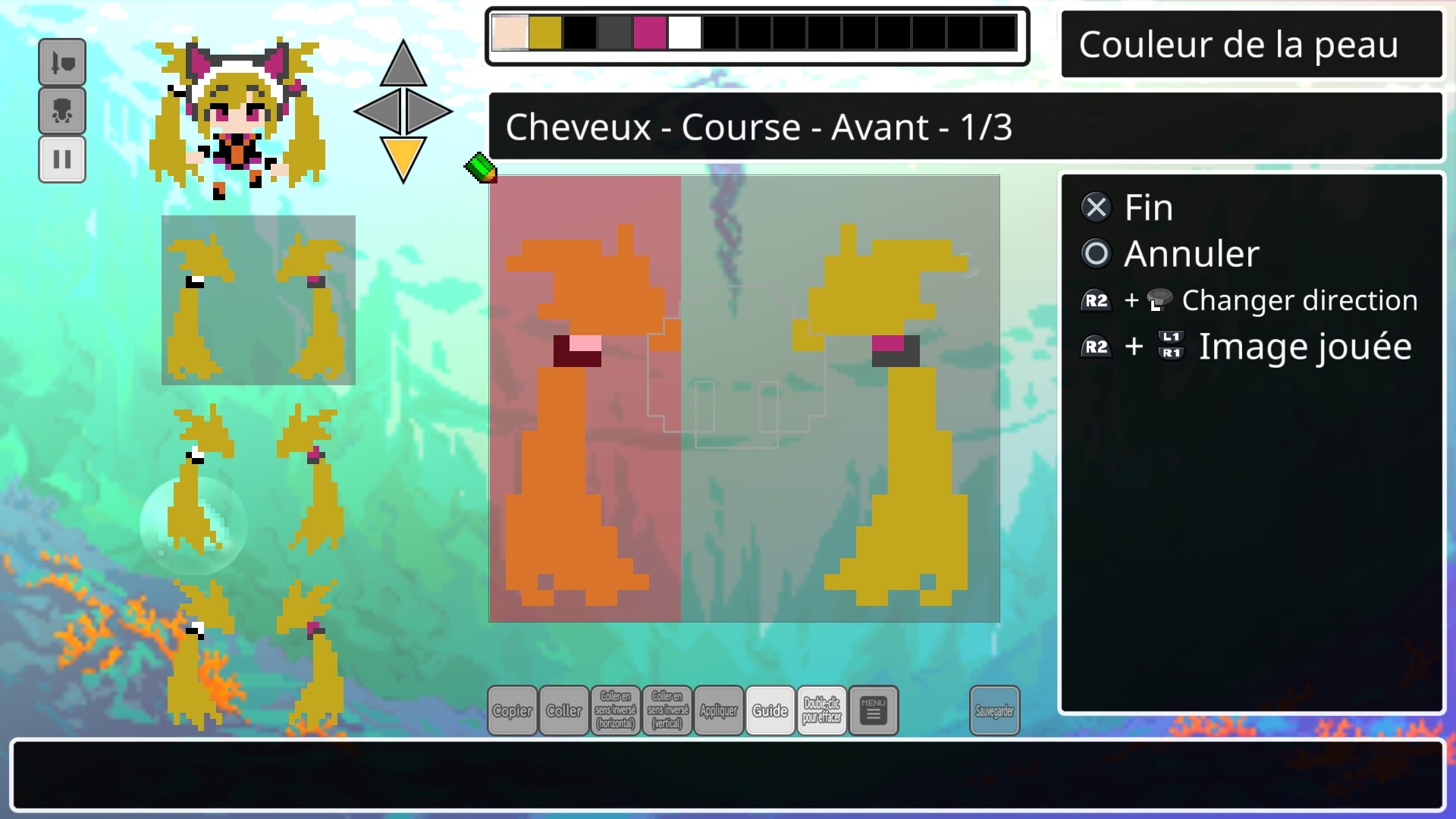
This rigor extends into extreme customization. Every character, every weapon, every musical note can be modified. You literally compose your game, even redrawing your sprites. This aspect, already present in Cladun Returns, reaches a dizzying scale here. The creation tool becomes an extension of the gameplay: a space of total control which ends up absorbing all other ambitions.
But this is also its limit. By wanting to control everything, Cladun X3 sometimes loses the magic of the unexpected. We admire the system, we respect its precision, but we struggle to give in to it. Perfection becomes a straitjacket.
On Switch, the port is solid. The controls respond perfectly, the loads are short, and the fluidity remains constant, even in the most saturated dungeons. The game fits in the hand like a collector’s item: compact, neat, demanding.
The clarity of the pixel and the fury of the rhythm
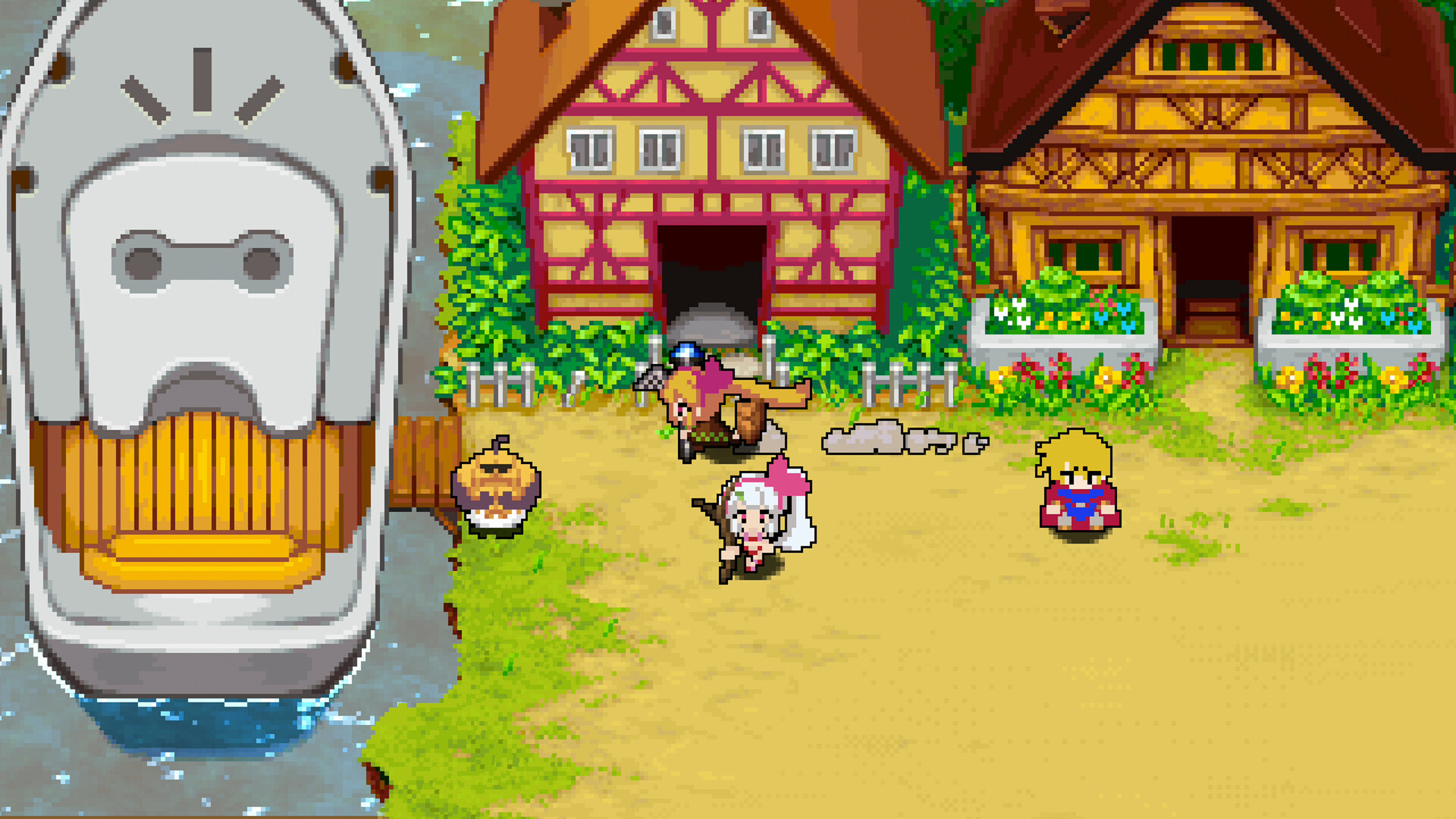
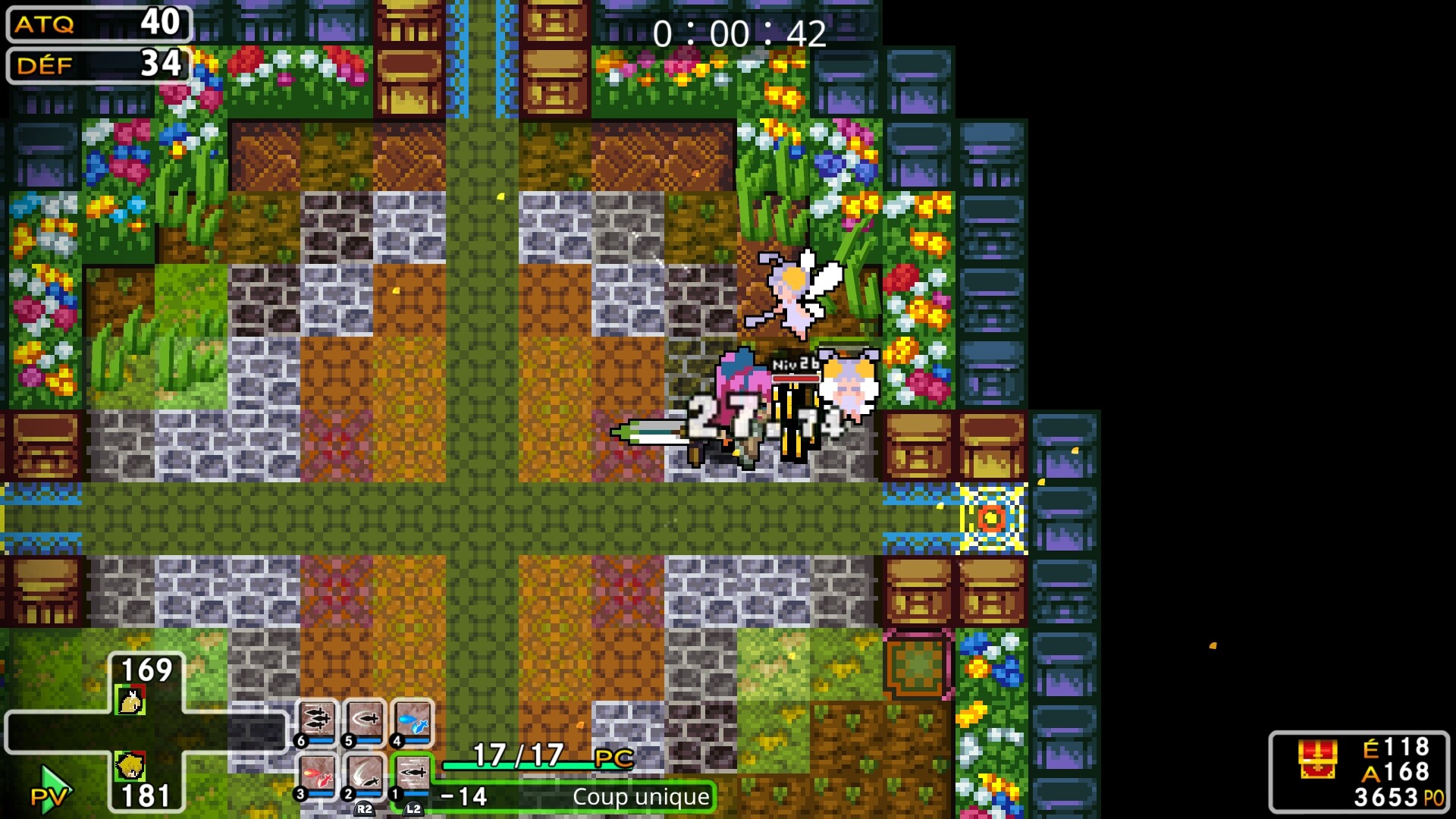
Graphically, Cladun X3 fully embraces its retro nature. Pixel art does not serve nostalgia but readability: each element, each shot, each projectile is instantly identifiable. The game favors clarity over beauty, precision over seduction. The dungeons come in a deliberately simple palette which highlights the detailed sprites and impact effects. It’s a functional style, almost Spartan, but which perfectly supports the fast tempo of the game.
On Nintendo Switch, the rendering is impeccable. Textures hold up smoothly, colors pop on the OLED screen, and combat remains consistently fluid, even in the busiest configurations. Readability remains exemplary, and this is perhaps the game’s greatest asset: nothing escapes the eye, nothing obstructs the action. The aesthetic, deliberately fixed, nevertheless retains an artisanal elegance, inherited from old Nippon Ichi titles. We sense a team that masters its tool and refuses to show off.
The animations sometimes betray the modest budget. The movements are rigid, the transitions abrupt, and certain visual effects lack finesse. Nothing annoying in the gameplay, but this economy of means reinforces the overall coldness. Cladun X3 is effective, but never spectacular: a game that speaks to the player through gestures, not through looks.
The soundtrack, on the other hand, is one of the great successes of the title. Faithful to the NIS spirit, it mixes chiptune instruments and modern percussion in a mix that is both catchy and ironic. Each dungeon has its own rhythm: some tracks evoke tension, others derision. This permanent contrast creates a unique, almost absurd atmosphere, between the tragedy of damned souls and the lightness of an arcade game.
Verdict
Perfection as a prison
8/10
Cladun X3 is a gaming machine more than a game to tell. Nippon Ichi pushes its system logic to the point of obsession: everything is measured, adjusted, balanced to the millimeter. It is a demanding title, sometimes austere, but of rare precision. Each run becomes an experience of pure optimization, each victory a demonstration of method. Nothing is left to chance; and this is, at the same time, its greatest strength and its limit.
Beneath its apparent simplicity, Cladun X3 contains an impressive density: a precise structure, interdependent mechanics, massive content and total freedom in creation. But this wealth sometimes ends up suffocating. The pleasure, immediate in the first hours, is gradually diluted in perfectionism. The game is for those who like to master, not those who like to discover.
Pros
- The surgical precision of the gameplay
- The uniquely rich customisation system
- Perfect fluidity on Switch
- A retro but coherent artistic direction
- The freedom offered to the player even in the music
Cons
- Sometimes unbalanced difficulty
- Repetitive environments
- Almost non-existent narration
- A progression that ends up closing in on itself
More in Video games
Full library 8/10
Onimusha: Way of the Sword
XBOX 7.5/10
The Lord of the Rings: War in the North – Legacy Edition
XBOX 5/10
Disgaea Mayhem
SWITCH 9.5/10
Assassin’s Creed Black Flag Resynced
XBOX 5.5/10
Tale of Dark Lands
SWITCH 9/10
007 First Light
XBOX 8/10
Realm of Ink
SWITCH 7/10
Ariana and the Elder Codex
SWITCH 6.5/10
Kingdom’s Return: Time-Eating Fruit and the Ancient Monster
SWITCH 9/10