
Blood of Mehran
The twilight of legends
Score: 5.5/10
Images and videos
At a glance
We liked
- The artistic direction, coherent and inspired by Persian myths
- The sound ambiance, of rare accuracy
- Sincerity of tone, without cynicism or excess
- Some visually strikingly beautiful moments
We liked less
- Stiff and unsatisfying combat
- A narrative that is too distant, deprived of emotion
- Sumptuous but empty environments
- A slow rhythm that ends up wearing out the fascination
 By Farrel Grimwood · published · 5 min read
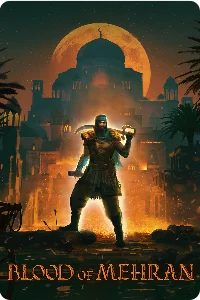
Developed by Permanent Way Game Co. and published by Blowfish Studios, Blood of Mehran was released on Xbox Series X|S on October 7, 2025. The game is explicitly inspired by the tales of the Arabian Nights and sets its action in a mythical Mesopotamia: the legendary warrior Mehran must take up arms again after abandoning his sword to find what he lost.
The promise is clear: mix hack-and-slash, stealth and exploration in an imagined, dreamlike Middle Eastern world. But does this exotic journey manage to transcend its modest ambitions to offer an experience worthy of the legend?
Shadows of a broken myth
Blood of Mehran opens with the ruins of an empire consumed by its own glory. Mehran, fallen warrior, walks through a world emptied of meaning, haunted by the memory of what he destroyed. The game adopts a serious, almost religious tone, and turns each cutscene into a prayer for a vanished age. We quickly understand that this quest is not that of a hero, but of a man on the run from his past.
The narration, refined to the core, seeks symbolism more than drama. Each exchange, each fragment of text evokes loss, remorse, fatality. But this austerity ends up absorbing all emotion: the dialogues follow one another without tension, the secondary characters slip like mirages in the desert. We would like to feel the weight of their stories, we only perceive the echo.
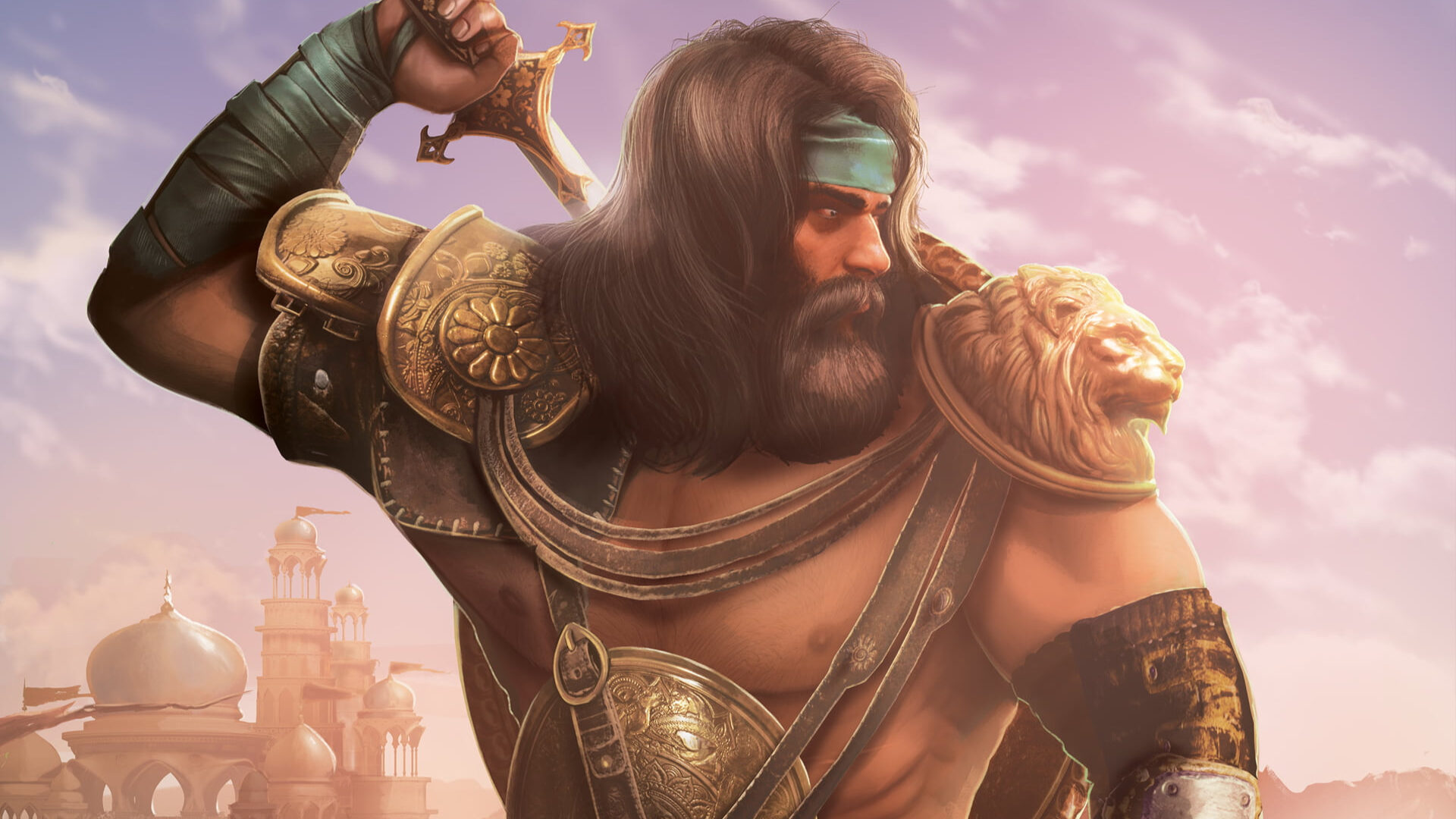
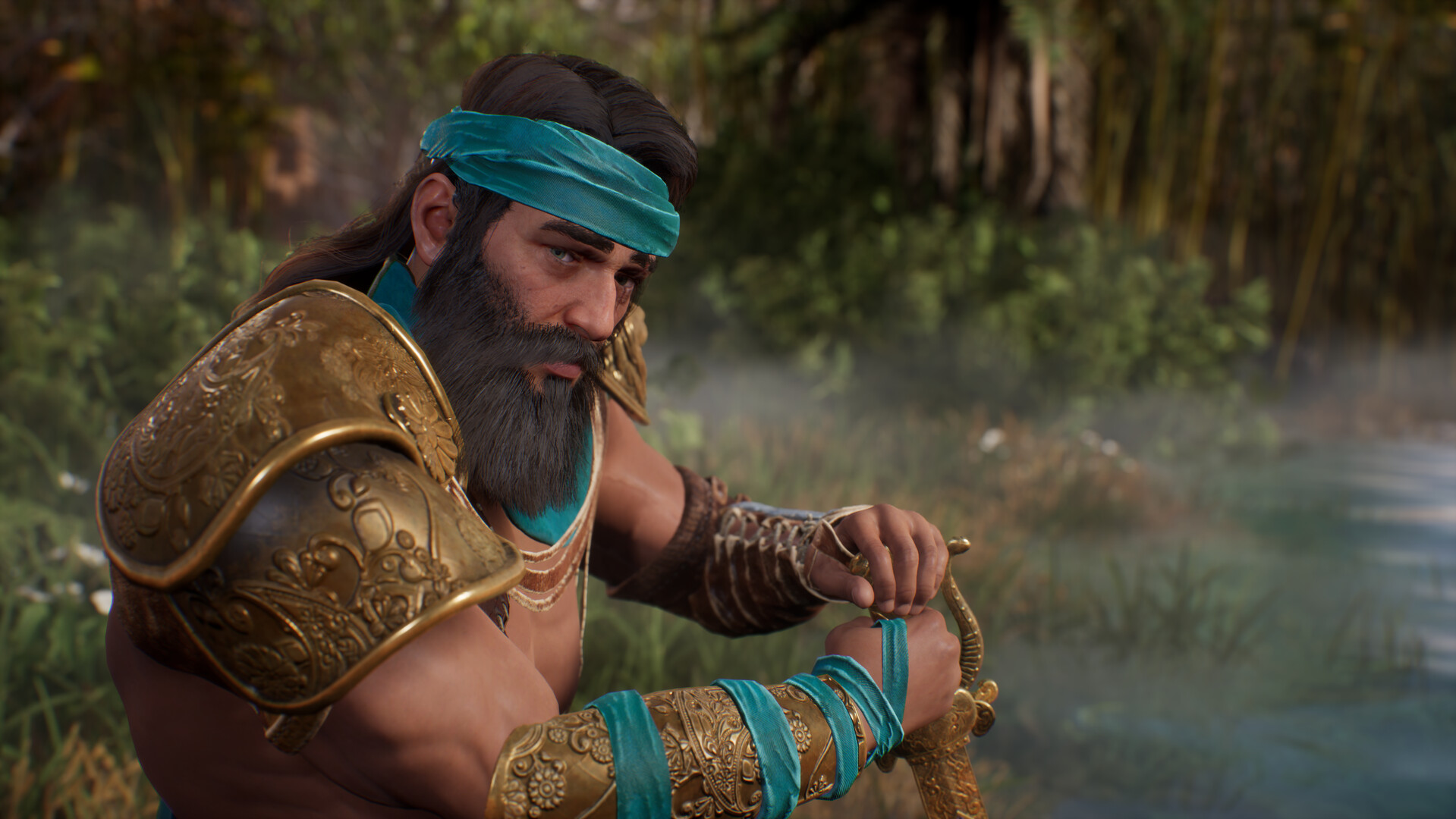
Mehran himself remains an enigma. Not by depth, but by silence. His muteness, his lack of nuance, his always fixed gaze make him a fixed icon rather than a protagonist. His rare companions only exist in the function they fulfill: guide, witness, obstacle. Their words are lost in a staging too rigid to bring them to life.
However, there is a form of honesty in this coldness. Blood of Mehran is not trying to seduce; it lays things bare. It tells of ruin without hope of redemption, of glory emptied of meaning. A tale of dust and silence, magnificently ambitious in intention, but incapable of breathing into it the breath necessary for the tragedy it claims to embody.
The weight of sand and blood
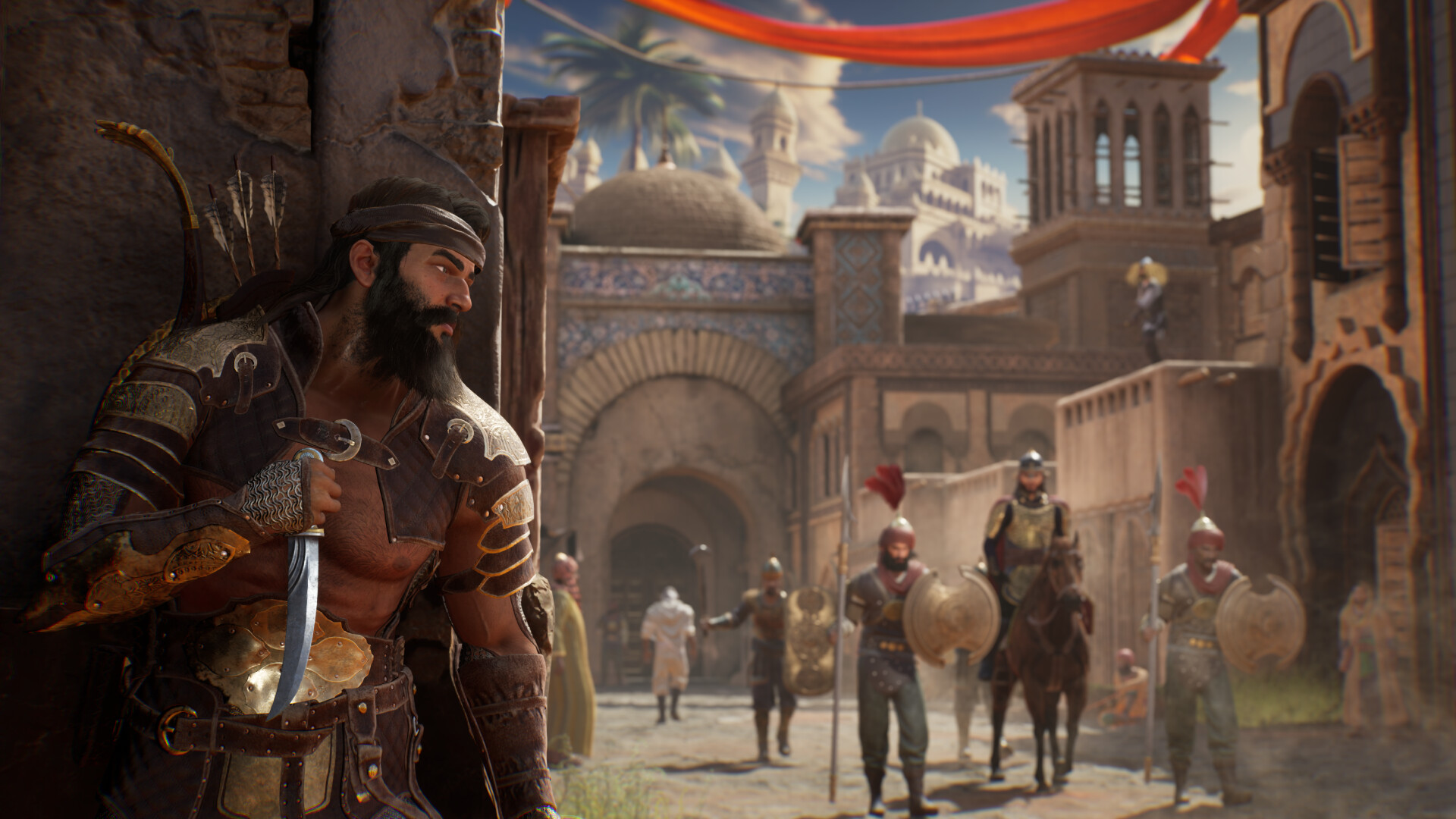
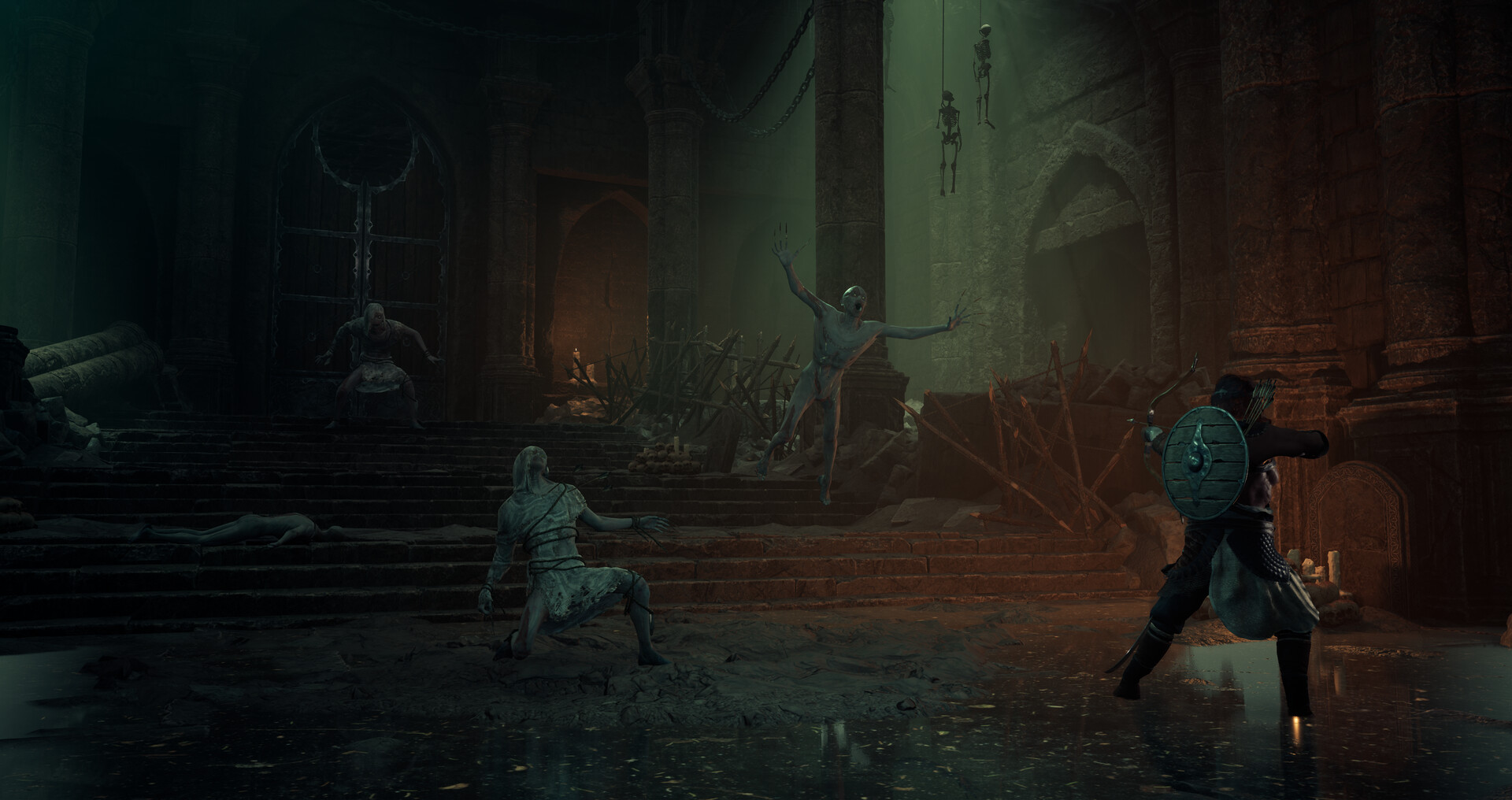
Blood of Mehran is all about confrontation. The sword draws the main line of the story, and each confrontation becomes a metaphor for this struggle against time and guilt. The gameplay follows the tradition of third-person hack-and-slash: quick hits, parries, dodges, stamina management and executing combos. On paper, the formula seems solid. In practice, it struggles to convince.
The fights lack fluidity. The stiff animations, the latency between attacks and the lack of precision of impacts betray a system that has not found its rhythm. We feel the intention: to give weight to each blow, realism to each movement; but the execution remains cumbersome, almost anachronistic. The player oscillates between frustration and fascination: frustration with the stiffness of the system, fascination with this slow, almost ritualistic violence, which gives the game a hypnotic strangeness.
The exploration mechanics follow the classic codes of the genre: semi-open areas connected by corridors, chests to search, secrets to discover. However, everything seems too fixed to arouse curiosity. The environments, superb in appearance, are crossed more than they are inhabited. Few interactions, little variety: we watch, we move forward, we fight. Here again, intention exceeds control.
The progression system, based on improving weapons and skills, suffers from the same imbalance. Mehran’s evolution is taking place slowly, without any real increase in power; the feeling of progress is diluted in a monotonous loop. Even the clashes against enemy leaders, supposed to embody strong moments, are too similar to make a lasting impression.
Yet, beneath this roughness, something resists. In the rigidity of the gameplay there is a coherence with the subject: this world is broken, and so is its hero. Each fight becomes a test, each victory an effort torn from fatigue. It’s not a great spectacle, it’s a slow heroic agony. But in a genre saturated with fluidity and efficiency, this choice of slowness ends up condemning the game to oblivion.
Dust and light
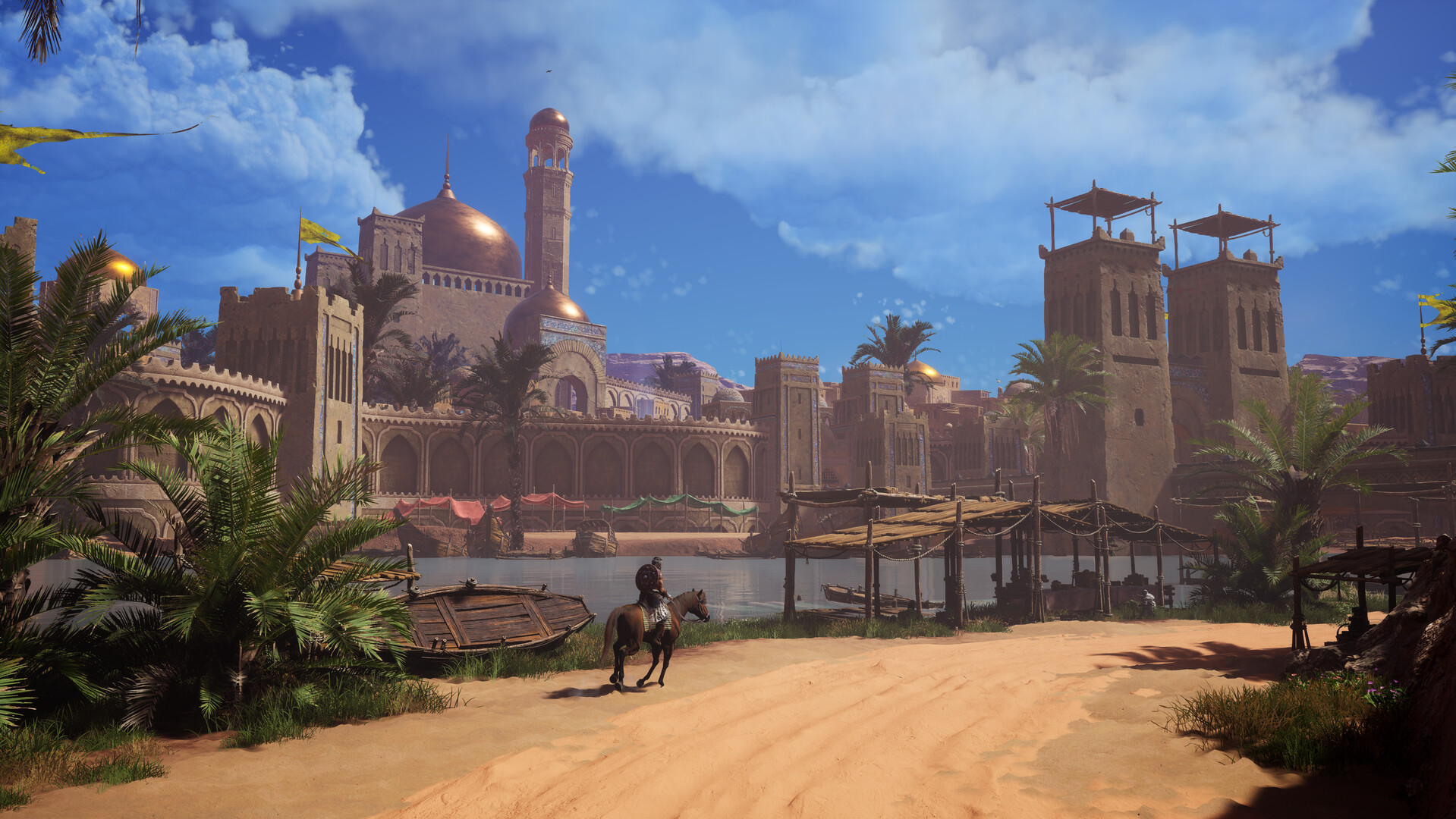
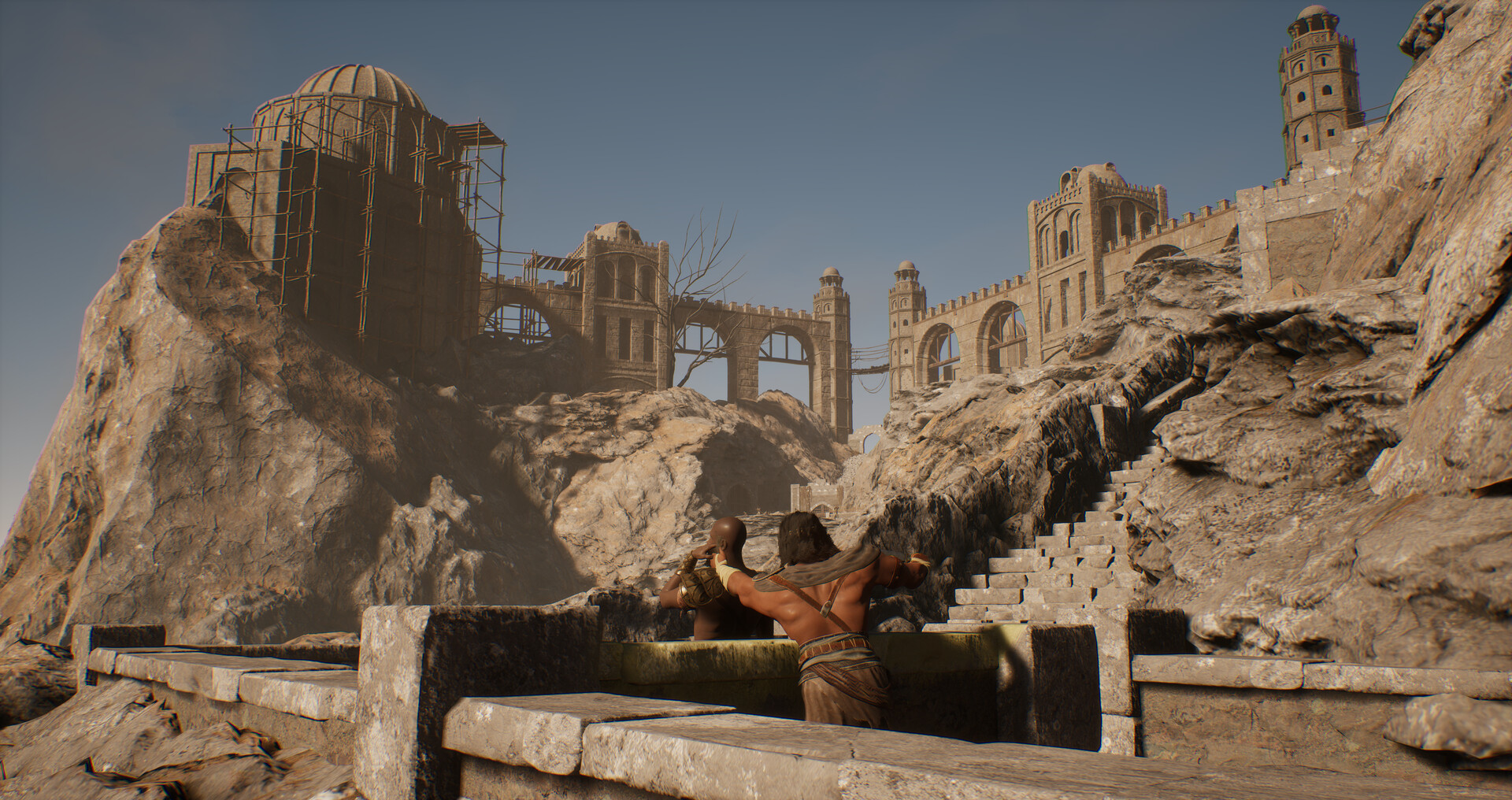
Visually, Blood of Mehran stands out for its consistency before its beauty. The world it depicts is not a lost paradise: it is a desert of gold and stone, crossed by ruins that seem to bleed light. The aesthetic draws on Persian and Mesopotamian myths without ever falling into pastiche. The massive architectures, the torn fabrics, the reflections on the armor tell the story of a universe on the verge of erasure. This is not a game that seeks to dazzle, it is a game that wants us to feel the warmth of the sand under our feet.
The artistic direction works wonders… when the engine doesn’t betray it. The textures are fine, the lighting effects controlled, but the human models lack expressiveness, and certain dated animations remind us of the modesty of the budget. The panoramas exude solitude, the interiors lack life. We thus alternate between bursts of visual grandeur and hollow, empty zones, where the staging fades away.
The staging suffers from the same contrast: a few sequences filmed with a real sense of setting alongside frozen dialogues, with little direction for the actors. The result is intermittent beauty: a world superb to look at, but rarely inhabited.
On the sound side, the success is clearer. The original soundtrack, between dry percussion and oriental stringed instruments, accompanies the player like an incantation. The themes return, transform, disappear in a breath of wind. It is in this musicality that the game finds its soul. The sound effects reinforce the materiality of the world: saber sinking, leather cracking, wind rasping the walls. The mixing is just right, almost organic.
The dubbing, minimalist, is limited to the essential but maintains the seriousness of the tone. Few words, but a real vocal presence. As a whole, Blood of Mehran impresses less with its technique than with its sensory texture: a rough, dry game, coherent down to its flaws.
Verdict
The legend that fades
5.5/10
Blood of Mehran is a game haunted by its own ambition. Everything there exudes sincerity, but everything also betrays the fragility of a project which aims for greatness without having the means. It is a fresco deprived of breath, a poem of sand that disintegrates between the fingers.
The combat system, stiff and outdated, lacks the momentum necessary to sustain the dramatic intensity it purports to serve. The staging, often superb, fades away too quickly for lack of embodiment. And yet, something persists: an atmosphere, a melancholy, an authenticity that cannot be faked. Blood of Mehran often fails, but it fails with dignity.
Pros
- The artistic direction, coherent and inspired by Persian myths
- The sound ambiance, of rare accuracy
- Sincerity of tone, without cynicism or excess
- Some visually strikingly beautiful moments
Cons
- Stiff and unsatisfying combat
- A narrative that is too distant, deprived of emotion
- Sumptuous but empty environments
- A slow rhythm that ends up wearing out the fascination
More in Video games
Full library 8/10
Onimusha: Way of the Sword
XBOX 7.5/10
The Lord of the Rings: War in the North – Legacy Edition
XBOX 5/10
Disgaea Mayhem
SWITCH 9.5/10
Assassin’s Creed Black Flag Resynced
XBOX 5.5/10
Tale of Dark Lands
SWITCH 9/10
007 First Light
XBOX 8/10
Realm of Ink
SWITCH 7/10
Ariana and the Elder Codex
SWITCH 6.5/10
Kingdom’s Return: Time-Eating Fruit and the Ancient Monster
SWITCH 9/10