
Atelier Resleriana: The Red Alchemist & the White Guardian
The secrets of a forgotten world, rekindled by the flame of alchemy
Score: 8.5/10
Images and videos



At a glance
We liked
- The narrative depth that mixes melancholy and hope
- The duo Rias and Slade, complementary and endearing
- The poetic artistic direction and captivating music
- The rich synthesis system conducive to experimentation
We liked less
- Technical slowdowns during busy fights
- A repetition that can bore impatient players
- No French translation
 By Farrel Grimwood · published · 8 min read
Contents
At a time when alchemy is nothing more than a distant echo, swallowed up by oblivion and silence, Atelier Resleriana: The Red Alchemist & the White Guardian stands like the story of a rebirth. Available on September 26, 2025 on Nintendo Switch, the new opus by Gust and Koei Tecmo takes place in the kingdom of Hallfein, a land marked by the unexplained disappearance of its inhabitants and the ruin of its knowledge. Here, hope takes the form of Rias Eidreise and Slade Clauslyter, two figures whom destiny brings back to their city of origin to rekindle the flame of an extinguished science and unravel the threads of an ancient drama.
It’s not just a new adventure, but a reinvented myth. Each step the player takes on the lands of Hallfein promises a mixture of discovery and melancholy, an exploration where the quest for knowledge becomes a quest for survival. Behind the elegance of a series that has survived the ages, a persistent question emerges: can alchemy still save this world, or is it just a memory destined to fade?
Children of a devastated kingdom
The story of Atelier Resleriana takes root in Hallfein, a land marked by an unexplained disappearance. Once prosperous, the city was emptied of its inhabitants, leaving behind ruins and a silence that only the echoes of the past still seem to populate. It is in this void that Rias Eidreise and Slade Clauslyter emerge, two figures whose steps bring back memory and hope.
Rias, an alchemist with precocious talent, embodies the ardor of youth faced with loss. Her quest is not only scientific: it is intimate, fueled by the desire to understand why Hallfein faded away and to give new meaning to forgotten knowledge. In her gestures, in her doubts, the fragility of a heroine who carries both the rigor of study and the weight of mourning shines through.
Slade, her companion in arms and on the road, represents the other side of this quest: pragmatic, protective, more attached to beings than to theories, he becomes the guardian of balance. His presence channels Rias’ passion, but his gaze, too, is troubled by the magnitude of the buried secrets. Their duo, far from being fixed, evolves throughout the adventure, oscillating between complicity, disagreements and revelations, offering the player a constant emotional dynamic.
Around them is a gallery of characters, each of whom bears a scar. Survivors haunted by exile, spirits linked to the roots of the Great Tree, mysterious figures who guide or hinder the protagonists’ quest. Some become allies of circumstance, others establish themselves as rivals or guardians of forbidden truths. Their trajectories, often intertwined, remind us that the quest for alchemy is inseparable from that of the men who inherit it.
The central theme is that of memory: memories of a world that has lost its breath, memories of sacrificed knowledge, memories of choices that condemn or save. The story does not just deliver a mystery to be solved, it sets up a broader reflection: what is knowledge when it is cut off from its people? And what responsibility do those who try to revive it bear?
This narrative weaving, made of the intimate and the mythological, gives Atelier Resleriana a rare density. Behind the colors and the apparent softness, the adventure takes the form of a hushed drama, where each character reflects in their own way the wound of a world and the possibility of its healing.
Knowledge in fragments, exploration in cycles
The strength of Atelier Resleriana lies in its way of articulating the gameplay around the fragility of a world in ruins. Far from offering a uniform open space, the game structures Hallfein into fragmented territories, each carrying its own identity and its own trials. Exploration is done in zones, where we alternate between the discovery of resources, strategic confrontations and the resolution of puzzles linked to alchemy. Each cycle becomes a step closer to rebuilding, but also a reminder of what was lost.
The combat system is based on a dynamic turn-based approach that combines the classic strengths of the series with innovations. Rias uses her alchemist skills, capable of transforming materials into weapons or healing in the heart of combat. Slade, more physical, imposes his presence with frontal attacks and protective techniques. Around them, the allies encountered throughout the adventure complete the team with varied styles, giving the clashes a tactical richness which requires thinking about each placement, each sequence, each resource consumed.
The level design plays with the symbolism of the Great Tree, the common thread of the adventure. Each branch explored opens up to areas with contrasting atmospheres: sanctuaries bathed in light, marshes invaded by corruption, ruins where vegetation has reclaimed its rights. These environments are not just decorations: they dictate the rhythm and influence the gameplay. Some terrains impose mobility constraints, others accentuate the importance of collecting, forcing the player to adapt their strategies and vary their team compositions.
The synthesis, the heart of the series, is part of this cyclical logic. The materials collected during exploration feed a system that is more accessible than before, but still dense for players seeking depth. Each item crafted can change the outcome of a confrontation or unlock a route in the environment. The mechanics, both simple to understand and subtle in its ramifications, remind us that alchemy is as much a science as it is an art of adaptation.
Progression is based on a clear loop: exploration, collection, synthesis, combat. But it is the way in which each step resonates with history that makes Resleriana unique. The player does not just accumulate resources, he revives fragments of memory, restores forgotten knowledge and participates in the reconstruction of a kingdom. This alchemy between gameplay and narration establishes a depth that goes beyond the mechanical framework.
Certainly, the experience can seem demanding due to its repetition and its deliberately measured pace. But it is in this rigor that its identity lies: Atelier Resleriana does not seek to dazzle with speed, but to captivate with endurance, by offering a journey where each step counts, each success weighs, and each failure recalls the fragility of a world on the verge of extinction.
The poetry of colors, the echo of melodies
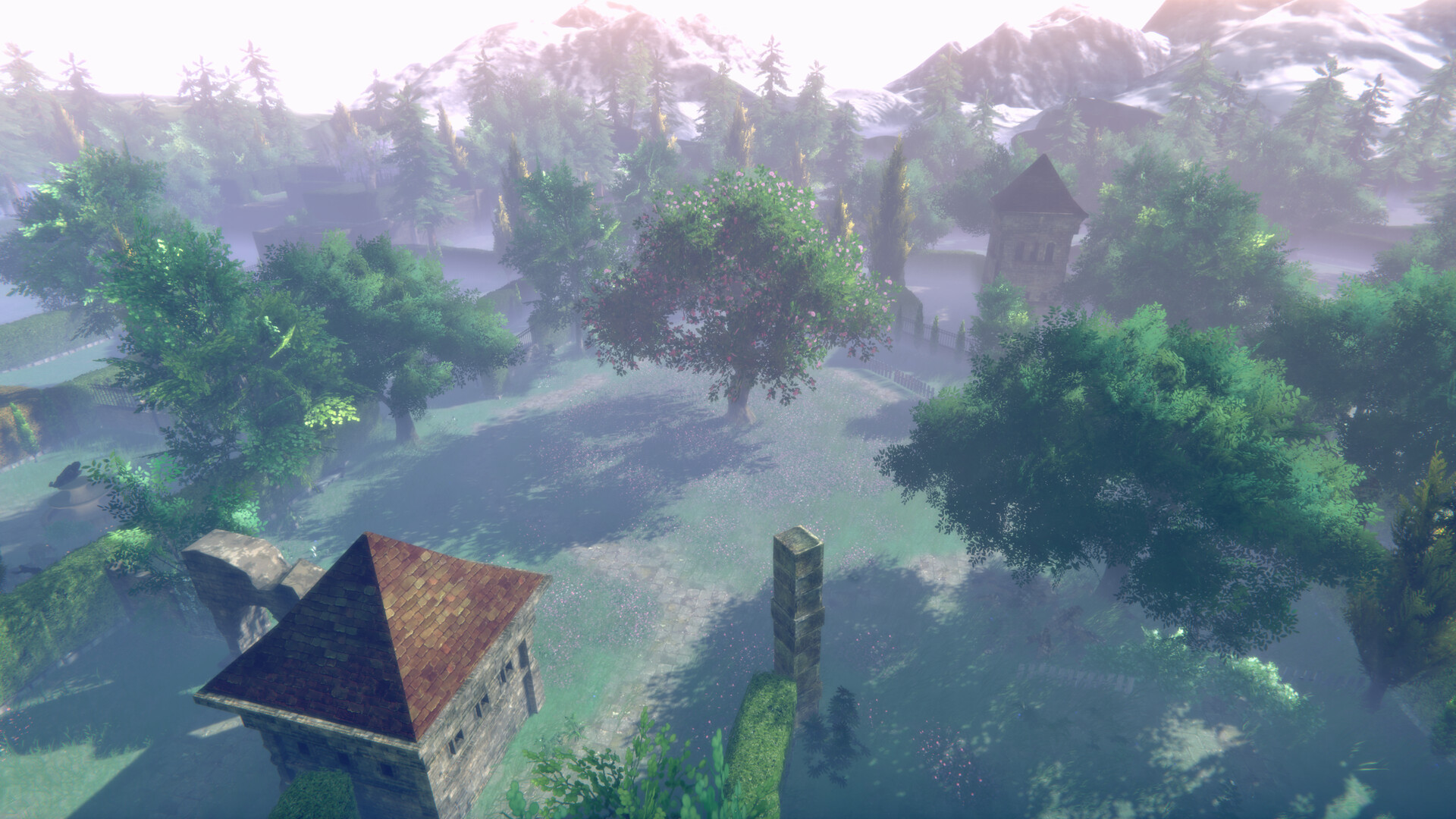
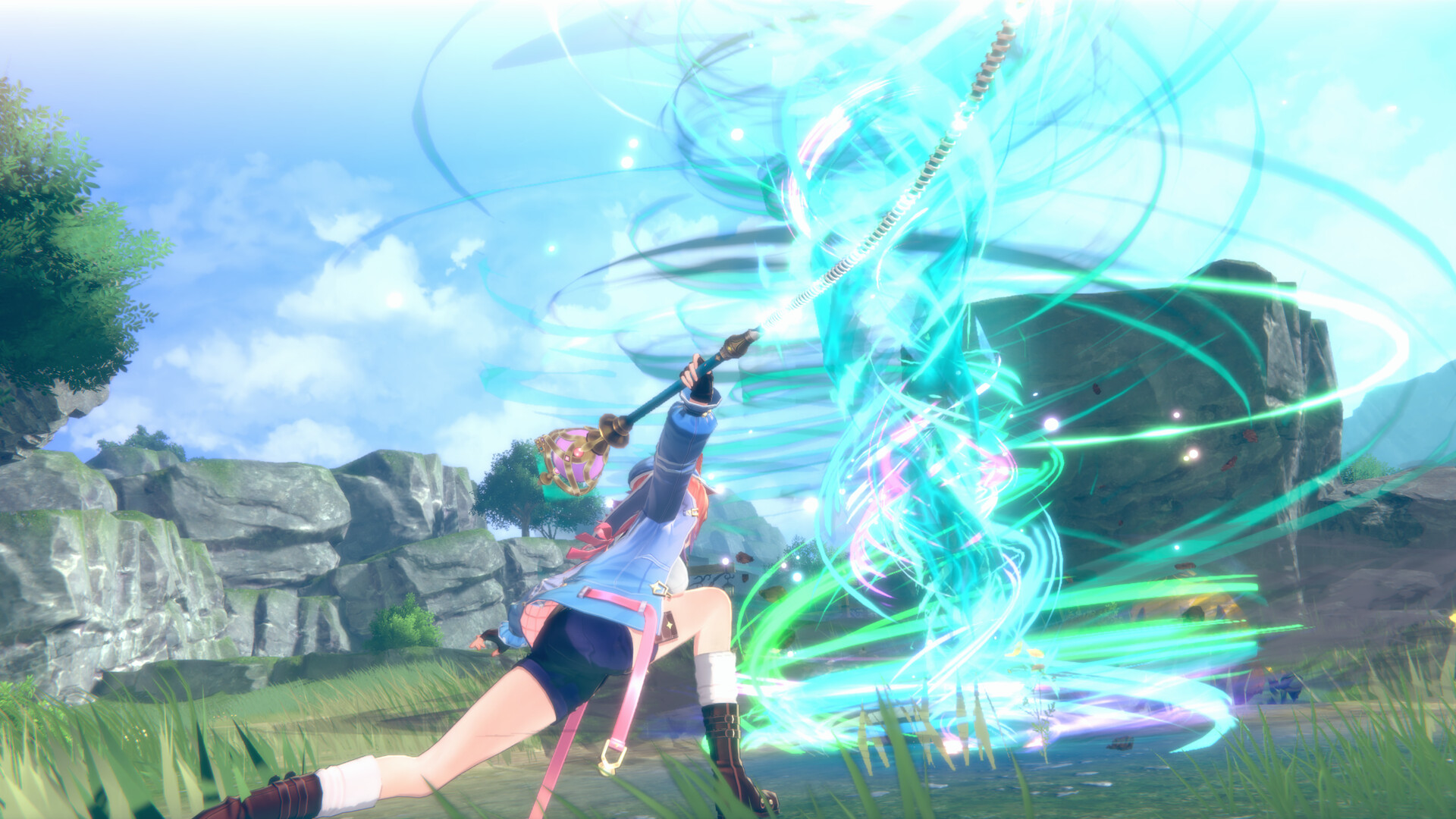
Visually, Atelier Resleriana stands out as one of the most polished episodes of the series on Switch. Gust continues its work as a master craftsman by offering environments that oscillate between enchantment and desolation. The plains of Hallfein, bathed in soft light, contrast with the corrupted areas, drowned in dark hues and disturbing glows. The shrines resplendent with luminous details that recall the past grandeur of alchemy, while the sprawling ruins suggest a world in tatters, frozen in wait for its rebirth.
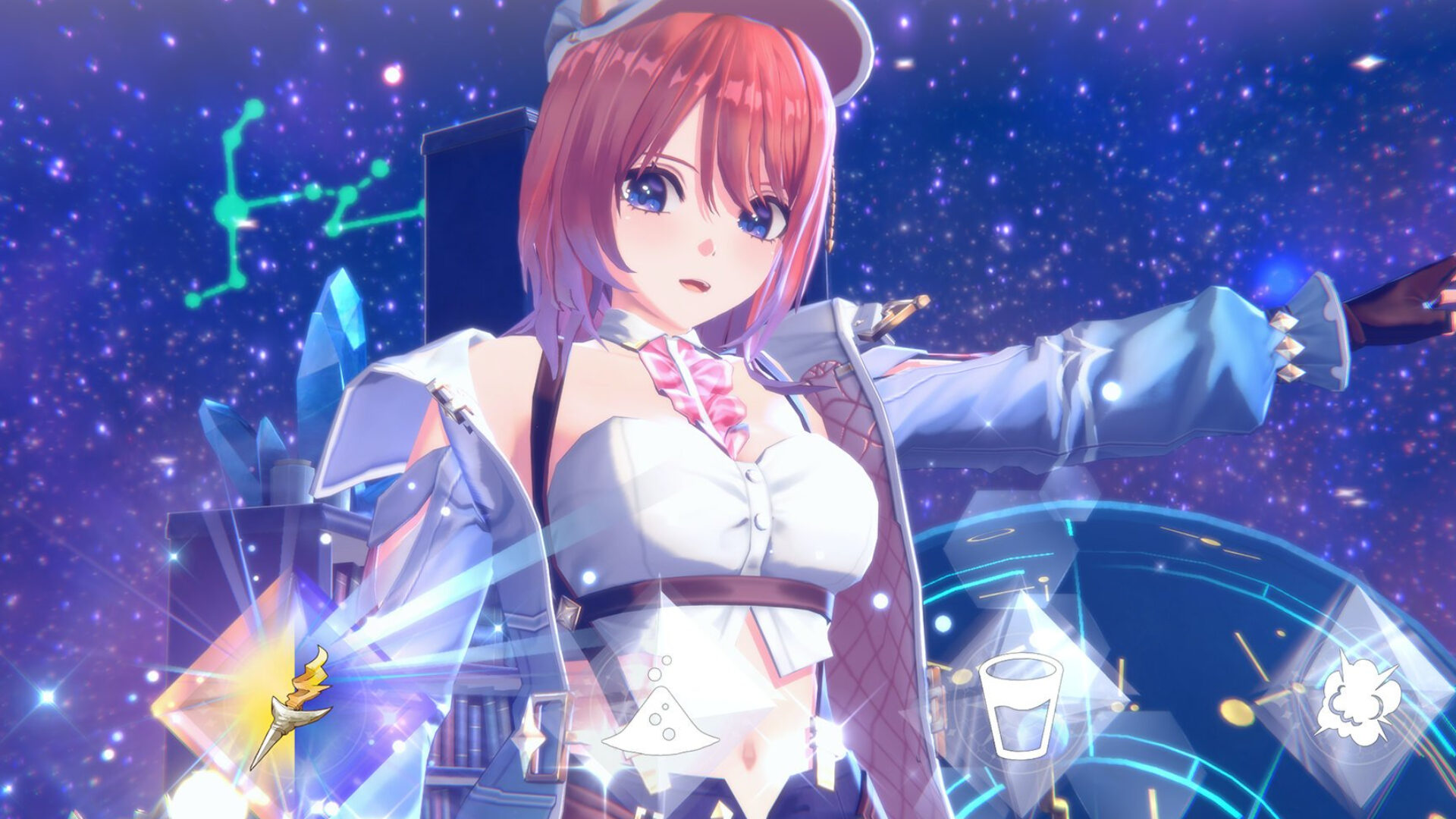
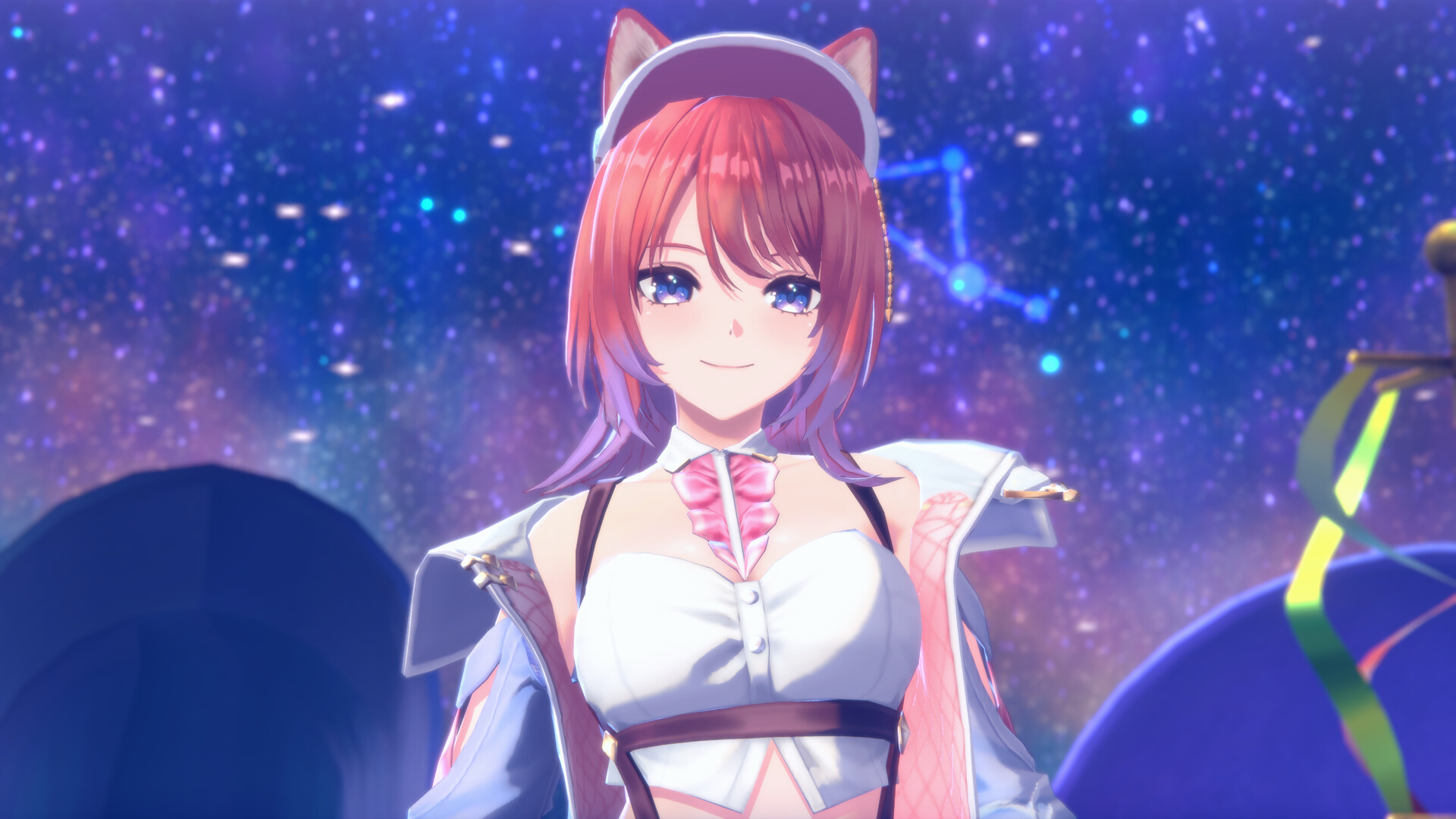
Cel-shading, the studio’s trademark, gains in subtlety. The characters stand out with fluid contours and more nuanced facial expressions, capable of expressing a fleeting emotion, a doubt or a new resolution. Rias and Slade, in particular, benefit from careful animations which reinforce their complementarity: passion and precision, delicacy and strength. The allies encountered, each with their unique design, enrich this gallery of souls that we remember as much for their aesthetic as for their role in the story.
The technique on Switch, however, shows its limits. Textures sometimes lose clarity in larger environments, and some framerate drops occur during combat saturated with effects. But artistic identity far outweighs these weaknesses. Each scene maintains a coherence, each area visually tells a story, and the charm specific to the series is maintained, even in the more modest setting of the hybrid console.
The soundtrack, for its part, constitutes a real signature. The orchestral compositions mix traditional instruments and modern layers, creating an atmosphere that is sometimes peaceful, sometimes oppressive. The exploration themes exude melancholy and wonder, while the combat music comes alive with lively rhythms and incisive melodies that underline the dramatic tension.
The Japanese dubbing conveys the emotional accuracy of the characters. Rias expresses both fragility and determination, Slade conveys a quiet strength, and the antagonists impose themselves with sharper diction, imbued with mystery or threat. The French subtitles, clear and well integrated, allow you to fully enjoy these interpretations.
The combination of artistic direction and soundtrack gives Atelier Resleriana a unique atmosphere. It is a world that breathes through its colors and notes, a world where each look and each sound heard reminds us that beauty and sadness can coexist, like two inseparable sides of the same journey.
The discrete mechanics of a persistent journey
On a technical level, Atelier Resleriana ensures decent stability on Switch, despite some compromises. The framerate is generally maintained, even if slowdowns occur occasionally during fights saturated with visual effects. Loading times remain reasonable, and the portability of the console fits perfectly with the cyclical structure of the game, allowing you to progress in small sessions without losing the thread of the adventure.
The progression system is based on mechanics that extend replayability. Each mission, each area explored and each synthesis cycle nourishes a feeling of tangible progress. The player continually returns to the village, a place of rest and preparation, where he can interact with allies, improve his skills and strengthen infrastructure. This loop transforms the experience into a long weaving, where each session contributes its stone to the building of reconstruction.
Replayability also relies on the freedom offered by synthesis. Combinations of ingredients give rise to a multitude of results, some essential for progress, others optional but valuable for refining a strategy. This system encourages experimentation and gives each player the feeling of having shaped their own path, their own tools, their own style of play.
Secondary quests enrich the campaign. Some are purely utilitarian, intended to harvest resources and recipes, but others explore the daily lives of the inhabitants of Hallfein and add welcome depth to the universe. They strengthen attachment to the world, and remind us that survival is not only a question of victory on the battlefield, but also of bonds and solidarity.
Finally, the technical aspect is complemented by careful ergonomics. The clear and readable menus make it easier to manage a dense system. The accessibility options remain limited but allow the difficulty to be partially adapted, which opens the door to a wider audience without breaking the demanding identity of the game.
As a whole, Atelier Resleriana isn’t just a transitional episode: it installs mechanics that extend the journey well beyond the first campaign, giving players the rare pleasure of constant return to a world that continues to breathe after each session.
Verdict
The rebirth of a fragile flame
8.5/10
Atelier Resleriana: The Red Alchemist & the White Guardian succeeds in giving the saga a new impetus. By bringing alchemy back to the center of the story, by weaving the intimate and the mythological, Gust delivers an instalment that speaks to veterans and newcomers alike. The story of Rias and Slade, carried by a melancholy universe and characters with visible scars, finds a singular echo in a gameplay where each cycle becomes a step towards the reconstruction of a wounded world.
Certainly, the Switch’s technical performance imposes limits, repetition can sometimes be a burden and slowdowns remind us that ambition exceeds the machine. But the essential is elsewhere: in this ability to make exploration and synthesis a living story, in this atmosphere which combines beauty and sadness, and in this breath which gives back to alchemy its role of promise and light.
Pros
- The narrative depth that mixes melancholy and hope
- The duo Rias and Slade, complementary and endearing
- The poetic artistic direction and captivating music
- The rich synthesis system conducive to experimentation
- The cyclical structure which perfectly matches the handheld format of the Switch
Cons
- Technical slowdowns during busy fights
- A repetition that can bore impatient players
- No French translation
More in Video games
Full library 10/10
World of Warcraft: Forever
PC 8.5/10
Warhammer 40,000: Boltgun 2
PC 9/10
Total War: Warhammer III – Lord of the End Times DLC
PC 7/10
Revisited | Warcraft III: Reforged
PC 7.5/10
Warcraft III Reforged: Forsaken Kingdom
PC 8.5/10
World of Warcraft: Midnight
PC 9/10
Puzzle Bobble Everybubble!
PC 6/10
Crown of Greed
PC 6.5/10
Tavernhold
PC 6.5/10