
Coji-Coji
Coji-Coji finally shows up, and still refuses to play the game
Score: 8/10
 By Farrel Grimwood · published · 4 min read
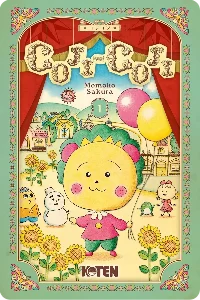
With the arrival of Coji-Coji in the French Mangetsu catalog under the Koten label, it is a distinctive work, long out of reach of the French-speaking readership, which finally finds a legitimate place in bookstores. Created by Momoko Sakura, Coji-Coji looks like nothing familiar, even to an audience accustomed to the eccentricities of Japanese manga. And this is precisely what makes this publication as valuable as it is confusing.
Coji-Coji takes place in the Land of Märchen, an absurd world populated by creatures who seem to evolve according to rules that no one really tries to understand. At the center of this minimalist theater is Coji-Coji himself. A calm and detached character who goes through situations with an almost disturbing serenity. He doesn’t grow, he doesn’t learn anything, he never questions himself. He observes, responds from the sidelines, and leaves others to struggle with their own contradictions.
The strength of the manga lies in this radical posture. Momoko Sakura does not tell a story in the classic sense, she strings together short, often innocuous situations, where humor arises from the constant gap between the reader’s expectation and the absurd response of the story. The dialogues are simple, almost dry, but always loaded with something unsaid that hits home. Behind the round and childish drawing, Coji-Coji speaks of loneliness, conformism, absurd social rules and this permanent pressure to “function correctly” in a world that is not.
The French edition proposed by Mangetsu is part of a clear heritage approach. The format respects the original work and highlights its singularity without any attempt at forced modernization. The translation maintains this deliberately flat, sometimes disconcerting tone, which makes the manga so special. Nothing is overplayed, nothing is explained to the reader. Coji-Coji never seeks to be friendly, much less to seduce. It simply exists, and leaves the reader free to adhere to its absurd logic or not.
A still world where everyone is moving
In Coji-Coji, the story takes on a circular, almost meditative form. Each chapter offers an autonomous situation, a slice of life captured in the Land of Märchen, which gradually enriches the perception of this singular universe. The whole composes a gentle and absurd chronicle, where interest arises less from the sequence of events than from the way in which they present themselves and are repeated.
Coji-Coji occupies a central place without ever imposing itself. He moves through scenes with quiet constancy, observing his surroundings with disconcerting lucidity. His words, simple and direct, act like a mirror held up to the other characters. Where they question themselves, get carried away or seek to do well, he responds with a personal, stable, almost immutable logic. This stability creates a permanent gap, and it is in this gap that the manga finds its rhythm and its humor.
Around him revolves a gallery of immediately identifiable characters. Each inhabitant of Märchen exists through a way of being, a little habit, a well-defined vision of the world. Their interactions give rise to short, often unpredictable exchanges, which recall certain everyday conversations, transposed into a slightly displaced setting. Nothing is forced, everything is based on observation and the accuracy of behavior.
Momoko Sakura’s writing is distinguished by a great economy of means. The dialogues get to the point, while exploring thoughts that are not childish. Each situation arises naturally, without seeking immediate effect, and gives the reader time to grasp what is happening between the lines.
Gradually, Coji-Coji builds a coherent universe, governed by its own rules. The absurd becomes a daily language, perfectly integrated into the functioning of the world. This consistency gives the manga a strong and recognizable identity, where each return to the Land of Märchen provides a familiar, almost comforting sensation.
Through its characters and their exchanges, the work paints a comical vision of the world. Situations take on importance by their very presence, without apparent hierarchy. Everything coexists on the same level, in a strange but obvious harmony, which gives Coji-Coji this unique tone, both accessible and deeply singular.
Graphic simplicity for the eye
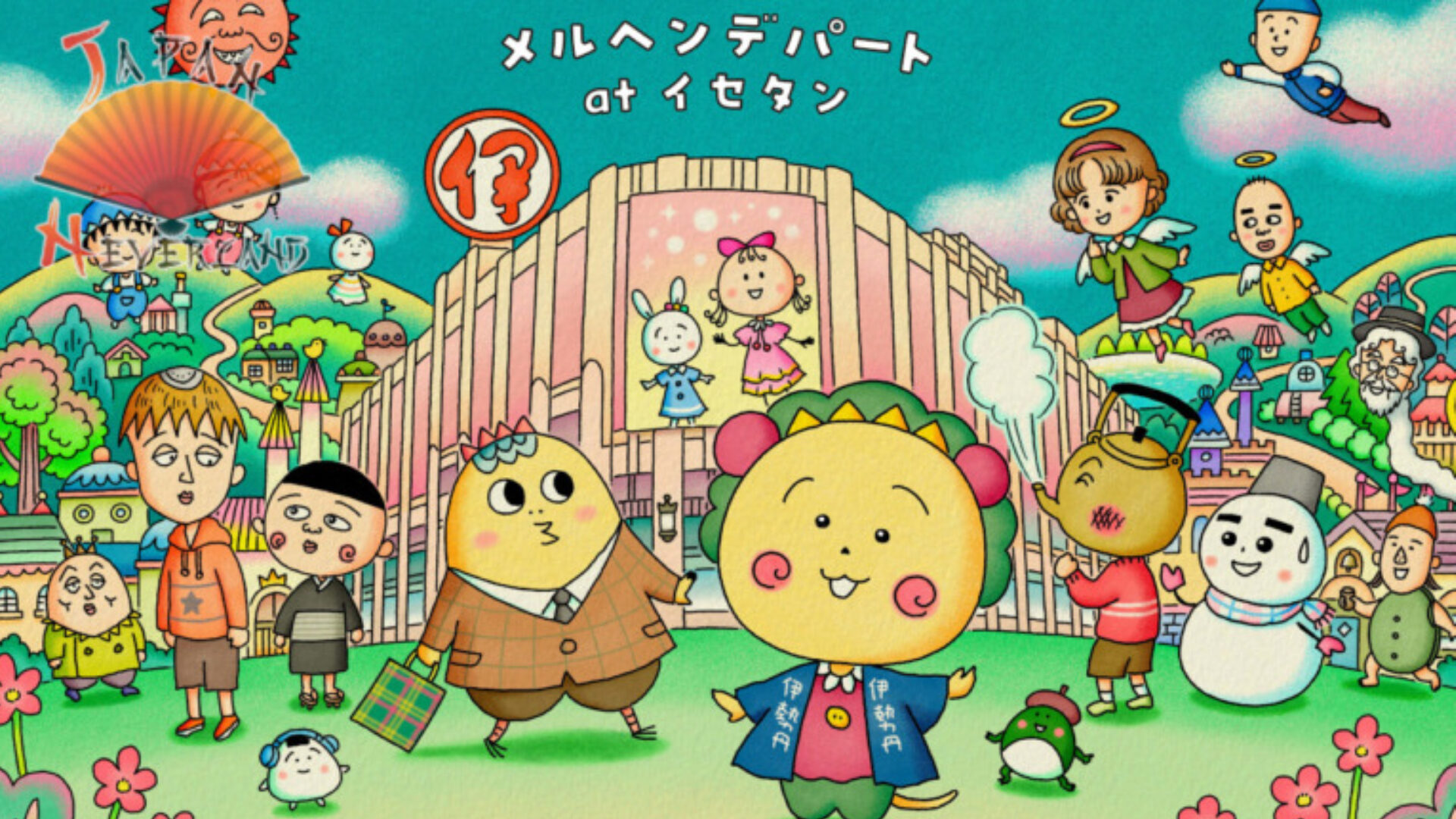
The design of Coji-Coji is seemingly obvious. The features are round, refined, almost childish, and the backgrounds are often reduced to the essentials. This visual simplicity, however, is neither effortless nor careless. It constitutes the very basis of the production imagined by Momoko Sakura, an author who perfectly masters the art of saying a lot with very little.
The characters are immediately distinguishable by their silhouette and expression. A look, a posture, a fixed smile are enough to convey an emotion or an intention. Drawing acts as a direct language, even if it tends to be overloaded. This constant overflow encourages the reader to concentrate on the situations rather than on their formatting.
The settings, deliberately sober, function as landmarks rather than detailed locations. They situate the action without ever confining it. The Land of Märchen thus appears as a world sketched in light touches, sufficiently defined to exist, sufficiently open to accommodate all situations. This graphic economy reinforces the universality of the subject and facilitates immersion.
The French edition offered by Mangetsu fully respects this balance. The printing highlights the clarity of the line, the contrasts are clear, and reading is frictionless. The chosen format gives the pages room to breathe and preserves the original intention of the author, without artifice or superfluous graphic rereading. The book object accompanies the work with sobriety, in a logic of transmission rather than demonstration.
In Coji-Coji, the drawing never seeks to take over the story. It acts as a calm, stable framework within which situations can exist freely. This alliance between visual simplicity and visual precision gives the manga a strong and immediately recognizable identity, where each page invites you to slow down and observe.
Verdict
An understated work that leaves a lasting impression
8/10
With this new French edition, Coji-Coji finally finds a setting worthy of its singularity. By publishing it, Mangetsu is not only enriching its catalog: the publisher is offering French-speaking readers access to a rare, discreet work, whose strength rests on the constancy of its outlook and the accuracy of its tone. Momoko Sakura's manga moves forward quietly, sets up its universe smoothly, and leaves a lasting impression with its strange sweetness and offbeat humor.
Coji-Coji never seeks to seduce through excess or effect. It offers another way of reading, more attentive, calmer, almost contemplative. Each situation, each exchange, each silence contributes to a vision of the world that is both simple and profoundly human. A reading that can be savored in small touches, and which benefits from being revisited.
More in Manga & comics
Full library 8/10
Mop & Pudding: Tea Beneath the Milky Way
Rue de Sèvres (Le Renard Doré) 8/10
My Beautiful Doll Is a Super Darling
Kurokawa 2/10
Pluie Alcide
Éditions Lapin 8/10
Bug Ego
Kazé Manga 8.5/10
Ashes Volume 3
Ankama 8.5/10
La Vérité de Pinocchio
Grand Angle 7.5/10
Les 7 Chevaliers du Royaume des Marronniers
Akata 8/10
Arsène Lupin: Le Bouchon de cristal
Grand Angle 8/10
Le Bamboo de l’Avent
Bamboo 7/10