
Magical Girl Dandelion
A heroine caught between two sides
Score: 7/10
Images and videos
At a glance
We liked
- Tanpopo and Shade’s longstanding relationship fuels a real emotional conflict.
- A heroine who seeks to rescue others without accepting imposed categories.
- Expressive characters and short, easy-to-follow fights.
- A mixture of humour and darkness that gives the duo depth.
We liked less
- Recruitment and the first trials move very quickly.
- Papillon and several supporting characters remain underdeveloped.
- The narrative structure currently follows familiar paths for the genre.
 By Farrel Grimwood · published · 5 min read
Contents
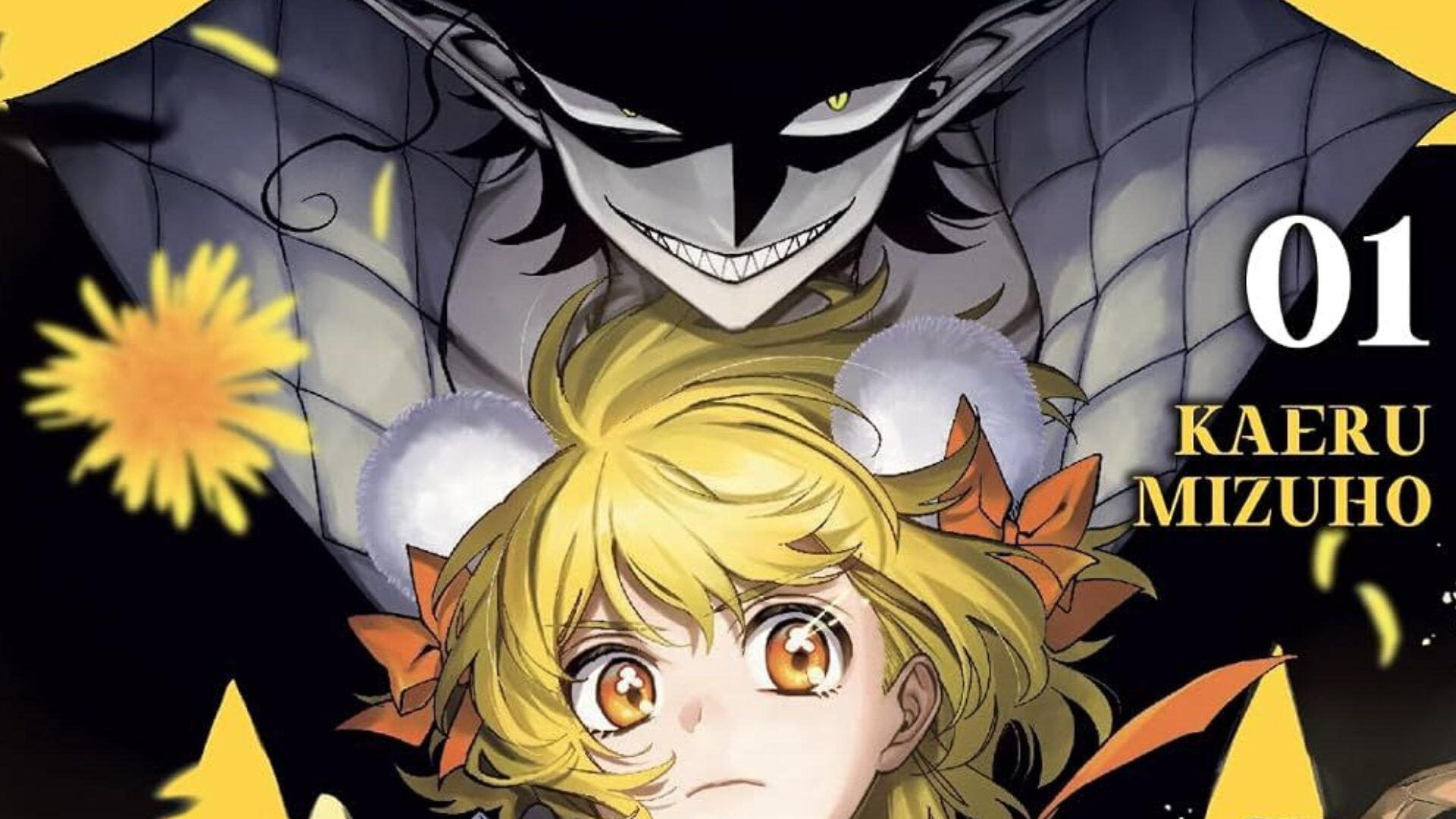
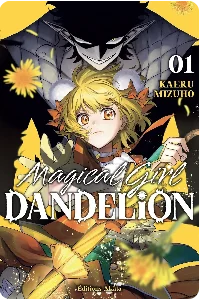
As a child, Tanpopo saw a spectre kill her parents. Another spectre saved her: Shade. Years later, she lives with her grandfather and still has this creature by her side, invisible to everyone else. To her, Shade is a friend and protector. To the magical girls tasked with fighting spectres, he belongs to the enemy. Kaeru Mizuho places that disagreement at the centre of Magical Girl Dandelion, whose first volume is published in French by Akata.
Tanpopo herself possesses exceptional magical potential. Papillon, a government-linked organisation, comes to recruit her at school to defend the public. She admires these heroines and wants to help in turn. Accepting, however, means entering an institution that might demand she turn against Shade. The conflict is established before Tanpopo has even had time to learn to fight.
The central duo has immediate appeal, but does this frantic pace leave enough room for the choice that should give the story its full strength?
Shade protects and smothers
Shade saved Tanpopo when nobody else could. Since then, he has watched over her from the shadows, intervened whenever danger approaches and joked with a familiarity made credible by their long history. Their relationship is therefore not an alliance improvised for the plot’s convenience. It exists before the recruitment and explains why Tanpopo refuses to see him as a monster to destroy.
That protection has a price, however. Shade knows the danger spectres represent and does not want Tanpopo to throw herself into their war. His refusal is understandable, but also ends up deciding on her behalf what she is capable of facing. The volume’s best tension lies there: his affection does not prevent him from being possessive. Tanpopo can be grateful without owing him her future.
The fact that only she can see him creates another distance. Shade occupies an essential place in her life while remaining absent from everyone else’s. Their closeness is nothing like an ordinary friendship, and the surrounding secret may become impossible to maintain once Tanpopo joins Papillon. Mizuho does not need constant arguments to show that their balance is fragile.
Tanpopo wants to save without sorting people into categories
Tanpopo’s position could have been reduced to a conventional dilemma: join the heroines or remain loyal to her friend. It is more interesting because she wants to act for herself. Her parents’ murder has not made her a teenager who considers all spectres alike. Shade saved her; that experience prevents her from unquestioningly accepting a sharp division between protectors and enemies.
Her admiration for magical girls is no less sincere. She wants to rescue victims and discovers a power that could allow it. The problem is therefore not a refusal to fight, but the definition of whom to fight. The first confrontations already require her to seek another outcome when the simplest answer would be to strike. That desire to understand gives the heroine a direction beyond magical talent.
Tanpopo is sometimes characterised very quickly. Her kindness, courage and determination are clear, while her school life and relationships beyond Shade have less time to exist. Her grandfather provides a family anchor, but the volume often prefers renewing the danger to giving those relationships breathing space. She is engaging; it remains to be seen who she is when no emergency forces a choice.
Papillon raises more questions than answers
Recruitment by Papillon gives the conflict a public form. Magical girls are not isolated vigilantes: an organisation identifies, supervises and sends them to fight spectres that genuinely threaten humans. Commander Kujaku Mayuyama and Peony, an already recognised magical girl, embody that authority. Their arrival at school abruptly brings Tanpopo into a world where Shade will be judged by his nature before his actions.
That framework serves the opening well. A few scenes are enough to explain what Papillon expects from its new recruit and why she cannot speak freely about her protector. The institution, however, remains only sketched. Its workings, the place given to magical girls and its classification of spectres are promises of development more than subjects genuinely examined in this volume.
The story thus gains an immediate conflict but postpones some of its most interesting stakes. If spectres are not all alike, how does Papillon respond to those protecting humans? What can Tanpopo do when the rules contradict what she sees? The volume opens those questions without pretending to settle them. That is honest for a series opening, even if the framework still lacks depth.
Art that knows how to change tone
The contrast between the two leads is clear before they even speak. Tanpopo has soft features and a bright appearance; Shade imposes a dark silhouette, visible teeth and sharper expressions. Mizuho uses that opposition for funny scenes as much as unsettling passages. The spectre can raise a smile in a familiar exchange, then become threatening again as soon as he turns towards an opponent.
Fights arrive quickly and occupy only a few pages at a time. Their panel layouts prioritise impact: an appearance, a reaction, a blow and then the consequences for the characters. That brevity avoids burying the reader in magical effects. Spectre designs and expressive faces also distinguish action from school scenes without making it feel like a different manga.
Everything nevertheless moves too quickly to let an image or threat settle. The art effectively accompanies the narrative’s rush, but that same energy prevents some confrontations from carrying the weight their stakes deserve. The violence of the opening, with Tanpopo’s parents dying, also announces a harsher tone than the idea of a costumed heroine alone suggests. This first volume retains humour without being an entirely light read.
A rushed introduction
In 192 pages, Magical Girl Dandelion has to introduce a trauma, a longstanding relationship, an organisation, a recruitment and several trials. Mizuho makes the main rules easy to follow. Tanpopo’s background, Shade’s importance to her and Papillon’s aims are clear. The story advances without lengthy explanations.
That efficiency nevertheless comes at a cost in the transitions. Decisive stages in Tanpopo’s new life follow one another before her earlier everyday existence has really taken shape. Supporting characters mainly enter to trigger a situation or represent a side. The volume has an excellent centre of gravity in Tanpopo and Shade’s bond, but everything orbiting it still needs to earn its own place.
The manga does not immediately reinvent the magical girl formula. A teenager discovers her gift, joins an organisation and faces dangerous creatures: these are familiar elements. The difference lies in the friend that organisation should teach her to eliminate. It is a strong starting point, provided the continuation genuinely lets Tanpopo challenge ready-made answers instead of merely lining up opponents.
Verdict
Shade makes all the difference
7/10
This first volume makes Tanpopo and Shade worth returning to. Their affection has a history, their disagreement has consequences and neither can escape the conflict simply by changing their mind. Mizuho adds expressive art and easy-to-follow action. The result is lively, sometimes funny and dark enough that the danger never feels decorative.
The volume is still too eager to put all its pieces in place. Papillon, supporting characters and Tanpopo’s ordinary life need more time, while the first fights still follow familiar paths. Magical Girl Dandelion nevertheless offers a convincing introduction to its series. Its future success will depend less on new powers than on the freedom genuinely allowed to its heroine between the two sides.
Pros
- Tanpopo and Shade’s longstanding relationship fuels a real emotional conflict.
- A heroine who seeks to rescue others without accepting imposed categories.
- Expressive characters and short, easy-to-follow fights.
- A mixture of humour and darkness that gives the duo depth.
Cons
- Recruitment and the first trials move very quickly.
- Papillon and several supporting characters remain underdeveloped.
- The narrative structure currently follows familiar paths for the genre.
More in Manga & comics
Full library 7.5/10
Les 7 Chevaliers du Royaume des Marronniers
Akata 8/10
Mop & Pudding: Tea Beneath the Milky Way
Rue de Sèvres (Le Renard Doré) 8/10
My Beautiful Doll Is a Super Darling
Kurokawa 2/10
Pluie Alcide
Éditions Lapin 8/10
Bug Ego
Kazé Manga 8.5/10
Ashes Volume 3
Ankama 8.5/10
La Vérité de Pinocchio
Grand Angle 8/10
Arsène Lupin: Le Bouchon de cristal
Grand Angle 8/10
Le Bamboo de l’Avent
Bamboo 8/10