


Stranger Things – Flight of Icarus
Shadows of glory
Score: 7/10
 By Farrel Grimwood · published · 4 min read
Published in paperback format in November 2025 by Lumen, Stranger Things: Flight of Icarus gives Eddie Munson the novel he deserved. Written by Caitlin Schneiderhan, screenwriter of the series, the text takes place in 1984, two years before season 4. Hawkins is still just a dull town, a setting too small to contain the bubbling soul of a boy who dreams of amps and freedom. Eddie is not yet a legend: just a squeaky teenager, who doubts, who composes in the shadows. The novel promises an intimate dive…
Hawkins’ Ghosts
The novel opens with a Hawkins who we hardly recognize. Not yet consumed by the supernatural, just damaged by banality. Eddie Munson survives there more than he lives there, stuck between the narrow walls of a caravan and the excessive dreams he feeds with riffs and faded posters. Schneiderhan dwells on these everyday details: the nights spent tinkering with a damaged guitar, the arguments with an absent mother, the bike rides in the dirty morning light; to restore the melancholy of a teenager who struggles with the ordinary.
It is in these suspended moments that the novel hits home. Eddie observes a world that is dying out, a future that is closing before it even opens. Schneiderhan succeeds in painting him without betraying him: his anger is not romanticized, his marginality is never posed as a posture. It’s a raw, almost awkward loneliness that oozes through every page. We then understand why the character had such an impact on the series: his humanity.
However, this internal look does not always keep the promise of depth that it outlines. Some passages stretch out, others repeat, as if the text was hesitating between introspection and nostalgia. The author flirts with social realism without ever daring to delve completely into it. The structure remains linear, almost academic, and the dramatic progression is too often based on predictable motifs: the encounter, the disillusionment, the shattered dream. This narrative choice keeps the reading fluid, but sometimes deprives the novel of the tension that its sadness deserved.
Around Eddie gravitate a few secondary figures sketched in broad strokes. We meet his music group, his lost friends, a budding love, a surrogate father. All participate in the emotional echo of the story, but none impose themselves. These silhouettes, often touching, lack material to go beyond their accompanying role. Their dialogues ring true, but without relief: we feel the sincerity of the author, but also the limits of a universe which prefers to evoke rather than tell.
And yet, something works. Even in its silences, the novel finds truth. In these failed conversations, in these incomplete friendships, in these dreams too big for the small town of Indiana, Schneiderhan restores the essence of Stranger Things: adolescence as a place of lack. It’s not great drama, it’s just murmuring; and this is often where the most beautiful emotions are born.
Music above all
If there was a reason to read Flight of Icarus, it would be the music. Not the one we hear, but the one we feel. Each chapter seems built on an invisible melodic line: the rhythm of a guitar, the breath of an amp, the dull beat of a heart in search of a stage. Schneiderhan knows the tempo of an amateur group: the rehearsal without an audience, the awkward joy of creating something that will never be heard.
The writing embraces this energy: brief, impactful, almost rhythmic. It alternates between atmospheric descriptions and bursts of lucidity, like an improvisation searching for its refrain. This fluid, almost cinematic style makes for immediate reading, but it sometimes lacks a literary texture. Where the series manages to mix great spectacle and emotional depth, the novel remains economical: it shows just enough, without daring to dig deeper.
The French translation accentuates this impression. It respects the clarity of the original text, but smoothes out its nuances. Certain sentences lose the musicality of the poetic momentum that Schneiderhan managed to create. This does not ruin the experience, but attentive readers will feel the loss of a grain, of a vibration.
The novel, however, manages to give Eddie Munson back his own voice. Where the series showed him through excess, the novel reveals him through nuance. His passion for metal here becomes a language, a way of existing in a world that refuses to hear him. He doesn’t play to please, but to survive. This tension between noise and silence runs through the entire text, like a score that is written as it is destroyed.
The last part of the novel concentrates all its emotional power. The words accelerate, the rhythm tightens, the tone becomes almost lyrical. We feel that the author loves this character, that she is trying to save him by giving him a past. It’s a beautiful attempt, sometimes repetitive, but sincere to the end.
And this is perhaps the most moving success of Flight of Icarus: it is not a perfect novel, it is a loyal novel. Loyal to its hero, to its time, to this idea that sometimes a poorly tuned dream is enough to give meaning to life.
Verdict
Hawkins' Shooting Star
7/10
Stranger Things: Flight of Icarus doesn't seek greatness, it seeks rightness. Caitlin Schneiderhan shapes a more human, more fragile, more tangible Eddie Munson. The novel is more of a farewell song than a spectacular prequel; a story that sometimes plays too safe, but carried by a sincere affection for its character. There we find the music, the anger and the irony of a teenager who simply wanted to exist before becoming a symbol.
More in Books
Full library 10/10
Steelborn
Lumen 7.5/10
La Société très secrète des sorcières extraordinaires
Lumen 7/10
Graciela in the Abyss
Lumen 7.5/10
Manhattan Rivals
Pocket Jeunesse 10/10
Sépia, tome 2 : Le complot de Flobourg
Pocket Jeunesse 8/10
100 Films d’animation japonais
Yniss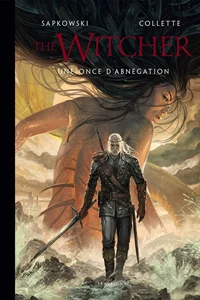 8/10
The Witcher: A Little Sacrifice
Bragelonne 7/10
One of Us Is Next
PKJ 9/10
The Star That Fell from the Sky
 8/10