
Springs, Eternal
Memorable encounters in a love story on shakier ground
Score: 6.5/10
Images and videos


At a glance
We liked
- A hot springs resort with a carefully crafted atmosphere
- Guests with varied stories and personalities
- Discoveries elsewhere that open up new dialogue
- Retro art direction that suits the memories and the strangeness of the setting
We liked less
- A central relationship whose tensions leave too little room to see what drew the couple together
- Dialogue choices with limited impact that sometimes diverge from the intent they suggest
- Encounters with supporting characters that need more development
- Occasionally cumbersome navigation on dark trails
 By Farrel Grimwood · published · 7 min read
Contents
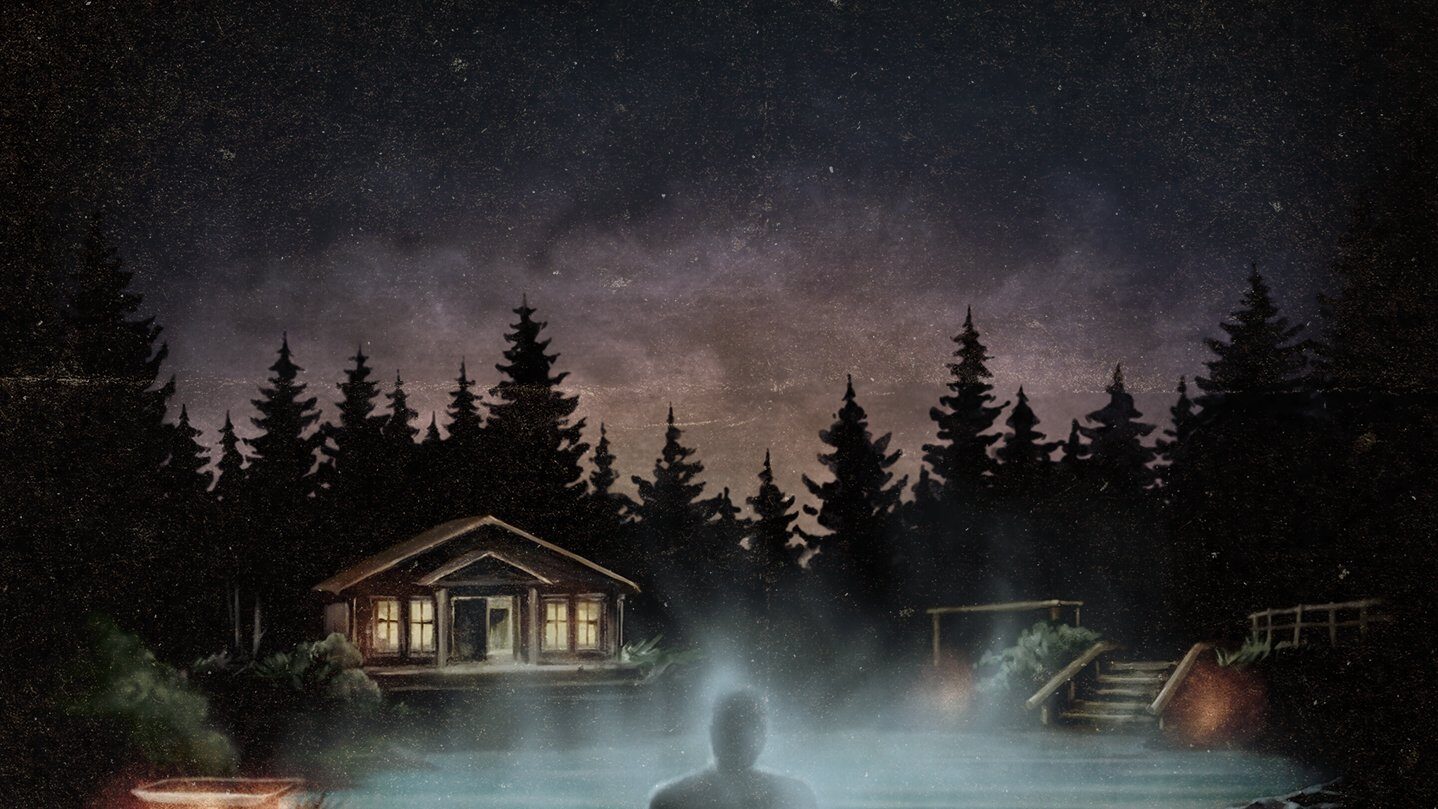
With Gone Home and Tacoma, Fullbright made its name with adventures that let players piece together other people’s lives through exploration. Working under the same banner, Steve Gaynor returns with Springs, Eternal, a smaller project that brings together a hot springs retreat, memories of a relationship, and a few decidedly less restful occurrences. The setting matters as much as the conversations, and its visuals deliberately evoke the 3D games of the late 1990s.
The adventure takes just a few hours and rests on an appealing idea. There’s time to get to know strangers while the protagonist tries to understand what brought him here. Melancholy and unease are meant to give this nighttime walk some texture while preserving the intimacy of the story. But can the mysteries of Stillwater Springs carry a love story that asks for so much attention?
A room for the night
The protagonist arrives alone at Stillwater Springs, a secluded mountain resort. Once he checks in and settles into cabin 108, the paths, pools, and buildings open up for exploration. A legend gives the stay a purpose. Meditating at the various sacred sites is supposed to open a path to the life he wants. For a man still preoccupied with memories of Twyla, the promise has an obvious appeal.
The baths trigger flashbacks. The first sparks of attraction, the couple’s conversations, and the tensions between them surface in fragments as the stay continues in the present. The game follows two threads, tracing what drew the couple together and introducing the people the protagonist meets at the resort. The pairing works in principle. Other people’s stories offer a different way to look at something that had seemed his alone to make sense of.
The resort also benefits from revealing its layout gradually. The map expands as the story progresses, opening up new places to visit. What feels like a welcoming refuge in the opening minutes grows harder to make sense of as its caves and wooded paths come into view. The next conversation is as much a draw as the uncertainty about what kind of place this really is. That’s a good reason to leave a comfortable room in the middle of the night.
The strangers make the stay
The guests are the most endearing part of Springs, Eternal. Some are looking for a little rest. Others are trying to make sense of a loss or a change in their lives. The conversations range from everyday concerns to stranger subjects, and each encounter has a tone of its own. Two philosophers deep in debate make for a very different conversation from a woman ready to ink someone’s future onto their skin.
The game makes good use of that variety. A conversation can turn up something worth bringing up elsewhere or open a topic that was previously unavailable. The encounters start to connect. There’s a reason to go back to someone with a new question instead of repeating the old ones. Exploration serves the writing in a tangible way. A detour can deepen a connection, however brief.
A few exchanges have enough humor to keep the place from feeling like a permanent gathering of unhappy people. A statue of Jizō, a protective figure in Buddhist tradition, turns out to be a livelier conversationalist than its solemn appearance suggests. That surprise gives the characters room to show some personality and keeps the exchanges from turning into a series of lessons about life.
Even so, these encounters often end just as they’re getting interesting. Additional conversations give some of the guests more depth, but several get little room to grow beyond the part they play in the protagonist’s stay. The short format keeps things light. It also leaves a few promising ideas half developed, and several of these lives are more worth lingering over than the story at the center of the game.
Twyla takes up all the space
The relationship with Twyla drives the story. The memories are meant to show what drew the two together, then make sense of the hurt and regret the protagonist brings with him. The game gives the relationship room to unfold through conversations, moments of closeness, and disagreements, dispensing with a long recap. Dialogue options let the player intervene in some of those conversations, with all the discomfort of reliving something whose outcome is already settled.
The way the game handles the couple’s flaws is what gets in the way. Hurtful remarks, selfish reactions, and failures to communicate end up taking up a great deal of space. Imperfect people can carry a gripping story. The scenes still need to show enough of what drew them together. Nostalgia alone can only do so much to make every argument moving.
Here, the few tender moments struggle to offset the steady accumulation of painful exchanges. The protagonist’s sadness is understandable, but the relationship gets more attention than its emotional impact earns. The adventure invites a look back at the past, yet it hovers awkwardly between accepting the end of a relationship and continuing to invest it with a significance the scenes rarely convey. Much of the melancholy comes from the setting and the music. The couple themselves account for less of it.
The dialogue options add to that distance. The line the protagonist delivers can feel at odds with the intent suggested by the selected response. He’s a fully scripted character with a temperament and contradictions of his own. Even so, offering choices creates an expectation of some control over how he expresses himself. When that expectation goes unmet, picking a response feels like another step between lines of dialogue, with little sense of taking part in the conversation.
Finding the way
The actions are simple. Walk, examine objects, talk to people, and visit the meditation sites. There’s no combat or string of complex puzzles. Books, notes, and objects that can be picked up and handled give the locations some substance. Hidden vinyl records can even be brought back to the lounge and played there. That gives collecting a pleasant purpose beyond ticking a box.
Most of the freedom lies in the order of visits and how much time goes into exploring detours. New areas open in stages, and dialogue choices change some responses within a story that follows a broadly consistent path. A clear direction suits a short story perfectly well. It does, however, leave less reason for a second playthrough once the main conversations and secrets have been uncovered.
Finding the way can be awkward. The map helps locate places, but without an indication of which way the protagonist is facing, it takes some mental work to match the forks in the trail to the direction of travel. In the deep darkness of the woods, it’s easy to retrace a path for little reward. The flashlight helps with the next few steps, though its beam rarely gives a clear view of the surroundings. Discovering a way to fast-travel thankfully cuts down on later trips while preserving the appeal of the first crossing.
An almost welcoming night
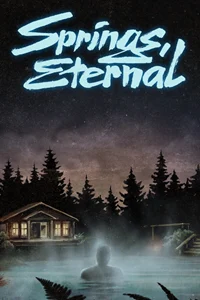
The art direction captures the sense that this place could offer shelter or give good reason for unease. Lit windows, wood-paneled rooms, and steam rising from the pools make the resort feel inviting, while the dark bulk of the forest blurs its edges. Grainy textures and dithered gradients, where tiny dots break up the transitions between shades, give the grounds the look of an imperfect memory. The retro style earns its place.
Sound matters just as much. Rustling trees, water, and chimes fill the space between conversations. The quiet makes those sounds more unsettling when they change. Glimmers in the woods and distortions in some of the transitions into memories build tension without turning the game into a sustained horror ordeal. Most of the fear comes from whatever lies beyond the flashlight’s beam.
These effects serve the story unevenly. Some sustain the uncertainty about Stillwater. Others feel more like interruptions meant to remind the player that something about the stay is off. They can be effective in the moment, even when their connection to the couple’s story is hard to see. The game is very good at creating a feeling. It’s less clear what that feeling adds to some scenes.
On PC, controller support makes it possible to explore without relying on the keyboard. The bigger caveat is the amount of reading. Dialogue is delivered as text, and there’s no French translation at launch. In an adventure that depends so heavily on the nuances of conversation, a good command of English is essential. A full visit is expected to take two to three hours. That’s a modest time commitment, but it demands a level of attention that the beauty of the setting alone can’t supply.
Verdict
The stay is more convincing than the romance
6.5/10
Springs, Eternal makes Stillwater Springs feel like a real place. The grainy visuals, the sounds of the forest, and the conversations make its detours worth taking. The guests have enough personality to make their stories worth pursuing, and information picked up in one encounter can prove useful in the next. This short retreat has a remarkable atmosphere.
Twyla and the protagonist’s story is less convincing. The tensions between them overshadow what drew them together, and the dialogue choices offer too little freedom to bridge that emotional distance. Finding the way in the dark and the lack of a French translation are practical drawbacks. It’s an interesting adventure for its setting and the people found there, but the central story can’t carry all the emotional weight placed on it.
Pros
- A hot springs resort with a carefully crafted atmosphere
- Guests with varied stories and personalities
- Discoveries elsewhere that open up new dialogue
- Retro art direction that suits the memories and the strangeness of the setting
- Sound design that brings the woods and baths to life
Cons
- A central relationship whose tensions leave too little room to see what drew the couple together
- Dialogue choices with limited impact that sometimes diverge from the intent they suggest
- Encounters with supporting characters that need more development
- Occasionally cumbersome navigation on dark trails
- No French translation at launch
More in Video games
Full library 7/10
Poetic Trio
XBOX 8/10
Grief like a stray dog
SWITCH 10/10
World of Warcraft: Forever
PC 10/10
World of Warcraft: Forever (Beta)
PC 8.5/10
Warhammer 40,000: Boltgun 2
PC 9/10
Total War: Warhammer III – Lord of the End Times DLC
PC 7/10
Revisited | Warcraft III: Reforged
PC 7.5/10
Warcraft III Reforged: Forsaken Kingdom
PC 8.5/10
World of Warcraft: Midnight
PC 9/10