Krydrufi V1 2.0 Ultra Set
Get the brushes out without taking over the desk
Score: 7.5/10
Images and videos




At a glance
We liked
- A compact station that separates and rearranges to suit the project.
- Two compartment boxes useful for parts and small tools.
- A worthwhile textured palette for checking drybrushing.
- Silicone, glass and the wet palette serve different purposes.
We liked less
- A narrow wet palette surface for preparing multiple mixes.
- Metal clips and closures require careful handling.
- Tubs must be emptied before transport in a bag
- No dedicated support for miniatures or paints.
 By Farrel Grimwood · published · 5 min read
Contents
Sometimes the prospect of putting everything away is enough to postpone a painting session until tomorrow. Getting the brushes out, filling the water pot, finding the palette and packing it all up again soon becomes a chore when the workbench is also a desk or living-room table. The Krydrufi V1 2.0 Ultra Set addresses that very practical problem: keeping equipment together in a station that opens for work and stacks afterwards to free up space.
The Ultra package adds a wet palette, two storage boxes and several working surfaces to the rinsing tubs. Glass, silicone and a drybrushing plate make this 2.0 version more appealing for miniature painting. Older V1 modules can also be kept, as they remain compatible. But does this little portable workshop really simplify a session, or mainly bring together accessories a painter already owns?
A small format that demands choices
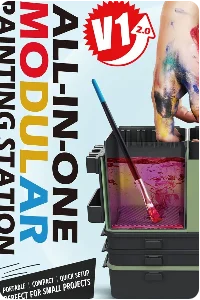
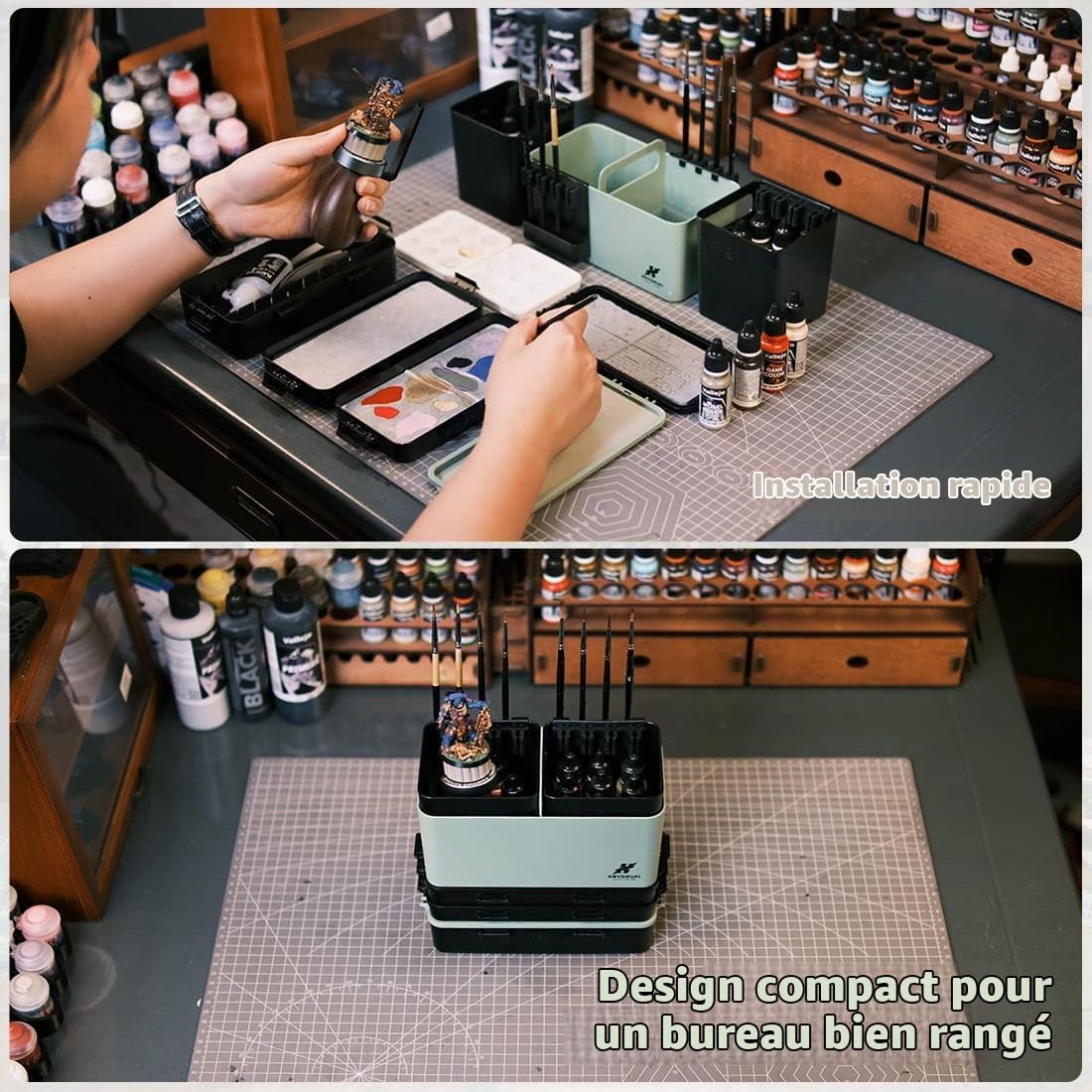
When closed, the station measures 20.5 cm wide, 10.5 cm deep and 19 cm high. The top section holds two removable water tubs around a handle. The other modules attach underneath, while their lids and fasteners allow them to be separated for use. The result is a small tower for storage and several components to spread across the table while painting.
The compact closed format is the real advantage. Equipment stays together between sessions, and unused palettes can be left aside. Once opened, the modules naturally take up more room than the little tower they formed on the shelf. A stable, reasonably clear surface is still needed. The station carries tools, but provides neither a work surface, lighting nor table protection.
This Ultra 2.0 includes one wet palette and two storage boxes, not two wet palettes. Two sponges and twenty sheets come with the module. The sponge holds water beneath the paper to slow acrylic paint drying. The lid then closes the palette between sessions, taking up much less room than a large studio model.
For a few colours and one miniature at a time, the format makes sense. Preparing several mixes and their highlights, however, soon reaches the edge of the paper. The Ultra is therefore better suited to a limited project than a session involving many colour variations at once. It means choosing what goes on the palette or accepting the need for a second one. That second wet module is an extra purchase that is not necessarily justifiable, particularly beside the larger formats sold by competitors.
Metal clips inside the lid hold spare sheets, avoiding a search for the packet when the paper needs replacing. They do require gentle handling: lifting or bending them too far risks deforming them. How long mixes keep still depends on the water, paint and room conditions. Closing the lid does not remove the need to monitor the sponge and clean it regularly.
Glass and silicone are worthwhile additions
The white silicone palette has nine wells. It is useful for small quantities best kept off the wet palette, notably washes or already very fluid paints such as Contrast paints. Metallics can also be kept separate from other mixes. Silicone allows dried acrylic paint to be peeled away instead of scraped out of a rigid well. The recesses remain large enough for the few drops needed for certain details.
The tempered-glass palette provides a smooth, light-grey surface. It mainly appeals to painters who also work with oils or enamels, or prefer mixing against a neutral background. It is not a second wet palette: nothing supplies water to the paint. Its usefulness therefore depends on habits. Someone who uses only acrylics and already has a favourite palette may leave this accessory packed away more often than they use it.
The textured plate is probably the addition most directly useful for miniatures. Drybrushing uses an almost unloaded brush to catch colour on raised details. Here, folds, slopes and rough areas allow the paint load to be checked before touching the model. It is a very welcome addition that takes up very little extra space. Absorbent paper removes paint without showing as clearly how it will behave on a raised surface. This test area therefore helps avoid leaving an overloaded mark on an already painted section.
Two tubs that help day to day
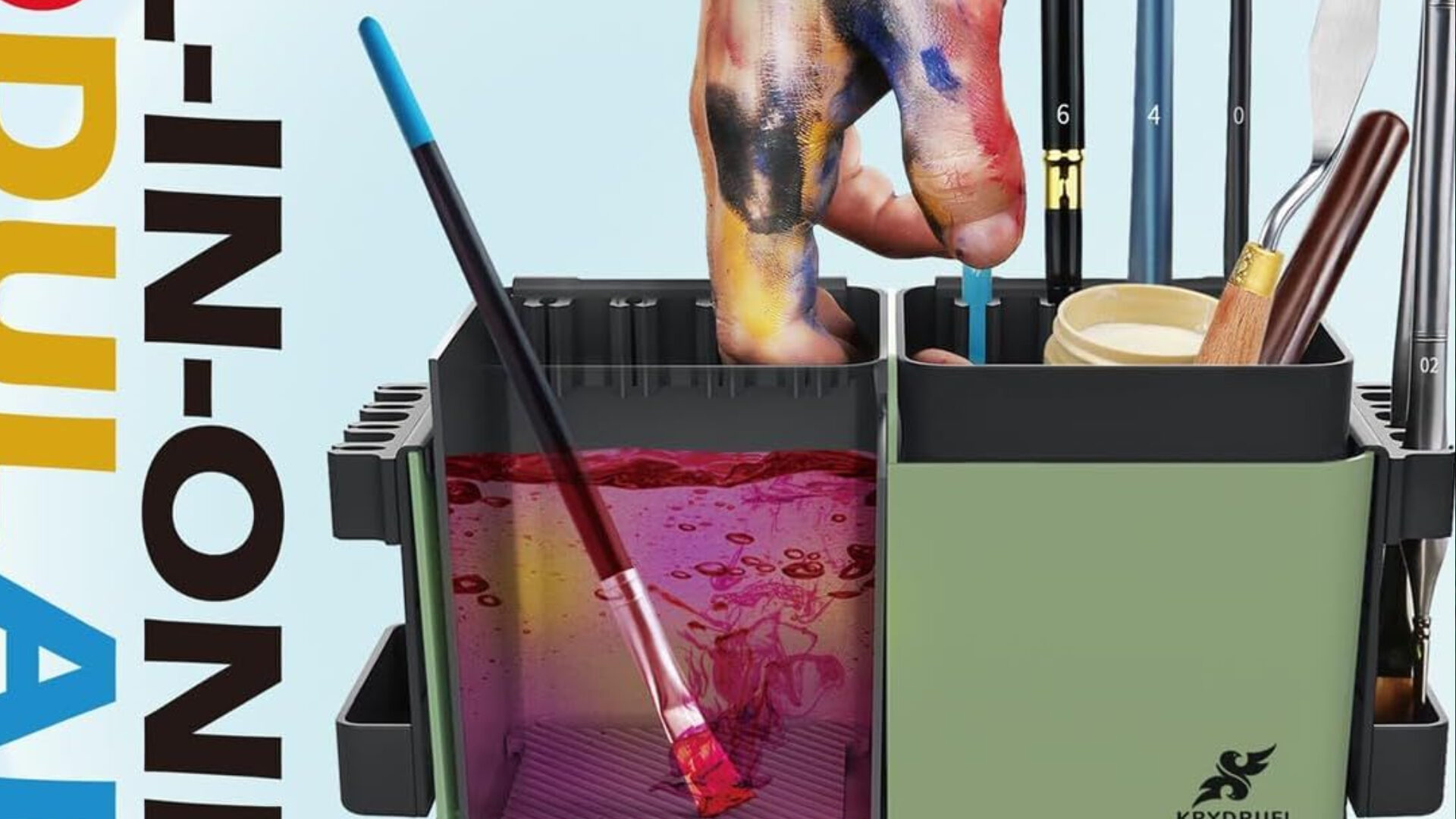
The two rinsing containers can separate metallics from ordinary colours, or keep one lot of water for the initial rinse and another cleaner. They lift out of the holder for emptying and washing. Silicone inserts add a cleaning surface at the bottom. These still need gentle use: scrubbing harder is not a good way to preserve a fine point.
Four brush holders keep handles from rolling across the table and provide several positions for resting or hanging brushes. The system is intended for brushes below size 10, though that does not guarantee that a very thick handle will fit as conveniently as a thin one.
Modularity does not eliminate cleaning. The inserts’ raised surfaces retain the residue they remove from bristles and need rinsing instead of allowing paint to accumulate. Another important limitation: the glass’s compatibility with certain solvents does not extend to the entire station. Oil-paint cleaners can attack the plastic. Those products are better kept in a suitable separate container rather than the Krydrufi tubs.
There are still choices about what to take
The two boxes with adjustable dividers are a worthwhile improvement for storing miniature parts, small tools and the station’s accessories. They suit those uses better than the older storage trays with large wells. Their lids are compatible with the wet palette’s, and the flat palettes fit into the space provided. Compartments can thus be adapted to the project instead of imposing a fixed layout.
That does not make the set a universal carrying case. The necessary paints still have to be packed, and space for long tools needs checking. The storage boxes also lack dedicated support for assembled miniatures: a loose piece in a compartment is not protected as it would be in a suitable transport case. For painting at someone else’s home, the station organises much of the equipment but does not necessarily remove the need for a bag or another box. Those are probably the two hardest limitations to justify. The station promises to replace a workshop, yet makes no provision for carrying paint pots or miniatures, requiring a second solution alongside it.
The fasteners also require each lid to be fully closed before stacking. A protruding tool can prevent closure and compromise the attachment of the module below. The instructions say not to stack more than four modules. The water tubs remain open: the handle makes a trip to the sink easier, but travel in a bag requires empty tubs. Portable does not mean watertight.
Verdict
A good occasional workshop designed for home rather than travel
7.5/10
The Krydrufi V1 2.0 Ultra Set works well for painters who need to clear their table after every session, less so for those who want to travel. The modules separate as needed, two lots of water make rinsing easier, and the new palettes provide real working options. The compartment boxes are also more relevant to miniatures than simple paint wells. For preparing a project and putting it away without scattering tools, the system is well thought out.
It just means accepting its small wet palette and choosing the accessories that will actually be used. The Ultra replaces neither a miniature case nor all paint storage, and the clips and lids require some care. At around €45 before delivery, it is a convincing option for a temporary or movable workstation. On an already equipped permanent workbench, its appeal is much less obvious: the main purchase is a way of storing equipment, less a way of transporting it.
Pros
- A compact station that separates and rearranges to suit the project.
- Two compartment boxes useful for parts and small tools.
- A worthwhile textured palette for checking drybrushing.
- Silicone, glass and the wet palette serve different purposes.
- Two rinsing tubs and four holders to organise brushes more effectively.
Cons
- A narrow wet palette surface for preparing multiple mixes.
- Metal clips and closures require careful handling.
- Tubs must be emptied before transport in a bag
- No dedicated support for miniatures or paints.