
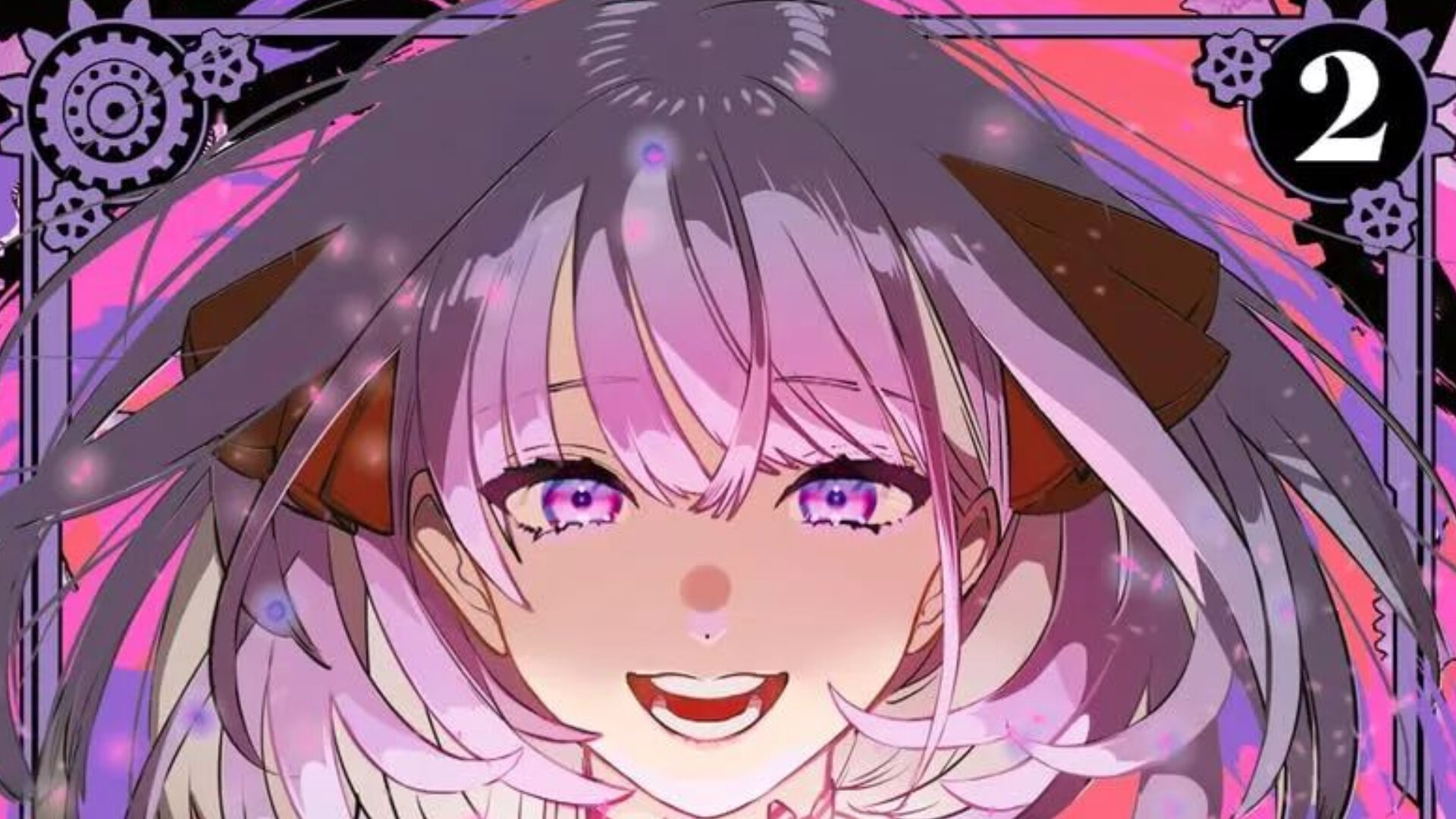
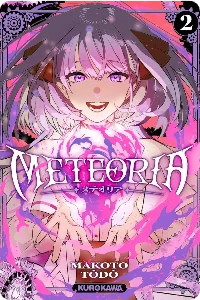
Meteoria – Volume 2
Changing your environment is not enough
Score: 7/10
Images and videos
At a glance
We liked
- Kanata's working-class origin still produces concrete consequences.
- The ordeal in the mine highlights the hero's observation and experience.
- Sim finally brings real fragility to a secondary character.
- Zero becomes a violent presence rather than just a reserve of power.
We liked less
- Kanata still lacks a sufficiently specific personal objective.
- The return to the mine confirms a skill already known more than it shows progression.
- The almost general hostility around the hero ends up seeming forced.
- The school structure takes up several very classic stages.
 By Farrel Grimwood · published · 9 min read
Contents
The first volume of Meteoria established an impoverished hero, observant and lucid enough to survive without suddenly becoming the strongest fighter in his world. Kanata left the mine after a brutal examination, then joined Section M thanks to an intelligence nourished by work, danger and necessity. This origin formed its best quality, but the volume remained cautious. The world held together, the drawing gave real substance to the machines and the meteoric coal, while the supporting roles still mainly served to move the hero towards the next stage.
Meteoria – volume 2 must therefore transform a good introduction into a lasting story. Kanata joins the in-demand Crawford Division, discovers the true weight of his scholarship status and participates in a field event organized in a mine. At the same time, he tries to establish a link with Zero, the creature implanted in his body. The volume thus broadens his circle, clarifies the functioning of the school and finally gives a less abstract form to the hero’s power.
This sequel has more human material than the previous one, but it also highlights a deeper weakness. Kanata quickly understands what is asked of him and finds very solid solutions. On the other hand, he still rarely chooses the direction in which he wants to move forward. Can he become anything other than an excellent student in a future decided by others?
School does not erase his background
Kanata’s entry into the Crawford Division could cut the story off from what was the strength of the first volume. An elite establishment, groups of students and practical exercises form a structure known from action manga. Makoto Tôdô, however, avoids treating this new setting as a simple school setting. Kanata has changed location, not social class. His status as a scholarship holder and his former condition as a worker immediately influence the way others look at him.
Elliot and Ebi don’t give him any respite. Their hostility does not come only from his success in the exam: it also expresses the refusal to see a boy from the mines enter a space reserved for a trained elite, sure of its codes and its legitimacy. The manga thus extends an idea already present in the first volume. Talent can open a door, but it does not erase the contempt or the power relations placed behind that door.
This continuity gives weight to the school. Kanata didn’t get a final reward from leaving his old job. He now finds himself in an environment where his experience is worth a lot in the field and very little in ordinary relationships. The volume clearly shows this discrepancy, particularly when his results attract more resentment than respect.
The characterisation is sometimes heavy-handed. Too many figures appear aggressive, suspicious or ambiguous at the same time. Hirari and Crawford seem more open, but their intentions remain difficult to read; Elliot and Ebi attack head-on; the rest of the group quickly accepts the collective distrust. This buildup maintains the tension, but also deprives the school of simpler moments that would have made the hostility even more believable by contrast.
The mine once again becomes a field of examination
Kanata does not dominate thanks to a new force that came at the right time, he observes the rock, identifies the traps of a conduit, takes into account the gases and reads the terrain with the reflexes acquired during his years of work. His knowledge is not presented as a biographical anecdote. It changes his decisions and the group’s safety.
This sequence confirms what makes the hero endearing. Kanata formulates a hypothesis, checks the available clues, corrects his idea if the result does not match and only acts when the risk becomes acceptable. Makoto Tôdô does not transform analysis into magical power. The reasoning remains linked to visible details and to an experience that the reader already knows.
However, returning to a mine limits the demonstration. Kanata lived and worked there for years. Seeing him more competent than students from another background seems logical, but does not reveal a new facet. The test rewards mastery already acquired instead of forcing the hero to construct new knowledge. The volume therefore proves the value of his former profession without fully measuring his progress since the Section M exam.
This choice remains useful for the story. In the school, Kanata’s origin becomes a reason for contempt; underground, it becomes a skill that others cannot imitate in a few minutes. The contrast is clear and effective. It would have been stronger if success had also required Kanata to have an ability learned since his recruitment, in order to connect his old life to the new one.
Sim finally gives weight to the group
The first volume left several characters as narrative functions. This second volume partly corrects the problem with Sim Heitley. His feeling of inferiority, his flight and his relationship with Jog and Bee make him something other than a comrade placed near Kanata to fill a team. He embodies a simple fear: work hard, enter recognized training, then see a newcomer monopolize all the light thanks to qualities that no one taught him.
Sim is not reduced to his jealousy. His reaction shows what Kanata’s success provokes around him. The hero does not seek to humiliate his group, but his efficiency despite himself creates a permanent comparison. This tension finally gives a human consequence to his abilities. It also forces Kanata to take into account a person who cannot be understood as a mechanism or dangerous terrain.
Jog and Bee reinforce this dynamic, even if their aggressiveness still locks them into a pressure function. Elliot, Ebi, Hirari and Araya Crawford also occupy more space. The volume therefore constructs a more identifiable entourage, with interests which do not all coincide with those of Kanata. It is no longer enough to distinguish allies from adversaries: several figures can help the hero while pursuing a goal that they do not explain to him.
Everything is not yet balanced. The general hostility sometimes makes it feel like every relationship must become a test. The story would benefit from letting certain bonds form without hidden threat or immediate rivalry. Sim shows precisely that a conflict works better when it starts from a precise and understandable weakness. The other students will need the same care to overcome their first trait.
Zero is not a docile weapon
The relationship with Zero provides the best idea of the volume. Until now, Meteoria implanted in Kanata could be understood as a source of power that was still poorly understood. Training reveals a living presence, violent and perfectly capable of rejecting the wearer. In the mindspace where they battle, Zero kills Kanata over and over again. Even though his body returns, the pain, exhaustion and fear do not go away.
The device prevents the new ability from feeling like a free reward. Kanata does not memorize a technique before reproducing it properly. He must endure a creature who recognizes no authority and whose strength threatens his balance. Power then becomes forced cohabitation. This idea corresponds well to a universe where society exploits meteoric coal while fearing the beings linked to it.
Makoto Tôdô stages a truly grueling training session. The repeated failures mark Kanata, and Zero’s visual representation gives a clear brutality to this internal duel. The ice and dark areas make the confrontation immediately readable without confusing it with the exercises carried out in the school. The reader understands that success does not depend only on physical effort, but on a clash of wills between two beings enclosed in the same body.
Kanata’s motivation remains less convincing. He wants to progress, survive and respond to the trust placed in him. These reasons are enough to accept training, not to support such violence. The story emphasizes his resistance and the need to believe in himself, while it should also specify what he hopes to obtain at the end of this mastery. Without a more concrete personal goal, each victory risks feeling like a new validation offered by the institution.
The volume confirms the hero’s intelligence. In the mine, Kanata transforms his experience into a method. Facing Zero, he endures, observes and looks for a flaw. In the group, he tries to understand Sim’s reactions instead of responding with pride. None of these qualities seem artificial. They extend the boy presented at the beginning of the series.
The problem lies in the direction. Kanata was sold to a mine, spotted by the M.R.D.O., recruited into Section M, assigned to the Crawford Division and then trained to control Zero. He acts seriously at every step, but almost every step is chosen for him. His objective remains defensive: not to fail, not to betray those who help him, not to die. This psychological coherence is no longer enough to carry the series alone.
A hero can start without a clear ambition. Kanata lived for a long time in a framework that left him no choice, and this passivity therefore has a credible origin. Volume 2, however, was to initiate a desire of its own, even if still awkward. Does he want to free other workers, understand the origin of the Meteorians, modify the M.R.D.O., protect a specific person or simply build a life of his own? The volume opens all these avenues without making him commit to one.
This absence weighs more here than in the first volume. An introduction could be based on escaping from the mine. A sequel must define what Kanata is looking for after this escape. As long as he remains the best candidate in the tests designed by Crawford and Hirari, he impresses without really taking control of his story.
The drawing maintains the pressure
Makoto Tôdô maintains the visual density of the first volume. The machines, galleries, outfits and installations of the M.R.D.O. give material continuity to the world. Steampunk doesn’t disappear as soon as school starts. It organizes places, tools and risks, with a clear difference between institutional cleanliness and the narrow nature of underground areas.
The mine remains easy to read despite the walls, dust and moving groups. The positions count because the test is based on knowledge of the terrain. A confusing panel would have nullified Kanata’s reasoning; on the contrary, the panel layout makes it possible to understand what he notices before seeing the consequence of his choice. The scenes with Zero change register and tighten the space around the mental duel.
The drawing also has a defect linked to the writing. When almost everyone is hostile, the tense expressions and confrontations build up until they produce a uniform tone. The volume lacks breathing, not because it moves too quickly, but because it leaves little room for a relaxed relationship or curiosity without ulterior motives. The graphic strength remains intact; the emotional rhythm demands even more contrast.
This sequel brings what was missing in the first volume. The group exists more, Kanata’s social class continues to produce consequences, and Zero ceases to be an abstract power. The world is expanding without forgetting the mine, and school does not erase the economic relationships established at the start. On these points, the series is really moving forward.
However, its structure becomes more conventional. Prestigious division, hostile students, collective ordeal, comrade in crisis and internal training make up a known plot. Makoto Tôdô gives it an identity through Kanata’s reasoning and through the place of blue-collar work, but the surprise remains limited. The volume seems fuller than the first while having less direction.
The ending launches a new practical exercise and promises a broader confrontation. The desire to read the sequel remains, especially to understand what Crawford and Hirari want, how Sim will evolve and what relationship Kanata will be able to establish with Zero. However, the priority is no longer to add a new event. The manga must give the hero a decision that is his alone.
Verdict
A brilliant hero who must choose
7/10
Meteoria - Volume 2 improves several elements left too thin in the previous volume. Sim finally gives real depth to the group, Kanata's working-class origin remains useful in the mine as in social conflicts, and Zero transforms the hero's power into a painful duel. Makoto Tôdô maintains a dense drawing, readable action and an industrial universe which never serves as simple decoration.
This sequel, on the other hand, loses the very clear direction of the beginning. Kanata solves problems, endures trials and responds to expectations with always convincing intelligence, but he has not yet formulated the future he wants to build. The school also becomes unnecessarily hostile when too many characters turn against him at the same time. The volume remains solid and is worth continuing, but it now places the series before a specific requirement: Kanata must stop being only the best candidate and become the author of his own choices.
Pros
- Kanata's working-class origin still produces concrete consequences.
- The ordeal in the mine highlights the hero's observation and experience.
- Sim finally brings real fragility to a secondary character.
- Zero becomes a violent presence rather than just a reserve of power.
- Kanata's reasoning remains clear and credible.
- The drawing retains its density without sacrificing the reading of the action.
Cons
- Kanata still lacks a sufficiently specific personal objective.
- The return to the mine confirms a skill already known more than it shows progression.
- The almost general hostility around the hero ends up seeming forced.
- The school structure takes up several very classic stages.
- Jog, Bee, Elliot and Ebi require even more nuance.
- The emotional rhythm leaves little room for calm or more natural relationships.
More in Manga & comics
Full library 8/10
My Beautiful Doll Is a Super Darling
Kurokawa 8/10
Mop & Pudding: Tea Beneath the Milky Way
Rue de Sèvres (Le Renard Doré) 2/10
Pluie Alcide
Éditions Lapin 8/10
Bug Ego
Kazé Manga 8.5/10
Ashes Volume 3
Ankama 8.5/10
La Vérité de Pinocchio
Grand Angle 7.5/10
Les 7 Chevaliers du Royaume des Marronniers
Akata 8/10
Arsène Lupin: Le Bouchon de cristal
Grand Angle 8/10
Le Bamboo de l’Avent
Bamboo 7/10