
M. Pagnol en BD : Naïs – histoire complète
The sun does not erase violence
Score: 7/10
Images and videos
At a glance
We liked
- Toine, central character, generous without being reduced to his handicap.
- The class conflict remains clear without transforming all bourgeois into adversaries.
- The light, colors and Provençal decor create a strong identity.
- The panel layout effectively alternates between tight dialogues and wider silences.
We liked less
- Naïs remains less developed than Toine despite her status as a title character.
- Fidelity to the film leaves little room for true reinterpretation.
- Some faces and expressions lack finesse.
- Frédéric, Micoulin and Mme Rostaing sometimes remain too close to their dramatic function.
 By Farrel Grimwood · published · 8 min read
Contents
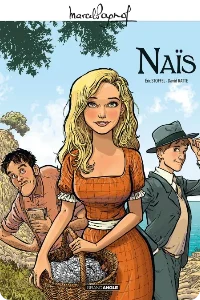
The Marcel Pagnol comics collection has been working for more than ten years to transform the stories of the Provençal filmmaker and writer into albums. M. Pagnol en BD : Naïs – histoire complète occupies a somewhat special place in this set. Originally, there was Naïs Micoulin, a short story by Émile Zola. Marcel Pagnol made a film from it in 1945, moving the emotional center towards Toine and attenuating the inevitability of the initial text. Éric Stoffel here adapts Pagnol’s version, with David Ratte on art and Atomix assisting with colours.
Toine is a worker, a hunchback and in love with Naïs, the daughter of the sharecropper Micoulin. She grants him her friendship, but her desire is for Frédéric Rostaing, the son of the owners. Frédéric first sees this connection as a summer diversion. Micoulin considers his daughter as part of his domain and experiences this relationship as an offense. Toine therefore finds himself in a cruel position: helping the one Naïs loves, while this man has neither his loyalty nor his depth.
In 72 pages, the album must contain the dialogues of Pagnol, the social harshness inherited from Zola, the southern sun and a threat of murder. It does so with real clarity, but also with a fidelity that sometimes restrains its own voice. Does this new Naïs manage to become a comic book in its own right, or does it remain a beautiful transposition of an existing film?
Zola in the background, Pagnol in the foreground
We must understand the adaptation chain to measure Éric Stoffel’s choice. The album does not return directly to Zola’s short story. It follows the story remodeled by Pagnol, with Toine in the foreground, a less implacable tone and an outcome that refuses to abandon the characters to pure disaster. Social violence remains there, but it runs through gentler writing, more attentive to individual goodness.
This choice immediately gives a clear direction to Naïs. The album does not seek to compare two versions nor to reconstruct the story from scratch. It seeks to recapture the Pagnol of dialogues, character oppositions and this Provence where humor can last a few seconds on the edge of drama. Reading therefore remains very accessible, even without knowing the film or Zola. Each relationship is established quickly, each danger is understood, each character occupies a clear function.
Yet the comic rarely offers the surprise of an adaptation willing to reshape its material. It follows an established route, relying mainly on the art to change how it travels that route. For a reader who knows the film, the pleasure comes less from the rediscovery of the story than from the way in which David Ratte transforms the voices, the silences and the settings into panels.
Toine takes up all the space
The book is called Naïs, but the heart of the album belongs to Toine. From the opening at the Saint-Henri tile factory, his body, his work and his social place are linked. A former friend became an engineer; he remained a worker. The gap does not destroy their friendship, but it already says a lot about a world where intelligence, effort and human value are not enough to decide everyone’s place.
Toine knows that Naïs will not love him the way he loves her. He could let Frédéric fend for himself or take advantage of Micoulin’s fear to regain a place with her. He chooses the opposite. He protects their relationship, takes risks and acts for the happiness of a woman who will give him nothing in return. The album makes this renunciation legible without reducing Toine to his handicap. His hunched back affects the way others look at him and the idea he has of himself, but it does not sum up either his humor or his lucidity.
The character is touching because he understands better than Frédéric what each decision can cost. The young bourgeois can leave. Toine will be left with the consequences. This difference gives weight to his generosity, but it also sometimes brings him closer to an overly perfect sacrificial figure. When everyone else gives in to desire, fear or pride, Toine almost becomes the moral conscience of the story. His goodness is moving; however, it leaves little room for a real dark side.
Naïs under the gaze of men
Naïs desires Frédéric while understanding that his commitment does not match hers. She is not a young woman deceived by ignorance. She sees the fragility of this relationship and chooses it anyway, because this brief space of freedom is worth more than the closed life prepared by her father. The album thus gives her desires of her own, which prevents the story from becoming just a duel between three men.
But her name on the front of the book creates an expectation that the story only partly fulfills. Micoulin wants to keep her like a servant. Frédéric first treats her like a summer love. Toine protects her at the cost of his own happiness. Even generous gestures are built around her more than with her. Naïs remains the point of tension, the one that triggers the choices, while Toine receives the most complete trajectory.
This imbalance comes from Pagnol and the album assumes it without really correcting it. It allows us to build a very beautiful character in Toine, but at times it weakens the character that gives the story its title. The violence exerted on Naïs is well shown: violence of a father who speaks of honor to mask possession, violence of a lover protected by his class, violence of a world that leaves her few ways out. What is missing is a little more room for her inner life, so that her choice carries as much weight as Toine’s devotion.
Love does not have the same price
The class conflict gives the drama its real edge. Naïs and Toine work for a living. Frédéric gets through the summer with the assurance of someone who can always retreat to safety. For him, an affair can remain a dangerous game. For Naïs, it threatens her home, her family ties and perhaps her life. The album does not need a long speech: the difference between bodies occupied with labour and a young man with time to spare is enough to establish the balance of power.
Frédéric is not, however, treated like a monster. He is frivolous, selfish, too certain that the problems will eventually give way, but he does not share Micoulin’s cruelty. Naïs‘s father is not violent because he is poor; but because he turns paternal authority into property rights. On the other hand, Frédéric’s mother brings a form of humanity which avoids reducing the rich to a contemptuous bloc.
This is where Naïs best retains Zola’s hardness. Behind the sun, everyone does not risk the same thing. Feelings flow between classes, but the consequences fall first on those who cannot leave. The album could have pushed this opposition further. It prefers to stay with human melodrama, which makes the story warm and fluid, but a little less biting than the conflict it sets up.
The sun against the threat
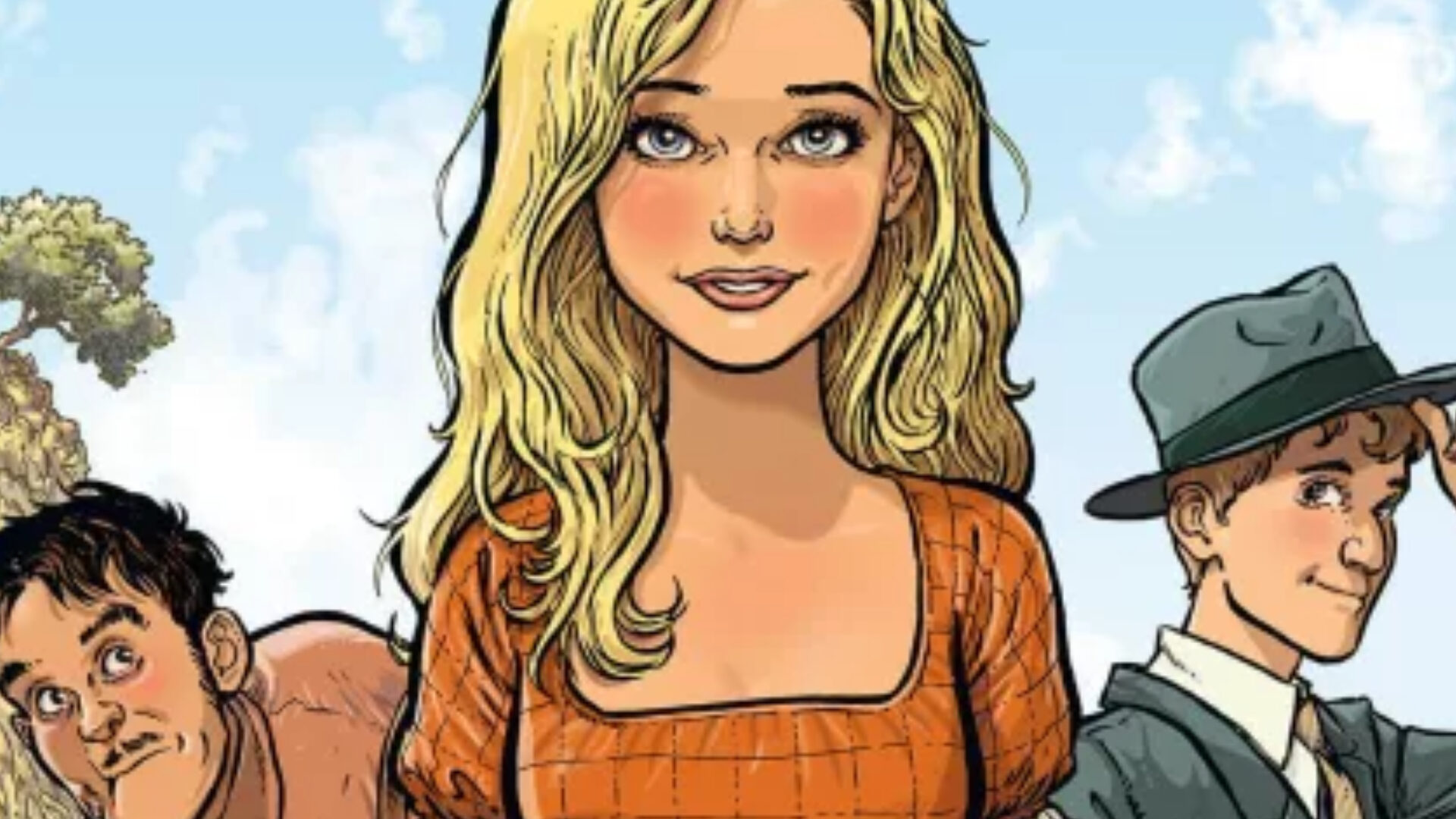
David Ratte creates an immediately identifiable Provence without reducing it to a postcard. Dirt roads, trees, stone, poorer interiors and bourgeois spaces construct social places as much as settings. Sunlight opens up the panels, while the browns, greens and nocturnal blues remind us that the story is not limited to the heat of a summer.
Color does a lot for tension. David Ratte and Atomix’s blocks of colour contrast the clear light of day with more closed nocturnal scenes. Danger therefore never completely erases gentleness, and gentleness never succeeds in making us forget Micoulin. This contradiction corresponds well to Pagnol’s tone: a world welcoming to the eye, crossed by human relationships which can become fierce.
The layout ranges from small panels useful for exchanges to larger frames where a look or a distance between two bodies replaces the dialogue. It is in these moments that comics gain the most autonomy. The semi-realistic linework, however, remains less convincing on some faces. The expressions sometimes go too quickly towards the expected effect, with figures that are a little stiff or overemphatic. The settings and color then carry more emotion than the features of the protagonists.
A loyalty that holds the album together
Éric Stoffel knows Pagnol’s work and this can be seen in the manner of the dialogues, the clarity of the relationships and the respect for the tone. The 72 pages move forward without confusion. The opening at the tile factory places Toine before bringing the story back to Naïs, Frédéric and Micoulin. Then each scene tightens the danger until the moment where Toine’s dedication can no longer remain simple discretion.
The trade-off is a sense of dutiful illustration. The album seeks more to preserve than to reinterpret. Readers attached to the film will find a coherent transposition, close to its spirit and its balance. Those who expect the comic to question the place of Naïs, shake up Frédéric or give Micoulin more nuance will be left wanting more.
The format also imposes a real density. The dialogues must advance, the setting must exist, the threat must rise and the four central figures must find their place. The whole thing remains fluid, but certain nuances are taken care of by very visible shortcuts. Above all, Frédéric remains the feckless man of privilege, Micoulin the threat, Mme Rostaing the human counterweight. Toine escapes this mechanism better; Naïs, paradoxically, remains more locked in there.
The drama keeps rounded edges
There is no shortage of darkness. Micoulin is not content to disapprove of an affair; he slides towards murderous hatred. The class difference gives his anger a dimension of humiliation, but the story shows very clearly that honor serves above all as an alibi for control. This threat gives the album a much heavier tension than a simple Provençal romance.
However, Naïs never goes as far as Zola’s dry despair. Pagnol had already chosen another direction, and the comic strip retains it. Goodness can still influence destiny, a bourgeois mother can understand what her son does not see, Toine can prevent violence from having the last word.
This is both the strength and the limitation of the album. We close the book with real affection for Toine and with the feeling of having found a work by Pagnol in a coherent setting. We remain less marked by Naïs itself, by Frédéric or by the social brutality that the story could have left to burn longer. The reading experience is beautiful, assured and often touching. It almost never risks unsettling the work it honours.
Verdict
Toine carries the book
7/10
Naïs offers a solid, readable and visually warm adaptation of Marcel Pagnol's film. Éric Stoffel respects the dialogues and the balance of power, while David Ratte and Atomix give the Midi a light capable of coexisting with the threat. The album finds its emotion above all in Toine, a lucid worker, a hopeless lover and generous enough to protect a happiness from which he will be excluded.
But this fidelity also limits the whole. Toine carries the book to the point of partially erasing Naïs, the other characters sometimes remain too one-dimensional, and some faces lack finesse. The comic extends Pagnol’s work very well; it barely reshapes it. A touching, carefully crafted read, carried by its hero, that would have benefited from giving as much room to the inner life of the woman whose name it bears.
Pros
- Toine, central character, generous without being reduced to his handicap.
- The class conflict remains clear without transforming all bourgeois into adversaries.
- The light, colors and Provençal decor create a strong identity.
- The panel layout effectively alternates between tight dialogues and wider silences.
- A faithful adaptation, accessible even without knowing the film or the short story.
Cons
- Naïs remains less developed than Toine despite her status as a title character.
- Fidelity to the film leaves little room for true reinterpretation.
- Some faces and expressions lack finesse.
- Frédéric, Micoulin and Mme Rostaing sometimes remain too close to their dramatic function.
- The social conflict could have been pushed further.
More in Manga & comics
Full library 8.5/10
La Vérité de Pinocchio
Grand Angle 8/10
Arsène Lupin: Le Bouchon de cristal
Grand Angle 8/10
Mop & Pudding: Tea Beneath the Milky Way
Rue de Sèvres (Le Renard Doré) 8/10
My Beautiful Doll Is a Super Darling
Kurokawa 2/10
Pluie Alcide
Éditions Lapin 8/10
Bug Ego
Kazé Manga 8.5/10
Ashes Volume 3
Ankama 7.5/10
Les 7 Chevaliers du Royaume des Marronniers
Akata 8/10
Le Bamboo de l’Avent
Bamboo 7/10