


Witch and Mercenary
A meeting without romance
Score: 7/10
 By Farrel Grimwood · published · 4 min read
Witch and Mercenary Volume 01 is the first manga adaptation of the series written by Kaeru Chōhōkiteki and illustrated by Bench Kanase, originally published in Japan by Kodansha. It arrives in French version at Doki-Doki on January 7, 2026.
This first volume features two figures rejected by their own society: a witch and a mercenary who find themselves forced to form an alliance to survive and hope to find a place to exist without being hunted down.
From this starting point, the work engages in an implicit reflection on fear, redemption and the quest for refuge, themes which appear to be the potential common threads of the series.
Two survivors facing a world that hunts them
The first volume of Witch and Mercenary articulates its story around a simple and assumed narrative mechanism: stalking. Witches are designated targets, and the world in which they operate grants them no moral ambiguity. They are considered threats, and their elimination constitutes an ordinary act, integrated into the very functioning of society. The manga establishes this reality bluntly, making the witch hunt a structural framework rather than an exceptional event.
At the center of the story is Siasha, a powerful witch who faces permanent invaders. The manga never presents her as an idealized or heroic figure. Her status is that of a survivor, constantly cornered, whose very existence provokes violence. Her character is built with restraint and lucidity, far from any victimhood posture. She understands the world in which she lives and expects no pity from it.
Opposite her, Zig Crane embodies another form of marginality. A seasoned mercenary, he is neither a knight nor a savior. His morality is dictated by experience, fatigue and a pragmatic logic forged by combat. Zig has no ideological hatred towards witches. He hunts them because it’s his job, and because this world rewards efficiency more than compassion. This apparent neutrality makes his character particularly ambiguous.
The relationship between Siasha and Zig is not based on immediate trust or romanticized complementarity. It arises from a situation of rupture, after a violent confrontation which could have ended with a classic execution. Zig’s choice not to kill Siasha is not a spectacular reversal, but a measured, almost cold decision, which introduces an unstable dynamic between the two characters.
The secondary characters and the narrative environment reinforce this constant tension. The world of Witch and Mercenary is populated by functional, often hostile figures who embody the normalization of violence. Mercenaries, Hunters, and Authorities are not developed to elicit empathy, but as a reminder that fear of magic has become an organized and accepted system.
Through this gallery of characters, the manga does not seek to multiply points of view, but to lock the reader into a logic of permanent survival. The protagonists do not move towards immediate redemption. They move forward out of necessity, aware that every alliance is fragile and potentially temporary.
Violence drawn without embellishment
Graphically, Witch and Mercenary adopts a resolutely functional approach, serving the brutality of its universe. The line is precise, sometimes dry, and refuses any form of idealization. The bodies are marked, the faces are often closed, and fatigue can be read as much in the looks as in the postures. This graphic sobriety effectively accompanies the tone of the story, reinforcing the idea of a world worn down by violence and fear.
The staging favors readability and impact. The action scenes do not seek spectacular choreography, but immediate effectiveness. The clashes are quick, often abrupt, and highlight the real dangerousness of the situations rather than a sense of achievement. Magic, when it occurs, is never presented as elegant or wonderful. It is heavy, destructive, and visually treated as a disturbing force, consistent with how it is perceived by the inhabitants of this world.
The backgrounds fully contribute to this atmosphere. The environments crossed are rarely welcoming: hostile villages, dangerous roads, open spaces which offer no lasting security. The world of Witch and Mercenary is not designed to be explored with curiosity, but traversed with caution. This approach reinforces the feeling of permanent precariousness which weighs on the characters.
The panel layouts are conventional, but controlled. The dialogue sequences alternate with moments of visual silence which allow the tension to breathe. The absence of graphic overload allows the story to maintain a coherent rhythm, without unnecessary interruption. Each page serves the progression of the central duo, without decorative detour.
As a whole, the artistic direction of this first volume does not seek to seduce with beauty, but to establish a credible and oppressive atmosphere. A choice consistent with the purpose of the manga, which prefers harshness to braggadocio and consistency to demonstration.
Verdict
Survival without illusion
7/10
With Witch and Mercenary Volume 01, the series lays a clear and straightforward foundation. The manga neither seeks to reinvent dark fantasy nor to embellish its codes. It is part of a logic of permanent survival, where fear structures societies and where alliances are never guaranteed. The story moves forward without artificial urgency, preferring to establish a heavy climate and a fragile relationship between its two protagonists rather than multiplying spectacular twists and turns.
This first volume fully assumes its introductory role. It presents a hostile world, characters shaped by violence and a central dynamic based on distrust more than hope. Without seeking to immediately seduce, Witch and Mercenary offers a coherent and controlled introduction, which intrigues more by its restraint than by its intensity.
More in Manga & comics
Full library 8.5/10
Un amour invisible
Doki-Doki 8/10
The Marshal King – Volume 1
Doki-Doki 7/10
Shiba Inu Rooms – Volume 2
Doki-Doki 8/10
Nos cœurs de chats
Doki-Doki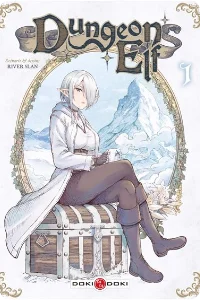 4/10
Dungeon Elf – Volume 1
Doki-Doki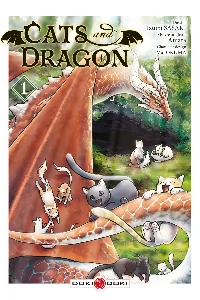 7/10
Cats and Dragons
Doki-Doki 6/10
Aux côtés du Dieu-Loup – Volume 3
Doki-Doki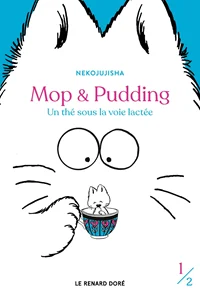 8/10
Mop & Pudding: Tea Beneath the Milky Way
Rue de Sèvres (Le Renard Doré) 8/10
My Beautiful Doll Is a Super Darling
Kurokawa 2/10