
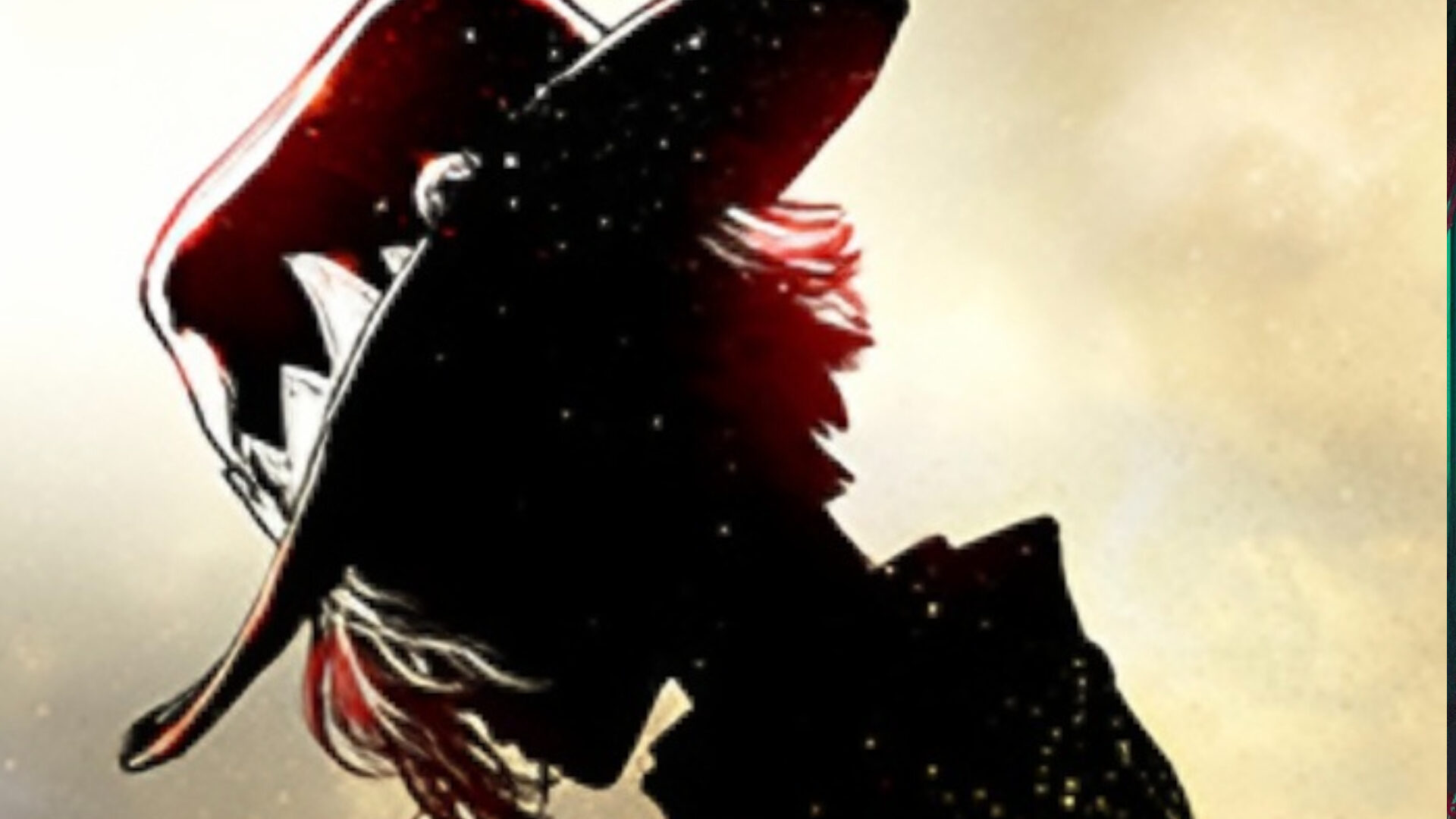
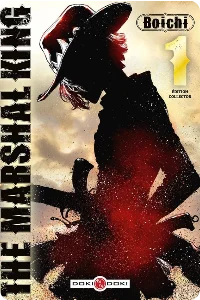
The Marshal King – Volume 1
Boichi’s take on the western
Score: 8/10
At a glance
We liked
- An immediately striking steampunk western world
- Boichi’s spectacular art is perfectly suited to the genre
- Jim Godspeed is a very effective hero in his initial ambiguity
- Agera and Mira already provide strong support for the story
We liked less
- An academy structure more conventional than the opening
- Jim remains more iconic than moving
- Some pages are very crowded
- The staging sometimes pushes the spectacle too hard
 By Farrel Grimwood · published · 7 min read
Contents
The Marshal King arrives with a huge advantage and an equally obvious reservation: it is Boichi. Before even opening the volume, you know there will be sharply chiselled faces, impossible bodies, guns drawn like monuments, stares that fill an entire page, and a taste for spectacle that can turn a simple entrance into a film trailer. The problem is that Boichi does not always know when to stop. This first volume makes that clear very quickly.
The manga establishes an apocalyptic western world where desperados rule, while marshals still try to stand for something resembling justice. Into this desert comes Jim Godspeed, a young man dragging the coffin of M. Godspeed, one of the continent’s most feared outlaws. Jim claims to be his son. He also claims to have killed him. And instead of running away with that cursed name on his back, he wants to become a marshal.
The premise is almost too perfect for Boichi: an outlaw’s son, a father turned into a dark legend, guns, dust, machines, an academy for lawmen and a hero no one can quite read. The Marshal King is not subtle. It barely even tries to be. It would rather kick down the saloon door, put its boots on the table and ask readers whether they want to see just how wild things can get.
A western that knows its poses
Boichi does more than draw three hats, two revolvers and a desert to create the illusion of a western. He draws on its most recognisable conventions: silhouettes lost on the horizon, close-ups of eyes, a hand dropping towards a gun, danger apparent before the first shot, weathered faces that seem to have lived ten lives before entering the panel.
Visually, it works immediately. The world feels dry, violent, almost metallic. The desperados do not look like anonymous bandits placed there to fill the background. They are scarred bodies, grimaces, battered profiles, people already worn down by the law of the strongest. The manga understands that a western lives as much in its faces as in its gunfights. Here, Boichi is on home ground.
The steampunk touch gives the setting still more personality. Mechanical arms, vehicles, armour, buildings and machines add an industrial layer to the Wild West that suits its excess. The Marshal King depicts a world that kept producing technology while completely failing to grasp the idea of civilisation.
All this gives the volume a powerful presence. You immediately know what kind of image the manga wants to leave behind. It wants to be neither an understated western nor a realistic one, but a mythology of dust and steel, with characters who look born to become posters. On that front, it more than delivers.
Jim Godspeed, a hero who is too simple
Jim is the centre of the story, but also its strangest element. On paper, the character is excellent: a boy bearing the name of a legendary criminal, arriving with his father’s corpse and asking to join those meant to uphold the law. Simply seeing him cross the desert with that coffin raises a question: has he come to clear the Godspeed name, or to carry on its violence in a different uniform?
The manga handles that ambiguity well enough. Jim is too powerful to be reassuring, too naive to be entirely threatening, too direct to be easy to understand. He has the energy of a shonen hero who charges in before thinking, but drags a history behind him that no one can ignore. Whenever he fires, readers see both a potential future marshal and a desperado’s son in the same gesture.
The problem is that Jim remains stronger as an idea than as a character. He certainly makes an impression. His power, name, frankness and almost childlike side produce some excellent scenes. But his inner life remains limited in this first volume. We understand what he represents. We understand the conflict he creates around him. We are still waiting to understand what he really carries inside when he is not proving he can draw faster than everyone else.
That is no deal-breaker for the start of a series. A first volume is allowed to keep some mystery. But The Marshal King pushes so hard, so fast and with so much noise that you sometimes wish Jim had more room to breathe. Boichi builds him as a legend in the making. The sequel will simply have to prove that he is a human being too.
The academy: a good idea and a convenient shortcut
After its strongly western opening, the volume shifts its focus fairly quickly to the marshal academy. The idea may be surprising, but it makes sense. To become a marshal, Jim cannot simply turn up with a corpse, a revolver and a declaration. He must enter an institution, face trials, be judged by others and, above all, endure the scrutiny of those who see him first as M. Godspeed’s son.
This gives the story a very clear shonen framework. Jim must prove himself. The students despise or distrust him. Important figures test his limits. Supporting characters begin to emerge around him, notably Agera Dutch Schaefer and Mira Abigail Black, who prevent the volume from becoming a mere parade of male heroics. Agera observes, understands and adds a shrewder nuance. Mira makes a more direct, physical and immediately heroic impression.
The trouble is that the academy also makes the manga more conventional. The desert, the coffin and the outlaw myth gave the opening tremendous force. Once it adopts a structure built around trials, The Marshal King falls back into a more familiar pattern: prove your worth, humiliate the sceptics, impress the powerful, earn your place. It works, but it is less untamed than the initial promise.
The volume makes up for this with its pace. A great deal happens, perhaps even too much, but the energy never fades. Boichi never leaves readers in a classroom for thirty pages. Even the academy looks ready to explode. You feel that the law in this world is no set of rules pinned to a wall. It is a power struggle wearing a badge.
Boichi showing what he can do
Visually, this volume is exactly what you would expect from Boichi let loose on a steampunk western. It is lavish, detailed and often impressive. The weapons have weight. The machines have a visual logic. The bodies are always a little too beautiful, too muscular, with backs too exaggeratedly arched, but that is also his way of turning every character into an icon before they have even spoken.
The action scenes hold up very well. Gunfire is easy to follow, impacts have force, and the poses do their job. Boichi knows how to sell the decisive moment: the second before the shot, the impossible angle, the look that already says the opponent has lost. When the manga focuses on this visual language, it is formidable. You turn the pages as though watching a sequence edited for the cinema.
But this generosity has a downside. Some pages are so crowded that reading them feels less natural. Boichi wants to show everything: texture, movement, sweat, the weapon, the mechanism, the setting, the face, the effect. Density is part of his style, but it can also squeeze the air out of the volume. The Marshal King often impresses. It leaves rather less room for silence.
This also shows in the female characters. Mira and Agera have real roles in the story, and the volume already gives them a presence. But Boichi remains Boichi, with a tendency to stylise bodies to excess, sometimes distracting from what the scene is saying. This is nothing new in his art, but here again it comes with the package. You get the virtuosity along with the mannerisms.
An opening volume stronger than it is subtle
The Marshal King offers a first volume that knows how to sell its series. It establishes a world, a promise, a hero, supporting characters and a direction. It makes you want to see what becoming a marshal really means in a world that seems to have lost the very idea of justice. It also makes you want to know what Jim actually did, what he wants, and what the Godspeed name might still destroy around him.
Yet the manga does not surprise as much as it impresses. Its major strengths emerge very quickly: the art, the poses, the world, the mix of western and steampunk. So do its limitations: a fairly standard training structure, a hero still more iconic than moving, and effects sometimes pushed too hard. The volume does not fumble its entrance. It simply kicks the door a little too hard.
Perhaps that is what makes it enjoyable despite its flaws. The Marshal King is honest about what it is. It wants to be big, brutal, seductive and sometimes a little ridiculous, like those legends of the West that grow with every retelling. The manga does not yet have all the depth it promises, but it already has a distinctive look. For a first volume, that counts for something.
Verdict
An opening that comes out guns blazing
8/10
The Marshal King succeeds in its first volume by giving Boichi almost ideal ground: an apocalyptic western, steampunk, weapons, exaggerated bodies, legendary figures and a hero caught between a criminal legacy and a dream of justice. Visually, the volume has immediate force. It knows how to bring its world, its threats and its grand poses to life.
Still, this start is more spectacular than truly surprising. Jim Godspeed intrigues, but needs more depth. The academy provides an effective structure, though a more conventional one than the opening suggested. And the art, impressive as it is, sometimes overloads its pages. It remains a very good launch, but one that must soon turn its excess into a meaningful journey.
Pros
- An immediately striking steampunk western world
- Boichi’s spectacular art is perfectly suited to the genre
- Jim Godspeed is a very effective hero in his initial ambiguity
- Agera and Mira already provide strong support for the story
- A dense, energetic first volume that makes you want to read on
Cons
- An academy structure more conventional than the opening
- Jim remains more iconic than moving
- Some pages are very crowded
- The staging sometimes pushes the spectacle too hard
- Boichi’s visual mannerisms can distract from some scenes
More in Manga & comics
Full library 8.5/10
Un amour invisible
Doki-Doki 7/10
Shiba Inu Rooms – Volume 2
Doki-Doki 8/10
Mop & Pudding: Tea Beneath the Milky Way
Rue de Sèvres (Le Renard Doré) 8/10
My Beautiful Doll Is a Super Darling
Kurokawa 2/10
Pluie Alcide
Éditions Lapin 8/10
Bug Ego
Kazé Manga 8.5/10
Ashes Volume 3
Ankama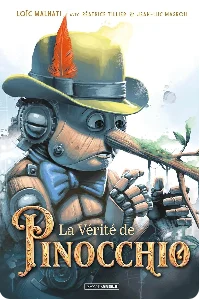 8.5/10
La Vérité de Pinocchio
Grand Angle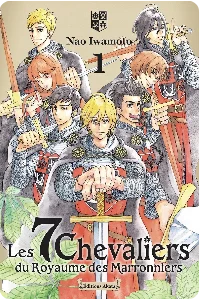 7.5/10
Les 7 Chevaliers du Royaume des Marronniers
Akata 8/10