
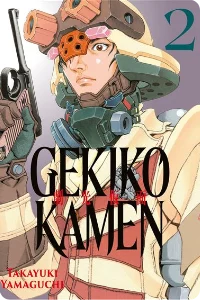
Gekikô Kamen – Volume 2
The too heavy mask of a dream that left traces
Score: 8.5/10
 By Farrel Grimwood · published · 3 min read
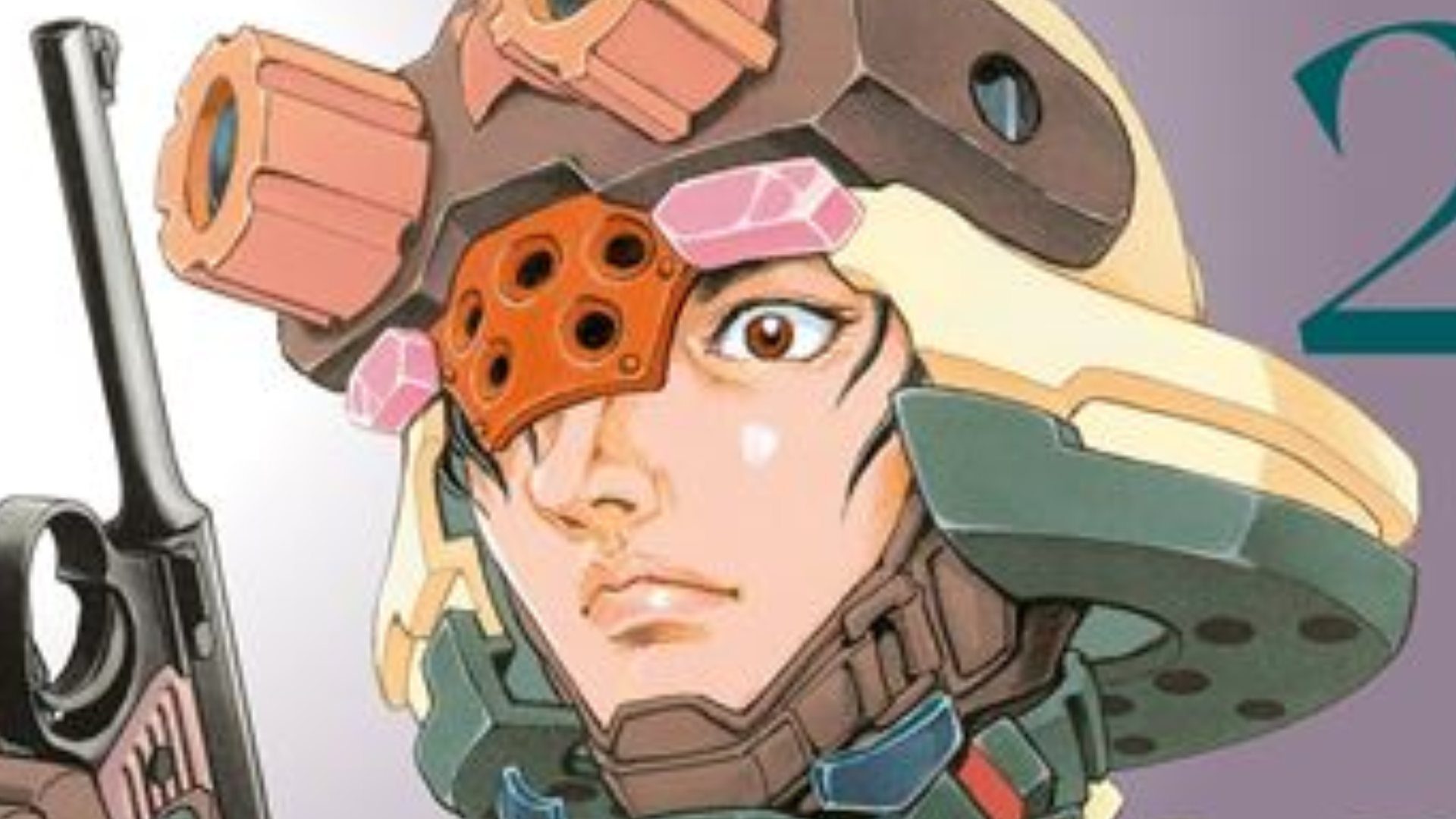
Published in France on March 20, 2026 by Meian, Gekikô Kamen volume 2 continues the very particular trajectory of Takayuki Yamaguchi, already known for Shigurui and The 7 Ninjas of Efu. The series, launched in Japan in 2021 in Big Comic Superior, continues here to explore what already made it unique: a relationship with tokusatsu that goes far beyond simple fan passion to touch on something much murkier, much more damaged.
This second volume returns more directly to Otoya’s university years and to the Toku Arts club, with this fixed idea that animated the group: designing a hero’s costume capable of acting in the real world. It’s a strong basis, because it allows the manga to talk about the mask differently. The costume is not only a fantasy, a tribute or a game; it becomes a projection, a real obsession. And the more the volume advances towards this material, the more Gekikô Kamen gains in depth.
Volume 2 also seems to want to focus on this seemingly very simple question: what is a real hero? Through Otoya, his past, and this nickname "Jissôji the butcher" which is already enough to tarnish the memory of the student dream, the manga looks less at the brilliance of the hero than at the human price of his creation.
The dreamed costume, and everything it ends up damaging
With this second volume, Gekikô Kamen moves away from a simple homage to tokusatsu. The volume looks back on the years of the Toku Arts club, on this desire to design a hero costume capable of acting in the real world, and on what this idea ended up generating in those who stuck to it. From there, the manga immediately gains weight. The mask no longer appears as a youthful fantasy or as a game of passionate students; it becomes the exact point where an ideal begins to distort lives.
This is where this volume 2 takes on another dimension: the nickname “Jissôji the butcher” is enough to make us understand that the heroic dream has long since ceased to have anything innocent. Takayuki Yamaguchi is less interested in the brilliance of the hero than in what it costs when we want to give him substance. This passion for costume, pose, intervention and justice then shifts towards something much heavier. It is no longer a matter of fascination, but becomes a force which marks, which isolates, which leaves traces impossible to erase.
Otoya gains enormously in this deepening. His stiffness, his obsession, his way of still inhabiting this old dream take on a much clearer density here. Gekikô Kamen no longer looks only at a man who remains a prisoner of his imagination, but at what this imagination has made of him. And this is precisely what gives this second volume its real strength. The tokusatsu retains its beauty, its faith and its power of projection, but it now takes on a much harsher counterpart. The costume always promises a form of grandeur. It also carries everything that reality refuses to carry.
Tense linework and direction that deepen the unease
Visually, Gekikô Kamen confirms here what the first volume already hinted at: Takayuki Yamaguchi holds his subject with a dense, sooty, rough black and white, which immediately gives the volume a very heavy presence. The faces, the bodies, the looks, the postures; everything seems worked to bring out something tense, uncomfortable, too intense to simply remain in the register of nostalgic passion. Volume 2 thus keeps this very physical, very tense visual material, which fits perfectly with what it tells.
Yamaguchi never treats the costume as a simple iconic silhouette or as a wink for tokusatsu fans. He gives it weight, substance, almost gravity. The mask, the outfit, the presence of the manufactured hero then take on a particular force, because they emerge in a world that the manga continues to depict as heavy, banal, sometimes almost sticky. It is in this gap that the volume finds a large part of its power. The dreamed hero retains his beauty; reality retains all its harshness.
The layout accompanies this tension very well. Gekikô Kamen advances with a real science of constriction, giving space to gazes, silences, presences, then suddenly bringing forth all the violence of what it shows. Volume 2 does not seek a spectacular effect on each page, it prefers to create unease, let it rise, then anchor it in the story. It’s a very coherent approach with a volume that speaks precisely of obsession, of ideals and of that moment when everything begins to go wrong.
Verdict
A volume 2 which finally gives all its gravity to the mask
8.5/10
With this second volume, Gekikô Kamen takes on a much clearer scope. Takayuki Yamaguchi builds his story around what already made the series unique, this passion for tokusatsu, the costume and the heroic figure, but here giving it a much heavier charge.
The volume gains in density, Otoya in depth, and everything that was still a fantasy or a student dream now takes on a much harsher counterpart. The series then ceases to intrigue only by its idea, it really begins to make an impact.
More in Manga & comics
Full library 7.5/10
Yoru no Uta / Akatsuki no Uta
Meian 8/10
The Wicked Eyes Fly to the Full Moon
Meian 8/10
Mop & Pudding: Tea Beneath the Milky Way
Rue de Sèvres (Le Renard Doré) 8/10
My Beautiful Doll Is a Super Darling
Kurokawa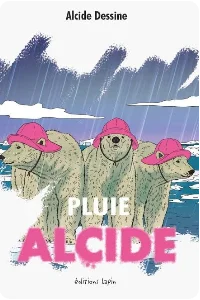 2/10
Pluie Alcide
Éditions Lapin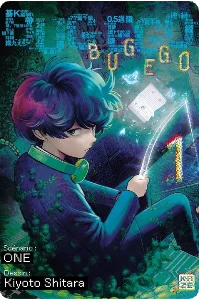 8/10
Bug Ego
Kazé Manga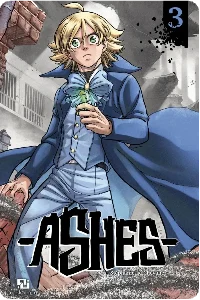 8.5/10
Ashes Volume 3
Ankama 8.5/10
La Vérité de Pinocchio
Grand Angle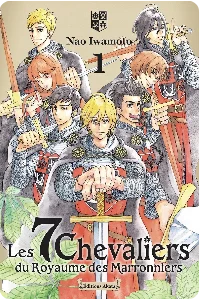 7.5/10
Les 7 Chevaliers du Royaume des Marronniers
Akata 8/10