Consoles: a new promised land for RTS games?
 By Farrel Grimwood · published · 11 min read
Contents
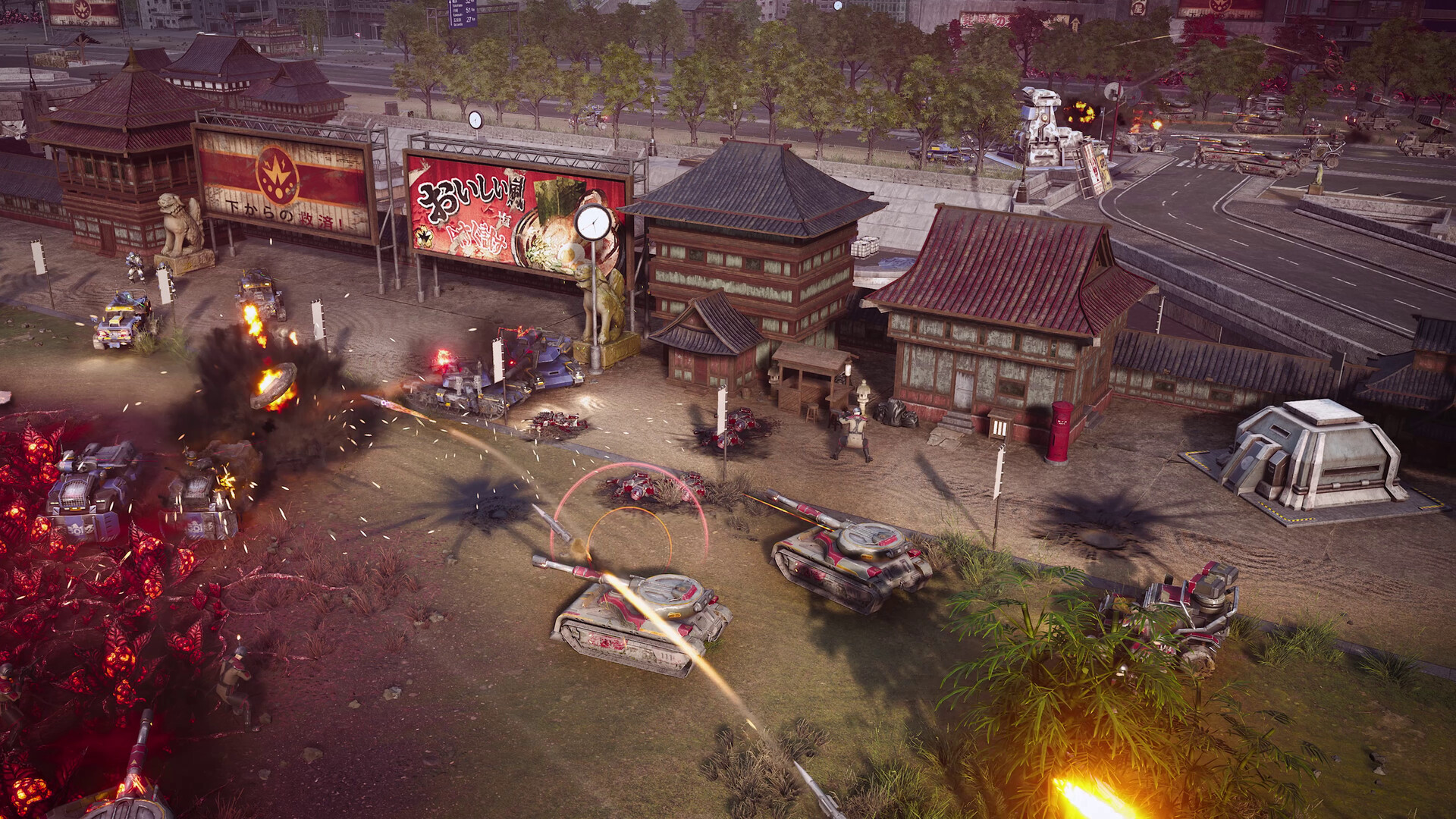
RTS still looks like it’s dying. It has almost become a running joke. As soon as a new project arrives, we talk about a return. As soon as it stumbles, we bury the genre again. Between the ghosts of StarCraft, the promises of rebirth Tempest Rising and the old king Age of Empires II who refuses to leave the throne, real-time strategy seems stuck in its own legend.
What if the problem wasn’t just with the games, but with the room in which we’re trying to bring them to life? For years, RTS has still dreamed of being a cerebral sport for fast players, calibrated for the mouse, APM, ladder and competition. The genre lost this place of choice a long time ago in favor of faster, simpler, better monetizable competitors.
Meanwhile, the console advances differently. Slower, more readable, more direct, sometimes clumsy, but also more welcoming.
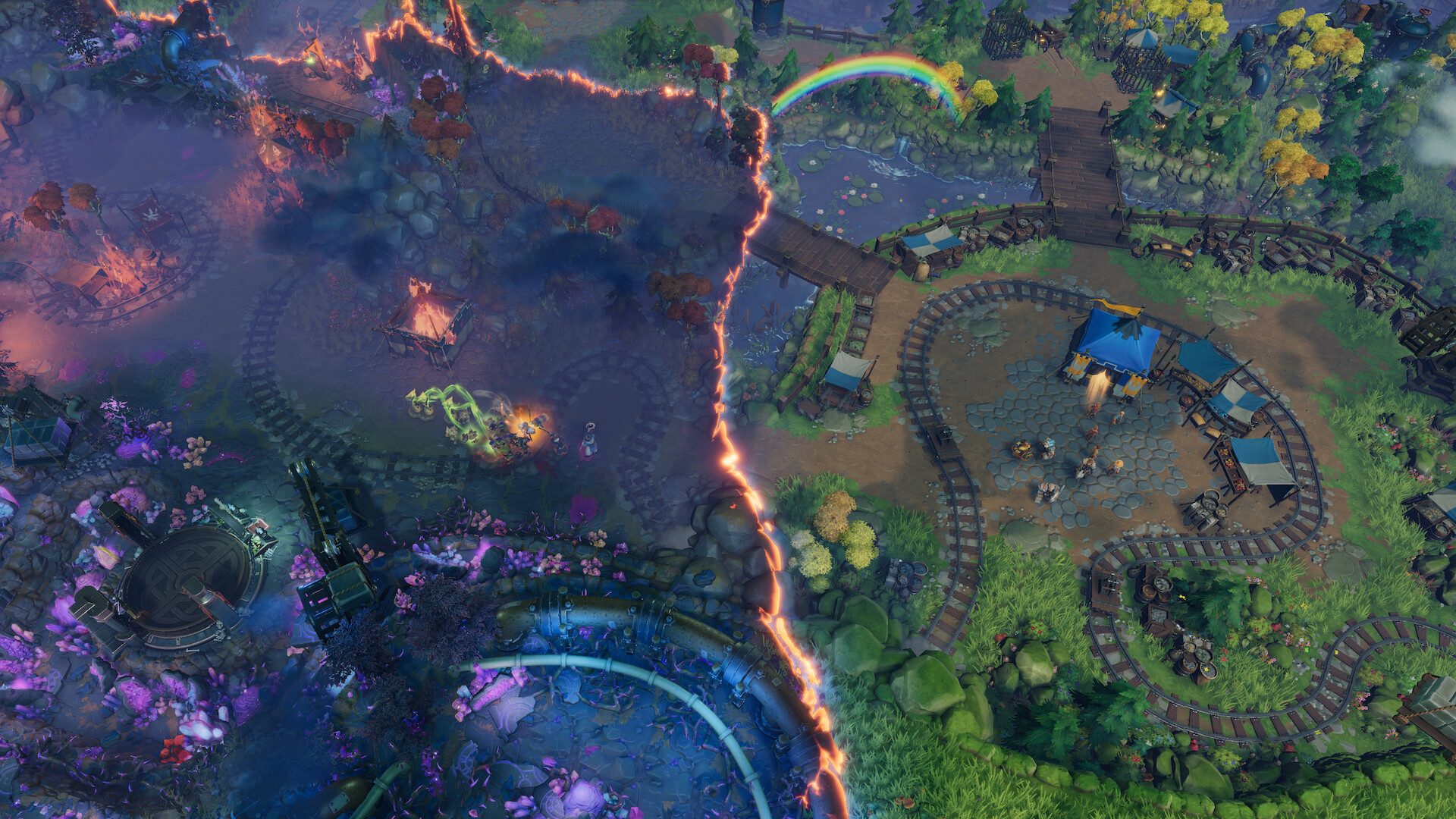
On Xbox especially, something is emerging. Age of Empires II, Age of Empires IV, Age of Mythology: Retold, Halo Wars 2, Dune: Spice Wars, Company of Heroes 3, Dungeons 4, Sudden Strike 5: the console does not replace the PC, but it offers the RTS a chance and a different audience. Perhaps even its best ground to stop surviving as a nostalgic genre, and start breathing again.
A genre that never really disappeared
RTS is long dead. We know it, because we repeat it to each new generation. It died when FPS ate the PC mainstream. It died when the MOBA turned the heroes of Warcraft III into a competitive religion. It died when StarCraft II became less of a game and more of a mountain to climb. It died when publishers stopped believing that a base, three resources and a blacked-out map could still sell.
Except that a truly dead genre doesn’t come back to haunt shop windows as often. It doesn’t receive remasters, Definitive Editions, expansions, console ports, stubborn indies and studios who each swear that they have figured out how to wake it up. RTS isn’t dead, it just lost the attention it had in the 90s.
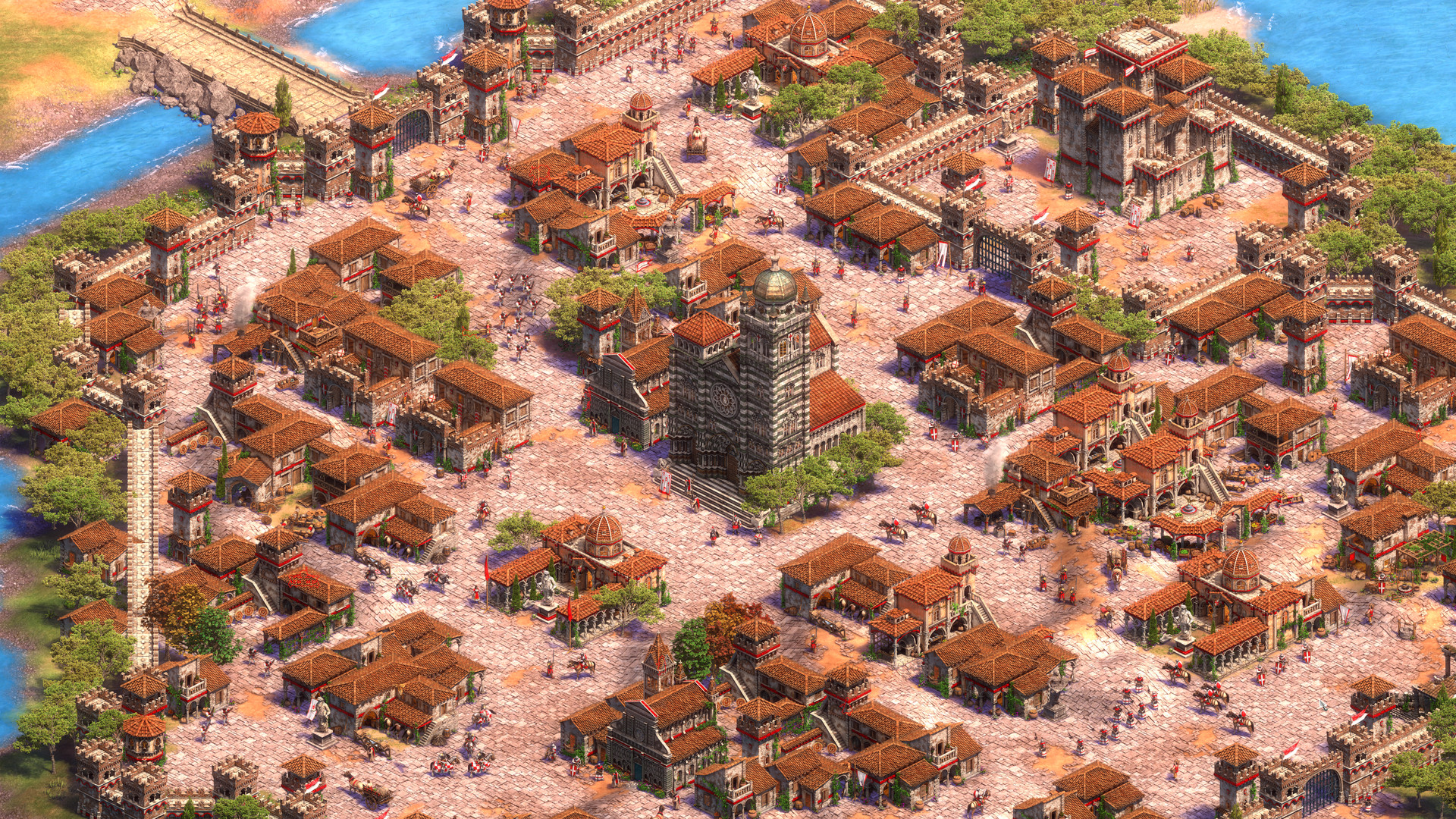
Perhaps the cruelest paradox is in Age of Empires II: Definitive Edition. On PC, at the time of preparing this file, SteamDB still showed more than ten thousand players connected and a daily peak above twenty-seven thousand. StarCraft II lives elsewhere, in its own Battle.net ecosystem, and it would be absurd to erase it. But the symbol remains strong: one of the strongest RTS on the visible market is based on a game from 1999, retouched, nourished, maintained, but never replaced.
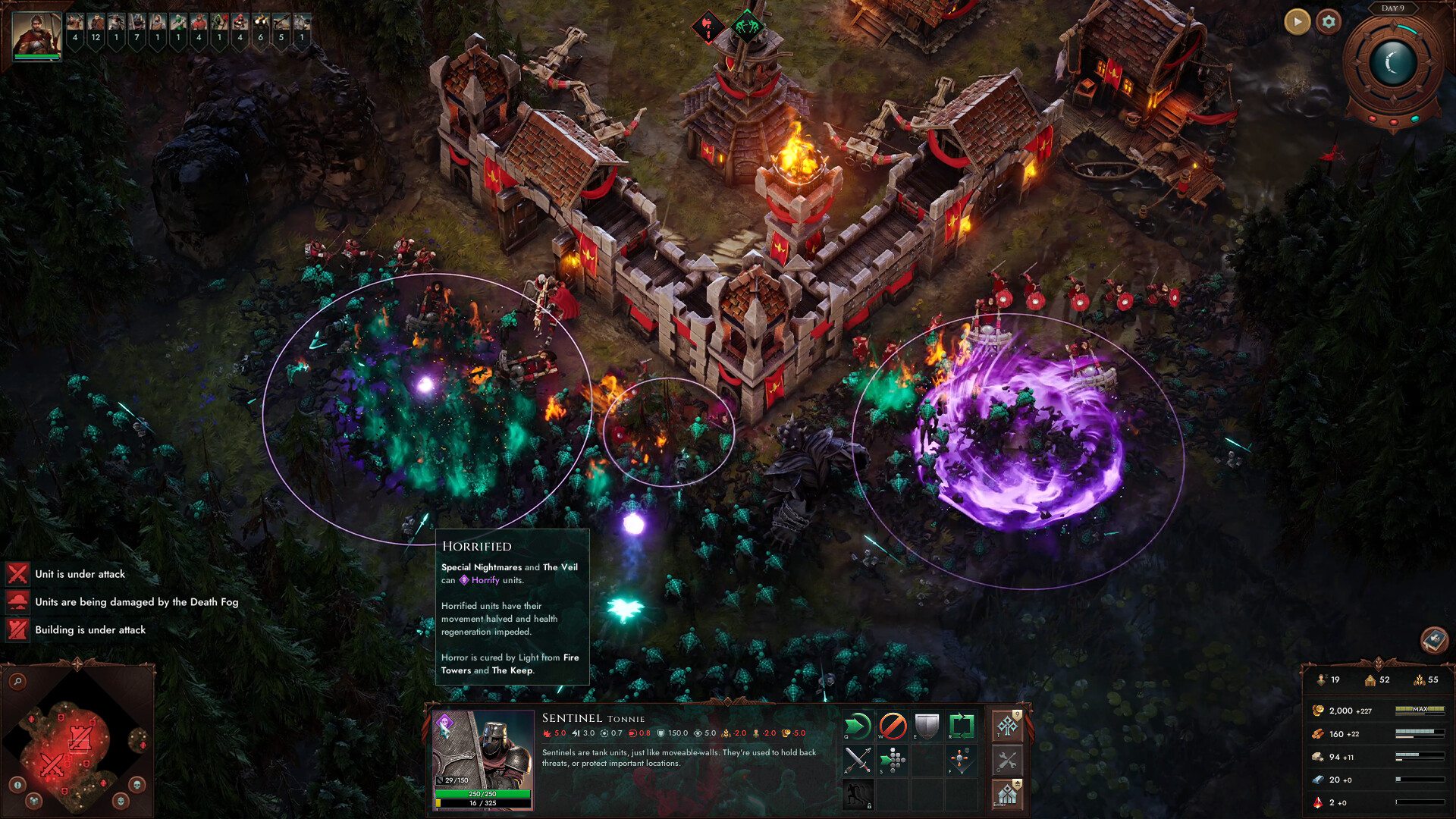
This is where the genre hurts. The new RTS do not only face the games of the moment but first and foremost their own ancestors. A title like Tempest Rising arrives with the explicit promise of the return of old glories. Age of Darkness: Final Stand attempts to move RTS towards mass survival. The Settlers: New Allies reminds on the contrary that a historical name is not enough to hold a formula if the soul has crumbled along the way.
The genre therefore still exists, but as an anxious heir. It has to prove it is still legitimate before it can even prove it is good. It’s an exhausting position. And that’s perhaps why the console becomes interesting: it doesn’t ask the RTS to be the purest. It asks the genre to be fun.
The false salvation of eSports
The RTS has long been portrayed as a kind of competitive nobility. Two brains face to face, an economy to maintain, a map to read, decisions to make in real time. On paper, it’s magnificent. In effect, this has created a prison from which there is no escape.
eSports has given RTS a mythology. StarCraft, above all, showed that a strategy game could become a spectacle, a discipline capable of keeping a country and a scene in turmoil. But this greatness has left an immense shadow: many modern RTS still seem to want to seduce the player by promising him a ladder, precise balance, caster readability, fast-paced high-level play. As if salvation had to necessarily come through competition.
The problem is that League of Legends has already won this battle. Not because it would be nobler, finer or more strategic. Simply because it captured the great mass eSports narrative: teams, immediately identifiable roles, stars, world finals, a spectacle that is readable even when you don’t understand everything. The RTS remains more difficult to watch. It asks viewers to read an invisible economy, map pressure, a technological delay, an absence of a scout, a mistake that occurred five minutes before the final explosion. Worse still, it is slower in its first part. A game of Age of Empires can last over an hour, the majority of which is spent watching two players build houses and erect towers.
Wanting to compete head-on with LoL therefore makes no sense. RTS doesn’t need to become a MOBA to survive. It does not need to turn every game into an eSports audition. It can keep a competitive scene, of course. It even has to. But when competition becomes the center of design, everything tightens up: openings, timings, balancing, ergonomics, the relationship to error. The average player no longer discovers a world. They enter an examination room.
The console breaks this reflex. Not because it is incapable of competition, but because it naturally shifts what players want. On console, we think campaign, comfort, readability, progression, evening session. We think less of APM than of understanding. Less perfect execution than clear decision. And for a genre that has become intoxicated by its own demands, this shift can do good.
The controller does not replace the mouse, it forces you to choose
However, we must be honest: an RTS played with a controller starts at a disadvantage. The mouse is an almost perfect tool for selecting, framing, correcting, placing a building, catching a lost unit, sending three groups on three fronts. The keyboard adds its shortcuts, its groups, its ingrained routines. We won’t beat this precision with two sticks and four triggers.
But this observation is less definitive than it seems. The real question isn’t whether the controller replaces the mouse. It does not. The real question is what an RTS must keep to remain itself, and what it can agree to simplify to become more welcoming and find its place in the hearts of players.
This is exactly what Age of Empires IV or The Valiant achieves. RTS games do not become something else, do not transform and refuse the simplification of their previous mechanics. We always start with villagers, a Town Center, resources and a map that ends up becoming too small. But instead of key combinations, we play with the radial menu. Instead of clicking frantically, we learn to predict. RTS on console doesn’t look like a hackneyed genre, but like a living room RTS. Quite simply.
When the console interface is designed, it not only hides complexity: it organizes it. It makes visible what matters most. It accepts that the player cannot do everything, nor so quickly, then it seeks to prevent this slowness from becoming frustration by modifying the very rhythm of the games. The console imposes a hierarchy. It forces developers to answer a simple question: what action is really essential?
This is why the living room can become an El Dorado. Not in the naive sense, with miraculous sales and gold mines under every sofa. An El Dorado in the sense of a territory still poorly exploited, where the RTS can stop measuring itself only by its PC past and look for another way of existing.
Age of Empires opened the door
The arrival of Age of Empires on Xbox has enormous symbolic value. For years, the series represented almost the opposite idea of the console: the PC, the mouse, the desktop, the map that you unroll with method. Then Age of Empires II: Definitive Edition switched to Xbox with optimized controls, adapted tutorials, cross-play and keyboard-mouse support. The gesture was not only commercial, it said that the old king could continue to rule over a new territory. An area still untouched by the presence of League of Legends.
Age of Empires IV confirmed the idea. The Xbox and PlayStation versions accept controller or keyboard-mouse, the Xbox version supports the cloud and the Series X|S version can support up to eight players, fully embracing its heritage as a LAN hero. Above all, the game does not present itself as a shameful adaptation. It assumes the couch, the radial menu, the separate rankings for controller players. It recognises that the input changes the way of playing, without agreeing to sacrifice any of it.
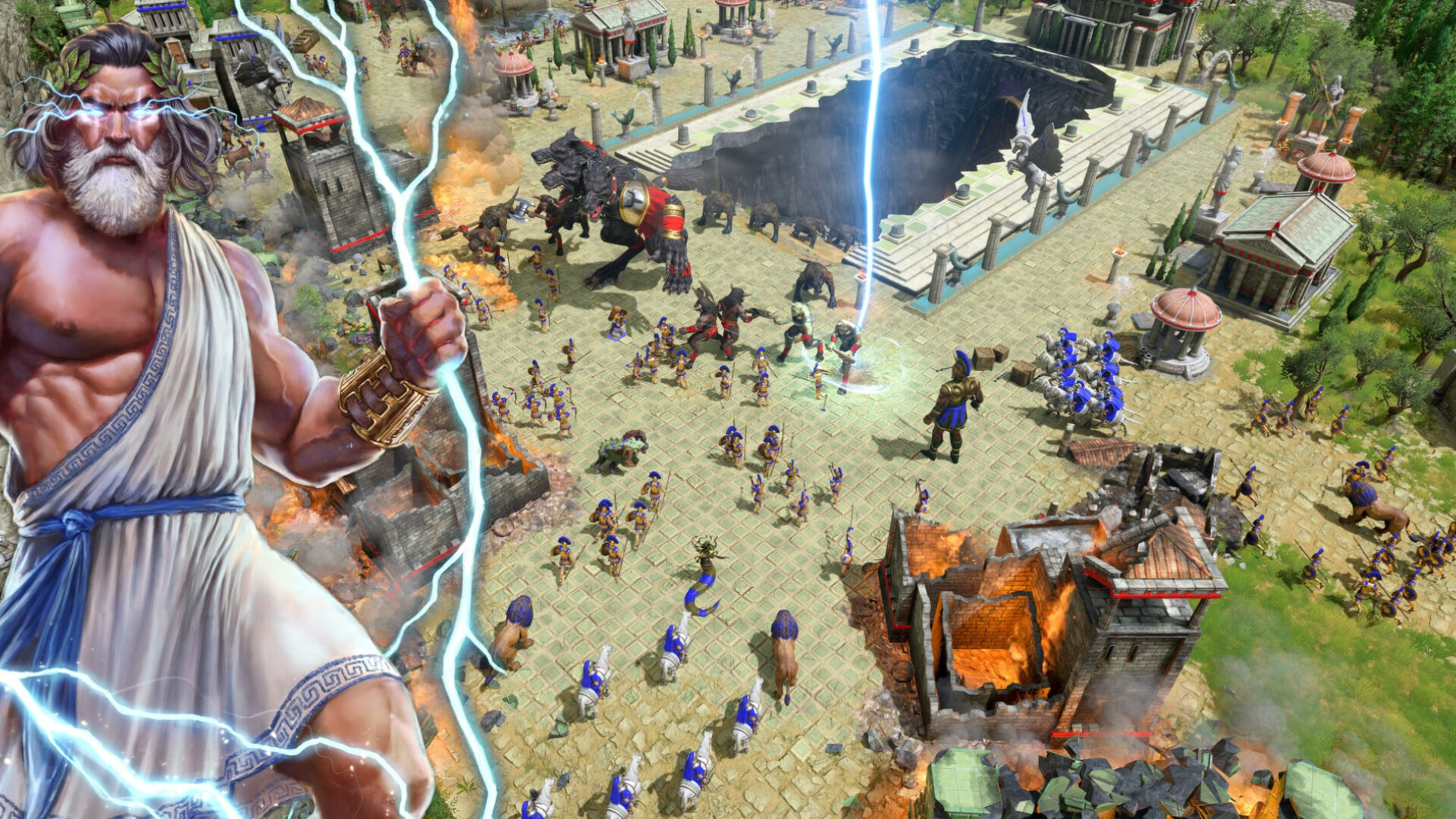
In this movement, Age of Mythology: Retold occupies a special place. Our review already emphasised on the strength of the myth awakened without sacrilege: legible pantheons, more flexible divine powers, a recasting which consolidates without fossilizing. This mythological readability almost becomes an advantage. A lightning bolt from Zeus, a minotaur, a sandstorm, a Titan gate: the game shows its decisions.
The Immortal Pillars expansion also serves as a reminder that this rebirth is not fixed. Age of Mythology is not just a repainted memory, it is an RTS that continues to add gods, approaches and asymmetries. On console, this almost theatrical dimension makes the strategy more embodied, less abstract.
Microsoft plays a central role here. World’s Edge, Forgotten Empires, Relic, Climax, Tantalus, Wicked Witch: around Age, a constellation of studios learned to maintain the past without enclosing it in mothballs. The result is not perfect, but it proves one thing: when the publisher takes the time to think about the interface, the console RTS stops being a joke and gives hope to fans.
Xbox is not a desert
It would be wrong to believe that everything begins and ends with Age of Empires. The console already had an obvious precedent: Halo Wars. Ensemble Studios, then Creative Assembly on Halo Wars 2, understood one very simple thing: a console RTS cannot just be a PC RTS with fewer buttons. It must design its bases, armies, selection tools and camera for the pad. Halo Wars 2 still remains today a useful reminder that the console can accommodate real-time command if the game agrees to speak its language, to adapt to its codes.
Since then, the list has grown. Dune: Spice Wars, from Shiro Games and Funcom, brings to Xbox a hybrid form, between 4X and real time. It’s not pure Age of Empires-style RTS, but that’s perhaps precisely what makes it interesting. Arrakis is not only earned by producing faster. We play politics, espionage, economics, cards.
Company of Heroes 3 is another important case, even if it must be handled with nuance. Relic and Hardlight have worked on a radial menu, a tactical pause, an interface designed for the living room screen. On paper, this is exactly the kind of effort that should be applauded. But Relic later confirmed it was stopping updates to the console version, while still leaving the game available. The message is clear: porting an RTS to console is possible; maintaining it over time is another war.
This observation also applies to Warhammer Age of Sigmar: Realms of Ruin. Frontier had a strong license, a real console ambition, a control system designed for the controller. However, the game did not really set a new standard. This is a salutary reminder: the console opens a door, it does not guarantee that everything that passes through it will become alive.
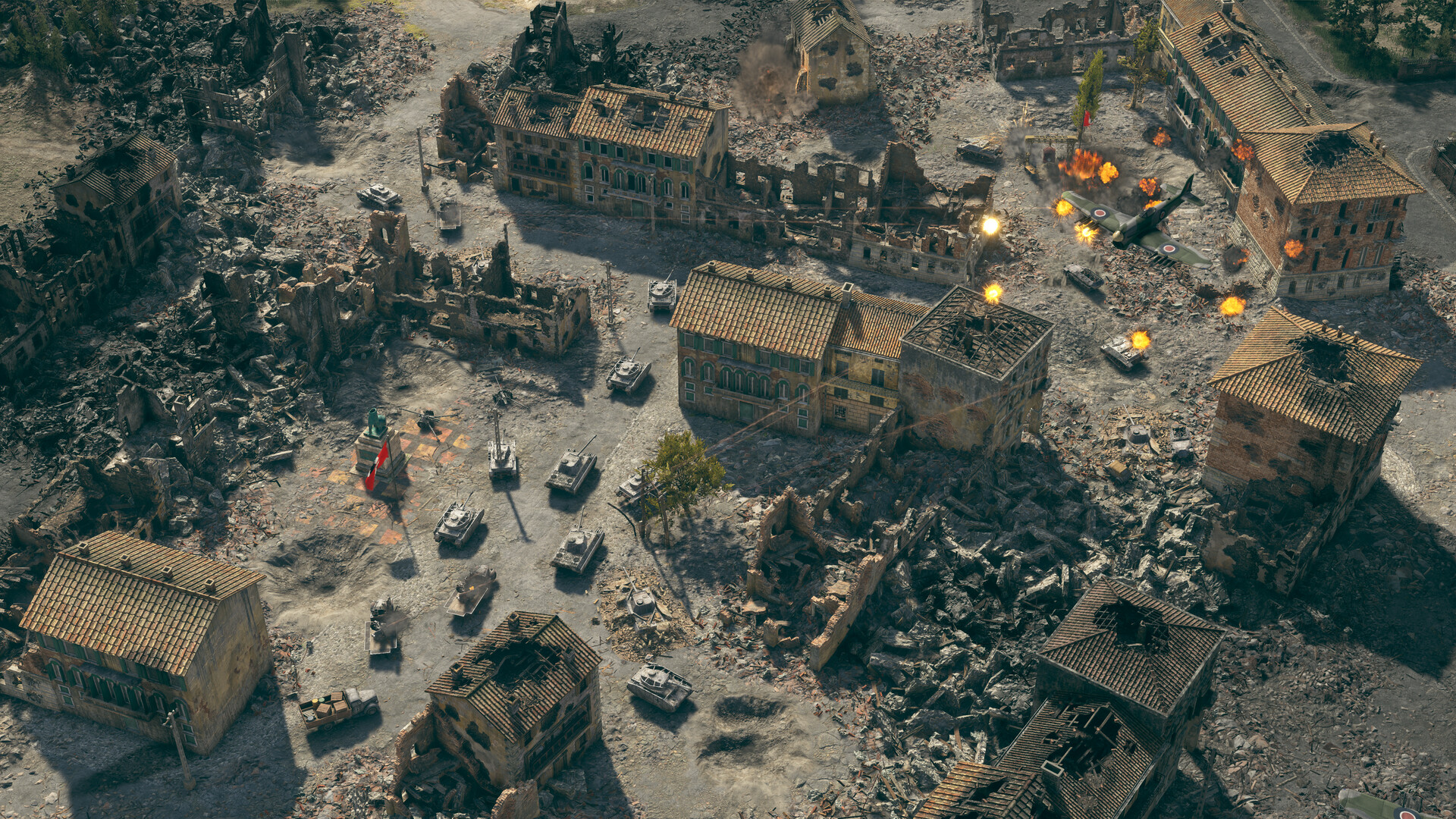
Besides these names, there are also They Are Billions, Iron Harvest, Ancestors Legacy, Bad North, Aliens: Dark Descent in the tactical cousin, and now Sudden Strike 5. Not all are RTS games in the same sense. Some lean towards real-time tactics, others towards survival, others towards accessible wargaming. But all of them show that the console is no longer merely a secondary port destination. It has become a territory where we test forms.
The Switch, a still fragile laboratory
For its part, the Nintendo Switch should be treated with caution. It doesn’t have the same power, not the same screen comfort, not the same living room logic as the Xbox. A dense RTS on Switch can quickly become a struggle with text size, unit readability, and interface limitations. But that’s no reason to rule it out, especially with the arrival of the Switch 2 and its Mouse mode.
Company of Heroes Collection is probably the most telling example. Feral Interactive has ported the Relic classic to Switch with an interface and control scheme built for console. The simple fact that this game exists on the hybrid machine says something: even an RTS known to be fast-paced, tactical, busy, can be reworked for another way of playing.
Northgard also exists on Switch, and its territorial rhythm makes sense there. Bad North, more minimalist, is almost real-time strategy reduced to the bones: islands, waves, units, positioning. Even Pikmin, without being a classic RTS, has long accustomed the Nintendo public to ordering groups in real time, reading a space, accepting loss and optimizing a route.
Still, the Switch is a reminder of the hardware limits of console fantasy. Dungeons 4 – Nintendo Switch Edition reminds us that adaptation is possible, but it costs. The denser the interface, the more the portable console requires real rewriting. A successful console RTS is not a porting miracle. It’s a translation job.
What the console does not forgive
If the console can become an El Dorado, it will also be ruthless. The PC sometimes tolerates dense interfaces, tiny texts, shortcuts to memorize, stacked windows, menus designed for the proximity of a desktop screen. The living room does not forgive that. The Switch even less so.
On console, an RTS must accept four rules. First, the essential orders must fall under the fingers. Next, the economy must be readable without opening five panels. Then the camera must make it possible to understand the battle from a distance. Finally, the error must be able to be corrected without panic. If one of these rules breaks, the game immediately gives the impression of being trapped on its platform.
This is why good adaptations work tactical pause, radial menus, quick groups, automatic priorities, clear alerts, font sizes, contextual selections. These are the conditions for survival of the genre on console.
The console also forces the RTS to rethink its relationship to solo. For a long time, part of the discourse around the genre gave the impression that the real player was the one on the ladder. But on Xbox, many players come above all looking for a campaign, a skirmish against the AI, a quiet progression, a way to settle into a system without immediately having to measure up to the whole world. This audience is not secondary. It is perhaps even the key to the revival of the genre.
This is where the RTS can become generous again. Not by giving up its depth, but by ceasing to confuse depth with intimidation. A good console RTS should not be simpler. It needs to be clearer.
Images and videos