A final tribute to Spiders
 By Farrel Grimwood · published · 14 min read
Contents
- A studio born from a desire to continue
- Mars, the first real territory
- Bound by Flame, attachment through faults
- The Technomancer, the same dream but bigger
- GreedFall, the promise kept
- Steelrising, the Mechanical Revolution
- GreedFall: The Dying World, returning in a storm
- The Bigben bet, then the Nacon vice
- Judicial reorganisation, no buyer and announced liquidation
- What Spiders Leave Behind
There are studios that we don’t defend because they have succeeded in everything, but because they have always tried something. Spiders was one of them. A French studio capable of making worlds too big for its means, RPGs that are sometimes stiff, sometimes clumsy, but always sincere in their desire to give the player a role, a choice, a place in a universe that just needed to be understood.
With Spiders, role-playing never had the perfectly polished face of big AAA productions. Instead, it had visible seams, stiff animations, combat that was still finding its balance, systems that promised more than they could always deliver. But it also had something rarer: an identity. From Mars: War Logs to GreedFall, from Bound by Flame to Steelrising, the studio has built a stubborn trajectory around the same idea: making RPGs on a human scale, with factions, companions, dilemmas, original worlds and the slightly dangerous generosity of games that want to be larger than themselves.
For me, Spiders was the first French studio to compete with Piranha Bytes. A small French team, capable of delivering universes of a richness rarely seen in the genre, of stirring the same emotions as games like Gothic. Rare, precious games, leaving a mark on anyone who managed to overcome their wanderings and imperfections.
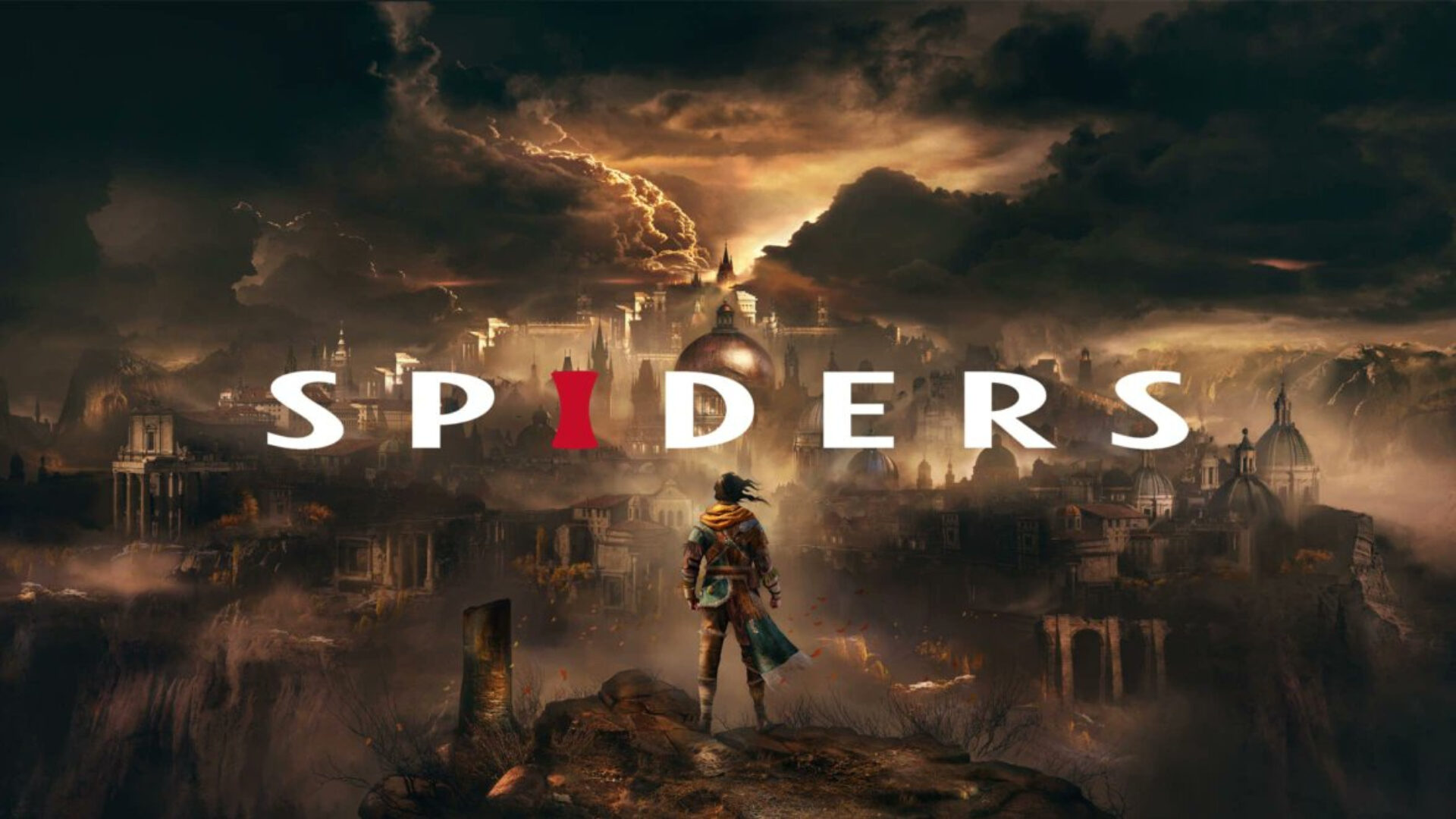
Spiders was born in 2008, grew up in the shadow of Focus Home Interactive, found its audience with GreedFall, went under the Bigben then Nacon flag, before being overtaken by the financial crisis of its group. At the time of writing, April 29, 2026, the studio has officially been in receivership since March 30. In the absence of a buyer, the receiver must request its liquidation before the commercial court. Until the judgment is published, the word must remain cautious. But the symbol is already there.
There then remains a broader question than just the destiny of a company: what do we lose when a studio like Spiders disappears? Not just a brand. Not just a few franchises. We lose a certain idea of the European RPG, the one which accepts to be rough to keep its breath, the one which prefers to try an atmosphere, a system, a relationship between characters, rather than fitting neatly into a box already validated by the market. What we lose with Spiders is what most modern productions lack: a soul.
A studio born from a desire to continue
Spiders was founded in 2008 by several French veterans of Monte Cristo, united around the experience Silverfall. The studio then presents itself as a structure capable of developing its own creations or working on licensed properties. This detail matters, because it already says something about its journey: Spiders will move forward for a long time between commissioning, co-development and personal ambition.
Its first works are not yet those which will build his image among RPG enthusiasts. They participate in the ports of Sherlock Holmes Versus Jack the Ripper, The Testament of Sherlock Holmes, also co-develop Of Orcs and Men. Faery: Legends of Avalon is their first big game and already demonstrates familiarity with genre universes. They also provide an important technical basis. Spiders develops its games with its own engine, the Silk Engine, an internal tool designed over the years to bring its productions to PC and consoles.
This technical independence does not transform Spiders into a giant, however. Rather, it gives it a backbone. The studio does not have the means of the big names in RPG, but it has its workshop, its habits, a way of creating its worlds. In an industry where many mid-tier studios end up absorbed into larger pipelines, Spiders has long retained that unique feeling of craftsmanship. Not always clean, not always comfortable, but immediately recognizable and devilishly effective.
Mars, the first real territory
The real breakthrough came with Mars: War Logs in 2013. The title does not have the scale of a great science fiction RPG, but it already contains the studio’s grammar. A damaged planet, water as a central resource, struggling corporations, a hero caught in a world bigger than him, and choices that attempt to influence the destiny of the characters encountered.
Nothing is completely under control yet. Mars: War Logs remains a short, abrupt game, with the visible limits of a limited budget. But it has direction. It doesn’t try to be a miniature Mass Effect. It prefers to construct a dry, dusty, very dark science fiction, where the lack of means becomes a texture more than a constraint. The world seems narrow, but this narrowness also serves its atmosphere: Mars is not a flamboyant field of conquest, it is a place that survives poorly, hostile and surly.
This is where Spiders really start to become Spiders. The studio understands that it can exist in this intermediate zone, between the narrative RPG and accessible action, between the desire for choice and the constraint of production. Mars: War Logs is not an absolute revelation, but it is a clear promise, the first brick in a huge wall. The studio has found its territory: damaged, political role-playing games… imperfect, but inhabited.
Bound by Flame, attachment through faults
With Bound by Flame, released in 2014, Spiders changes scenery but not really nature. This time, the studio dives into a dark fantasy, with a mercenary possessed by a fire demon and a world threatened by icy forces. Two paths are available to the player: accept the power of the demon, or resist him to preserve what remains of humanity. A very direct, classic idea, but strong enough to give the game its true color.
Bound by Flame, if not a flawless game, is above all my first contact with the studio. A game bought somewhat by chance, attracted by the colors of the cover and already this first feeling of being faced with a game signed Piranha Bytes. For the record, I long believed that the studio was made up of former members of the German team.
The title was far from perfect. With its stiff combat system, its unforgiving difficulty, its characters bordering on caricature. However, it has this thing that cannot be easily patched: a soul. The game believes in its dilemma. It believes in his hero who changes physically according to the player’s choices. It believes in this temptation of power, even when his systems do not always succeed in drawing all the power from it.
More importantly, Bound by Flame is a game whose plot is openly inspired by the The Black Company novel series. With its dark story, very far from the canons of the genre at the time. Perhaps this is why it remains in a corner of the mind, that it is one of those games that we like to restart from time to time.
Bound by Flame is one of those RPGs that you don’t like despite their flaws, but almost with them. It does not cheat on its status as an AA game. It shows its seams, sometimes too much, but it attempts a complete adventure, a world, companions, progression, an ending. In the highly calibrated landscape of modern role-playing games, this fragility has a form of undeniable charm that leaves a lasting impression.
Spiders affirms one important thing: its games will probably never be the most beautiful, the most fluid, the richest. They will be the ones who try. Those who take a concept that’s a little too big and then move forward anyway. Bound by Flame is perhaps one of the best gateways to understanding this special relationship with the studio. You see everything there: the ambition, the clumsiness, the sincerity, the atmosphere.
The Technomancer, the same dream but bigger
The Technomancer, in 2016, returns to Mars and extends the obsessions already posed by Mars: War Logs. Electric powers, a caste of warrior-mages, a society crossed by fear, control and secrets. The game wants to be bigger, longer, more RPG. It wants to give more space to companions, factions, areas to explore, to this impression of living in a society rather than in a simple setting.
Here again, everything does not always follow. The game stretches its own limits, particularly in its combat and in the repetition of its environments. But it shows real progress. Spiders learns to hold its worlds better, to better connect them, to better make the player feel that the player is moving forward in a society rather than in a simple succession of corridors. The Technomancer remains imperfect, but it refines the formula.
Above all, it confirms that Spiders does not want to make neutral RPGs. The studio likes charged contexts: water wars, social hierarchies, biological secrets, powers that isolate as much as they protect. Even when the execution remains limited, the intention gives the game a density that many smoother productions don’t have.
GreedFall, the promise kept
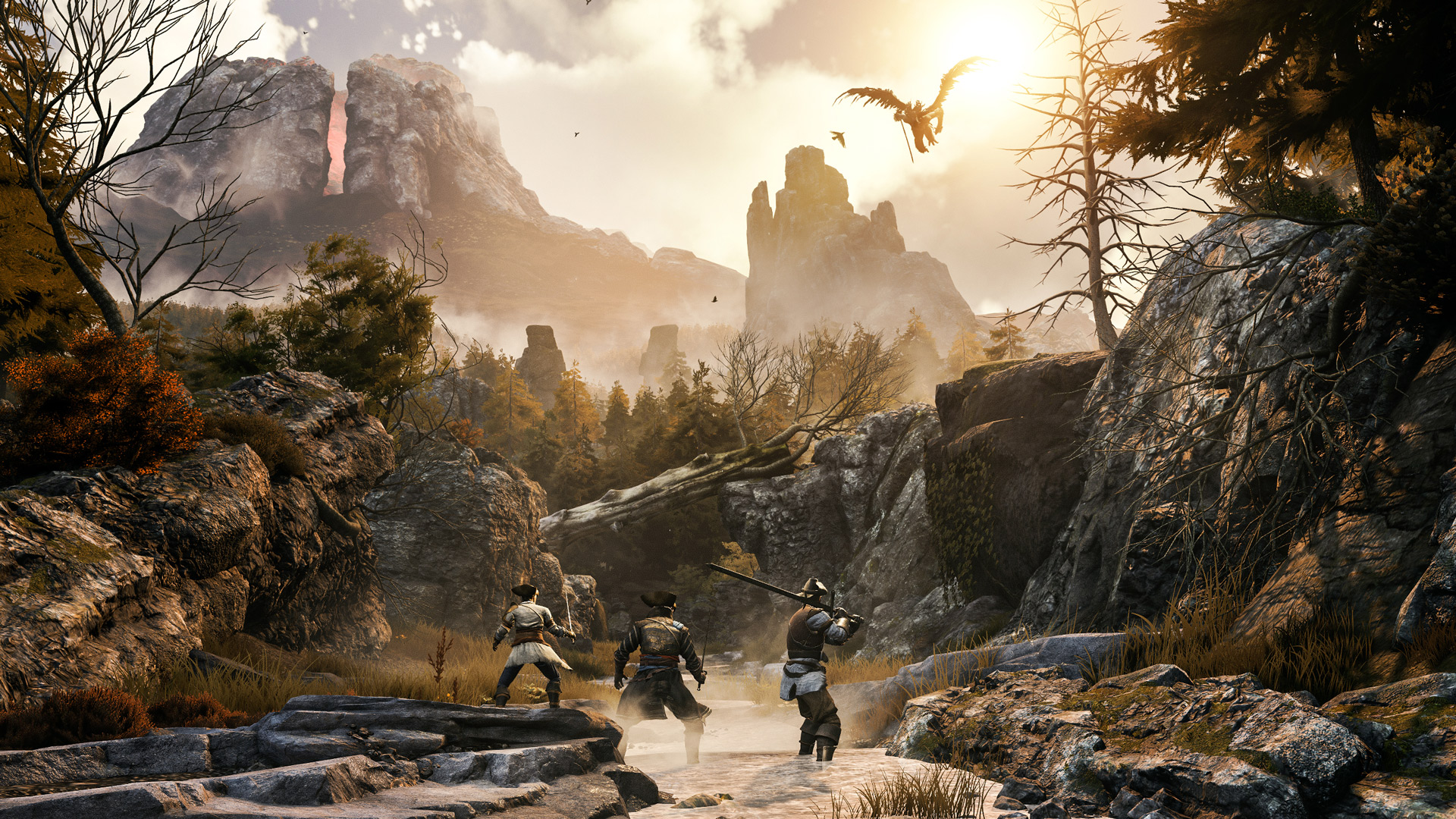
Then comes GreedFall. Released on September 10, 2019, the game arrives at a time when many players are still looking for the taste of old-fashioned narrative RPGs: companions, faction quests, dialogues, choices, free progression, a world dense enough to make you want to read its tensions. Spiders does not invent this formula. It simply puts it back on the table with its means, its vision and his strange baroque elegance.
GreedFall is the moment where the studio’s promise becomes visible to a wider audience. The island of Teer Fradee, the nations inspired by 17th century Europe, colonial tensions, diplomacy, the possibility of resolving certain situations other than by force: all this gives the game a special place. It doesn’t have the systemic power of the biggest RPGs, but it offers a complete, coherent adventure, with a clear artistic identity that contrasts with the artisanal side of previous productions.
Success confirms it. In August 2020, Focus Home Interactive and Spiders announced that GreedFall had exceeded one million copies sold. For a studio of this size, this is more than a good result. It’s validation. The game proves that there is still an audience for this mid-level RPG, ambitious without being gigantic, imperfect without being careless, attached to companions and consequences rather than mere excess.
GreedFall is not without problems. Its fights maintain a certain rigidity and the world remains more segmented than it sometimes suggests. But it crystallizes the best version of Spiders: a studio capable of compensating for part of its limitations with a clear direction, an atmosphere, a real desire to take people on a journey. We don’t forgive the game for everything. We simply understand why it counted.
Steelrising, the Mechanical Revolution
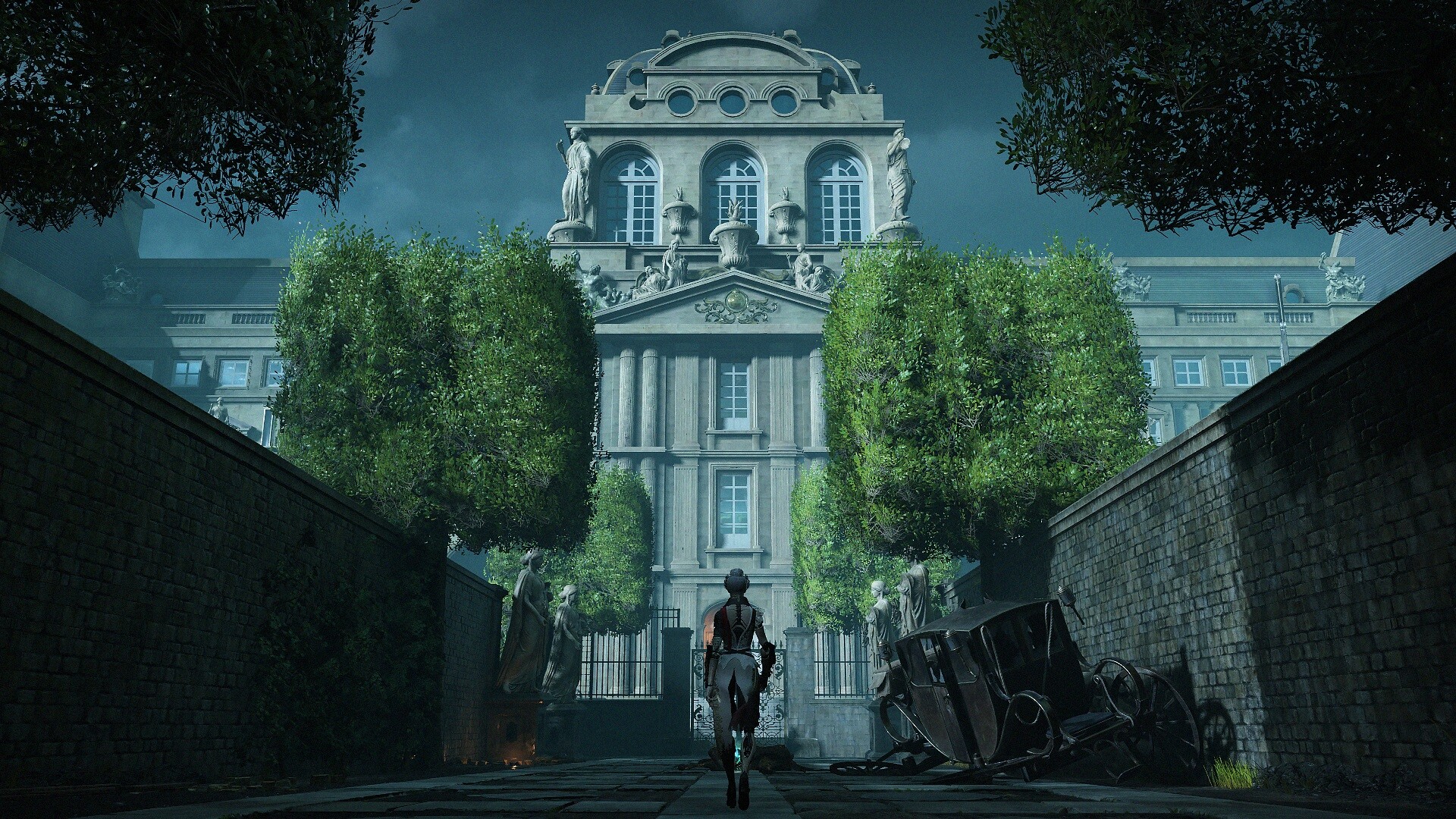
After its takeover by Bigben, who became one of the pillars of Nacon, Spiders changed its approach again with Steelrising. Released on September 8, 2022, the game imagines an alternative French Revolution where Louis XVI crushes Paris thanks to an army of automatons. The player plays Aegis, an automaton in the service of Marie-Antoinette, in an action-RPG closer to soulslike than the studio’s previous productions.
The idea is immediately strong. Paris, the automatons, the historical figures, the mechanical body of Aegis, the streets distorted by a monarchy that has become literally industrial: Steelrising has an image. It gives Spiders a clearer visual identity than ever, almost a synthesis between its taste for history, fantasy, mechanics and demanding combat systems.
The game also remains limited. It does not have the precision of the major models of the genre, nor the dizzying richness of FromSoftware. But that’s not exactly what we are asking of it. Steelrising works when it transforms soulslike into a field of expression for a French imagination rarely exploited with such frontality. It is not perfect, but it has a distinctive identity. And at Spiders, a silhouette is more important than impeccable polish.
GreedFall: The Dying World, returning in a storm
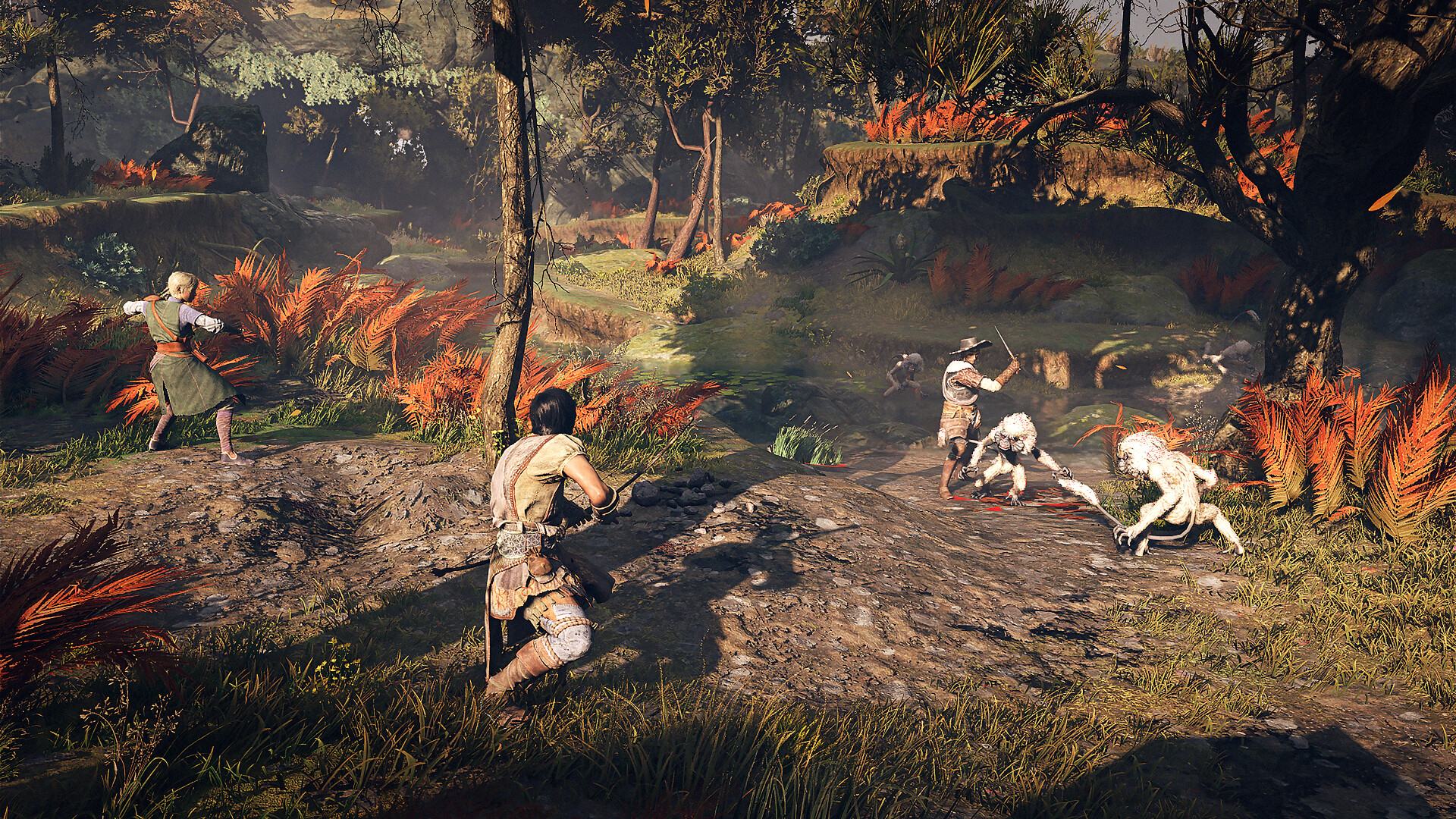
GreedFall: The Dying World arrives in much more complex conditions. Launched in early access on PC on September 24, 2024, then released in full version in March 2026, the game returns to the universe of GreedFall with a reversal of perspective. This time, the player plays a native of Teer Fradee, torn from his island and taken to the continent of Gacane, three years before the events of the first episode.
On paper, the choice is exciting. It allows us to look at the universe from the other side, to shift the center of gravity, to give the world another memory. The game also changes pace by moving towards more tactical combat, with a logic of active pausing and group control. Spiders tries something again. Even to return to its most popular franchise, the studio is not content with remaking exactly the same game, unlike many others.
But this return takes place in a difficult atmosphere. Early access, expectations linked to GreedFall, internal reorganization, social tensions and the Nacon crisis give The Dying World an almost tragic place in the studio’s timeline. It must have been the consolidation of a franchise. It now risks appearing as its final chapter.
It’s unfair to reduce a game to the situation of the company that produced it. But it’s difficult to completely separate The Dying World from its surroundings. At Spiders, games have always borne traces of their manufacturing conditions. This one perhaps wears them more than all the others.
Despite everything, The Dying World remains a demanding, ambitious, and exciting RPG. If it is to be the studio’s swan song, then the latter will be like all its works: imperfect but grandiose.
The Bigben bet, then the Nacon vice
In July 2019, Bigben Interactive announced the acquisition of Spiders. The press release is clear: the operation must strengthen the group’s development center and extend its know-how in the strategic segment of AA gaming. At that time, Spiders had around thirty employees according to Bigben, was still working with Focus on GreedFall, and was to continue to be managed by Jehanne Rousseau, co-founder of the studio.
The connection makes sense. Spiders gains support from a group that wants to grow in video games. Bigben, then Nacon, gained an RPG studio, a promising genre, an expertise that its portfolio did not yet fully cover. The ambition is clear: to make Spiders one of the showcases of this French AA strategy.
But the history of the industry often reminds us that a buyout is not just a promise of resources. It is also a new dependency. A studio can keep its name, its offices, its engine, its teams, while becoming linked to the decisions, debts, priorities and fragilities of its group. In Spiders’ case, this dependence will eventually take its toll.
From 2024, social signals will become more and more visible. An open letter relayed by the STJV evokes a deterioration of working conditions, disorganization, turnover, a lack of transparency and blocked negotiations. The text was signed, according to the union, by 43 employees out of 95. In September 2024, a strike movement was launched. In 2025, the Spiders union section then warns of a plan for layoffs and job cuts.
Judicial reorganisation, no buyer and announced liquidation
The final crisis comes from Nacon. On February 25, 2026, the group announced that it had declared its cessation of payments and requested the opening of judicial reorganisation proceedings before the Lille commercial court. On March 3, Nacon confirmed the opening of this procedure. The group explains that it wants to continue its activity, renegotiate its debt and preserve its employees within a stabilized framework.
On March 23, four subsidiaries were in turn concerned: Spiders, Kylotonn, Cyanide and Nacon Tech requested the opening of judicial reorganisation proceedings. For Spiders, the information included in the legal notices indicates an opening judgment on March 30, 2026, a cessation of payments date set for March 18, and an observation period running in principle until September 30, 2026.
A period of observation, normally, leaves a chance. It must make it possible to look for a plan, a takeover, a way to continue. But according to information published by Origami on April 28, 2026, no buyer has come forward for Spiders. The receiver therefore had to request the liquidation of the studio this Wednesday, April 29. The nuance is important: as long as the official judgment is not published, we must speak of an announced or imminent liquidation, not of a legally closed event.
But for employees, for players, for those who have followed the studio for a long time, the violence of the moment does not depend only on the publication of a line at BODACC. It lies in what Spiders represents: eighteen years of existence, a rare identity in French video games, a series of games which have accompanied a whole generation of players attached to RPGs who dare to keep their rough edges.
What Spiders Leave Behind
Spiders won’t be remembered because its games were impeccable. It would even be a bad way to describe the studio. Its productions have often been stiff, uneven, too ambitious for their budget. But they had a quality that you can’t just measure by the fluidity of an animation or the size of a map: they had direction.
Spiders leaves behind a way of making RPGs that accepted compromise without giving up the desire. Worlds built around rare resources, social wars, tense factions, characters caught between loyalty and survival. Games where we felt the desire to talk about power, corruption, colonization, faith, transformed bodies, threatened humanity. Not everything was always treated with the same finesse, but the studio had the merit of having something to say.
It also leaves a much broader question. What happens to AA when costs increase, when cycles lengthen, when a success like GreedFall does not guarantee lasting stability? Between the very small independent and the gigantic AAA, Spiders occupied that fragile zone where we can still try original worlds without having an army of developers. It is precisely this area that seems most threatened today.
The announced disappearance of Spiders does not just close a page. It reminds us that an industry needs intermediate studios to breathe. Studios capable of failing a little, of succeeding sometimes, of producing something other than already validated formats. Spiders wasn’t perfect. But it was one of those studios whose flaws also spoke of courage.
Spiders, like Piranha Bytes two years ago, will undoubtedly leave a void in the hearts of gamers. Not only for their presence, for their franchises; but also for what their mere existence meant to an entire industry that only conforms more and more, to the point where each release feels like the last.
So long, everyone. And thank you for everything.
Images and videos